
How to Choose the Right Floating Buoy in 2026?

Time:2026-11-04 Author:Amelia
0%

Choosing the right Floating Buoy in 2026 starts with the site, not the catalog. A buoy that performs well in a sheltered marina may struggle in open water, where waves, wind, and current apply steady force. Think about the job it must do. Will it mark a channel, support instruments, protect a mooring, or carry a visible safety light? Each use calls for different buoyancy, stability, visibility, and anchoring needs.

A practical rule from [insert verified Floating Buoy expert’s name] is: “Match the buoy to the conditions it will face, not just the task it will perform.” Replace this placeholder with a checked expert attribution before publication; a made-up quotation would weaken trust. From experience, small details matter. A rough dock edge can scrape a float’s coating. A short, choppy fetch can make a tall buoy lean and tug at its line. Even bright colors may fade faster under intense sunlight.

This guide’s outline examines buoy types, materials, load capacity, visibility, mooring, and maintenance. It also considers lifecycle cost, because the lowest purchase price may hide frequent repairs or replacement. Check manufacturer specifications against real site measurements, and confirm that fittings suit the intended equipment. Then compare options using the same conditions. A tidy product sheet is useful. Field performance matters more. Some trade-offs remain: added weight may improve stability, yet make handling harder. The right choice is the one that fits the water, the work, and the people maintaining it.
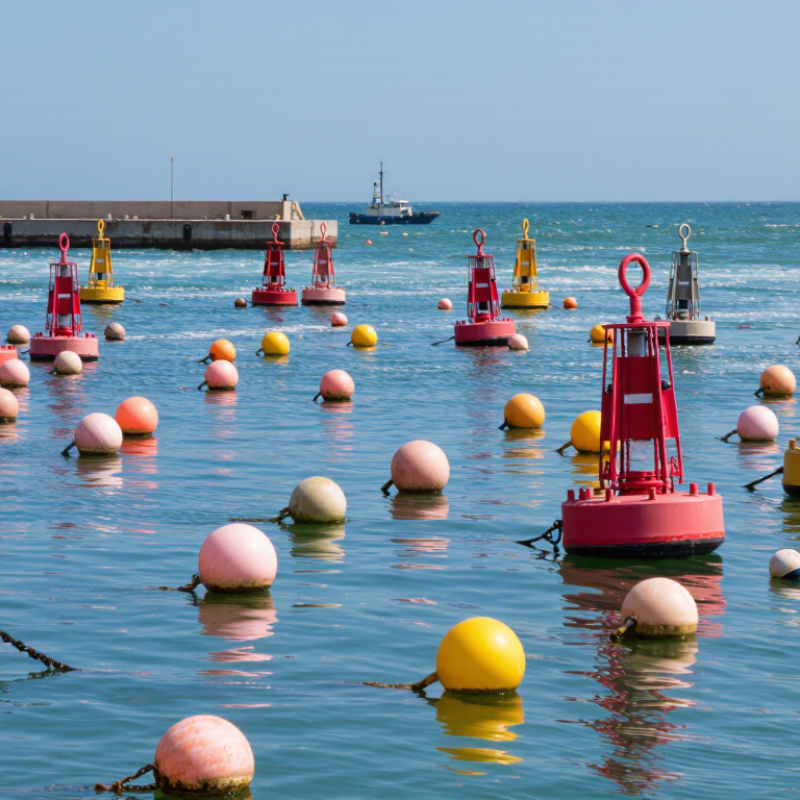
How to Choose the Right Floating Buoy in 2026?

Understanding Floating Buoy Types and Their Uses

How to Choose the Right Floating Buoy in 2026?

Understanding Floating Buoy Types and Their Uses

Floating buoys do different jobs, so start with the water and the information you need. A moored buoy stays anchored and can carry sensors for waves, wind, or water quality. It suits fixed monitoring sites, but its anchor and line must match local depth, currents, and weather. NOAA’s National Data Buoy Center uses moored buoys and coastal stations to collect marine and meteorological observations. Check the actual sensor package; the buoy’s shape alone tells you little.

Drifting buoys move with surface currents, making them useful for tracking ocean conditions across wide areas. NOAA’s Global Drifter Program maintains a target array of 1,250 satellite-tracked drifters, which measure sea-surface temperature and help map currents. That scale shows why drifters matter for broad observation, not precise marking of one location. For channels, hazards, or work zones, choose a navigation marker designed for visibility and stability in local waves. Color and lighting should fit the marking plan.

Profiling buoys travel vertically through the water column, gathering information such as temperature and salinity at different depths. They are better for ocean research than for marking a shoreline. Before choosing, compare payload, battery life, anchoring needs, and the expected sea state. Ask how often the device needs servicing. A tidy specification sheet can still overlook chafe on a mooring line or spray on a solar panel. Small details matter. NOAA’s program figures provide useful context, but they are not a substitute for site-specific design.

Matching Buoy Design to Your Application

A floating buoy should be chosen for its task, not its color or catalog photo. For water-quality sampling, look for stable sensor mounts, protected cable runs, and reserve buoyancy for fouling and maintenance loads. Navigation and wave monitoring may need greater visibility, reflective markings, or a different response to motion. Small details matter.

NOAA’s 2022 Sea Level Rise Technical Report projects 10–12 inches of additional sea-level rise along U.S. coasts between 2020 and 2050. At exposed sites, check whether freeboard and mooring adjustments can accommodate changing water levels. Do not size only for today’s waterline. Regional conditions still vary.

The IPCC Sixth Assessment Report estimates that the ocean absorbed about 91% of the Earth system’s excess heat from 1971 to 2018. For long deployments, check material resistance to UV exposure, corrosion, and temperature changes; salty spray can quickly expose weak connectors. In open water, assess wave loading, drift, retrieval, and anchor-failure consequences. A calm pond may need only a compact, low-profile float that is easier to service. No design is perfect. Recheck the load assumptions before ordering.

How to Choose the Right Floating Buoy in 2026?

Match buoy size and design to the load, environment, and operating conditions of your application.

Estimated gross buoyancy is calculated for spherical buoys in seawater at a density of 1,025 kg/m³. It represents displaced seawater, not usable lifting capacity: subtract the buoy’s own mass and account for mooring loads, waves, and an appropriate safety margin. Application examples are indicative, not design specifications.

Evaluating Materials, Size, and Buoyancy Requirements

How to Choose the Right Floating Buoy in 2026?

Evaluating Materials, Size, and Buoyancy Requirements

A buoy should match its working environment, not just look large enough on a product page. For sunny, shallow water, UV-resistant polyethylene can handle frequent exposure and occasional knocks. In colder conditions, check the material’s temperature range; some plastics become less forgiving. Foam-filled designs resist punctures, while inflatable models are easier to store but need regular pressure checks. No material is perfect.

Size depends on what the buoy must support and how visible it needs to be. Measure the load, including attached ropes or equipment, and consider waves that may pull the buoy under. A rough starting point: one liter of fresh water supports about one kilogram before the buoy itself and any safety margin are counted. Salt water provides slightly more lift. Leave reserve buoyancy rather than sizing to the exact load.

Think about the site, too. A small buoy can disappear behind chop, while an oversized one may drag or swing in wind. Check its dimensions against the water depth and attachment point. I’ve found that estimates can feel reassuringly precise, but real loads shift. Test the setup in calm water, inspect seams and fittings, and revisit the choice after the first rough outing.

Checking Visibility, Mooring, and Environmental Suitability

A floating buoy should be easy to identify against its real background, not just in a catalogue photo. Check its color, shape, reflective surface, and any required light from the approach direction, at dawn and in rain. IALA’s Maritime Buoyage System uses standardized colors and shapes for navigational marks, but local requirements and viewing conditions still matter. Small detail. Big consequence. A buoy partly hidden by glare, reeds, or spray may be technically visible and still hard to spot.

Mooring choice should reflect the site’s depth, current, wave exposure, and expected water-level range. NOAA’s 2022 Sea Level Rise Technical Report projects 0.25–0.30 metres of average rise along the U.S. coastline from 2020 to 2050. That is a broad regional projection, not a site forecast, but it is a reason to check line length, swing radius, and changing clearance. A mooring that works on a calm day may load unevenly when wind and current pull in different directions. I still find that easy to underestimate.

Match the buoy’s material and fittings to local exposure: saltwater, ultraviolet light, freezing, abrasion, and biological growth can all shorten service life. Ask for documented limits on load, temperature, and maintenance, rather than relying on appearance alone. Check the actual water and weather records for the site, then inspect the buoy after installation. Records help. They do not replace a field check.

Comparing Safety Standards, Maintenance, and Total Cost

Choosing a floating buoy starts with its job: marking a channel, supporting a line, or protecting a work area. Match buoyancy, visibility, load rating, and attachment points to actual site conditions, not just nominal size. Check resistance to sunlight, saltwater, impact, and expected temperature changes. Safety requirements vary by location and use, so compare product documentation with applicable marine standards and site rules. Look for clear test data, rated loads, and replacement guidance. A neat specification sheet can still leave questions. Ask how ratings were measured.

Maintenance affects safety and long-term cost. Inspect the buoy, fittings, and mooring lines on a regular schedule, and record damage or repairs. For inflatable models, check pressure and seams as the manufacturer directs. Small defects grow. Include cleaning, inspection labor, installation, and eventual replacement in the budget, not just the purchase price. A cheaper buoy may cost more if it needs frequent servicing or fails early. Costs add up. The estimate is rarely perfect; weather and heavy use can change replacement timing. Keep a small allowance for unexpected repairs, and review it after each inspection season.

FAQS

What is a moored buoy used for?

It stays anchored at a fixed site and can carry sensors for waves, wind, or water quality. Match its anchor and line to local depth, currents, and weather.

How is a drifting buoy different?

It moves with surface currents and helps track conditions across wide areas. It is not ideal for marking one precise location. Shape alone tells little.

When should I choose a profiling buoy?

Choose one when you need measurements at different depths, such as temperature or salinity. It is meant for research, not shoreline marking.

Which buoy material suits my location?

UV-resistant polyethylene can suit sunny, shallow water, while foam-filled designs resist punctures. Inflatable models store easily but need pressure and seam checks. No material is perfect.

How do I estimate the buoy’s required size?

Add the weight of the buoy, ropes, and attached equipment. One liter of fresh water supports about one kilogram before safety margins. Leave a reserve.

What should I consider for visibility and stability?

Check wave conditions, wind, water depth, and the attachment point. A small buoy may vanish behind chop, while an oversized one may swing or drag.

How often should I inspect a buoy?

Set a regular schedule for checking the buoy, fittings, and mooring lines. Look for worn seams, chafe, and damage. Small details matter.

How should I compare the total cost?

Include installation, cleaning, inspection labor, repairs, and replacement—not just the purchase price. My initial estimate may miss weather-related wear. Costs add up.

Conclusion

Choosing the right Floating Buoy in 2026 starts with understanding the available types and the job each is designed to do, such as marking a location, supporting equipment, or improving navigation. Match the buoy’s shape and features to its intended application, then assess the materials, dimensions, and buoyancy needed to perform reliably under expected loads and water conditions.

Visibility and secure mooring are also essential, particularly where currents, waves, or changing weather may affect placement. Consider whether the buoy’s materials and construction suit the local environment, including exposure to sunlight, saltwater, and temperature changes. Before making a decision, compare relevant safety requirements, routine maintenance needs, expected service life, and overall ownership costs. A balanced choice is one that remains visible, stable, durable, and practical for its intended use.

Amelia

Amelia

Amelia is a seasoned marketing professional with a wealth of expertise in our company’s core offerings. With an unwavering passion for driving growth and innovation, she plays a pivotal role in shaping our marketing strategies and enhancing brand visibility. A key aspect of her responsibilities......