
Precision Modular Floating Pontoon & Platform Assemblies
Explore heavy-duty, UV-stabilized, seamless pontoon modules designed for watercraft mooring, floating walkways, aquaculture cages, and industrial pump platforms.
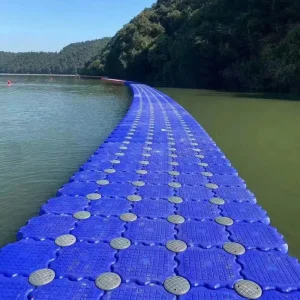
OEM Advanced Floating Boat Pontoon for Custom Water Platforms
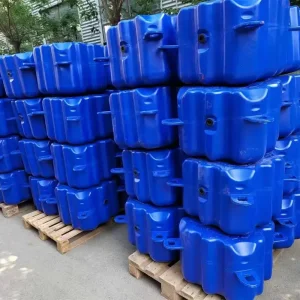
ODM Durable Floating Boat Pontoon for Versatile Water Projects
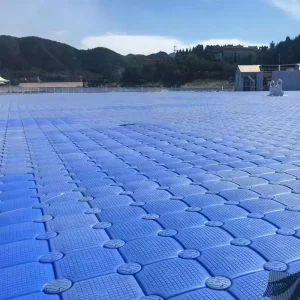
Best High-Performance Floating Boat Pontoon for Modular Platforms

Custom Innovative Floating Boat Pontoon for Versatile Platforms
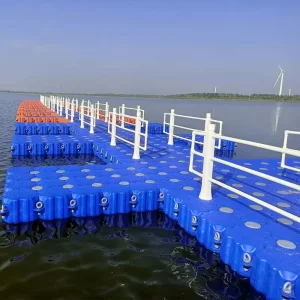
Custom Premium Floating Boat Pontoon for Safe and Stable Platforms
High-Quality Robust Floating Boat Pontoon for Flexible Platforms
High-Quality Versatile Floating Boat Pontoon for Water Projects
High-Quality Water Boat Pontoon Floating – Stable Modular Platforms
Engineering Evolution of Marine Polymer Flotation Systems
The transition from conventional corroding steel drums and concrete caissons to smart, resilient rotational-molded high-density polyethylene (HDPE) pontoon architecture.
High-Density Polymer Science
Traditional marine floating docks faced accelerated degradation under UV bombardment and chemical marine fouling. Modern pontoon formulations synthesize rotational-grade LLDPE/HDPE enriched with UV8 to UV20 carbon stabilizers, guaranteeing upwards of 25 years of anti-aging resiliency against saltwater hydrolytic corrosion, extreme pH fluctuations, and aggressive marine algae attachments.
Seamless Rotomolding Integrity
Unlike blow-molded or welded plastic alternatives prone to burst stresses along thermal seam interfaces, single-shot rotational molding produces 100% monolithic hollow hulls. Seamless engineering eliminates catastrophic leak hazards caused by pontoon deflection in turbulent multi-directional wave zones and sudden boat bow impacts.
Smart Marine & Sensor Interfacing
The future of modular marine berths incorporates built-in internal channels and embedded IoT conduits. Juhua's advanced pontoon platforms facilitate dynamic cable pass-throughs, water ballast sensors, environmental water salinity probes, and integrated solar-powered night beacons for autonomous marine traffic regulation.
Turnkey Solutions Across Demanding Water Sectors
From complex commercial marinas to sensitive ecological wetland reserves, our modular pontoon configurations satisfy stringent buoyancy and load-bearing requirements.
Commercial Berthing & Marina Docks
Engineered for commercial watercraft, yachts, and fishing fleets. Modular pontoon assemblies absorb heavy berthing impacts through flexible interlocking pin layouts, resisting continuous torsional loading caused by harbor wake and tide swells.
Industrial Water Pumps & Dredging Floats
Robust buoyancy platforms designed to carry massive slurry suction pumps, electrical transformers, and heavy discharge steel/HDPE pipelines across high-density tailings ponds, municipal reservoirs, and active canal desilting corridors.
Eco-Tourism & Floating Walkway Bridges
Slip-resistant textured surfaces conforming to international pedestrian safety protocols. Designed for nature parks, floating botanical viewing pavilions, floating restaurants, and transient bridge walkways subject to strict environmental regulations.
| Evaluation Parameter | Juhua Rotomolded Pontoon (PE) | Traditional Steel Pontoons | Concrete Floating Caissons | Timber / Barrel Floats |
|---|---|---|---|---|
| Corrosion Resistance | Immune (Saline / Acid) | High Rust / Pitting | High (Subject to spalling) | Rot & Borer Vulnerable |
| Impact Energy Absorption | High Elastic Memory | Permanent Denting | Brittle Cracking | Splintering / Breakage |
| Installation & Logistics | Lightweight Modular Handling | Heavy Cranes Required | Specialized Marine Barges | Manual / Labor Heavy |
| Service Lifespan Expectancy | 20 - 25+ Years Zero Paint | 8 - 12 Years (Frequent Recoat) | 25 - 30 Years (High Upfront) | 3 - 6 Years Regular Replace |
| Environmental Contamination | Non-Toxic Recyclable Food-Grade | Toxic Antifouling Paint Leach | Chemical Leaching Risks | Chemical Preservative Leach |
Intelligent Rotomolding Automation & Production Scale
Located in Huimin County, Binzhou, Shandong, our facility integrates Industry 4.0 smart controls to achieve uncompromised batch-to-batch repeatability and ultra-high manufacturing capacity.
Computerized Thermal & Speed Control
Our proprietary multi-arm rotomolding units utilize variable-frequency digital speed controls combined with automated real-time internal mold temperature telemetry. This precisely prevents wall-thinning across angular pontoon corner radiuses, eliminating structural weakness.
Standardized Interchangeable Tooling
CNC-machined aluminum casting molds ensure precision pin-to-lug tolerances down to ±1.5mm. Marine pontoon blocks fabricated years apart integrate seamlessly on existing harbor structures, providing international contractors total confidence for expansion programs.
High-Volume Global Logistics Readiness
With over 1,000 m² of specialized production stations and direct proximity to major Shandong deep-water container ports (Qingdao, Tianjin), we easily fulfill mega-scale municipal and EPC orders, offering high-density container nesting for optimized oceanic shipping rates.
Engineering Evaluation Checklist for International EPC Buyers
Rigorous specifications required by port authorities, marine civil engineers, and international procurement officers before signing pontoon supply contracts.
Specific Buoyancy Sizing
Calculate net load carrying capacity including dead-weight, static live loads, and transient crowd distributions (minimum 350-400 kg/m² standard design margin for commercial applications).
Interlocking Lug Tensile
Verify corner lug tensile shear performance. Our connecting ears exceed 2,000 kgf tensile resistance to ensure continuous wave torsion does not cause joint separation.
Polymer Quality Verification
Reject regrind recycled scrap plastic. Insist upon virgin linear low-density polyethylene with authenticated Melt Flow Index (MFI) and ASTM D1693 environmental stress-crack resistance certificates.
Full Third-Party Auditing
Ensure the supplier accommodates pre-shipment inspections by SGS, Bureau Veritas, or TÜV, encompassing drop impact tests, wall-thickness ultrasonic gauging, and buoyancy verification.
Direct Engineering Partnership with Zero Middleman Delays
Transparent warranty protocols, strict global maritime certifications, and rapid technical dispatch across 80+ countries.
Legally Binding Warranty Terms
We back our rotomolded floats with clear legal transparency: the official warranty coverage begins when the buyer hands over the commissioned facility to the investor and concludes 18 months post-handover, or 12 months after the initial water installation date, whichever milestone arrives first.
Complete Hydrodynamic Modeling
Never rely on unverified estimates. Our application engineering department delivers comprehensive hydrostatic buoyancy safety factor calculations, wave deflection assessments, mooring pile reaction forces, and deadweight anchor layout configurations customized to your bathymetric charts.
Direct CAD / 3D Layout Assistance
Share your waterfront DWG/DXF drawings directly with our Binzhou design office. We draft complete 3D pontoon layout assemblies, gangway interfaces, fender positions, and electrical cable conduit routings within 24 to 48 hours for immediate project tendering.
Integrated Offshore Lines, Dredging Pipe Floats & Buoys
Complete your aquatic installation with matched OEM pipelines, high-buoyancy dredge collars, harbor navigation markers, and specialized rotomolded marine components.
Custom Innovative Floating Boat Pontoon for Versatile Water Platforms
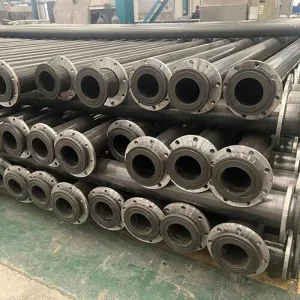
High-Quality Robust Pipeline for Reliable Fluid & Material Transport
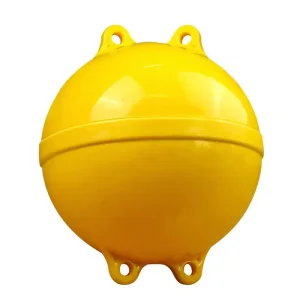
ODM ABS Float Ball for Reliable Marine and Freshwater Buoyancy
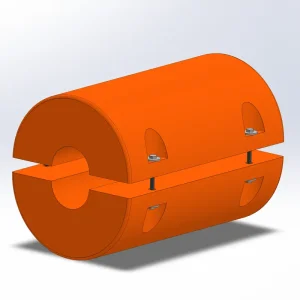
Best Pipe Floats for Floating Pipeline Support and Water Transfer

ODM Polyethylene Mooring Buoy for Harbors & Floating Facilities
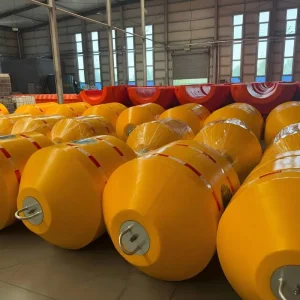
High-Quality Mooring Buoy for Commercial Berths & Offshore Areas
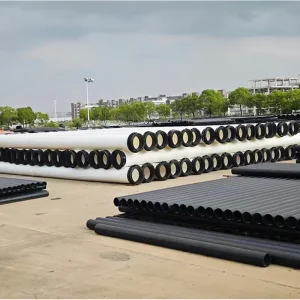
ODM Heavy-Duty Pipeline for Versatile Water and Fluid Transport
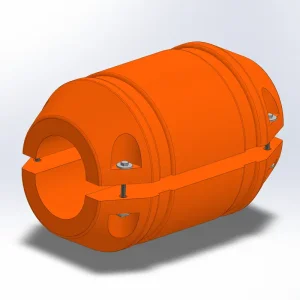
ODM Reliable Pipe Floats for Marine Dredging Projects
Engineering Questions Answered by Marine Specialists
Direct technical answers regarding load dynamics, polyurethane foam infill, anchoring constraints, and international shipping protocols.
What is the standard load-bearing capacity of Juhua modular boat pontoons?
Standard single-layer pontoon cubes (500x500x400 mm) provide approximately 350 kg to 380 kg per square meter of buoyancy load support. For heavy-duty watercraft, gangway bridge ramps, or heavy pump installations, dual-tier stacking or reinforced high-displacement blocks achieve payload capacities surpassing 700 to 1,000 kg/m².
How do you calculate buoyancy margins for pipelines vs. pontoon platforms?
For floating discharge pipelines, total displacement must account for the full working slurry density plus a 20% to 30% reserve buoyancy margin (keeping roughly 1/4 of pipe OD above water). For boat berthing pontoons, static buoyancy must exceed total deadweight plus anticipated peak dynamic passenger and vessel mooring impact by at least 150%.
Are your polyethylene pontoons filled with closed-cell polyurethane foam?
Yes, upon request. While our rotationally molded thick-wall shells are 100% airtight and water-tight as hollow units, for high-risk offshore channels, commercial ports, or ice-flow locations, we pressure-inject marine-grade, closed-cell polyurethane (PU) foam (>35 kg/m³ density). This guarantees 100% buoyancy retention even if the outer hull sustains violent accidental hull puncture.
What anchoring systems are recommended for tidal zones with 3m+ water variations?
For deep or high-tidal environments, we engineer internal guide-roller brackets attached to steel piles driven into the seabed, allowing smooth vertical floatation travel. In non-pileable deep reservoirs or offshore waters, we supply elastic rubber shock-cord anchor lines or heavy chain bridles linked to deadweight concrete sinkers.
How do your pontoons perform in extreme freeze-thaw sub-zero temperatures?
Our linear low-density polyethylene resins remain highly ductile down to -40°C without suffering brittle glass transition failure. The arched bottom contour and smooth convex side geometries of the pontoon blocks naturally deflect lateral expanding ice pressure, lifting the platform harmlessly upward during winter freeze cycles.
What are your standard export lead times and shipping container nesting ratios?
Thanks to our high-capacity Shandong factory lines, standard volume orders (100 to 500 pontoon sections) typically ship within 7 to 14 days. Modular cubes are configured for compact palletization and nested loading, allowing up to 240 standard 500mm modules inside a single 40ft High Cube (HC) container to dramatically lower ocean freight costs.