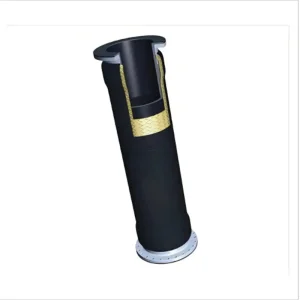
Engineered Floating Sphere Solutions for Demanding Aqueous Operations
Manufactured using rotational molding and structural ultrasonic polymer bonding. Optimized for UV resistance, environmental stress crack resistance (ESCR), and extreme temperature tolerances.
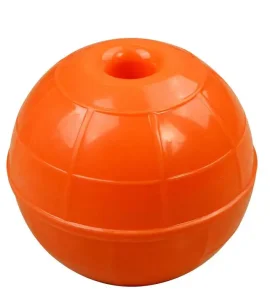
OEM ABS Float Ball – Durable Buoyancy Support for Water Projects Manufacturers, Manufacturer
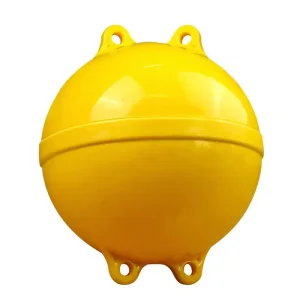
ODM ABS Float Ball for Reliable Marine and Freshwater Buoyancy Manufacturers, Factories
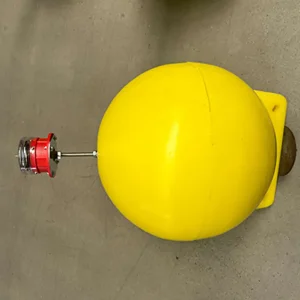
ODM Floating Ball with LED Light – Reliable Marine Navigation and Safety Manufacturer, Pricelist
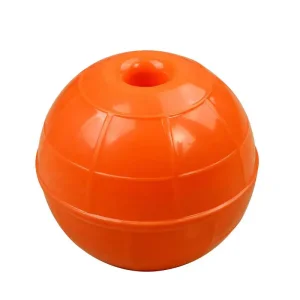
ODM Heavy-Duty ABS Float Ball for Water Engineering Projects Suppliers, Quotes
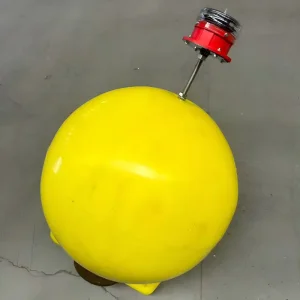
ODM High-Visibility Floating LED Ball for Marine and Freshwater Safety Manufacturers, Pricelist
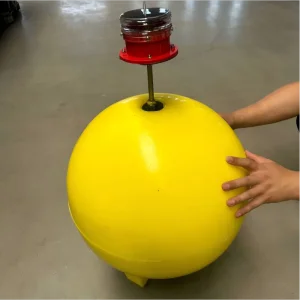
High-Quality LED-Equipped Floating Ball for Safe and Efficient Water Operations Factory, Factories
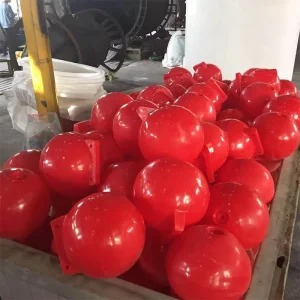
Best PE Float Ball – Durable Buoyancy Solution for Water Projects Products, Quotes
Best PE Float Ball for Safe and Efficient Water Operations Companies, Pricelist
Macro-Industry Solutions: Deploying Spherical Flotation Systems at Scale
Spherical buoyancy modules provide omnidirectional hydrodynamic balance, eliminating torsional shear stresses common in cylindrical floats under cross-current load vectors. Explore critical sector implementations.
Reservoir Evaporation & Algae Control
Deploying self-assembling floating ball blankets covers up to 91% of open water surface area. By inhibiting sunlight penetration (photosynthetically active radiation), water utility operators achieve up to 85% reductions in blue-green algal blooms (cyanobacteria) while curbing evaporative water loss in arid climate holding basins.
Tailings Ponds & Mining Chemistry
Engineered for hyper-saline, acidic, and alkaline pregnant leach solution (PLS) ponds (pH 1.5 to 13.0). High-density polyethylene floating spheres resist chemical degradation, preventing hazardous bird landings on cyanide-bearing leachates and buffering floating pump suction intakes from sediment silt ingestion.
Floating Solar (FPV) & Cable Line Flotation
Integrated spherical floats serve as compliant wave attenuation perimeters and distributed umbilical buoyancy supports for offshore floating solar plants. The low drag coefficient ($C_d \approx 0.47$) preserves structural anchoring integrity during sudden hydrodynamic surge events and tidal reversals.
China Factory 4.0: Supply Chain Resilience, Automation & Scale Economics
Combining automated bi-axial rotational molding centers with closed-loop computerized temperature controls to produce flotation spheres with ultra-uniform wall thickness tolerances and guaranteed structural integrity.
Automated Bi-Axial Rotomolding
Our Binzhou manufacturing facility operates computer-controlled multi-station carousel rotational molding systems. Variable-frequency motor positioning and real-time infrared inner-cavity thermal sensors eliminate the hot-spot thin walls common in conventional molding, achieving precise $\pm 0.5\text{mm}$ structural wall tolerances across high-volume production batches.
Resilient Raw Material Supply Alliances
Direct supply contracts with top polymer petrochemical complexes guarantee direct-from-source virgin LLDPE and HDPE resins (melt flow index $3.5\text{g}/10\text{min}$, density $0.935\text{--}0.940\text{g}/\text{cm}^3$). This shields infrastructure projects from spot-market price volatility while guaranteeing verifiable lot-to-lot traceability under ISO 9001 quality audits.
Direct-to-Port Intermodal Efficiency
Situated in Shandong’s maritime manufacturing hub with streamlined highway corridors to Qingdao and Tianjin deepwater ports, our logistics division packs high-cube containers (40' HC) with precision sphere-nesting patterns. This spatial optimization cuts international cubic shipping costs by up to 28% compared to un-nested cargo layouts.
| Material / Parameter | Virgin HDPE Rotomolded | Engineered ABS Spheres | Expanded Polyurethane Core | Structural Steel Alternative |
|---|---|---|---|---|
| Specific Density | $0.935\text{--}0.942\text{ g/cm}^3$ | $1.04\text{--}1.08\text{ g/cm}^3$ | $35\text{--}45\text{ kg/m}^3$ (closed-cell) | $7.85\text{ g/cm}^3$ |
| Seawater Corrosion | Immune / No Oxide | Immune / Inert | Hydrophobic Encapsulated | Severe (Requires Anodes) |
| Impact Resistance (Charpy) | $18\text{--}24\text{ kJ/m}^2$ (No Break) | $12\text{--}18\text{ kJ/m}^2$ | Resilient Cushioning | Plastic Deformation Risk |
| UV Degradation (ASTM G155) | 20,000 hrs Xenon Arc Pass | 12,000 hrs Stabilized | Internal / Shielded | Paint Degradation Risk |
| Maintenance Overhead | Zero Maintenance (20 yr) | Minimal Annual Checks | Zero Water Ingress | Annual Recoat Required |
Enterprise Procurement Criteria: Rigorous RFQ Specs & Buoyancy Calculations
Avoid catastrophic flotation failure on project commissioning day. Hydrodynamic engineering demands accurate sizing calculated against operational fluid density, freeboard safety margins, and mooring line hydrodynamic loads.
Buoyancy Margin Calculation Protocol
For submerged mooring lines, tethered instrumentation arrays, and floating containment curtains, total buoyancy must account for dynamic wave shock loads. We recommend sizing spherical flotation according to the following baseline formula:
Engineering Design Criterion: Total Reserve Buoyancy ≥ 1.30 × Maximum Static Deadweight
Wall Thickness & Tensile Integrity
Tenders must mandate minimum wall thicknesses (≥ 6mm to 12mm depending on spherical diameter). Rotational molding must be executed with virgin resin to achieve an ultimate tensile yield stress exceeding $22\text{ MPa}$ according to ASTM D638 standards, preventing crushing under transient hydrostatic pressure.
UV Weathering Certification
For installations in tropical and high solar irradiance zones (Middle East, Australia, Latin America), flotation materials must incorporate carbon black compounding or hindered amine light stabilizers (HALS UV-20). Retain at least 80% tensile elongation after 10,000 hours of accelerated QUV weathering exposure.
Tethering Eyelet & Load Verification
Spheres integrated with pass-through through-bolts, stainless steel 316 (SS316) swivels, or molded eyelets must submit tensile pull-apart test reports. Juhua proof-tests anchoring eyelet assemblies to 2.5 times the rated working load limit (WLL) to prevent tear-out in turbulent watercourses.
Technical Roadmap & Future Outlook: Smart IoT Floats and Sustainable Polymers
The transition from passive buoyancy bodies to active, intelligent marine monitoring platforms. Explore our research and development trajectory in telemetry-integrated spheres and circular marine materials.
Sub-GHz & Satellite IoT Telemetry
Integrating compact, self-charging solar photovoltaic top caps with LoRaWAN, NB-IoT, and low-earth-orbit (LEO) satellite modules into industrial floating spheres. This technology enables real-time sensing of water temperature, dissolved oxygen, turbidity, and geolocation drift alerts across remote mining lagoons and offshore aquaculture leases.
Circular Bio-Polyethylene Resins
Partnering with advanced biochemical laboratories to incorporate certified circular polymers derived from tall oil and bio-waste feedstocks. Our goal is delivering floating spheres that achieve a 65% reduction in cradle-to-gate carbon emissions while matching the environmental stress-cracking resistance of virgin fossil HDPE.
AI-Optimized Drag Hydrodynamics
Using computational fluid dynamics (CFD) and genetic machine learning algorithms to model surface dimple micro-textures (analogous to golf-ball boundary layer control). These micro-textures reduce hydrodynamic skin friction drag by up to 14% in high-velocity river current installations, alleviating line tension on mooring anchor points.
Localized Support & Global Compliance Assurance
Deploying flotation hardware into international jurisdictions requires unyielding regulatory compliance. Juhua verifies every shipment against international marine and environmental protocols.
PIANC & IALA Navigation Compliance
Visual delineation floating balls and marine demarcation markers conform strictly to IALA (International Association of Marine Aids to Navigation and Lighthouse Authorities) chromaticity boundaries and surface luminance standards. They also comply with PIANC guidelines for dredging discharge line demarcation.
NSF / ANSI 61 & REACH Safety
For municipal water utilities and potable drinking reservoirs, our PE spheres utilize food-grade certified resins verified free of heavy metals, phthalates, and bisphenol A (BPA). Complies with REACH (EC 1907/2006) and RoHS environmental leaching restrictions under direct water contact conditions.
Global Field Engineering Support
From initial mooring layout simulations and dynamic buoyancy sizing calculations to on-site commissioning supervision, Juhua supports port authorities, EPC civil contractors, and mining operators across more than 80 countries with complete documentation packages including CAD, BIM, and Finite Element Analysis (FEA).
Engineering FAQ: Technical & Procurement Specifications
Direct answers from our polymer engineering and naval architecture team regarding material selection, ballast dynamics, and commercial delivery timelines.
Comprehensive Marine Flotation, Dredging Pipe Floats & Heavy Offshore Equipment
Complete your aquatic conveyance and safety perimeter systems with matched pipelines, high-visibility marker buoys, and heavy-duty structural water barriers.

High-Quality Reliable Pipe Floats with Cable Troughs for Efficient Marine and Pipeline Operations Quotes, Factory

OEM Pipeline Float for Floating Pipeline Systems and Water Transfer Projects Manufacturers, Factories

High-Quality High-Visibility Marine Buoys for Safe Offshore Operations Pricelist, Factory
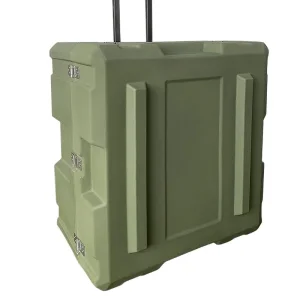
ODM Heavy-Duty Rotomolded Military Airdrop Storage Container Supplier, Factory
ODM Pipe Floats for Floating Water Pipelines and Marine Support Systems Manufacturers, Manufacturer
ODM ABS Float Ball for Reliable Marine and Freshwater Buoyancy Manufacturers, Factories
ODM Durable Cable-Integrated Pipe Floats for Submerged Infrastructure Supplier, Manufacturer