
Engineered Heavy-Duty Pipeline Systems for Critical Fluid Transfer
High-density rotational molded systems designed for dredging discharge, mining slurries, municipal effluent, and aggressive industrial fluid conveyance under severe hydrodynamic conditions.
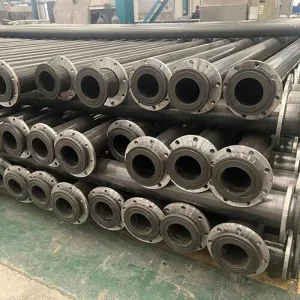
Best Durable Pipeline for Efficient Fluid Transport
View Product Specs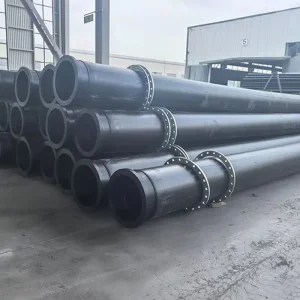
Best Heavy-Duty Pipeline for Safe and Efficient Transport
View Product Specs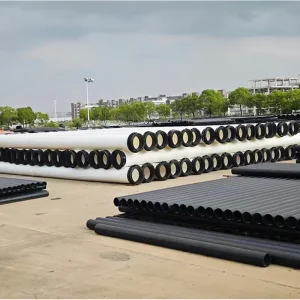
ODM Heavy-Duty Pipeline for Versatile Water & Fluid
View Product Specs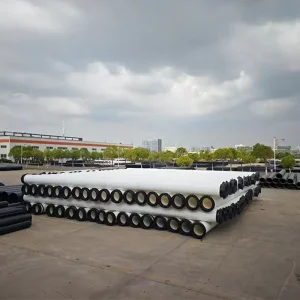
ODM High-Density Pipeline for Liquid & Gas Transport
View Product Specs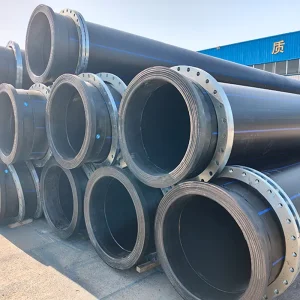
ODM High-Performance Industrial & Municipal Pipeline
View Product Specs
OEM Industrial-Grade Pipeline for Reliable Transport
View Product Specs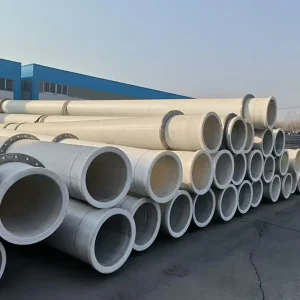
ODM Industrial-Strength Pipeline for Material Transport
View Product Specs
High-Quality Robust Pipeline for Fluid Transfer
View Product SpecsGlobal Pipeline Procurement Needs & Total Cost of Ownership (TCO)
Why Tier-1 dredging conglomerates, offshore operators, and government port authorities are shifting from legacy rigid steel systems to engineered HDPE pipelines and modular polyethylene buoyancy jackets.
Severe Slurry Abrasion Control
Dredging fine silica sand, iron ore tailings, or coralline limestone destroys bare steel via cavitation and gouging wear. High-molecular weight HDPE discharge pipelines offer an elastic modulus that absorbs particle impacts, yielding up to 4.2x longer continuous operational lifespan under slurry velocities between 3.5 and 6.5 m/s.
- Hazen-Williams friction coefficient C=150
- Elimination of inner scaling & calcification
- Zero metallurgical corrosion in seawater
Dynamic Flexural Fatigue Resistance
Floating discharge conduits are constantly subjected to cyclic wave action, swell oscillations, and shifting anchor vectors. While welded steel lines suffer cracking at heat-affected zones (HAZ), rotomolded polyethylene pipe floats and flexible polymer strings safely flex with swell heights exceeding Beaufort scale force 7.
- Superior absorption of bending moments
- Bolt-lock collar prevents axial dislocation
- Impact-resistant PU closed-cell foam fill
Lifecycle Economics & Mobilization
Procuring low-weight HDPE matched with split-shell buoyancy rings slashes maritime freight volume and mobilization cranes. Pipeline towing can be carried out directly through open waters without derrick barges, reducing operational downtime and lowering installation carbon footprints by over 44%.
- Rapid 2-half-shell modular bolt assembly
- Low draft minimizes vessel collision risks
- 100% recyclable post-decommissioning value
Total Cost of Ownership Formulation: The Dredging Contractor's Perspective
Enterprise procurement teams must compute TCO across 10 years: TCO = Initial CapEx + (Installation Days × Vessel Dayrate) + (Routine Slurry Wear Rotation × Downtime) + Anode Servicing - Residual Salvage Value. Polyethylene pipelines equipped with matched rotomolded floats drop vessel dayrates during setup from $45,000/day (heavy crane barge) to under $8,500/day (light workboat tender), amortizing capital investment within the very first capital dredging campaign.
Industrial Pipeline & Buoyancy System Pricelist Benchmarks
Transparent price references based on standardized outer diameters (OD), wall pressure ratings (SDR/PN), foam-core buoyancy specifications, and export batch tiers for international port delivery.
| System Category | Dimension Specification (OD / ID) | Pressure / Material Rating | Net Buoyancy / Load Capacity | Estimated Range (FOB / Meter or Unit) | Availability & Lead Time |
|---|---|---|---|---|---|
| Heavy-Duty Slurry Pipeline | OD 250mm – 315mm (10" – 12") | PE100 / SDR 11 / PN16 (1.6 MPa) | Conveyance capacity: ~480 m³/h | $38.00 – $64.50 / m | In Production (7-10 Days) |
| Dredging Discharge Line | OD 400mm – 500mm (16" – 20") | PE100 / SDR 17 / PN10 (1.0 MPa) | Conveyance capacity: ~1,250 m³/h | $72.00 – $118.00 / m | Standard Stock Available |
| Large Harbor Reclamation Pipeline | OD 630mm – 800mm (24" – 32") | PE100 / SDR 21 / PN8 (0.8 MPa) | Conveyance capacity: ~3,100 m³/h | $145.00 – $240.00 / m | Batch Production (14 Days) |
| Ultra-Large Marine Pipeline | OD 900mm – 1200mm (36" – 48") | PE100 / SDR 26 / PN6 (0.6 MPa) | Conveyance capacity: ~7,200 m³/h | $290.00 – $580.00 / m | Custom Project Run |
| Matched Rotomolded Pipe Float (Pair) | To suit OD 250mm – 315mm | UV8 Polyethylene + PU Closed Foam | Net Buoyancy: 220 kg – 380 kg | $68.00 – $115.00 / pair | Immediate Dispatch |
| Heavy Slurry Dredge Float (Pair) | To suit OD 400mm – 500mm | 8-12mm PE Wall + Polyurethane Core | Net Buoyancy: 550 kg – 1,150 kg | $165.00 – $295.00 / pair | Immediate Dispatch |
| Offshore Reclamation Float (Pair) | To suit OD 630mm – 800mm | Heavy Reinforced Fastener Pockets | Net Buoyancy: 1,800 kg – 3,200 kg | $420.00 – $810.00 / pair | Standard Stock Available |
| Subsea Tie-In Flotation Module | Deep-submergence rated shell | High-Density Syntactic Foam Cores | Working depth: Up to 150m | $1,250.00 – $3,400.00 / set | Engineered to Spec |
*Note: The pricelist metrics provided above reflect standardized industrial baseline ranges. Final CIF/FOB quotations depend upon order tonnage, raw polymer indexing (ICIS/Platts PE benchmarks), wall thickness adjustments, customized flange backing rings (galvanized/stainless steel 316), and project-specific shipping logistics.
Macro-Sector Engineering Solutions Across Marine & Terrestrial Sectors
How our integrated pipeline and buoyancy systems are engineered to address the specific hydrodynamic, rheological, and regulatory challenges of major world industries.
01. Capital Dredging & Mega Port Expansion
Modern mega-dredgers (such as CSDs with cutter power >4,000 kW) pump extreme sand-water mixtures at high velocities. We deliver matched discharge lines with split collar floats calibrated precisely so that 25% of the pipe diameter remains visible above the water plane under full 1.45 kg/dm³ slurry loading, preventing line sinking during emergency pump shutdowns.
02. Mine Tailings & Ash Slurry Handling
Remote copper, gold, and bauxite concentrators must move toxic, abrasive slurries across tailing management facilities (TMFs) and settlement lakes. Our pipeline strings utilize high-density PE combined with chemical-inert float modules that withstand acidic pH ranges (1.5 to 13.0) and high solar irradiance without stress cracking.
03. Offshore Desalination & Brine Outfalls
Seawater Reverse Osmosis (SWRO) facilities demand deepwater intakes and high-salinity brine dispersion lines. Our subsea tie-in buoyancy assemblies enable controlled negative-to-neutral buoyancy transitions during pipe sinking operations, protecting seafloor benthic zones and securing subsea pipeline alignment on uneven bathymetry.
04. Municipal Water Bypass & Storm Overflow
Urban river realignments, flood mitigation programs, and temporary wastewater bypass networks require rapid modular deployment. Light-weight rotomolded pipe floats integrate cable troughs for running telemetry lines and subsea power cables directly alongside municipal pumping strings without separate rigging.
05. Hydrocarbon Protection & Spill Mitigation
Near marine oil terminals and bunkering berths, floating barrier curtains and containment booms isolate floating hydrocarbons and surface debris. Our rotationally molded virgin polyethylene hulls will not absorb oils or degrade when exposed to fuels, providing continuous 24/7 barrier integrity.
06. Offshore Aquaculture & Mariculture Feed Lines
Open-ocean fish farming requires automated pneumatic pelleted-feed distribution through continuous floating pipeline conduits. Specially conditioned non-toxic, food-grade PE materials prevent feed contamination while enduring continuous high-energy pelagic wave slamming.
Engineering Technology Roadmap: The Future of Pipeline Buoyancy
Advancing pipeline resilience through smart IoT sensory telemetry, nano-reinforced rotomolded polymers, and circular bio-composite matrix designs.
IoT Buoyancy Telemetry
Embedded LoRaWAN / NB-IoT hydro-acoustic sensors inside float collar pockets to transmit live tilt angles, internal foam moisture saturation, and GPS axial line deformation directly to dredger bridge SCADA consoles.
Graphene-Enhanced Outer Shells
Formulating rotational polyethylene resins with exfoliated graphene nanoplatelets to double outer abrasion resistance, increase tensile yield strength to >28 MPa, and provide permanent antistatic performance.
Bio-Based & Circular Resins
Transitioning to 40% chemically recycled ocean-bound plastics and ISCC-certified bio-feedstock without compromising molecular weight distribution, elongation at break, or ASTM D1693 environmental stress crack resistance (ESCR).
Deepwater Syntactic Matrix
Next-gen hollow glass microsphere (HGMS) syntactic foams capable of continuous deployment at hydrostatic pressures down to 300 meters, eliminating cell collapse during subsea pipeline tow-and-sink campaigns.
Global Commercial Landscape, International Compliance & Field Support
Operating across 80+ countries with engineering protocols harmonized to American, European, and maritime international standards.
Localized Field Engineering & Turnkey Spare Sourcing
We provide localized engineering support through dedicated CAD/BIM pipeline layout drafting, hydrodynamic freeboard simulations, on-site butt-fusion welding supervision, and standardized mold matching. Spare half-shells and fastener hardware kits remain interchangeable across multiple continuous production runs, ensuring seamless retrofit operations during maintenance shutdowns.
Precision Marine Buoys, Dredging Floats & Offshore Flotation Hardware
Rotomolded polyethylene float balls, deepwater subsea buoyancy collars, mooring platforms, and marine aids to navigation engineered for long-term ocean durability.
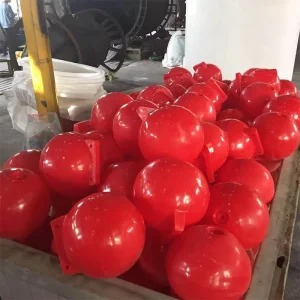
Best PE Float Ball – Durable Buoyancy Solution
View Product Specs
Custom Mooring Buoy for Marina Berths & Offshore
View Product Specs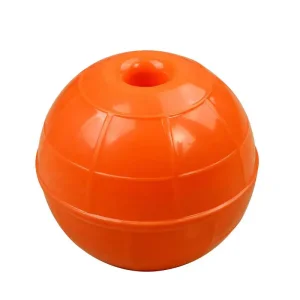
ODM Heavy-Duty ABS Float Ball for Water Engineering
View Product Specs
Best Precision Marine Buoys for Navigation
View Product Specs
High-Quality Pipe Floats for Pipeline Support
View Product Specs
High-Quality Versatile Floating Boat Pontoon
View Product Specs
Water Boat Pontoon Floating – Modular Platforms
View Product Specs
ODM Deepwater Pipeline Support Floats – Subsea
View Product SpecsEngineering Q&A: Technical Specifications & Procurement
Clear answers to complex technical questions asked by marine consultants, dredging contractors, and tender committees.
How is pipeline buoyancy calculated for heavy dredged slurry?
Total required buoyancy must account for three combined masses: pipe tare weight (Wpipe), conveyed medium weight calculated using slurry density rather than clear water (Wslurry = Volume × ρslurry, typically 1.30 to 1.65 kg/dm³), and auxiliary equipment such as flanges, bolts, and rubber hoses (Wacc). Total float buoyancy must exceed this combined weight by a minimum safety factor of 1.25 to 1.30 to maintain roughly one quarter (25%) of the pipe outer diameter above the waterline, preventing the line from becoming submerged during heavy tidal oscillations.
Why is rotomolded polyethylene preferred over welded steel pontoons?
Polyethylene (PE) exhibits high chemical inertness, zero electrolytic corrosion in saline environments, and complete resistance to UV degradation through UV8 stabilization additives. Unlike welded steel buoyancy tanks, which can suffer rust perforations, weld cracking, and sudden waterlogging, PE float bodies are seamless and rotationally molded. Furthermore, they are filled with high-density polyurethane closed-cell foam (>35 kg/m³) so that even if the outer shell is punctured by a vessel strike, water absorption remains under 1%, preventing catastrophic line sinking.
What is the standard warranty and expected operational lifespan?
Our standard commercial manufacturing warranty covers 18 months from bill of lading (B/L) handover date or 12 months from final project commissioning, whichever occurs first. Under nominal marine operating conditions (water temperatures -20°C to +45°C, exposure to natural sunlight), the design operating lifespan of our UV-stabilized rotational polyethylene shells exceeds 10 to 15 years, while HDPE pipeline conduits routinely achieve a service lifespan of 25 to 50 years.
Can pipe floats accommodate subsea cables, instrumentation, and lines?
Yes. We engineer customized float bodies with molded-in top or lateral cable troughs. These continuous recesses allow dredging power conductors, telemetry signal wiring, optical fibers, or hydraulic lines to be clamped securely along the pipeline axis. This setup protects auxiliary wiring from pinching between pipe flanges and avoids line entanglement without requiring separate secondary floating arrays.
What parameters are required to generate an exact quotation and drawing?
To provide an accurate technical proposal and pricelist estimate, our engineering team requires: (1) Pipe exact outside diameter (OD) and material wall thickness (SDR rating); (2) Medium composition and density (clear water vs. specific slurry density); (3) Working pressure (bar or MPa); (4) Total pipeline length and modular section lengths; (5) Marine site hydrodynamics (current speed, wave heights); and (6) Target destination seaport for optimized container nesting calculations.
How are pipeline products packaged to minimize sea freight costs?
Rotomolded pipe floats are manufactured as matched semi-cylindrical halves designed to nest together during shipping, significantly increasing container packing density in 40ft High Cube (HC) maritime containers. Galvanized fastener kits, high-tensile steel bolts, and rubber gaskets are packed into separate seaworthy wooden crates to prevent cargo shifts and port inspection delays.