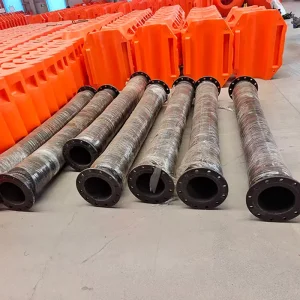
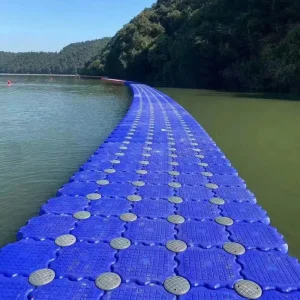
Flagship Cable-Integrated Buoyancy Modules
Engineered specifically to support discharge pipelines alongside critical power transmission cables, fiber telemetry cords, and offshore utility umbilical lines.
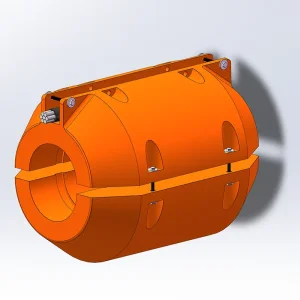

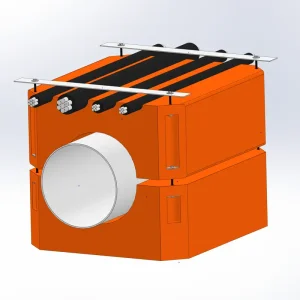
The Evolution of Dual-Utility Marine Flotation
As offshore dredging, deep-water mining, and marine infrastructure escalate in scale and complexity, the mechanical separation of buoyant pipelines and high-voltage power conduits has emerged as a severe operational vulnerability.
Electromechanical Integration
Traditional dredging operations operated hydraulic slurry pipelines and electrical umbilical leads in disparate channels. Pipe floats with integrated cable troughs mitigate hydrodynamic tangling, eliminating umbilical strain and cable shear under cross-current wave dynamics.
Stress-Relief Architecture
By recessing electrical lines, subsea fiber optics, and sensor wiring inside molded conduits across the top hemisphere of the float, tensile stresses generated by heavy tidal surges are absorbed by the rigid HDPE collar rather than vulnerable cable jackets.
Aerospace-Grade Polyurethane Core
Our rotomolded shells feature a dense inner core of water-resistant polyurethane closed-cell foam (>35 kg/m³). In catastrophic impact scenarios where outer shells are punctured, water uptake is strictly zero, preserving critical pipeline buoyancy.
Global Enterprise Demand & Tender Requirements
Tier-1 EPC contractors, dredging conglomerates, and maritime authorities across the Middle East, Southeast Asia, Europe, and the Americas enforce stringent buoyancy criteria.
TCO & Lifecycle CAPEX
Global procurement teams favor PE over welded steel pontoons. Zero marine paint recoating, non-corroding UV-stabilized virgin polymer matrices, and 15+ years design lifespan cut cumulative Total Cost of Ownership by up to 58%.
Rigid Engineering Specs
Tenders necessitate explicit hydrodynamic calculations accounting for medium specific gravity (often 1.3 to 1.8 t/m³ in iron ore and sand dredging) alongside exact slot dimensions for high-voltage power conduits and instrumentation harnesses.
Container Packing Density
With international ocean freight volatility, procurement managers look for modular semi-cylindrical nested architectures. Our modular split-half designs maximize 40HC container cube utilization, minimizing freight cost per displaced liter.
ISO & Material Compliance
Meeting ISO 9001 quality parameters, ASTM D1693 environmental stress-crack resistance (ESCR >1000h), and marine-grade UV-8 stabilizer certifications are non-negotiable thresholds for multinational port authority contractors.
China Factory 4.0: Supply Chain Resilience & Process Precision
Based in Binzhou, Shandong, Juhua Rubber & Plastic pioneers computer-controlled rotational molding automation, ensuring zero defect tolerances and unmatched export speed.
Closed-Loop Thermal Sensing
Our rotomolding infrastructure employs variable-frequency automated drive mechanisms coupled with infrared multi-point temperature sensors. This eliminates wall-thinning on critical conduit corners and stress joints, ensuring uniform wall thickness throughout the float body.
Integrated Upstream Supply
Situated in the heart of Shandong’s petrochemical manufacturing corridor, our facility secures high-density polyethylene polymer granules and specialized UV stabilizers directly, isolating international customers from raw material supply shocks.
Interchangeability Guarantee
Precision CNC-milled steel molding casts ensure millimetric accuracy. Replacement halves manufactured five years later will fit installed legacy pipelines seamlessly, drastically reducing operational downtime and site modification costs.
Engineering Buoyancy Calculation Formula
A crucial technical failure in maritime tenders is calculating buoyancy based exclusively on clean water pipeline profiles. Juhua engineers design using hydrodynamic safety thresholds adjusted for full slurry load and ancillary cables:
- Freeboard Target: Minimum 25% of pipe diameter maintained above sea level to counteract dynamic wave run-up and tidal suction forces.
- Slurry Density Factor: Always incorporate target density (ρslurry up to 1.6–1.8 kg/L) rather than standard freshwater baseline.
- Dynamic Acceleration: Factor crosswinds and open-sea wave accelerations into fastener shearing limits.
Worldwide Commercial & Localized Use Cases
From extreme desert desalination installations to offshore port land reclamation, Juhua buoyancy modules power harsh aquatic environments.
Electrified Dredging Fleet
Major European and Asian coastal projects are converting to zero-emission electric cutter suction dredgers (CSD). Our pipe floats carry the high-voltage 10kV power cables alongside discharge lines, enabling green maritime dredging without secondary cable barges.
Desalination Brine Outfalls
In the Arabian Gulf and Red Sea, coastal RO plants utilize HDPE discharge pipelines with integral sensor conduits. Juhua pipe floats isolate monitoring fiber optics from high-temperature, hyper-saline brine discharge currents.
Mining Tailings & Telemetry
In South American and Australian open-pit and salt lake mining facilities, floating tailings slurry lines operate alongside remote automated pump-control wires. Troughs prevent abrasive tailings splatter from degrading low-voltage control lines.
Floating Solar (FPV) Utilities
Large inland floating solar arrays require combined freshwater conduit transfers and heavy DC grid collection umbilicals. Our rotomolded units serve as anchor foundations and stable routing guides across fluctuating reservoirs.
Frequently Asked Technical & Commercial Questions
In-depth insights based on 20+ years of rotomolding manufacturing and field deployment.
Pipeline floats with cable troughs are specialized rotational-molded high-density polyethylene (HDPE) buoyancy modules consisting of two matching semi-cylindrical halves. Unlike standard dredge floats, their external geometry features one or more longitudinally recessed channels (cable troughs). These channels accommodate, support, and shield electrical power transmission cables, subsea data umbilicals, or control instrumentation leads directly atop the floating pipeline, preventing cable snagging, abrasive wear, and cross-current entanglement.
In floating pipelines subjected to wave bending moments and swell dynamics, free-hanging power umbilicals experience cyclic tensile peaks and bending fatigue. By confining the cable within a rigid, recessed channel fitted with neoprene retaining clamps, the pipeline itself acts as the primary load-bearing spine. This keeps the cable's bend radius strictly within manufacturer tolerances and isolates the internal conductors from dynamic oceanic stresses.
Juhua uses high-grade, high-density polyurethane closed-cell foam with a density rating exceeding 35 kg/m³. Because the cellular structure is closed and non-interconnected, even if the exterior polyethylene hull suffers catastrophic puncture or propeller lacerations, the foam core absorbs less than 1% moisture by weight. The buoyancy module retains its rated buoyancy and keeps the pipeline afloat indefinitely.
Buoyancy calculations must never assume clean water. Total system weight is calculated as the dry weight of the steel or HDPE pipe, plus the fully filled internal volume multiplied by the maximum slurry specific gravity (which can reach 1.6 to 1.8 t/m³ in iron or tailings operations), plus the weight of all flanges, bolts, and cable harnesses. Juhua's rule of thumb prescribes engineering a net float displacement equal to at least 125%–130% of this aggregate working weight, guaranteeing a steady freeboard with roughly one quarter of the pipeline exposed above the water surface.
Yes. Our in-house mold tooling shop can modify the trough geometry, depth, and radial width to match single thick power umbilicals (e.g., 3-core armored 15kV lines) or multiple parallel channels for fiber optic and telemetry conduits. Furthermore, stainless steel 316 / galvanized hold-down brackets with elastomer cushioning can be integrated directly into molded brass threaded inserts.
Standard export orders are dispatched within 15–25 business days from our Binzhou facility, with close proximity to Qingdao and Tianjin ports. Our standard warranty covers 18 months from delivery or 12 months from on-site commissioning, backed by comprehensive factory inspection certificates, material analysis sheets, and full export documentation.
Related Maritime & Industrial Fluid Equipment
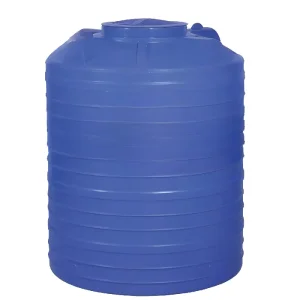
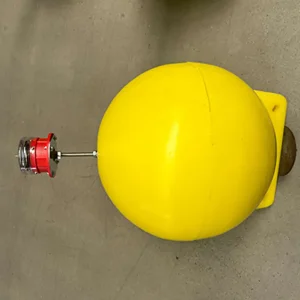
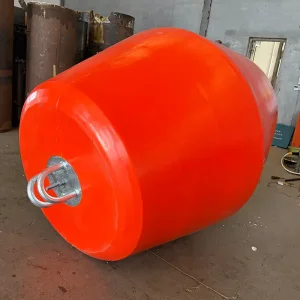
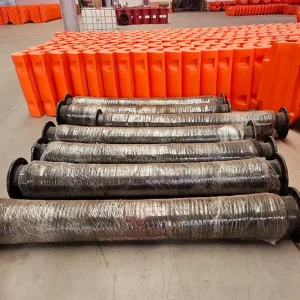
Explore our broader ecosystem of rotomolded storage tanks, navigation buoys, heavy slurry rubber hoses, and marine pontoon solutions.