
2026 Top Floating HDPE Pipe Types for Global Buyers

Time:2026-11-08 Author:Henry
0%

Floating HDPE is more than a buoyant plastic line. It is a working system exposed to current, wind, waves, abrasion, and repeated handling. For global buyers, the right pipe type depends on the job: dredging, water transfer, aquaculture, or temporary marine works. Wall thickness matters. So do diameter, float design, connection method, and the distance between supports.

This guide compares the leading floating HDPE pipe types expected to interest buyers in 2026. It explains where each configuration fits, what details deserve close inspection, and how operating conditions can change a purchasing decision. A pipe that performs well in sheltered water may behave differently in a tidal channel. Small details matter.

A practical design principle is to assess buoyancy, joints, and site conditions as one system. However, no source material or verifiable quotation from a named Floating HDPE specialist was provided, so attributing that sentence to an expert would risk inventing a statement. Buyers should also check manufacturer data, project references, and installation requirements before comparing prices. Some specifications look clear on paper but leave real questions unanswered. This overview aims to make those questions easier to spot.
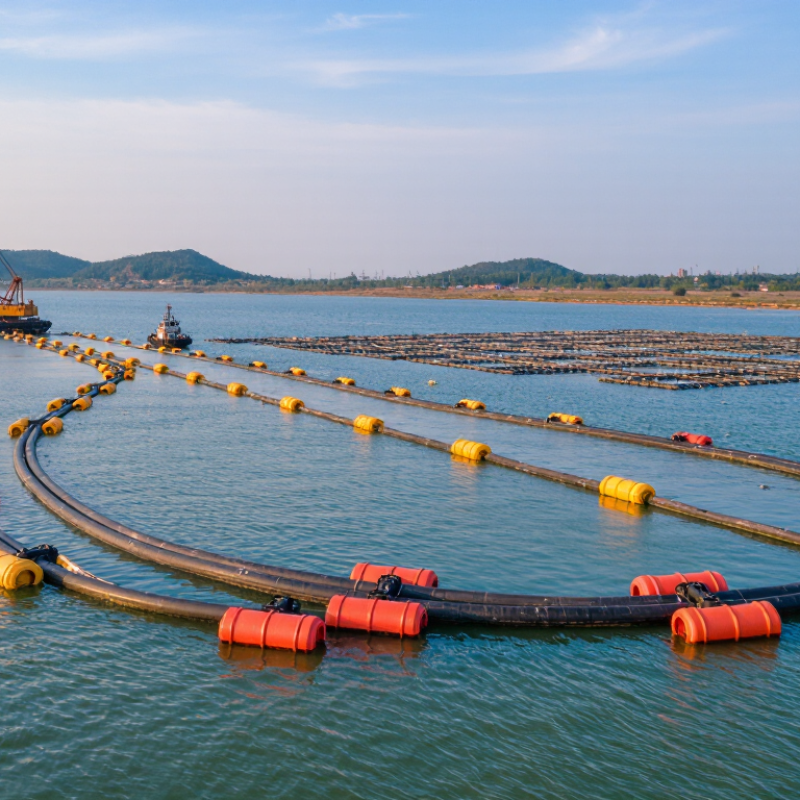
2026 Top Floating HDPE Pipe Types for Global Buyers

Floating HDPE Pipes: Structure, Materials, and Buoyancy Basics

A floating HDPE pipeline is usually built from continuous polyethylene pipe sections joined by butt fusion. The smooth joints reduce snag points and help maintain a consistent flow path. Wall thickness is selected for working pressure, handling loads, and installation conditions; a thicker wall is not automatically the best choice. It adds weight.

HDPE has a density slightly below fresh water, but that alone does not guarantee a loaded pipe will float. Water inside the pipe, fittings, sediment, and attached equipment all affect its net buoyancy. External float modules, often made with sealed buoyant cores and protective shells, provide the lift. Clamps should hold them firmly without crushing the pipe wall. A useful field check is to inspect spacing and attachment after towing, especially near bends and connections.

Buoyancy calculations compare the displaced water with the combined weight of pipe, contents, floats, and accessories. Seawater provides more lift than freshwater, so site conditions matter. Waves can also change loads quickly. It is easy to overestimate the safety margin. A neat calculation may miss uneven float spacing or water trapped in a damaged module. Allowing for changing fill levels and regular inspection makes the design more dependable, though actual performance still deserves checking on site.

2026 Top Floating HDPE Pipe Types for Global Buyers

Floating HDPE Pipes: Structure, Materials, and Buoyancy Basics

Illustrative calculation for empty, sealed SDR 17 pipes, using an HDPE density of 955 kg/m³ and freshwater density of 1,000 kg/m³. The theoretical buoyancy reserve is displaced freshwater mass minus pipe mass, per meter. Actual capacity depends on fittings, pipe contents, installation, and operating conditions; this calculation is not a product rating or design allowance.

Major Floating HDPE Pipe Types and Their Design Differences

Floating HDPE pipe designs differ mainly in how they create buoyancy and handle movement. The common option uses a standard pressure pipe with external, removable floats. These collars are easy to inspect and replace, but their clamps need regular checks in current and wave action. Another design uses a continuous buoyant jacket around the pipe. It spreads support more evenly and reduces exposed gaps, though repairs can be less straightforward.

Some systems use sealed, foam-filled sections attached at intervals. They can provide reserve buoyancy if a chamber is damaged, depending on the foam and enclosure design. The Plastic Pipe Institute’s Handbook of PE Pipe reports a polyethylene specific-gravity range of about 0.941–0.965. That is below freshwater’s approximate 1.0, but pipe weight, contents, fittings, and waves still affect flotation. The number alone is not a design.

For layouts, engineers commonly compare float spacing, pipe diameter, payload, and anchoring loads. ISO 4427 provides requirements for polyethylene water-supply pipes, including dimensions and pressure ratings; it does not select a floating arrangement. A practical choice should also account for access to joints and the ease of moving sections on site. Small details matter. Float spacing that looks neat on dry ground may behave differently under uneven loading, so field conditions deserve more attention than a tidy drawing suggests.

Applications Best Suited to Each Floating HDPE Pipe Type

Dredging projects often use solid-wall HDPE pipe supported by external floats. It carries slurry from a cutter or excavator toward a shore-based settling area. Choose float spacing for the pipe’s filled weight, not just its empty weight. A line crossing a sheltered pond needs different support from one exposed to boat wakes and wind. Small details matter.

For temporary water transfer, such as irrigation or construction-site supply, floating HDPE sections can bridge reservoirs and channels. Their smooth bore helps maintain flow, while detachable floats can simplify relocation. Check pressure ratings, couplings, and access for inspection before deployment. A practical concern is shoreline movement: repeated pulling may strain joints, even when the pipe itself remains intact.

Near-surface intake or aquaculture lines suit buoyancy-supported HDPE when water must move between a platform and a submerged point. Keep intakes clear of sediment and allow enough flexibility for water-level changes. Not every site. Waves, currents, temperature, and the conveyed fluid affect buoyancy and anchoring needs. A layout that looks tidy on paper may be awkward to service in muddy water, so field access deserves attention too.

How to Compare Pipe Sizes, Pressure Ratings, and Float Systems

Floating HDPE pipe selection starts with the job, not the catalog. Measure flow, route length, water depth, and expected movement before comparing nominal diameters. A larger bore can reduce friction loss, but it may add weight and make handling harder. Check the actual inside diameter, since wall thickness changes with pressure class and affects flow. Pressure ratings need context. Account for pump shutoff pressure, elevation changes, surge, and temperature. Ask the supplier for design limits and test records. For long discharge lines, a pressure calculation is more useful than a quick rule of thumb.

Float choice matters too. Floats should support the filled pipe, fittings, and attached loads, with suitable buoyancy for changing water conditions. Compare spacing, attachment methods, abrasion protection, and behavior around bends or waves. A line that looks stable on calm water may twist when current pushes against it. That detail is easy to miss. Inspect a sample assembly and confirm the float layout with the installer. I would allow some margin for changing water levels, though excess buoyancy can complicate towing and anchoring. No single pipe size or float pattern fits every route.

How Global Buyers Can Select and Verify Suppliers in 2026

2026 Top Floating HDPE Pipe Types for Global Buyers

Supplier selection starts with the project, not a catalogue. Check the pipe’s resin grade, outside diameter, wall thickness, pressure rating, and UV resistance against the water depth, current, and operating pressure. Ask for drawings showing float placement and connection details. The WHO/UNICEF Joint Monitoring Programme reported that 2.2 billion people lacked safely managed drinking water in 2022. That figure underlines why dependable pipeline procurement matters. It does not, by itself, tell you which supplier is qualified. Request traceable batch records, material test results, and a clear inspection plan. Verify certificates with the issuing body, and compare test samples with the delivered pipe. ISO 4427 provides requirements for polyethylene piping systems used for water supply; check which parts and editions apply to your project.

Tips: Ask for a live factory video or arrange an independent inspection. Look closely at pipe surfaces, weld beads, and float attachments. Have the supplier explain how damaged floats are replaced. A neat certificate folder helps, but it cannot replace physical checks. I would also keep one sample joint for review; it is a small step, and sometimes an awkward extra task, but it can reveal workmanship gaps before shipment. Keep the evaluation criteria in writing, including delivery milestones, packaging, and after-sales response times.

2026 Top Floating HDPE Pipe Types for Global Buyers - How Global Buyers Can Select and Verify Suppliers in 2026

Category Pipe Type or Check Key Characteristics Best-Fit Uses Buyer Selection and Verification Guidance
Floating HDPE Pipe Types
Pressure pipe Solid-wall PE100 HDPE pipe Pressure-rated thermoplastic pipe commonly supplied in metric sizes and specified by outside diameter and SDR. SDR is the ratio of nominal outside diameter to nominal wall thickness; a lower SDR means a thicker wall. Water transfer, irrigation, mining water lines, and other applications where the pipeline is supported by floats or a separate floating structure. Match the pipe material, diameter, SDR, design pressure, fluid, temperature, and installation conditions to the project specification. Confirm that the stated pressure rating applies at the intended service temperature.
Floating pipeline assembly HDPE pipe with external floats Uses discrete floats or buoyancy modules attached around the pipe. The pipe carries the fluid; the floats provide support and freeboard. Float spacing and restraint details affect stability and bending. Floating discharge or transfer lines, dredging works, reservoirs, and temporary water projects. Request a buoyancy calculation based on the filled pipe, pipe mass, float mass, fittings, expected loads, and required freeboard. Check float material, attachment method, spacing, and resistance to the project environment.
Dredging line HDPE dredging pipe with floats and wear-resistant connections Typically designed as a system rather than as pipe alone. Abrasion, impact, cyclic movement, joint loads, and changes in slurry density can affect service life and buoyancy requirements. Dredging discharge, sediment transport, and related marine or inland-water operations. Provide the supplier with slurry properties, solids content, operating pressure, route layout, and movement conditions. Verify joint design, wear allowances, float capacity, and documented suitability for the specified duty.
Modular system HDPE pipe with modular buoyancy collars or blocks Separate buoyancy elements can make inspection, replacement, or adjustment easier. The system must prevent shifting and account for uneven loads and wave or current effects. Projects requiring adjustable buoyancy, maintenance access, or a modular pipeline layout. Check float retention, spacing tolerances, UV and water exposure suitability, replacement availability, and compatibility with the pipe’s outside diameter.
Reelable or temporary line Flexible-layout HDPE pipeline with floating supports HDPE can accommodate gradual deflection, but allowable bend radius and handling limits depend on pipe dimensions, SDR, temperature, and the manufacturer’s guidance. Temporary water transfer and projects requiring frequent deployment or relocation. Confirm minimum bend radius, coiling and handling procedure, joint method, and whether the proposed floats and connections can withstand repeated deployment.
Supplier Selection and Verification in 2026
Standards and scope Applicable product standard ISO 4427 covers polyethylene piping systems for water supply and for drainage and sewerage under pressure. Other standards may apply depending on the fluid, market, and project requirements. All pressure-pipe procurement. Ask the supplier to identify the exact standard, edition, product scope, and any project-specific requirements. Do not treat a general standards reference as proof that every product configuration is compliant.
Material traceability Resin grade and production records Pipe performance depends on the specified PE compound, manufacturing controls, dimensions, and service conditions. Long-term or safety-critical installations. Request resin documentation, batch or lot traceability, pipe markings, and material test reports. Check that the paperwork identifies the delivered product and production batch.
Dimensions and pressure Outside diameter, wall thickness, SDR, and pressure rating Pressure capacity is related to material classification, wall thickness, diameter, temperature, and design conditions. A nominal rating should not be assumed to apply to every operating condition. Pressure lines and replacement-pipe orders. Compare measured dimensions and markings with the purchase specification. Confirm the pressure design basis, allowable operating pressure, temperature derating, and any surge conditions in writing.
Testing evidence Test reports and inspection records Relevant checks may include dimensional inspection, hydrostatic pressure testing, and material or fusion-joint tests, as required by the specification. First orders, large projects, and regulated procurement. Review dated reports with test methods, sample identification, results, and laboratory details. Where required, arrange independent inspection or testing against an agreed sampling plan.
Fusion and joints Butt fusion, electrofusion, or mechanical connections Joint suitability depends on pipe dimensions, material compatibility, equipment, operator qualification, and site conditions. Field-assembled pipelines and systems with multiple sections or fittings. Confirm the proposed joining method, compatible fittings, written fusion procedures, equipment requirements, and operator qualification records. Specify inspection and documentation for completed joints.
Buoyancy design System-level flotation calculation Buoyancy must account for the displaced water and the total submerged system load. An empty HDPE pipe may float, but a filled pipe can require external floats to remain afloat. Any pipeline intended to operate on or near the water surface. Request calculations for empty, filled, and relevant operating cases. Include pipe, contents, floats, fittings, valves, supported equipment, and project loads; verify the specified freeboard and stability assumptions.
Factory capability Production controls and quality-management evidence A quality-management certificate describes a management system; it is not, by itself, proof that a particular pipe complies with a product standard. Supplier qualification and repeat purchasing. Check certificate validity and scope, production and inspection procedures, calibration records, nonconformance handling, and whether the facility can manufacture the specified diameter and SDR.
Commercial and delivery risk Specification, packaging, and shipment documentation Clear documentation helps prevent mismatches between the approved product, manufactured pipe, and shipped goods. International procurement and project-based supply. Use an approved technical datasheet and purchase specification. Confirm marking, quantity, packaging, inspection rights, delivery terms, required certificates, and a process for handling discrepancies before shipment.

Note: Final pipe, float, and joint selection should be based on the project design conditions and applicable local requirements. Standards, pressure ratings, and supplier documents should be checked against the exact product and intended service.

FAQS

What are the common floating HDPE pipe designs?

Common options include pipes with removable float collars, continuous buoyant jackets, and sealed foam-filled sections. Each handles support and repair differently.

What makes removable floats useful?

Collars are easy to inspect and replace. Check their clamps regularly, especially where currents or waves move the pipe. Small parts loosen.

How does a continuous buoyant jacket differ?

It spreads support along more of the pipe and leaves fewer exposed gaps. Repairs may be less straightforward if the jacket is damaged.

Do foam-filled sections guarantee flotation after damage?

No. They may provide reserve buoyancy, depending on the foam and enclosure. The details matter.

Is polyethylene’s density enough to predict whether a pipe will float?

No. Its specific gravity is roughly 0.941–0.965, below freshwater’s approximate 1.0. Pipe weight, contents, fittings, waves, and payload also affect flotation. The number is not a design.

What should engineers compare when planning a floating layout?

Compare pipe diameter, float spacing, payload, and anchoring loads. Also check joint access and how crews will move sections on site. Dry-ground spacing can mislead.

What supplier information should buyers request?

Request resin grade, diameter, wall thickness, pressure rating, UV resistance, drawings, batch records, test results, and an inspection plan. Keep the criteria in writing.

How can buyers check delivered pipe quality?

Verify certificates with the issuing body, compare samples with delivered pipe, and inspect surfaces, weld beads, and float attachments. A factory video helps, but physical inspection is stronger. Keep a sample joint for review; it is an awkward extra, yet useful.

Conclusion

This guide introduces Floating Hdpe pipes, explaining how the pipe body, material properties, and buoyancy systems work together to support safe, stable movement of water and other suitable fluids. It compares major pipe types by design, including differences in float arrangement, connection methods, flexibility, and intended operating conditions, then relates these features to applications such as water transfer, dredging support, and temporary or fixed installations.

For practical selection, the article outlines how buyers can compare pipe diameter, wall thickness, pressure ratings, and float capacity in relation to project needs. It also highlights key supplier checks for 2026, including reviewing technical data, confirming manufacturing quality controls, assessing testing and documentation, and evaluating communication and delivery capabilities. These considerations help global buyers make informed comparisons and select a pipe system suited to the operating environment and project requirements.

Henry

Henry

Henry is a dedicated marketing professional with a profound expertise in the company's offerings. With years of experience in the industry, he possesses an impressive understanding of the market dynamics and consumer behaviors that drive success. Henry is committed to sharing his insights through......