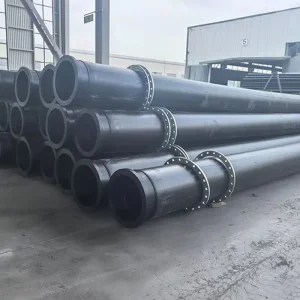
Featured Offshore & Inshore Marine Buoyancy Modules
Heavy-duty rotomolded virgin polyethylene shells filled with impermeable closed-cell polyurethane foam, purpose-sized for standard Australian pipeline diameters and severe maritime conditions.
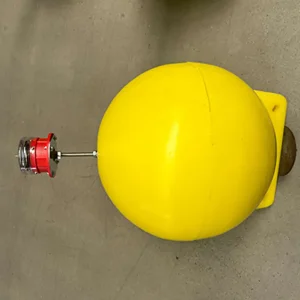
ODM Floating Ball with LED Light – Marine Navigation & Safety
View Technical Specs
Custom Mooring Buoy for Marina Berths & Offshore Anchorage
View Technical Specs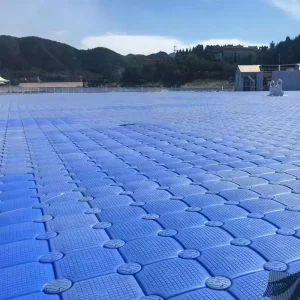
High-Performance Floating Boat Pontoon for Modular Water Platforms
View Technical Specs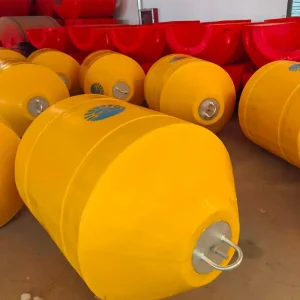
ODM Heavy Mooring Buoy for Commercial Vessel Infrastructure
View Technical Specs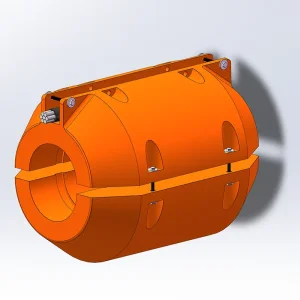
ODM Floating Pipe Floats with Integrated Dual Cable Channels
View Technical Specs
ODM Deepwater Pipeline Support Floats & Subsea Systems
View Technical Specs
ODM Mooring Buoy for River Terminals & Workboat Berths
View Technical Specs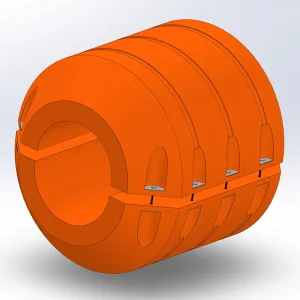
ODM High-Buoyancy Slurry Floats for Heavy Dredge Pipelines
View Technical SpecsCommercial Flotation Dynamics Across the Australasian Marine & Mining Sectors
Navigating cyclonic storm surges, extreme solar radiation indexes, and high-specific-gravity mineral tailings requires custom-engineered pipeline buoyancy modules built beyond conventional catalog standards.
Pilbara & Port Infrastructure Expansion
Australia's northwest continental shelf, home to Port Hedland, Dampier, and Cape Lambert, maintains the world's highest bulk-export throughput. Dredging channels in these macro-tidal regimes (exceeding 7-meter tidal ranges) demands pipeline floats capable of withstanding severe cyclic hydrodynamic fatigue, intense scouring, and continuous slurry discharge from trailing suction hopper dredgers (TSHD).
High-Density Tailings Pond Dewatering
Inland mining corridors across the Bowen Basin (Queensland) and the Goldfields-Esperance region (Western Australia) operate extensive tailings storage facilities (TSFs). Floating decant lines and high-density sludge transfer lines carry heavy mineral tailings (specific gravity $SG \ge 1.45-1.75$). Standard marine floats submerge under these heavy densities, necessitating custom-molded, high-volume displacement modules.
Extreme Oceanic UV & Thermal Cycling
The Australian continent exhibits peak UV index ratings consistently exceeding 12 to 14 during summer months. Conventional rotational molding polymers experience rapid photo-oxidation, thermal embrittlement, and environmental stress cracking (ESC). Our custom Australian export pipeline floats incorporate Ciba-Geigy Hindered Amine Light Stabilizers (HALS-class UV20+) compounding to guarantee structural integrity for 10-15 operational years.
Overcoming Hydrodynamic Drag, Tidal Variations, and Slurry Surges
Deploying floating pipelines in open oceanic and coastal waterways presents complex physical challenges governed by Archimedes' principle, fluid dynamic boundary layers, and wave spectra.
Wave-Induced Snaking Fatigue
Long oceanic discharge lines experience multi-directional flexural moments. Our clamp-on half-shell geometries incorporate internal anti-slip circumferential ribs that grip HDPE pipe securely, preventing axial migration during lateral surge currents and breaking waves.
Subsurface Scour & Intertidal Grounding
In regions like Darwin Harbor and Broome, pipelines regularly ground on mudflats at low tide. Our float outer shells are engineered with uniform wall thickness (8mm to 18mm) through variable-frequency rotational control, preventing puncture from coral beds or abrasive gravel.
Subsea Slurry Hammer Absorption
When dredge pumps cycle or experience plug clearing, severe hydraulic pressure surges transmit through the pipeline. The high-density closed-cell polyurethane foam interior absorbs shock loads, preventing fracture propagation across outer shell split-lines.
Corrosion-Proof Fastener Assemblies
Fastener failures in hyper-saline Australian waters can cause catastrophic string sinking. We supply all flotation modules with Grade 316 Marine Stainless Steel or Heavy Hot-Dip Galvanized (HDG Class A) hardware fitted with nyloc anti-vibration locking nuts.
Buoyancy Sizing Formula & Pipeline Ballast Safety Calculations
A fundamental point emphasized by our Chief Marine Engineering team: calculating buoyancy requirements based on an empty pipe is a hazardous miscalculation. Sizing must balance full operating slurry mass and severe wave drag.
Archimedean Flotation Design Requirement:
To maintain stable pipeline alignment with 25% to 30% freeboard exposed above the water surface under peak load:
- W_pipe: Dry structural weight of the PE100 / HDPE SDR11/17 pipeline or steel dredge casing (kg/m).
- V_internal: Internal pipeline cross-sectional displacement volume per linear meter ($\pi \times r_{int}^2$).
- $\rho$_slurry: Specific gravity of pumped mixture (e.g., pure seawater = 1.025 t/m³; fine silt slurry = 1.30 t/m³; coarse iron ore or quartz tailings = 1.60 to 1.85 t/m³).
- W_fittings: Cumulative mass of steel stub flanges, backup backing rings, rubber joint sleeves, and bolt sets.
- K_safety (Safety Factor): Recommended at 1.25 to 1.35 in calm harbors and tailing basins; elevated to 1.40 to 1.50 for open Australian oceanic dredging (e.g., Bass Strait or North West Shelf cyclonic seasons).
Slurry Flow Dynamics
Slurry density fluctuations occur rapidly when dredging cutters strike high-density sand pockets. If buoyancy reserves are below 25%, the pipeline sinks below the surface, exposing the assembly to underwater cross-currents and anchoring the line against bottom topography.
Center of Gravity Optimization
Our pipe floats are molded with asymmetric lower displacement ballast mass. This low center-of-gravity design counters the torsional roll induced when heavy slurry settles along the pipe bottom during dredge pump shutdowns.
Custom Cable Channels
Modern cutter suction dredgers (CSD) require substantial electrical and signal telemetry power cables routed parallel to discharge lines. Our integrated cable troughs house submarine power feeds securely away from surface pinching zones.
Australian Marine, Civil & Mining Flotation Use-Cases
From Gladstone LNG approach channels to inland copper pit dewatering, our rotomolded floats are engineered for Australia’s varied aquatic and industrial landscapes.
1. Western Australian Iron Ore Harbors
Harbor deepening operations at Port Hedland and Cape Preston encounter fine red hematite dust and saltwater spray. Our smooth outer PE surfaces prevent crusting, while standardized mounting geometry allows rapid replacement during planned 48-hour marine maintenance windows.
2. Seawater Desalination Plants
Major desalination infrastructure in Sydney (Kurnell), Melbourne (Wonthaggi), and Perth requires floating silt curtains and high-salinity brine discharge pipelines. Our 100% virgin polymer construction is non-toxic, chemically inert, and leaches zero volatile organic compounds into marine reserves.
3. Gold Coast & Coastal Sand Bypass Systems
Erosion prevention and harbor mouth sand-bypassing projects in Queensland and New South Wales utilize floating discharge lines exposed to open Pacific Ocean swells. Juhua's dual-half modules ensure the pipeline remains buoyant through breaking waves and rip currents.
4. Tailings Basin Decant Systems (Kalgoorlie & Mount Isa)
Super-saline, acidic water pumped from mine voids quickly degrades metal pontoon structures. Rotomolded PE shells with chemical-resistant closed-cell polyurethane cores eliminate corrosion risks, performing across pH ranges from 1.5 to 13.5.
5. Floating Solar (FPV) & Agricultural Storage Reservoirs
Australia's inland Murray-Darling basin faces high reservoir evaporation rates. Our custom buoyancy elements integrate seamlessly into floating covers, modular platform pontoons, and floating aerator intake pipelines.
6. Cyclone Anchorage & Emergency Navigation
During Category 4/5 cyclone events along the tropical coast, floating lines must quickly disconnect and ride out storm moorings. Impact-cushioned outer edges prevent catastrophic fractures when adjacent pipeline sections collide.
Next-Generation Polymers, IoT Buoyancy & Decarbonization
Meeting modern environmental and engineering standards requires ongoing material innovations in rotomolding and structural pipeline buoyancy monitoring.
Telemetry & Acoustic Smart Floats
Our 2026-2028 development roadmap integrates embedded RFID and low-power LoRaWAN / Satellite-IoT sensors directly into float inspection wells. These modules provide real-time telemetry on freeboard submergence, internal core moisture ingress, structural strain, and GPS line deflection across remote mine voids.
Circular Polymers & Bio-Based Polyurethanes
To assist EPC mining contractors in meeting Australian Scope 3 decarbonization targets, Juhua is testing closed-loop circular rotomolding resins. This includes chemically recycled ocean-bound polyolefins and bio-polyol expanding foams, cutting embodied carbon emissions while preserving ASTM D1693 environmental stress crack resistance (ESCR).
Variable Cross-Section Hydrodynamic Profiling
Advanced computational fluid dynamics (CFD) studies have driven new tapered leading and trailing float profiles. These teardrop cross-sections reduce current drag coefficients by up to 22%, lowering the anchor tension and line mooring requirements across dynamic estuaries and tidal channels.
Manufacturing Precision & International Standards Compliance
Every pipe float leaves our facility backed by certified ultrasonic wall thickness verification, closed-cell density testing, and factory interchangeability checks.
ISO 9001:2015 Precision Molds
Computer-controlled, CNC-machined steel tooling ensures dimensional consistency across paired shells. Batch-to-batch interchangeability guarantees that replacement units fit pipelines in service without field rework.
Hydrostatic Pressure Core Validation
Polyurethane core foam is sampled across production runs to verify closed-cell density ($\ge 35\text{--}45\text{ kg/m}^3$) and water absorption rates below 0.05%, preventing waterlogging even under puncture damage.
Ultrasonic Thickness Mapping
Each molded shell undergoes automated ultrasonic wall gauge inspection. We maintain strict control over corners and parting seams, which bear the highest mechanical stress during lifting and towing.
Export Container Stacking Optimization
Floats are designed with interlocking geometries to maximize nesting efficiency in standard 40-foot High Cube (40HC) ocean shipping containers, significantly reducing per-unit freight costs to Australia.
Frequently Asked Questions: Sizing, Materials, and Sourcing
Clear, definitive technical answers to assist dredging superintendents, EPC estimators, and marine operations engineers throughout the procurement process.
What is the standard design life of PE pipe floats in Australia?
Under typical Australian UV exposures (UV index 10-14), our UV20+ stabilized virgin polyethylene floats carry a design life of 10 to 15 years. Unlike steel pontoon floats, they will not rust, pinhole, or require anti-fouling coatings.
How are pipeline floats sized for heavy iron ore slurry discharge?
Sizing considers the total weight of the pipe, accessories, and the highest expected slurry specific gravity ($SG \approx 1.6\text{--}1.8\text{ t/m}^3$). Total displacement buoyancy must provide a safety factor of 1.30 to 1.40 to maintain approximately one-quarter of the pipe diameter above the water line.
What happens if the outer polyethylene float shell is punctured?
Because the interior is fully packed with high-density, closed-cell polyurethane foam with water absorption under 0.05%, water cannot enter the core. The unit maintains over 98% of its original buoyancy even if gouged by rocks or support equipment.
What hardware and fasteners are recommended for open-ocean Australian service?
We supply Grade 316 (A4) Marine Stainless Steel fasteners or Heavy Hot-Dip Galvanized Class A assemblies fitted with anti-vibration locking nyloc nuts to withstand cyclical shock from waves and pump pulsations.
Can floats be custom-molded to house electrical dredging power cables?
Yes. We regularly produce dual-purpose floats featuring integrated upper or side channels that carry high-voltage trailing power feeds and optical fiber communication conduits safely away from pinch points.
What is the standard warranty coverage on custom flotation orders?
The warranty begins upon equipment handover to the project investor and extends 18 months from delivery or 12 months from final project commissioning, whichever occurs first, covering structural shell integrity and foam bonding.
Engineered Marine Buoys, Dredging Pipelines & Flexible Systems
Explore our expanded fleet of heavy-duty navigation aids, mooring buoys, flexible dredge discharge hoses, and floating barriers engineered for long service life.
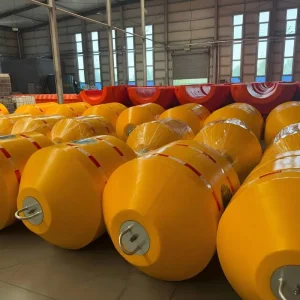
OEM Offshore Mooring Buoy for Deepwater Anchorage
View Technical Specs
Custom Reliable Marine Buoys for Harbor Waterways
View Technical Specs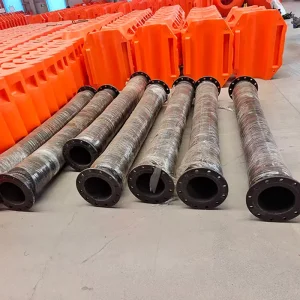
Custom Flexible Rubber Hoses for High-Abrasive Slurry Lines
View Technical Specs
ODM Heavy-Duty Navigation Buoys for Offshore Fairways
View Technical Specs
High-Performance Marker Buoys for Demarcation
View Technical Specs
Reliable Floating Barrier Solutions & Silt Curtains
View Technical Specs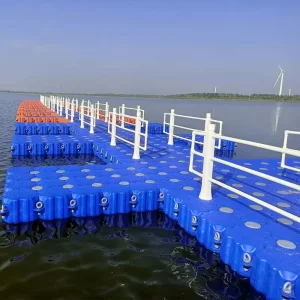
Premium Floating Boat Pontoon for Stable Water Platforms
View Technical Specs