
High-Performance Flotation Hardware: Phase I Catalog
Direct manufacturer supply for offshore energy, mooring assemblies, and cable conduit buoyancy protection.

Macro-Industry Solutions: The Subsea Electrification Surge
How the global pivot to offshore wind, deep-sea mining, and subsea intercontinental interconnects drives modern cable float architecture.
Offshore Wind Subsea Arrays
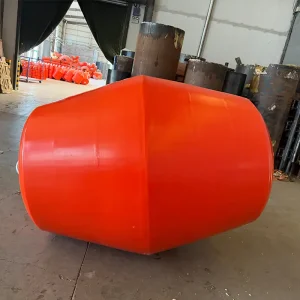
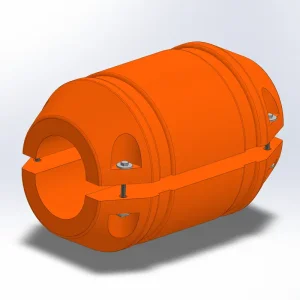
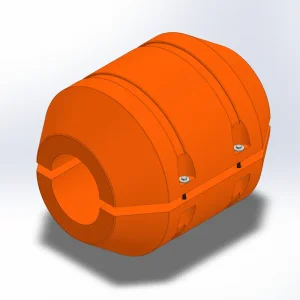
Modern offshore wind turbines generate immense multi-megawatt outputs requiring flexible array cables and dynamic export risers. Unmitigated wave motion produces catastrophic mechanical bend fatigue. Our rotationally moulded cable floats and specialized cable-trough buoyancy elements clamp onto subsea power lines, sustaining lazy-wave and steep-wave profiles to absorb ocean hydrodynamics.
Dredging & Heavy Slurry Conduit
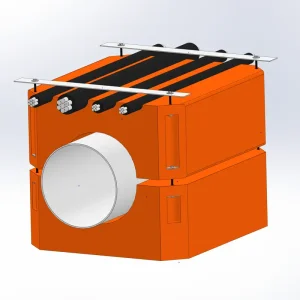
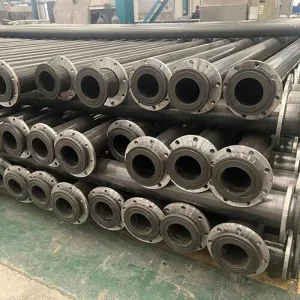
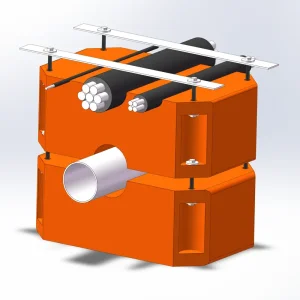
Heavy hydraulic dredging requires uninterrupted slurry evacuation while simultaneously supplying continuous multi-phase industrial power and digital control cables to offshore dredge heads. Integrated cable-trough floats combine high-buoyancy discharge pipe stabilization with dedicated, isolated conduits, keeping live electrical cables above corrosive wave breaks.
Subsea Telecommunication & Sensors
Global cross-strait and intercontinental data routes cross violent seabed topographies. Cable floats mitigate abrasive contact over jagged coral reefs and active geological faults. By maintaining calculated neutral or positive buoyancy zones, installers protect fiber cables from localized micro-bending loss and high-velocity bottom current stresses.
Cable Floats Factory Pricelist Dynamics & Cost Drivers
Direct manufacturer economics: How engineering specifications, material grades, and production volumes dictate project expenditures.
| Float Class / Inner Diameter | Core Density (PU) | Standard Net Buoyancy | Est. Factory Price Range (USD) |
|---|---|---|---|
| CF-100 (50mm – 90mm Cable) | 35-40 kg/m³ Hydrophobic | 60 – 120 kg | $85.00 – $145.00 / pair |
| CF-250 (100mm – 160mm Cable) | 45-50 kg/m³ Closed-Cell | 180 – 320 kg | $190.00 – $285.00 / pair |
| CF-500 (200mm – 320mm Array) | 50-60 kg/m³ High-Yield | 450 – 850 kg | $420.00 – $680.00 / pair |
| CT-PipeFloat (Integrated Trough) | 50 kg/m³ Structural PU | 600 – 1800 kg | $550.00 – $1,250.00 / unit |
| Custom Deepwater Subsea Shell | Syntactic Foam Option | Project Engineered | Quotation by Drawing |
Hydrodynamic Reserve Buoyancy Formula
To ensure zero localized droop under peak dynamic hydraulic drag, marine engineers calculate net required buoyancy margin as follows:
Where: F_safety ≥ 1.25 (Nearshore), ≥ 1.40 (Offshore Array)
*Slurry pipeline floats carrying auxiliary cable bundles must factor internal slurry density (up to 1.6 t/m³) rather than clean seawater.
Localized Support, Engineering Standards & Quality Assurance
Certified rotomolding methodology meeting international marine structural guidelines.
ASTM D1693 & ISO 9001 Testing
Every float shell is molded from virgin high-density polyethylene (HDPE / LLDPE) enriched with UV stabilizers (Class 8 UV resistance). Materials undergo Environmental Stress-Crack Resistance (ESCR) validation conforming to ASTM D1693 standards, proving endurance under prolonged saltwater exposure and intense solar UV degradation.
Marine Hardware & Fasteners
Corrosion-free clamping systems are integral to reliable float performance. We supply marine-grade 316 Stainless Steel, Super Duplex, or Dacromet-coated hot-dip galvanized fasteners, accompanied by high-friction rubber/EPDM internal liners that prevent cable sheathing abrasion and slippage along dynamic sea currents.
Full In-House Foam Core Fusion
Our computerized high-pressure polyurethane foaming lines inject solid, expanded closed-cell polyurethane (PU) directly into the rotomolded cavity. Even in the unexpected event of a high-impact puncture from maritime service vessels, the closed-cell matrix retains complete buoyancy with negligible water ingress.
Real-World Deployment Paradigms
Engineering adaptations across diverse global marine and offshore environments.
North Sea Offshore Wind Turbines
High-energy tidal zones require dynamic subsea cable floats installed on 66kV inter-array power cables. Utilizing our high-density, multi-segment modular clamp floats configured in a lazy-wave profile, subsea operators isolate high cyclic bending loads away from bottom touch-down points, preventing cable buckling.
Middle East Port Reclamation
Operating in high-salinity Arabian Gulf waters with ambient temperatures reaching 50°C, custom pipe floats with integrated overhead cable troughs allow massive cutter suction dredgers to transport millions of tons of marine sand while keeping umbilical control cables cooled and protected from slurry heat and marine debris.
Andean Tailings & Mining Ponds
High-altitude, chemically aggressive mineral processing ponds require chemical-resistant floating support for slurry extraction conduits and submersed high-voltage pump cables. Our HDPE shells resist aggressive acidic liquors, operating without mechanical failure or chemical breakdown.
High-Performance Flotation Hardware: Phase II Catalog
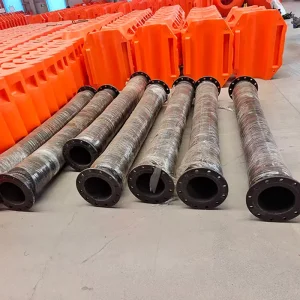
Robust dredging pipelines, specialty modular subsea floats, and heavy-duty water barrier solutions.


Engineering Roadmap: Next-Gen Intelligent Flotation
Pioneering sensor integration, ultra-lightweight polymers, and sustainable ocean lifecycle development.
IoT-Enabled Smart Floats
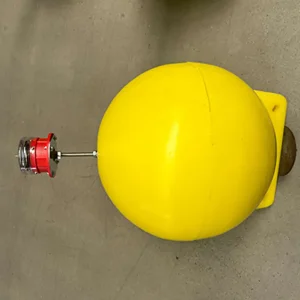
Embedding autonomous subsea strain gauges, hydro-acoustic transponders, and micro-accelerometers inside the buoyancy matrix. Our smart floats communicate real-time cable bend radii, localized temperature anomalies, and mooring fatigue back to offshore control rooms via satellite/mesh telemetry.
Bio-Circular Polymer Chemistry
In response to international zero-carbon marine directives, our R&D laboratories are deploying up to 40% chemically recycled and bio-derived polyethylene matrices without compromising the tensile modulus, flexural strength, or 25-year design lifespan of subsea units.
Syntactic Foam for Extreme Depths
Expanding from coastal shelf zones into deep-sea projects exceeding 1,500 meters. Combining micro-hollow glass spheres with structural resins to deliver ultra-high compressive resistance floats that resist hydrostatic crushing under extreme abyssal pressures.
Frequently Asked Questions: Cable Floats & Factory Engineering
Definitive engineering and procurement insights for project managers and EPC contractors.
What are pipeline and cable floats?
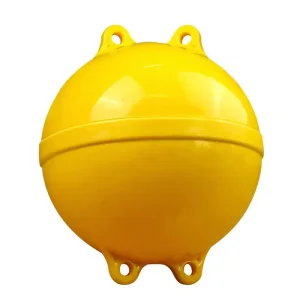
Pipeline and cable floats, commonly designated as dredge buoyancy modules or dynamic subsea umbilical floats, are clamp-on polyethylene bodies engineered to encase subsea cables, discharge lines, or umbilical conduits. They maintain designated buoyancy, prevent excess tension, keep conduits afloat when required, and protect lines from hydrodynamic drag and seabed abrasion.
How is buoyancy calculated for heavy dynamic slurry or cable runs?
Total buoyancy must exceed total dry system weight plus dynamic hydrodynamic drag. Calculate the cumulative deadweight of the conduit, internal slurry or copper cores, and external fittings. Apply a 20% to 30% positive reserve buoyancy factor for standard floating pipelines, or calculate specific submerged wave geometry for subsea dynamic lazy-wave configurations.
Why is rotomolded polyethylene superior to steel flotation?
Unlike steel pontoon systems, rotationally molded polyethylene floats are completely immune to saltwater electrolytic corrosion, never rust, and eliminate the need for costly recoating. Their elastic yield capability absorbs high impacts from tender boats or floating debris without cracking, and internal closed-cell PU foam ensures units stay buoyant even if punctured.
What is the standard manufacturing warranty period?
Standard warranty protection begins upon project handover to the end client and extends for 18 months, or 12 months after completed on-site commissioning, whichever transpires first. Full replacement warranties protect against environmental cracking, delamination, and premature UV failure.
What parameters are required for an accurate factory quotation?
To produce an exact engineering drawing and pricelist quotation, provide your cable or pipe outer diameter (OD), total dry weight per meter, density of conveyed internal fluid (if applicable), ambient installation temperature range, water depth, expected sea state currents, and target delivery port.
Can internal diameters and cable-troughs be custom engineered?
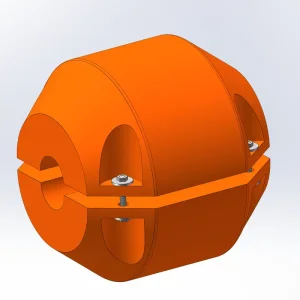
Yes. In addition to our inventory of over 100 standardized molds, our in-house tooling facility produces custom CNC molds configured for specific umbilical lines, multiple parallel cable channels, integrated fiber-optic conduits, and specialized quick-release marine latch systems.