
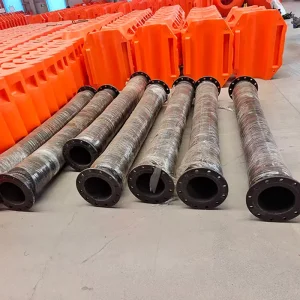
Custom Flexible Rubber Hoses for Advanced Fluid and Sediment Transport Products, Quotes
Access Technical Specs
Engineered rotomolded assemblies configured for intensive dredging cycles and offshore slurry conduit operations.
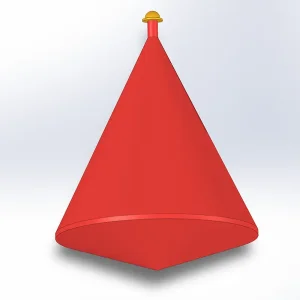

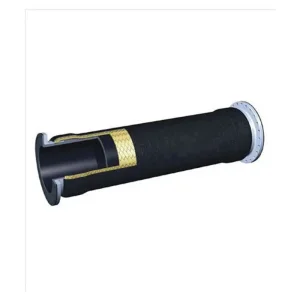
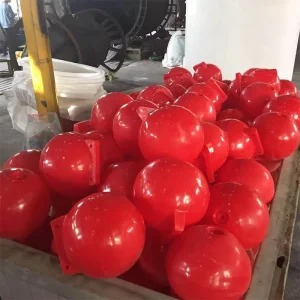
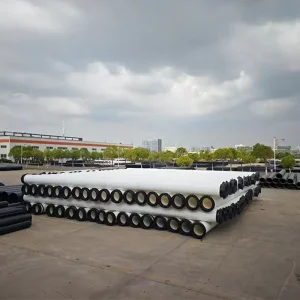
Strategic macro-analysis of marine pipeline deployment across land reclamation, deep-water port expansions, and environmental remediation.
Our rotomolding infrastructure utilizes electronic closed-loop thermal instrumentation and variable-frequency speed controls. This ensures isotropic wall thickness tolerances, removing weak stress lines and giving each dredge float shell structural resistance against wave slamming loads and hydraulic bending forces.
Fabricated from virgin UV-stabilized high-density polyethylene (HDPE) compounds, these modules do not succumb to marine microbial encrustation, chemical leach, or saltwater galvanic oxidation. Compared to traditional steel pontoon floats, operational lifespans increase by over 300% without recurring anti-corrosion recoating.
Molds are machined to standard outer diameter configurations (OD 110mm to 1200mm+). Shell halves integrate interlocking locating pins and reinforced bolt pockets to support quick offshore assembly, zero pipeline slipping, and uniform stress redistribution across HDPE and steel dredging discharge tubes.
Buoyancy calculations must accommodate slurry bulk density, dynamic wave currents, and the static weight of pipe collars.
A common mistake in dredging procurement is sizing floats for clear water transfer. When the cutter suction or trailing suction hopper dredger strikes consolidated heavy sediment, slurry specific gravity regularly reaches 1.3 to 1.6 t/m³. Calculating buoyancy reserve incorrectly causes line sagging, joint strain, and pipeline submergence.
Field installations configured for high-stress marine, civil water management, and mining environments.
Capital dredging requires non-stop sediment transit over multiple kilometers. Polyethylene dredging floats keep discharge pipes aligned against tidal cross-currents, preventing seabed dragging and allowing support boats to service dredging lines safely.
Mineral processing tailings present corrosive, low-pH, or abrasive dynamics. Our modular PE shells isolate the pipeline from corrosive elements, while upper integrated channels support auxiliary power, instrumentation, and control wiring directly alongside the slurry run.
Reservoirs and inland waterways present tight spatial constraints and fluctuating water levels. Lightweight, clamp-on PE floats support quick system reconfiguration, allowing operators to run flexible discharge pipelines over dams and around intake structures without heavy crane vessels.
How automation, IoT integration, and circular polymers are shaping the next generation of industrial flotation.
Next-generation dredging floats integrate low-power NB-IoT and LoRaWAN strain gauges. These modules track pipeline bending fatigue, joint stress, shell water ingress, and positional drift in real time, alerting control rooms to leaks or joint separation before major line failures happen.
Environmental standards in coastal zones are accelerating the shift toward low-carbon polymers. Production lines are adopting high-density polyethylene blends mixed with marine-recovered post-consumer resins, stabilized against microplastic shedding without lowering compressive toughness.
Using computational fluid dynamics (CFD), current float geometries are shifting from simple cylinders to streamlined, drag-reducing profiles. This profile minimizes drag from coastal currents, lowers dynamic loads on dredge anchoring winches, and reduces fuel burn for towing workboats.
A systematic framework covering inquiry intake through sea-trial commissioning for complex pipeline configurations.
Collection of project variables: Pipe Outer Diameter (OD), wall thickness, pipe empty weight, transported slurry specific gravity, maximum current velocity, working wave heights, and required freeboard elevation.
Engineers calculate total pipeline displacement, determining the required float shell volume, module pitch (spacing intervals), and bolt torque tolerances to prevent pipeline slippage during high-pressure cycles.
Cast aluminum or fabricated steel tooling produces balanced PE outer shells via biaxial rotation, followed by high-pressure PU core foaming. Shells are tested for uniform wall thickness, impact resistance, and water tightness.
Floats are nested or packaged to maximize container utilization for sea freight. We supply full assembly hardware, torque guidelines, and field support to ensure rapid pipeline hookup on site.
Integrated pipeline hardware, specialized pontoons, mooring nodes, and cable-supporting flotation equipment.

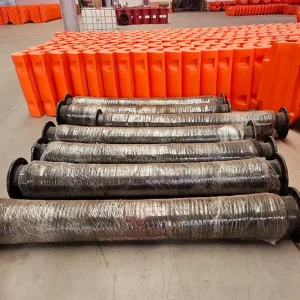


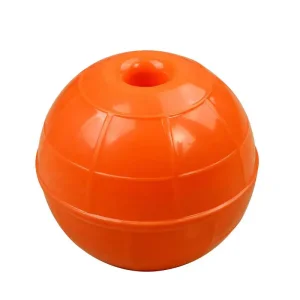
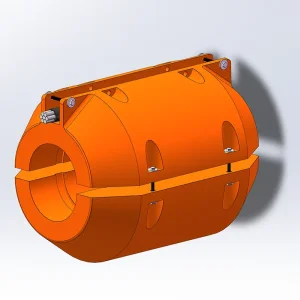
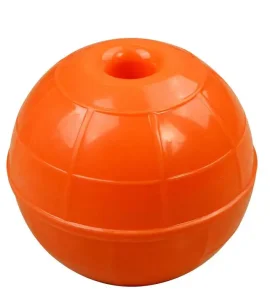
Essential guidance on buoyancy calculation, installation protocol, environmental survivability, and ODM factory fabrication.
Pipeline floats (dredge pipe floats or buoyancy jackets) are clamp-on modular units made of rotationally molded polyethylene shells, typically filled with high-density closed-cell polyurethane foam. Mounted in pairs around discharge pipes (HDPE, steel, or flexible rubber hoses), they provide upward buoyant force, keeping slurries, mine tailings, or water transport pipelines floating safely and visible above the waterline.
The total buoyancy provided by the pipeline floats must exceed the aggregate wet weight of the pipeline assembly. Sum the empty pipe weight, the weight of hardware and flanges, and the weight of the slurry inside it at maximum density. Total float buoyancy should provide 20% to 30% reserve buoyancy above this sum, keeping roughly 25% of the pipe diameter above the water surface to manage wind and wave actions.
Yes. Polyethylene (PE) compounds compounded with UV stabilizers and antioxidants perform reliably in marine applications. PE will not corrode in saltwater, resists marine borer attack, and flexes without cracking under dynamic wave slamming, avoiding the recurring rust, pitting, and maintenance issues of welded steel pontoons.
The standard warranty coverage begins once the buyer hands over the goods to the end-investor and extends for 18 months from that handover date, or 12 months following initial project installation, whichever milestone occurs first. Extended warranty support and site-commissioning guidance can also be arranged for major EPC contracts.
To produce an engineering sizing recommendation and formal commercial quote, please provide: exact pipe outer diameter (OD), pipe wall thickness and base material, density of the pumped slurry/medium, overall pipeline length, site environmental conditions (river current, wave height, coastal open water), desired freeboard, bolt hardware preferences, total order quantity, and your destination sea port.
Yes. As an ODM/OEM manufacturer, we fabricate float bodies to match any specified pipe diameter, including non-standard metrics. Outer shells can be customized with high-visibility safety colors (safety orange, marine yellow, hazard red), molded company branding, top-mounted cable troughs for power cables, and custom lifting lugs or attachment points.