20+
Years Rotational Molding Mastery
80+
Global Export Destinations
100%
Virgin Polyethylene Shells
<24h
Hydraulic Engineering Response
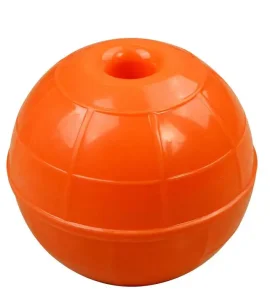
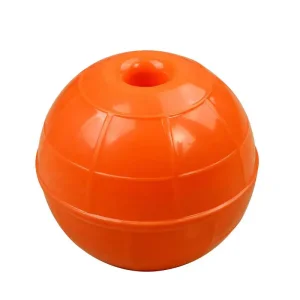
Primary Floating Ball Selections for Serbia Waterway Infrastructure
Targeted rotomolded buoyancy components engineered for high-velocity river transit, municipal reservoirs, and industrial processing channels.
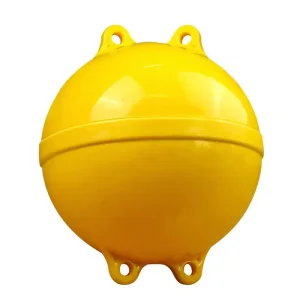
Serbia Commercial & Industrial Hydrological Landscape
Strategic analysis of inland water bodies, cross-border European transport corridors, and rigorous industrial tailings requirements across the Republic of Serbia.
Danube & Sava Navigational Arteries
Serbia represents a cornerstone of Pan-European Corridor VII (Danube). Commercial navigation, dredging campaigns around Pančevo, Novi Sad, and Belgrade require continuous surface marking, silt barrier suspension, and heavy-duty floating balls to secure sand and gravel discharge hoses against turbulent hydrodynamics.
Bor & Majdanpek Mining Tailings
Serbian copper, gold, and mineral extraction complexes utilize large-scale tailings retention reservoirs. The floating ball arrays act as critical evaporation retarders, bird deterrent barriers, and chemical-resistant floats for decantation lines exposed to acidic or alkaline mine effluent.
EPS Hydro & Thermal Power Stations
Facilities like Djerdap (Iron Gate) Hydroelectric Power Station and the Obrenovac complex demand robust debris interception barriers. High-buoyancy modular balls prevent plastic logs, invasive biomass, and drift waste from choking intake turbines and cooling channels.
Global Procurement Patterns & Structural Engineering Shifts
Enterprise procurement departments are transitioning from hollow blow-molded floats to seamless rotational molding with cross-linked polymer matrices.
The Demise of Extrusion Blow Molding
Historically, EPC contractors utilized thin-walled blow-molded spheres for industrial containment. These units frequently suffer seam splitting under continental thermal cycling (Serbian winters dipping below -15°C and summers reaching 40°C). Rotational molding produces uniform stress-free wall geometries with zero mechanical seams, offering high puncture resistance against river debris impact.
Rotomolded LLDPE delivers up to 10× higher environmental stress crack resistance (ESCR) compared to standard HDPE injection products.
Closed-Cell Polyurethane Foam Core Injection
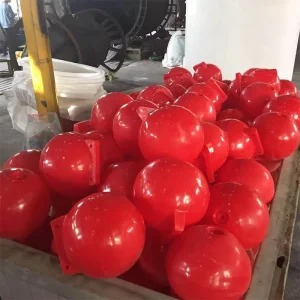
For high-liability civil protection zones in Serbia, solid-skin hollow floating balls carry sinking risks if perforated by river gravel or industrial vandalism. Modern global standards mandate 35–45 kg/m³ closed-cell hydrophobic polyurethane core injection, ensuring zero buoyancy loss even when the outer shell is compromised by hull collisions or ballistic impact.
Water absorption rates remain under 0.05% under sustained submerged hydrostatic loads, preserving lifetime reserve buoyancy.
Direct Factory Sizing & Indicative Pricing Matrix (Serving Serbia)
Reference factory pricelist for rotomolded and ABS industrial floating balls. Pricing FOB Qingdao / CIF Bar (Montenegro) / CIF Belgrade customs hub. Final quotations subject to foam core spec and order volume.
| Outer Diameter (mm) | Wall Thickness | Material Core | Net Buoyancy (kg) | Primary Industrial Use Case | Indicative Price (USD/Unit) |
|---|---|---|---|---|---|
| Ø 200 mm | 3.5 - 4.5 mm | Virgin PE / Air Filled | ~3.8 kg | Evaporation barrier, light safety line | $4.50 – $7.20 |
| Ø 300 mm | 4.5 - 5.5 mm | PE Shell / Optional EPS | ~13.2 kg | Agricultural irrigation canals, silt booms | $11.80 – $16.50 |
| Ø 400 mm | 5.5 - 6.5 mm | PU Foam Core (40kg/m³) | ~31.0 kg | River debris barriers, mine settling ponds | $24.00 – $33.00 |
| Ø 500 mm | 7.0 - 8.5 mm | High-Density Closed PU | ~62.5 kg | Dredge hose assistance, industrial intake lines | $45.00 – $62.00 |
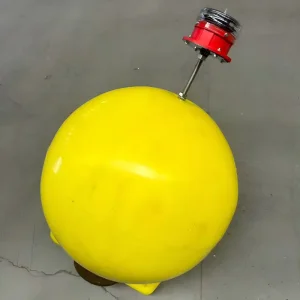
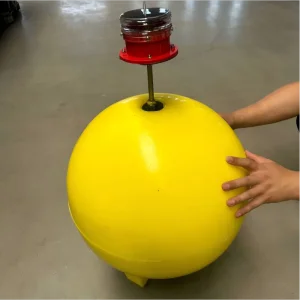
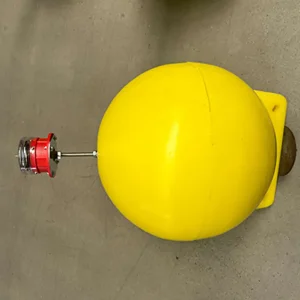
| Ø 600 mm (Solar LED) | 8.0 - 10.0 mm | Rigid PU / Marine Electronics | ~105.0 kg | Danube shipping fairway demarcation, locks | $95.00 – $145.00 |
Localized Logistics, Customs & Regulatory Alignment (Serbia)
Complete supply chain risk mitigation for Serbian public tenders, EPC infrastructure contracts, and private industrial procurement.
Logistical Access Corridors
Shipments destined for Serbian territory operate smoothly via multimodal container freight landing at Port of Bar (Montenegro), Port of Rijeka (Croatia), or Port of Piraeus (Greece), followed by direct bonded rail/truck transit to Belgrade and Niš customs terminals without transshipment delays.
CE & Serbian Standards (SRPS)
All polymer batches are backed by EN ISO 9001, ISO 14001, and REACH certificates confirming zero toxic leaching into drinking water reservoirs (critical for public works managed by "Srbijavode"). Shells integrate UV stabilizers (UV8 to UV15 rating) calibrated to south-European radiation indexes.
Fast Delivery & Interlocking Spares
With fully standardized steel tooling and automated rotational molding, replacement batches share exact structural tolerances with existing installations in Serbia. Complete containerization plans optimize 40HQ load capacity, reducing freight cost per liter of buoyancy by up to 28%.
R&D Technology Roadmap: Smart Marine Buoyancy
Continuous evolution from passive plastic buoyancy units to active, telemetry-integrated hydrological monitoring systems.
Phase 01
Nanocomposite Shells
Integration of graphene-infused polyethylene matrices to boost abrasive durability against aggressive river sediment and high-grit slurry lines.
Phase 02
NB-IoT & LoRa Sensors
Direct integration of self-powered water quality probes (pH, turbidity, temp) inside the float sphere for real-time monitoring in mining discharge zones.
Phase 03
Solar Self-Illumination
Impact-resistant embedded micro solar cells with lithium ferro-phosphate (LiFePO4) storage, delivering 15+ days continuous autonomous navigation flash.
Phase 04
Circular Bio-Polymers
Development of recycled marine-grade polymer formulations achieving 100% recyclability at project decommission, meeting future EU taxonomy guidelines.
Technical & Procurement FAQ for Engineers Serving Serbia
Answers to common structural calculations, warranty, material resilience, and operational inquiries.
What is the standard buoyancy reserve factor for Serbian rivers?
For high-flow waterways such as the Danube and Sava, we calculate buoyancy reserve at 1.25 to 1.35 times total submerged dry and dynamic load weight. This accounts for debris drag, river currents, and sediment settlement inside floating barrier networks.
Can PE floating balls withstand sub-zero freeze cycles in winter?
Yes. Our rotomolded high-molecular-weight virgin LLDPE resins are impact tested to survive -40°C without embrittlement. Even when frozen into river ice sheets, the spherical shell deflects compressive ice expansion stresses without cracking.
Are custom through-hole apertures available for cable and chain stringing?
Absolutely. We mold central through-holes ranging from 20 mm to over 110 mm, reinforced with internal structural sleeves. This allows hot-dip galvanized steel chains, stainless cables, or HDPE core hawsers to thread cleanly without point-load stress shearing.
What is the standard warranty coverage on export shipments?
The standard warranty coverage spans 18 months after cargo delivery or 12 months after completed hydraulic commissioning on site, whichever arrives first. Shell rupture caused by manufacturing defects is backed by free replacement units.
Complete Marine & Industrial Flotation Portfolio Serving Serbia
Full matrix of certified floating spheres, containment barriers, rotomolded storage vessels, and specialized maritime guidance assets.