
Engineered Buoyancy Modules for New York Commercial Operations
Rapid-deployment flotation spheres certified for marine barrier retention, heavy dredging discharge, and waterway zoning.
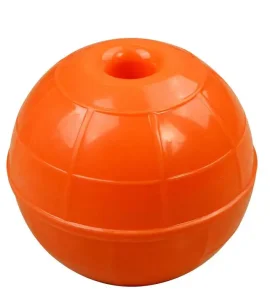
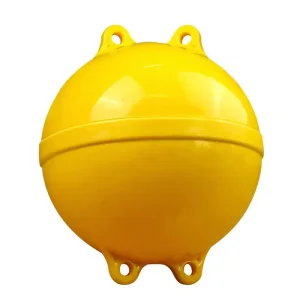
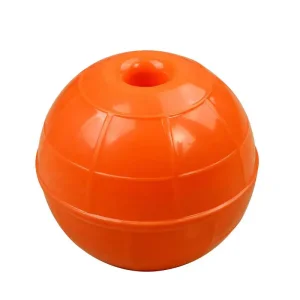
New York Industrial Waterways: Hydrodynamic Demands & Commercial Realities
From the hyper-active commercial shipping channels of New York Harbor to the ecologically sensitive reservoirs of the Catskill/Delaware watershed, buoyancy requirements demand unparalleled durability, chemical inertness, and structural integrity.
The state of New York encompasses one of the most operationally demanding, geographically diverse aquatic environments in North America. Within the tidal jurisdiction of the Port of New York and New Jersey—the busiest maritime gateway on the US Eastern Seaboard—floating ball products are routinely subjected to aggressive tidal scour, cyclic saltwater salinity gradients, relentless container barge wake turbulence, and collision hazards with floating urban flotsam. In contrast, Upstate New York projects along the Mohawk River, Lake Champlain, the Erie Canal lock networks, and the vast New York City Department of Environmental Protection (NYC DEP) drinking water impoundments require flotation products engineered to withstand intense sub-zero ice freezing, anchor-stress shearing, and strict non-leaching environmental mandates.
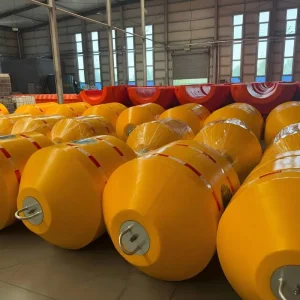
Traditional hollow, thin-walled blow-molded floats frequently fail under Empire State operating criteria. Winter freeze-thaw expansion cycles generate microscopic stress cracking along welded seams, while exposure to ambient aromatic hydrocarbons and industrial run-off accelerates polymer embrittlement. As an industry-leading manufacturer supplying regional contractors and engineering agencies, our custom floating ball products integrate virgin high-density polyethylene (HDPE) and impact-modified virgin ABS resin compounded with advanced UV-15 hindered amine light stabilizers (HALS), backed by high-density closed-cell polyurethane foam injection to guarantee buoyancy retention even in the event of catastrophic shell puncture.
NYC Harbor & Port Terminals
Severe wake-resistant mooring spheres, debris containment strings, and demarcation lines deployed at Red Hook, Kill Van Kull, and Bayonne shipping terminals requiring IALA-compliant chromacity and puncture resilience.
Hudson & Mohawk River Basins
Turbidity mitigation booms, dredging silt curtain float beads, and intake screening spheres engineered for heavy spring ice runoff and sediment loads in regional brownfield dredging operations.
Municipal Water Reservoirs
NSF/ANSI 61 compliant cover shade balls and barrier spheres installed across Catskill/Delaware and Croton reservoirs to mitigate photochemical bromate formation, limit algae blooms, and reduce evaporative loss.
Macro Industry Solutions: Polymer Science & Rotational Molding Excellence
Deploying precision thermal cycling, closed-loop melt indexing, and custom mold geometry to set international benchmarks for industrial buoyancy mechanics.
Across the global marine engineering landscape, floating balls have evolved from rudimentary perimeter floats into sophisticated hydrological tools. Whether deployed in tailings ponds in northern climates, mega-desalination intakes in the Middle East, or high-velocity sediment diversion channels along the Mississippi and Hudson rivers, the operational demands placed on polymer buoyancy components require comprehensive engineering validation.
Our manufacturing matrix employs multi-axis CNC rotomolding machinery capable of forming seamless, stress-free spherical skins with wall thicknesses ranging from 5mm to over 18mm. Unlike conventional blow-molding or thin injection molding—which suffer from molecular chain alignment weaknesses and parting-line fractures under shear stress—rotational molding enables biaxial polymer orientation. This uniform wall distribution resists sudden compressive implosion caused by hydrostatic head pressure when balls are submerged during surge surges or rapid gate openings.
Closed-Cell Foam Core Formulation
Engineered with 35–45 kg/m³ hydro-resistant polyurethane infill. The microscopic, non-communicating pore matrix eliminates water ingestion even under continuous 30-psi immersion scenarios.
ESCR & Chemical Passivity
Exceeding ASTM D1693 Environmental Stress Crack Resistance standards over 1,500 hours. Fully inert against petroleum spills, raw sewage effluents, chlorinated effluent streams, and high-salinity brine.
Through-Axle Load Distribution
Internal heavy-wall HDPE guide conduits and stainless steel 316 internal tension sleeves dissipate dynamic wave shear across the entire sphere volume rather than concentrating fatigue on exterior eyelets.
New York Regulatory Compliance & Engineering Standards
Strict alignment with Federal, NYS DEC, NYC DEP, and US Coast Guard engineering protocols to streamline project approvals and long-term asset management.
Procuring marine hardware and hydro-infrastructure components within New York State requires adherence to a dense network of regulatory frameworks. Products deployed in civil and maritime waterways must not merely satisfy static buoyancy metrics; they must satisfy stringent environmental preservation statutes and navigational safety mandates:
- NYS DEC Clean Water Act Permitting: Materials deployed in natural waterways and drainage basins must be 100% heavy-metal-free and resistant to leaching phthalates, cadmium pigments, or micro-plastic shedding.
- US Coast Guard 33 CFR § 66 Private Aids to Navigation (PATON): Spherical marker buoys and barrier terminal spheres must maintain specified chromaticity coordinates (Federal yellow, international orange, or navigation green/red) with high retro-reflectance per ASTM D4956 Type IV specs.
- NYC DEP Water Quality Approvals: Flotation equipment utilized in raw water intake facilities or reservoir shade configurations must be non-toxic, tasteless, and odorless, meeting NSF/ANSI Standard 61 drinking water toxicity thresholds.
- AASHTO / ASTM Mechanical Thresholds: High impact resistance at low temperatures (-20°F) per ASTM D256 Izod impact criteria to prevent structural fragmentation during Long Island Sound winter freeze-ups or Upper Hudson ice dam occurrences.
Our direct engineering support services provide New York civil contractors, EPC consultants, and port authorities with stamped buoyancy calculation sheets, wind/current catenary drag analysis, and detailed mooring load simulations customized to your local installation coordinates.
New York Hydraulic Applications: Where Precision Flotation Delivers ROI
Real-world deployments across power generating facilities, stormwater detention networks, coastal marinas, and industrial effluent retention ponds.
1. Power Plant & Industrial Cooling Intakes
Along the Hudson River and East River corridors, combined-cycle power facilities and substations deploy spherical barrier arrays equipped with heavy galvanized inter-connecting chains. The spheres prevent watercraft intrusion, guide floating vegetation away from intake grates, and dramatically reduce cooling water pump downtime.
2. Superfund Dredging Silt Retainers
During sediment remediation campaigns—such as the Gowanus Canal and Upper Hudson PCB cleanup projects—high-buoyancy spheres serve as load-bearing tensioners for heavy geotechnical silt curtains, keeping turbidity barriers vertically tensioned despite intense 4-knot tidal flushing.
3. Municipal Aeration & Wastewater Basins
At major wastewater treatment works (such as Newtown Creek and Wards Island), high-density ABS and PE floating balls are deployed in equalization basins to suppress toxic aerosol dispersal, retain process heat during harsh winter months, and maintain operational gas boundary layers.
4. Marina Debris & Storm Surge Booms
Private marina facilities throughout Long Island Sound and Staten Island incorporate linked float balls to form debris deflection corridors that intercept marine driftwood and storm runoff flotsam before it strikes valuable pleasure craft and commercial ferry berths.
5. Erie Canal Lock Demarcation
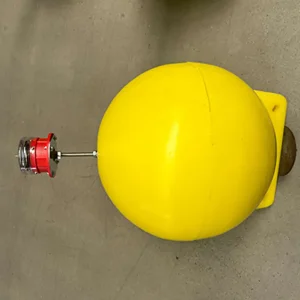
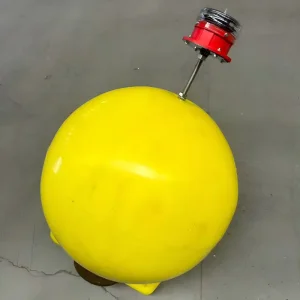
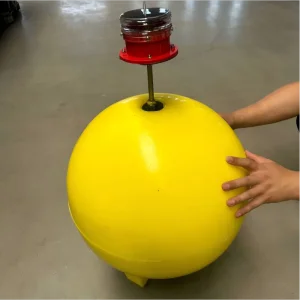
Seasonal navigation marking systems deployed along the New York State Canal System utilize solar LED floating spheres to provide mariners with day/night boundary identification, designed for rapid crane retrieval before winter freeze lock closure.
6. Retention Pond Evaporation & Wildlife
Upstate industrial quarries and chemical retention ponds deploy hex-pattern ball coverage to deter waterfowl from landing in contaminated process liquids while lowering chemical volatile emissions into neighboring residential envelopes.
Technological Roadmap: The Evolution of Intelligent Flotation Assets
Integrating embedded telemetry, bio-circular resins, and advanced hydro-dynamic surface profiles into industrial water systems.
High-Crystalline Virgin PE & ABS
Maximizing tensile yield strength (>22 MPa) with integrated carbon black and UV absorbers for 20+ year exposure without molecular micro-cracking.
IoT Sensory Integration
Internal low-power LoRaWAN and NB-IoT telemetry nodes embedded within spheres to measure water salinity, temperature gradients, and barrier tension loads.
Self-Cleaning Nano-Surfaces
Hydrophobic fluoropolymer and biomimetic skin coatings that eliminate zebra mussel colonization and marine barnacle fouling without biocidal leachates.
PCR High-Performance Hybrids
Utilizing up to 40% certified post-consumer recycled ocean plastics compounded with graphene platelets to surpass virgin impact performance while lowering carbon footprint.
Frequently Asked Engineering & Procurement Questions
Comprehensive specifications, load calculation guidelines, and operational parameters for civil and municipal contractors.
How do you calculate net buoyancy reserves for floating balls in saline vs. freshwater New York waterways?
Why choose rotomolded PE over injection-molded ABS for northern US cold-weather installations?
What prevents custom floating balls from rolling or degrading rapidly under continuous East Coast UV radiation?
Can your float balls be customized for through-chain tension barriers and heavy dredging lines?
What documentation is provided for commercial bids and municipal approvals in New York State?
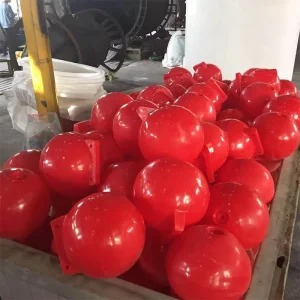
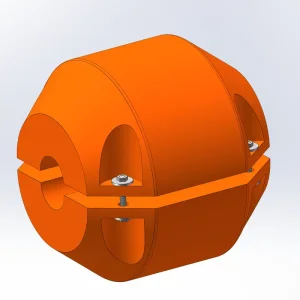
Industrial Floating Balls, Pipeline Shells & Marine Buoy Systems
Standard and bespoke configurations supporting East Coast civil contracting, marina anchoring, and hydraulic conduit operations.


Start Your New York Waterway Project Specification
Get custom buoyancy sizing, hydrodynamic drag models, and volume quotation delivery timelines direct from our technical team within 24 hours.