
Standard & Custom Pipeline Solutions for Sri Lanka Ports and Waterways
Selected high-density polyethylene and marine slurry transport pipelines optimized for rapid deployment across Western Province coastal reclamation and major river basin engineering projects.
-
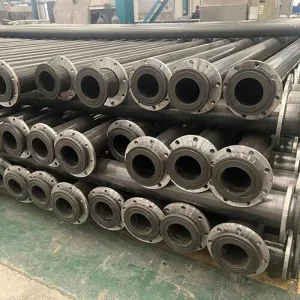
Best Durable Pipeline for Efficient Fluid Transport Supplier, Products
Request Technical Spec -
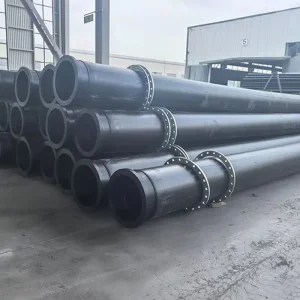
Best Heavy-Duty Pipeline for Safe and Efficient Transport Companies, Company
Request Technical Spec -
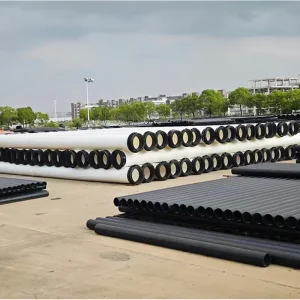
ODM Heavy-Duty Pipeline for Versatile Water and Fluid Transport Product, Quotes
Request Technical Spec -
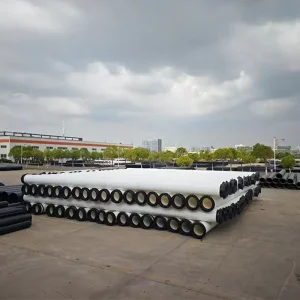
ODM High-Density Pipeline for Efficient Liquid and Gas Transport Manufacturers, Factories
Request Technical Spec
Macroeconomic Growth & Pipeline Demands in Sri Lanka
Strategic maritime logistics hub modernization, transshipment expansion, and large-scale agricultural diversion projects are transforming procurement parameters for heavy-duty pipeline infrastructure across the island.
Colombo Port City & Maritime Corridors
The construction of the Colombo International Financial City (Port City Colombo) involves continuous hydraulic reclamation, sand-pumping, and saltwater cooling lines. Demands for abrasion-resistant discharge pipelines capable of surviving heavy Indian Ocean swells remain at an all-time high among tier-1 Chinese and international engineering contractors.
Hambantota Deep Water Port Dynamics
Hambantota's bunkering hub, industrial processing zones, and ship-repair facilities necessitate non-corrosive, chemical-resistant subsea and floating pipelines. Marine pipelines must resist hydrocarbons, heavy heavy-fuel oil (HFO) ballast discharges, and severe marine organism fouling without premature wall thinning or chemical leaching.
Mahaweli Water Security & Irrigation Works
Sri Lanka's Ministry of Irrigation and the National Water Supply and Drainage Board (NWSDB) are aggressively upgrading trans-basin water conduits. From the Moragahakanda-Kaluganga agricultural schemes to suburban drinking supply networks in Gampaha and Kalutara, rigid yet crack-resistant high-density polyethylene pipelines have replaced traditional cast iron.
Engineering Pipelines for High-Salinity Tropical Marine Ecosystems
Deploying fluid transmission lines in the Indian Ocean requires meticulous mitigation against high surface temperatures, persistent UV-C radiation, and high-velocity abrasive slurry mixtures.
UV20+ Solar Photodegradation Resistance
Sri Lanka registers an extreme UV Index throughout the year. Our pipes feature virgin high-density polyethylene compound blended with 2.0% to 2.5% carbon black (particle size ≤ 20 nm) uniformly dispersed at the molecular level, exceeding ASTM D3350 Class C requirements to guarantee structural resilience without micro-fissuring under continuous tropical sunlight.
Hydraulic Smoothness & C-Factor Efficiency
With a Hazen-Williams roughness coefficient of C=150, our polyethylene conduits yield 30% lower frictional drag compared to ductile iron or unlined carbon steel. This dramatically minimizes pumping head losses across long discharge dredge lines, curtailing diesel consumption for dredgers operating off the shores of Negombo, Galle, and Trincomalee.
Slow Crack Growth (SCG) Resistance
Our heavy-duty pipes utilize bimodal PE100 resins with exceptional PENT (Pennsylvania Edge-Notch Tensile) values exceeding 10,000 hours at 80°C. This intrinsic material toughness resists localized stress concentrations caused by jagged coral rubble, granitic seabed outcrops, and intense hydrodynamic cyclic fatigue during monsoonal surge currents.
Material Performance Comparison: Indian Ocean Marine Pipeline Operations
| Engineering Attribute | Juhua PE100 Pipeline System | Standard Carbon Steel (Coated) | Ductile Iron (Cement Lined) | Glass Reinforced Plastic (GRP) |
|---|---|---|---|---|
| Saline Corrosion Rate | Zero (Completely Inert) | 0.15 - 0.40 mm/year | Localized Pitting Risks | Chemically Inert |
| Abrasion Rate (Quartz Sand Slurry) | 1.0x (Standard Baseline) | 3.5x - 4.2x Faster Wear | 2.8x Faster Wear | 1.8x Faster Wear |
| Flexural Elastic Modulus | ~950 - 1100 MPa (High Flexibility) | 210,000 MPa (Rigid) | 170,000 MPa (Rigid) | 12,000 - 18,000 MPa (Brittle) |
| Joint Integrity Method | Butt-Fusion / Electrofusion (Monolithic) | Welded / Flanged (Corrosion Prone) | Spigot & Socket / Mechanical | Adhesive Bell & Spigot |
| Impact Fracture Susceptibility | Ductile yielding; No shatter risk | Ductile; Denting risk | Brittle shock damage risk | Severe delamination under rock strike |
China-to-Sri Lanka Direct Supply Chain Architecture
Combining world-class high-capacity rotomolding and automated extrusion with streamlined ocean freight lines directly linking Qingdao/Tianjin to the Port of Colombo and Hambantota.
Tier-1 Extrusion & Rotomolding Lines
Operating dedicated extrusion facilities with closed-loop ultrasonic wall thickness gauge controllers and computerized multi-zone thermal measurement. Our pipeline halves and continuous pipe runs are molded to precise dimensional tolerances, ensuring zero mismatch during orbital butt-fusion operations on Sri Lankan job sites.
SLSI, SLS ISO 4427 & Global Compliance
Every production batch shipped to Sri Lanka is engineered to meet or exceed SLS 147, SLS 935, and SLS ISO 4427 municipal potable water standards, alongside EN 12201 maritime specifications. Full mill test certificates (MTC 3.1), raw material hydrostatic strain certificates, and third-party inspection reports (SGS/BV) accompany every bill of lading.
Rapid Logistics & Port Clearance
Leveraging deep commercial ties along the Maritime Silk Route, our dedicated export freight desk coordinates breakbulk and containerized shipments with direct liner services. Cargo arrives at Colombo Port within 10 to 14 sailing days, eliminating contractor downtime and enabling agile scheduling for complex EPC contracts.
Executing an Infrastructure Tender in Sri Lanka?
Connect with our technical design engineers for accurate SDR calculation, hydrostatic sizing, and fast CIF Colombo freight estimates.
Field Deployment Case Architectures Across Sri Lanka
From shallow coastal lagoon desilting in Puttalam to high-volume offshore discharge in Hambantota, our heavy-duty pipeline arrays solve severe environmental and engineering challenges.
Kelani River Basin Salinity Intrusion Barriers
Seasonal saltwater intrusion threatens drinking water intakes in Ambatale and Biyagama. Our modular floating pipelines and intake bypass lines provide swift, floatable deployment across river channels, preventing high-salinity seawater backflow while preserving uninterrupted municipal water supply to Greater Colombo.
Thermal & Reverse Osmosis Outfall Lines
Sri Lanka's growing industrial parks in Mirigama and coastal desalination facilities require discharge outfall lines immune to concentrated brine effluent and chemical cleaning agents. Our PE100 SDR11 and SDR17 pipes resist environmental stress crack corrosion, providing completely leak-free performance over decades.
Epawala Phosphate & Mining Slurry Networks
Abrasive mineral slurry pipelines at inland mining operations demand extreme hoop strength and wear-resistant polymer walls. By combining rotational PE flotation jackets with reinforced internal polymer pipe linings, operators prevent pipeline rupture, safeguarding local river habitats from catastrophic toxic slurry spills.
Engineered Flotation, Liquid Storage & Conduit Systems
Complete project-matched marine solutions including heavy-duty industrial pipe sections, rotomolded storage vessels, and cable-integrated flotation modules tailored for Sri Lankan procurement specifications.
-
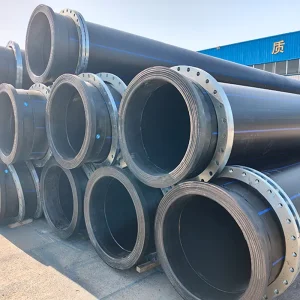
ODM High-Performance Pipeline for Industrial and Municipal Transport Suppliers, Companies
Request Technical Spec -
OEM Industrial-Grade Pipeline for Reliable Fluid Transport Companies, Factory
Request Technical Spec -
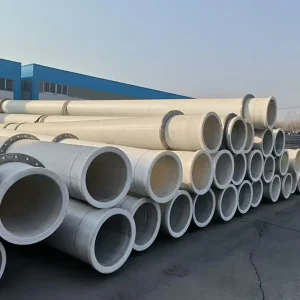
ODM Industrial-Strength Pipeline for Efficient Fluid and Material Transport Supplier, Quotes
Request Technical Spec -
High-Quality Robust Pipeline for Reliable Fluid and Material Transport Manufacturers, Factory
Request Technical Spec -
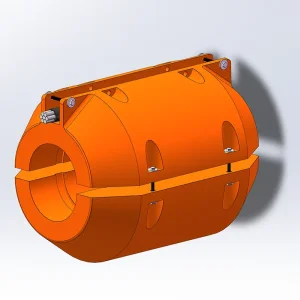
ODM Floating Pipe Floats with Cable Channels – Secure Buoyancy and Cable Protection for Marine Systems Quotes, Factories
Request Technical Spec -
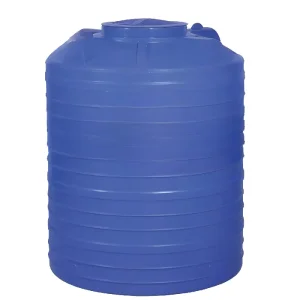
Custom Polyethylene Rotomolded Water Storage Tank – Durable and Safe Liquid Storage Solution Supplier, Factories
Request Technical Spec -
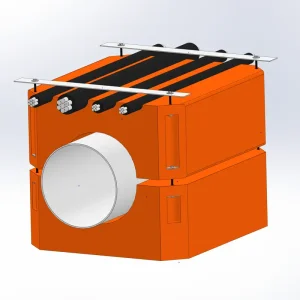
Custom Customizable Floating Pipe Supports with Cable Troughs Company, Pricelist
Request Technical Spec -
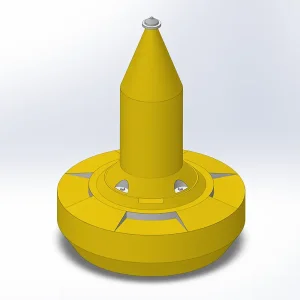
Best Reliable Floating Buoys for Coastal Navigation and Offshore Projects Suppliers, Factory
Request Technical Spec
Frequently Asked Questions: Sourcing Pipelines in Sri Lanka
Key technical, regulatory, and logistics clarifications for project directors, procurement heads, and EPC estimators managing Sri Lankan water and marine projects.
What is the standard shipping lead time to Colombo and Hambantota Ports?
Direct containerized and breakbulk ocean freight from our primary Chinese manufacturing base typically requires 10 to 14 sailing days to the Port of Colombo, and 12 to 16 days to Hambantota Port. Standard production lead times for customized SDR-rated pipelines or pipe floats range from 7 to 15 working days depending on quantity and extrusion tooling configurations.
How do your pipes comply with Sri Lankan regulatory standards (SLSI / MEPA)?
Our pipeline systems comply with SLS ISO 4427-2 specifications for water supply and meet Marine Environmental Protection Authority (MEPA) criteria for non-toxic, non-leaching marine polymers. We supply third-party migration tests, carbon black dispersion certs, and short-term hydraulic test records alongside every shipment.
How do you calculate necessary buoyancy reserves for floating discharge lines?
We employ an industry-standard safety coefficient of 1.2 to 1.3 based on maximum operational slurry density (typically 1.3 - 1.6 t/m³ for coral sand dredging). The total buoyancy of clamp-on polyethylene floats must exceed the combined deadweight of the pipe, flanges, fittings, and internal slurry payload so that 25% to 30% of the pipe diameter remains visible above the water surface.
Can you supply custom flange drillings (JIS, ANSI, BS/EN) for existing setups?
Yes. We engineer customized stub ends with integrated carbon steel or stainless steel 316 backing rings drilled to ANSI Class 150, BS 4504, DIN 2501, or JIS 10K/16K patterns, allowing smooth, leak-free bolt-up integration with legacy pump discharge manifolds and marine dredge lines installed in Sri Lankan shipyards.
Request an Engineering Dossier & Quotation
Submit your project drawings, pipe diameter, wall thickness, medium density, and target port for a comprehensive technical analysis within 24 hours.