
High-Integrity Rotomolded Systems for European Deployments
Manufactured using premium linear low-density and high-density polyethylene (LLDPE/HDPE) under Industry 4.0 computerized rotational cycles to assure stress-free molecular bonding and zero seams.
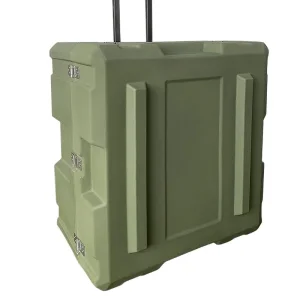
Heavy-Duty Rotomolded Tactical & Military Storage Container (Czech Logistics Approved)
View Engineering Specs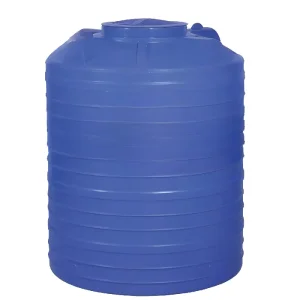
Industrial Polyethylene Rotomolded Chemical & Water Storage Tank (Vltava & Elbe Basin Standards)
View Engineering Specs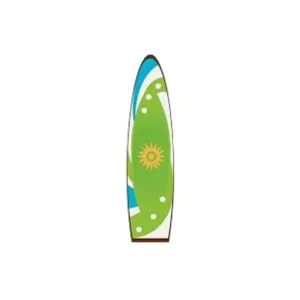
Durable Rotomolded Watersports Hull & Aquatic Board Platform (Czech Recreation Grade)
View Engineering Specs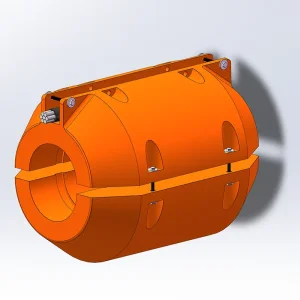
Cable-Channel Floating Dredge Pipe Floats for Heavy De-Silting Infrastructure
View Engineering SpecsCzech Republic Industrial Demand & Hydro-Engineering Dynamics
Strategic deployment within the Bohemian Massif, riverway modernizations along the Elbe (Labe) and Vltava, and integration into the Central European manufacturing corridors.
Inland Hydrology & Dam Desilting
The Czech Republic relies heavily on complex water management across the Vltava river cascade, Orlík, and Lipno reservoirs. Sediment removal and hydraulic desilting require robust, closed-cell polyurethane-filled rotational molded floats resistant to high abrasion and cyclic winter sub-zero temperatures down to -25°C.
Automotive & Heavy Machining Tanks
As Central Europe's automotive hub, Czech industrial facilities in Mladá Boleslav, Kvasiny, and Kolín require rotationally molded diesel exhaust fluid (AdBlue) reservoirs, industrial chemical rinse vessels, and coolant tanks that demonstrate absolute chemical neutrality and dimensional stability without welded seams.
Strategic European Transit Logistics
Given the Czech Republic's position as a multimodal freight crossroad linking Germany, Poland, Austria, and Slovakia, defense and transit operations demand ruggedized rotomolded containers compliant with STANAG standards, capable of surviving extreme mechanical shocks during cross-border transit.
The Global Paradigm Shift Toward Advanced Rotomolding
Traditional metal fabrication and blow molding processes face insurmountable physical limitations in heavy-duty fluid dynamics and marine engineering. Metal pipelines corrode, rust under acidic slurry contact, and incur exorbitant galvanic coating upkeep. Rotational molding (rotomolding) provides isotropic stress profiles, ensuring uniform wall thickness throughout hollow geometric bodies without internal stress concentrations.
Global procurement teams across Europe, North America, and East Asia are aggressively replacing welded structural steels and lightweight thermoformed plastics with dense, cross-linkable rotomolded polyethylene capable of absorbing massive impact energies while remaining fully buoyant and impermeable to aggressive hydrocarbons.
Key International Procurement Metrics
- Environmental Stress-Crack Resistance (ESCR): Exceeding 1000 hours per ASTM D1693
- Internal Reinforcement: Closed-cell PUR core with zero water absorption index (<0.1%)
- Thermal Resiliency: Flawless mechanical modulus between -40°C and +65°C
- Interchangeability: Precision CNC mold pairing for direct field replacement
China Industry 4.0: Resilient Flotation Supply Chain for Europe
Combining world-class polymer thermal profiling, computerized multiaxial rotational equipment, and integrated intermodal rail freight direct to Prague and Ostrava.
Thermal Monitoring Automation
Our computerized manufacturing systems deploy internal mold temperature sensors and variable-frequency rotational drives. This guarantees flawless polymer crystallization, eliminating thin spots, inner pinholes, and internal residual stress across complex geometry parts.
High-Density Polyurethane Filling
Engineered using high-pressure reaction injection machinery that injects fire-retardant, high-density closed-cell polyurethane (38-45 kg/m³). Even if the outer PE skin suffers catastrophic impact, buoyancy degradation is strictly capped at zero.
Direct Intermodal Rail to Central Europe
Leveraging China-Europe Railway Express (Yiwu/Wuhan to Prague/Česká Třebová), orders avoid maritime choke points, reducing transit lead times to 16–22 days for high-priority municipal desilting and water construction deadlines.
Localized Applications Across the Czech Republic
Specific installation profiles engineered to meet Czech environmental and navigation requirements.
Vltava & Labe River Desilting
Ensuring navigational draft on major waterway corridors through continuous dredging slurry transport.
- Matched Pipe Outer Diameters: 160mm to 1200mm
- Corrosion-proof galvanised & 316 stainless bolts
- Streamlined hydraulic drag reduction profile
Municipal Floating Solar (FPV) Platforms
Supporting national clean energy goals on retention reservoirs and flooded former coal quarries in Most & Sokolov.
- High UV8-stabilized virgin polymer resin
- Heavy load capability up to 350 kg/m²
- Certified food-grade drinking water reservoir safe
Industrial Chemical & Runoff Storage
Chemical manufacturing complexes in Ústí nad Labem, Pardubice, and Ostrava heavy industrial zones.
- Complete resistance to acids, alkalis, and salts
- One-piece monolithic stress-free construction
- Tailored flange, valve, and sensor fittings
Comprehensive Flotation & Fluid Handling Solutions
Engineered for high performance, standard compliance, and rugged resilience across global and regional European waterways.
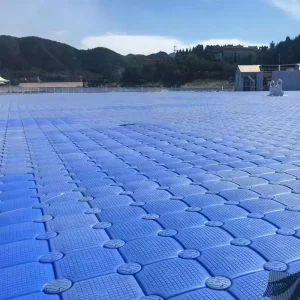
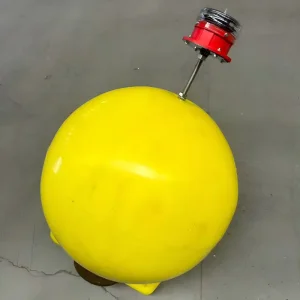
High-Performance Floating Boat Pontoon for Modular Water Platforms (Czech Marina Grade)
Explore Product Data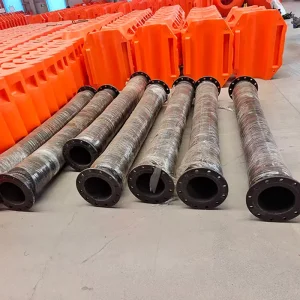
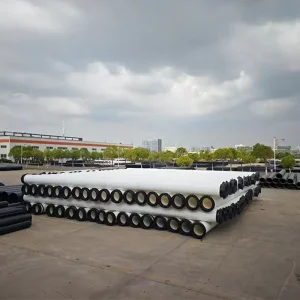
Heavy-Duty Flexible Rubber Suction & Discharge Hoses for Silt Slurry Operations
Explore Product Data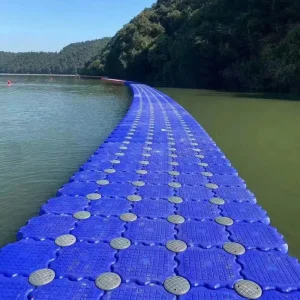

Frequently Asked Questions: Sourcing & Engineering Specifications
In-depth responses for procurement executives, EPC contractors, and hydro-technical engineers.
How does rotomolded polyethylene perform during severe Central European winter freezes?
Unlike PVC or low-grade fiberglass which becomes brittle under sub-zero conditions, our rotomolded hulls use high-purity virgin LLDPE/HDPE modified with proprietary impact copolymers. They maintain ductile fracture behavior and high mechanical resilience down to -40°C, absorbing the expansion pressure of freezing surface ice in Czech reservoirs and rivers without cracking.
What precise buoyancy calculation should be applied for heavy slurry dredging lines?
Flotation engineering must account for working conditions rather than dry pipe weights. The formula is: Total Buoyancy ≥ [Weight of Pipe + (Internal Volume × Slurry Specific Gravity) + Couplings/Hardware] × Reserve Factor (1.25 to 1.30). Sizing to a 25-30% surplus guarantees the pipeline remains stable with roughly one-quarter of its diameter clear of the waterline, preventing submergence under sudden operational turbulence.
Are custom mold dimensions supported for OEM parts, and what is the typical lead time?
Yes. We engineer CNC cast-aluminum and fabricated sheet-steel molds directly from STEP/IGES CAD models. Tooling development takes approximately 20 to 30 days, followed by sample prototyping and CMM verification. Once approved, production cycles operate with multi-arm carousels, delivering volume shipments with minimal production lag.
What environmental safety and potable water compliance standards do these products meet?
All our virgin polymer raw materials adhere strictly to EU REACH regulations and RoHS directives. Furthermore, for municipal water storage tanks, agricultural retention, and floating barriers placed in drinking reservoirs, we provide food-contact certifiable resins that release zero volatile substances, plasticizers, or heavy metals into aquatic ecosystems.
Request Custom Buoyancy Sizing & Factory Direct Quotation
Partner with an authoritative rotomolding engineering team. Get complete buoyancy calculation sheets, CAD drawings, and logistics plans optimized for the Czech Republic and Central European destinations.