Engineered Iberian Solutions
High-Integrity Fluid & Slurry Transport Systems for Spanish Infrastructure
Tested under rigorous Mediterranean and Atlantic maritime dynamics, our rubber dredging and discharge hoses deliver extreme fatigue endurance, structural dampening, and abrasion resistance.
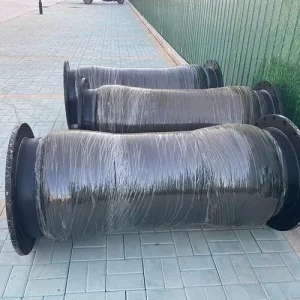
Custom Flexible Rubber Hoses for Spain Advanced Fluid & Marine Tailings Transport
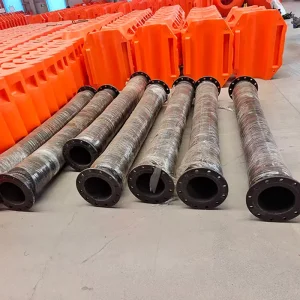
Heavy-Duty Marine Rubber Hose for Spain Port Authorities & Water Management
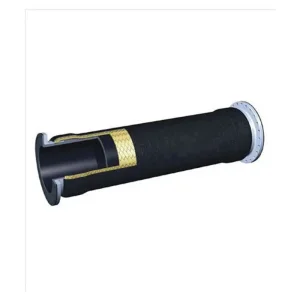
High-Performance Suction & Slurry Rubber Hose for Spain Marine & Mining Plants
Iberian Industrial Reality
Commercial Dynamics and Fluid Transfer Demands across Spain
Spain represents one of Europe's most geographically diversified operating theaters for industrial rubber hoses, demanding technical formulations that resist extreme Mediterranean solar degradation, high Atlantic wave fatigue, and severe mechanical abrasion.
Maritime Ports & Fairway Dredging
The state-managed ports network overseen by Puertos del Estado—including strategic logistics hubs such as the Port of Valencia (Valenciaport), Port of Algeciras, Port of Barcelona, and the Port of Bilbao—demands continuous fairway maintenance and capital berth expansion. Trailing Suction Hopper Dredgers (TSHD) and Cutter Suction Dredgers (CSD) require flexible, self-floating, and armored discharge rubber hoses that absorb continuous hydrodynamic bending loads while conveying abrasive marine silt, coarse gravel, and basalt fragments without delamination.
Iberian Pyrite Belt & Heavy Mining
The southern mining corridor of Andalusia—anchored by the historic Huelva and Seville copper, zinc, and polymetallic mining operations (such as Riotinto, Cobre Las Cruces, and Aguas Teñidas)—presents aggressive mechanical abrasion and acidic chemical exposure. Tailings lines and mineral extraction slurry transfer require heavy-duty synthetic inner elastomer tubes with high tensile carcass reinforcement, preventing localized scouring and high-pressure blowouts during dense slurry transport.
Desalination & Water Management
Given persistent drought cycles in Andalusia, Murcia, Alicante, and the Canary Islands, Spain has developed the European Union’s largest seawater reverse osmosis (SWRO) desalination capacity. Industrial rubber hoses installed in coastal seawater intakes, hypochlorite dosing systems, and high-salinity brine outfalls must withstand permanent immersion, full vacuum (-0.9 bar) suction cycles, and intense UV exposure without ozone micro-cracking.
European Standards & ESG
Technological Trends and Regulatory Imperatives in Spain
Procurement teams in Spain operate under strict European directives that dictate environmental safety, circular lifecycle tracking, and technical traceability.
REACH Regulation & Compound Toxicity Mitigation
Compliance with EU Regulation (EC) No 1907/2006 (REACH) is non-negotiable for Spanish engineering contractors. Industrial elastomer compounding has phased out hazardous plasticizers, short-chain chlorinated paraffins (SCCPs), and high-PAH extender oils. Modern rubber formulations utilize non-carcinogenic anti-degradants and silane-coupled precipitated silica reinforcing systems that ensure complete safety when discharging sediment in ecologically sensitive marine protected zones (ZEC and Red Natura 2000 corridors along the Spanish littoral).
Transition to Composite Elastomer Matrices
Traditional rigid steel flanged pipes are rapidly being replaced by high-modulus flexible rubber pipelines across Spanish civil port works. Rigid pipelines suffer premature fatigue failure from seabed wave motion and lack the dampening required when dredgers surge during tidal shifts. Engineered flexible rubber hoses offer bending radii down to 4 to 6 times the nominal internal diameter, dampening hydrodynamic pulse shocks and cutting installation barge operating times by over 40%.
Failure Mode Analysis
Engineering Audit: Critical Technical Challenges in Slurry Conveyance
Procurement engineers often experience premature line failure when catalog items fail to account for the unique physics of particle velocity, kinetic impact angles, and structural hoop stress.
| Failure Mode | Root Mechanism in Slurry/Dredge Service | Standard Market Failure Outcome | Our Engineered Solution |
|---|---|---|---|
| Erosion-Corrosion Synergy | Abrasive quartz sand strips protective surface boundary layers, accelerating chemical oxidation in saline Atlantic/Mediterranean waters. | Rapid wall thinning, catastrophic liner tear, inner carcass bursting under normal 10-16 bar operating pressure. | Ultra-high molecular weight natural rubber (NR) and synthetic polybutadiene (BR) blend delivering abrasion loss <45 mm³ (DIN 53516). |
| Dynamic Flange Pull-Out | Severe axial tensile loads caused by ocean swells, vessel drift, and water hammer effect pulling the rubber sleeve from its rigid connection. | Flange collar separation, severe slurry spill, catastrophic dredging downtime and environmental fines. | Built-in vulcanized steel nipple with multi-ply continuous high-tensile steel wire cord wrapped around the flange ring, forming an integral monolithic structure. |
| Vacuum Implosion & Kinking | High negative pressure generated during deep suction dredging or booster pump cavitation when sediment concentration spikes suddenly. | Radial pipe collapse, internal carcass delamination, flow stoppage and severe pump impeller damage. | Embedded high-yield spring steel helix wire rings embedded in heavy-duty synthetic cord plies rated for full vacuum (-0.9 bar / 90 kPa). |
| UV & Ozone Micro-Cracking | Prolonged exposure to Spain’s intense UV radiation index (>9 in southern regions like Andalusia and Murcia) oxidizing outer polymers. | Surface embrittlement, atmospheric micro-fissuring, moisture ingress to fabric reinforcement layers leading to rot. | EPDM/Chloroprene (Neoprene) outer cover compounded with hindered amine light stabilizers (HALS) and microcrystalline anti-ozonant waxes. |
Architectural Solutions
Macro Engineering Systems for Spanish Infrastructure Projects
Supplying end-to-end fluid conveyance assemblies certified to international standards and customized for local project topographies.
Self-Floating Dredge Hose Strings
Engineered for outer port expansions (such as Valencia's North Expansion and the Bilbao outer port), our self-floating rubber hoses eliminate the need for independent external clamp-on floats. Built-in closed-cell polyethylene foam buoyancy chambers provide reserve buoyancy up to 20% to 30% above the combined weight of the steel-flanged hose, fully saturated slurry (specific gravity up to 1.6–1.8 t/m³), and attached telemetry cabling, ensuring stable line geometry in open Atlantic seas.
Ceramic-Lined Slurry Composite Hoses
For high-wear mineral tailings circuits in Spanish copper/zinc processing plants and granite aggregate quarries in Galicia and Madrid, standard elastomer wear liners can face rapid erosion at discharge points. We engineer flexible hoses with vulcanized hexagonal alumina ceramic (Al₂O₃ ≥92%) tiles embedded within the high-elasticity rubber matrix, combining the extreme hardness of technical ceramics with the flexibility and shock-absorption of elastomeric engineering.
Smart RFID & Sensorized Monitoring
In line with Spain’s Industry 4.0 modernizations, our high-spec hoses feature optional vulcanized RFID chips and embedded fiber-optic or conductive wire wear indicators. Maintenance managers at Spanish dry docks and municipal desilting concessions can conduct non-destructive scans of residual wall thickness and operational thermal history, transitioning from reactive replacement to predictive maintenance.
Logistics & Compliance
Localized Support & Regulatory Assurance for Spain
Eliminating cross-border friction through comprehensive compliance documentation, European standard harmonization, and streamlined Iberian container routing.
UNE-EN & ISO Quality Compliance
Every industrial and marine rubber hose batch is manufactured, tested, and certified in accordance with relevant European norms, including UNE-EN ISO 1402 (hydrostatic pressure testing), ISO 4671 (dimensional measurement), and ISO 28017 (rubber hoses for dredging applications). Mill Test Certificates (MTC) Type 3.1 are delivered with every consignment, including full traceability of tensile cords and raw elastomer batches.
Direct Maritime Dispatch to Spanish Hubs
We execute optimized containerized (FCL/LCL) and breakbulk logistics directly to Spain’s primary container terminals: Valencia (Noatum/MSC), Algeciras (APM Terminals), and Barcelona (BEST). Hoses are packed on heavy-duty, heat-treated fumigated wooden saddles (ISPM 15 compliant) with UV-blocking shrink wrap to preserve mechanical integrity during ocean transit.
Dedicated Engineering Support Desk
Our bilingual technical consultation team assists project engineers, EPC contractors, and dredging superintendents across Spain with hydrodynamic bend radius calculations, pressure drop estimations via Darcy-Weisbach formulations, and flange matching (DIN EN 1092-1 PN10/PN16 or ANSI B16.5) prior to production sign-off.
Technical Knowledge Base
Frequently Asked Questions: Sourcing Rubber Hoses for Spain
Detailed engineering insights addressing the key operational questions asked by procurement heads, harbor authorities, and civil engineering directors.
How do you calculate the correct rubber hose inner wall thickness for abrasive sediment dredging in Spanish river estuaries?
The wear rate of the inner rubber tube is a function of slurry velocity (typically maintained between 3.5 to 5.0 m/s to prevent settling), solid particle size distribution (d50), particle angularity, and solid concentration by volume (Cv). For dredging silica sand and silt in estuaries such as the Guadalquivir or Ebro, we formulate natural rubber (NR) liners with high rebound resilience (>55%) and tear resistance exceeding 20 N/mm. Under these conditions, an inner wear layer thickness between 15 mm and 25 mm provides an operational lifecycle exceeding 1.5 to 2.5 million cubic meters of pumped sediment before liner wear reaches the carcass reinforcement.
What are the mechanical advantages of vulcanized built-in steel flanges versus loose steel slip-on flanges for offshore discharge lines?
Loose clamp-on flanges rely on external friction to grip the rubber sleeve, creating concentrated shear stress points that often slip or pull free under continuous bending fatigue from Mediterranean or Atlantic ocean swells. In contrast, our built-in vulcanized flanges integrate high-tensile steel cord fabric plies wrapped directly around the inner steel flange collar before the autoclave curing cycle. This results in a monolithic elastomeric-metallic bond that distributes tensile pull-out forces evenly across the hose body, rated for safety factors of 3:1 to 4:1 against working pressure.
How do your rubber hose compounds maintain structural integrity under high solar irradiation in Southern Spain?
Southern Spain (Andalusia, Murcia, Extremadura) registers annual solar radiation exceeding 1,800 to 2,000 kWh/m². Intense UV radiation combined with marine salt atmosphere triggers photo-oxidation in conventional standard rubber covers, resulting in cross-linking cleavage and micro-crazing. We compound our outer protective covers with an optimized blend of Chloroprene (CR) and synthetic Ethylene Propylene Diene Monomer (EPDM), augmented with non-staining antioxidants and specialized carbon black (N330/N550 grade). This formula passes ASTM D1149 ozone exposure testing (50 pphm at 40°C for 72 hours) with zero cracking, preventing surface embrittlement.
What is the standard lead time and import protocol when delivering custom-sized rubber hoses into Spain?
For custom manufacturing orders tailored to specific Spanish port projects (custom internal diameters from 150 mm up to 1200 mm), production typically spans 3 to 4 weeks depending on batch volume. Transit time via container line to the Port of Valencia or Algeciras is roughly 25 to 30 days. We provide comprehensive import documentation including the commercial invoice, packing list, bill of lading (B/L), CE conformity declaration, and 3.1 material test certificates matching TARIC code 4009. Customs clearance within Spanish ports is managed seamlessly through your appointed customs broker or our logistics partners.
Complete Systems Catalog
Heavy-Duty Dredging Pipelines, Flotation & Marine Accessories for Spain
Explore our complete engineering line of high-performance rubber pipelines, flexible suction sleeves, and marine barrier equipment supporting civil engineering works across Spain.
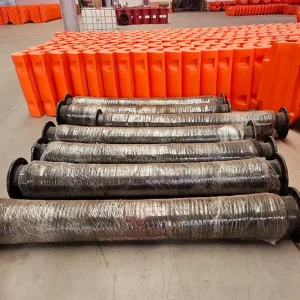
Custom Heavy-Duty Rubber Pipelines for Efficient Water and Slurry Transport in Spain
High-Performance Rubber Hoses for Spain Industrial Water & Slurry Transport
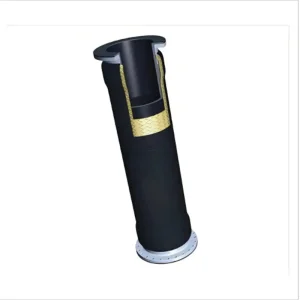
Custom Premium Rubber Hoses for Reliable Marine Discharge in Spanish Ports
Engineered Heavy-Duty Pipelines for Spain Sediment and Slurry Conveyance

High-Quality Versatile Floating Boat Pontoon for Spain Water & Port Projects

High-Quality Durable Floating Barriers for Spain Water Protection & Harbors
Flexible Rubber Dredging Hoses for Spain Industrial Fluid & Tailings Transport