Industrial Marine Flotation Solutions

ODM Floating Ball Products & Companies Serving Japan

Precision-engineered rotomolded polyethylene and ABS floating ball systems tailored for Japanese marine navigation, seismic-resilient offshore aquaculture, offshore wind moorings, and coastal civil engineering.

Send Inquiry Now
20+
Years Engineering Buoyancy
100%
Virgin High-Density PE & ABS
15+ Yrs
Marine UV-8 Design Life
JIS/JCG
Regulatory Compliance Grade

High-Integrity Floating Ball Systems for Japan Marine Projects

Engineered for high current resistance, extreme seismic disturbances, and harsh Pacific Ocean salinities. Discover our leading ODM rotomolded and ABS floating sphere models.
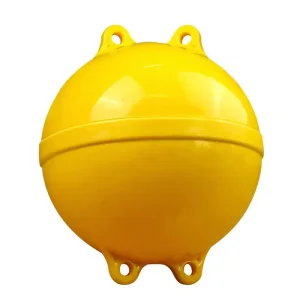
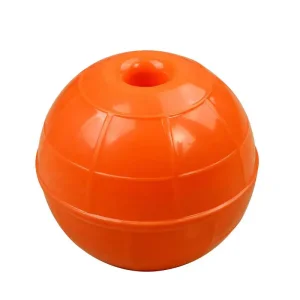
OEM ABS Float Ball for Japan Civil Water Projects
Impact-Resistant ABS Shell

OEM ABS Float Ball – Buoyancy Support for Japan Water Infrastructure Projects

View Product Details
ODM ABS Float Ball for Coastal Marine and Freshwater Reservoirs in Japan
Seawater Anti-Biofouling

ODM ABS Float Ball for Marine & Freshwater Buoyancy Deployment in Japan

View Product Details
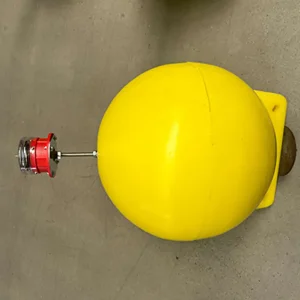
ODM Floating Ball with Solar LED Light for Japanese Maritime Navigational Safety
Autonomous LED Marker

ODM Floating Ball with LED Light – Japan Waterway Navigation & Demarcation

View Product Details
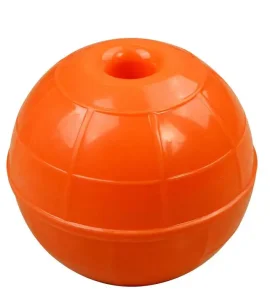
ODM Heavy-Duty ABS Float Ball for Japanese Hydro-Engineering Operations
Heavy-Duty Compression Core

ODM Heavy-Duty ABS Float Ball for Japanese Water Engineering & Flood Control

View Product Details

Japanese Commercial Demand vs. Global Flotation Trends

A rigorous review of structural dynamics, material longevity, and hydro-engineering parameters across coastal archipelagos and offshore installations.

Japan's Maritime Operating Realities

Japan faces demanding offshore operating conditions: the Tsushima Current, Kuroshio Current, severe typhoons, and heightened seismic risks. Flotation equipment must balance high structural resilience with flexibility. Conventional rotomolding often fails under repetitive cyclical wave pounding. Our ODM series utilizes cross-linked virgin Polyethylene (HDPE) combined with high-impact resistant ABS shells filled with polyurethane (PU) closed-cell foam, ensuring 100% buoyancy retention even in the event of outer shell breach.

Macro Industry Solutions Across Global Waters

Worldwide, the shift toward sustainable ocean governance and offshore wind expansion drives the demand for modular buoyant spheres. From mining tailings treatment ponds in South America to subsea cable suspension across the North Sea, floating balls function as critical tension-relief dampeners, bird deterrent covers, and evaporation suppression barriers. Juhua integrates computer-optimized variable wall thickness control to prevent stress-cracking in high-salinity sub-tropical and sub-arctic waters alike.

Localized Japanese Support & JIS Compliance

To serve Japanese coastal contractors, offshore energy engineering consortiums, and fisheries cooperatives (JF), our engineering lines follow Japanese Industrial Standards (JIS K 6922 for PE materials) and align with Japan Coast Guard (JCG) navigation aid luminosity standards. We provide factory acceptance testing (FAT) records, non-destructive ultrasonic thickness mapping, and customized batch traceability markings for Japanese procurement standards.

Key Deployment Scenarios Across Japanese Waters

From the Seto Inland Sea aquaculture complexes to Hokkaido offshore wind farms, our floating balls provide verified structural reliability.

Offshore Aquaculture in Sanriku & Mie

Deep-sea oyster, scallop, and nori cultivation along the Sanriku ria coastlines and Mie Prefecture demands buoyant spheres capable of withstanding heavy tidal shifts. Our anti-fouling rotomolded PE float balls resist barnacle penetration, preserve hydrodynamic equilibrium, and prevent submersible line entanglements during cyclic tidal surges.

Offshore Floating Wind Power Anchor Cable Dampening

As floating offshore wind test sites expand off Fukushima, Goto Islands, and Akita, subsea power dynamic cables and catenary mooring systems require high-tensile mooring buoys and auxiliary floating balls. These modular floats mitigate fatigue damage induced by vortex-induced vibrations (VIV) over decades of continuous tidal operation.

Port Demarcation & Tsunami Mitigation Gates

Across Tokyo Bay, Osaka Port, and Nagoya Harbor, high-visibility LED floating balls serve as critical markers for dredging access corridors, floating silt curtains, and automated emergency tsunami barriers. Built-in top eyelet reinforcement prevents shear failures during seismic sea surges.

Engineering Specifications: Polyethylene vs. Heavy-Duty ABS

Comprehensive material qualification matrix aligned with international standards and Japanese port engineering criteria.

Performance Indicator Rotomolded Virgin PE (LMDPE/HDPE) High-Impact Structural ABS Conventional Japanese Market Products
Tensile Strength (MPa) 22.5 - 26.0 (ISO 527 / JIS K 7161) 38.0 - 45.0 (ASTM D638) 16.0 - 19.0 (Recycled Blends)
Internal Core Filling High-Density Closed-Cell PU Foam (≥38kg/m³) Compressed Closed-Cell PU Foam (≥45kg/m³) Hollow / Low-density Styrofoam
Seawater Corrosion / Rust Complete Inertness (Zero Corrosion) High Resistance (Zero Leaching) Requires frequent recoating / Metal fittings rust
UV Degradation Resistance UV8 to UV16 Stabilized (ASTM G154) UV Coating + Polymer Stabilizer Surface chalking observed < 3 years
Service Temperature Range -40°C to +65°C (Hokkaido to Okinawa) -25°C to +75°C -10°C to +45°C
Eco-Toxicity & Food Safety Compliant with Japan Food Sanitation Law (JFSL) RoHS / REACH Certified Uncertified secondary recycled content

Buoyancy Technology Roadmap: 2026–2030

Anticipating next-generation maritime demands across Japanese and international offshore infrastructural programs.

PHASE 01: SMART SENSING

IoT Autonomous Sensor Pods

Embedding micro-turbines, LoRaWAN / NB-IoT hydrophones, salinity gauges, and wave spectrum monitors directly into floating ball cores for continuous Japanese oceanographic surveys.

PHASE 02: DEEPWATER INTEGRITY

Syntactic Foam Hybridization

Deploying micro hollow glass spheres in subsea float cavities to ensure buoyancy stability down to depths of 300m for offshore subsea pipeline tie-ins without implosion risk.

PHASE 03: CIRCULAR LIFECYCLE

Bio-Circular PE Formulations

Pioneering 100% recyclable, bio-attributed polymers certified by ISCC PLUS to support Japan’s 2050 Carbon Neutrality goals and Marine Plastic Zero Emissions frameworks.

PHASE 04: AUTOMATED FABRICATION

Robotic Wall Thickness Control

Real-time optical infrared laser monitoring across all rotomolding axis arms to eliminate microscopic thin spots and structural stress concentrations.

ODM Floating Line & Auxiliary Marine Equipment for Japan

Explore our extended series of high-visibility safety spheres, high-grade PE floats, deepwater pipeline buoys, and sediment transport components.
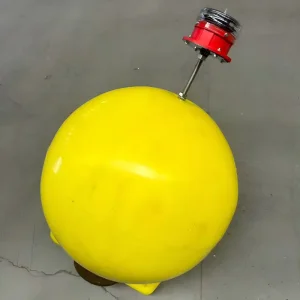
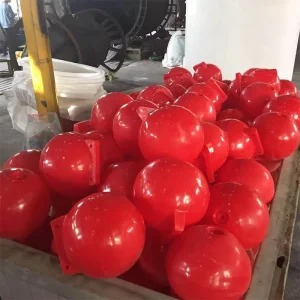
ODM High-Visibility Floating LED Ball for Japanese Marine Ports
Solar LED Beacon

ODM High-Visibility Floating LED Ball for Japan Marine & Freshwater Safety

View Product Details
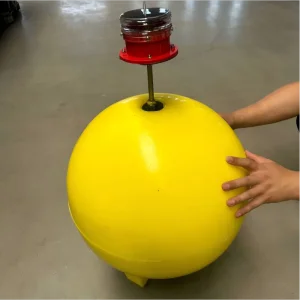
High-Quality LED-Equipped Floating Ball for Japanese Civil Waterways
Photovoltaic Auxiliary

High-Quality LED-Equipped Floating Ball for Efficient Japan Water Operations

View Product Details
Best PE Float Ball for Japan Dam & Reservoir Water Engineering
Virgin LMDPE Compound

Best PE Float Ball – Durable Buoyancy Solution for Japan Water Projects

View Product Details
Best PE Float Ball for Safe Water Operations in Japan Port Authorities
Closed-Cell Foam Matrix

Best PE Float Ball for Safe & Reliable Water Operations in Japanese Harbors

View Product Details
ODM Mooring Buoy for Japanese Vessel Anchoring and Marine Infrastructure
Forged Central Tie-Rod

ODM Mooring Buoy for Reliable Vessel Anchoring in Japan Offshore Infrastructure

View Product Details
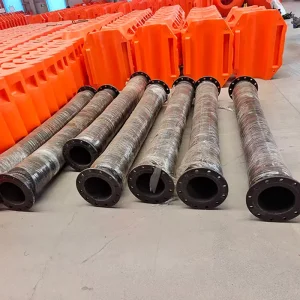
Custom Flexible Rubber Hoses for Japanese Sediment and Fluid Transport
Abrasion-Proof Liner

Custom Flexible Rubber Hoses for Dredging & Sediment Transport in Japan Ports

View Product Details
Custom Marine Buoys for Inland and Coastal Waterways in Japan
High Salinity Stability

Custom Reliable Marine Buoys for Waterway Safety Across Japan Coastal Zones

View Product Details
ODM Deepwater Pipeline Support Floats for Subsea Buoyancy Engineering in Japan
Hydrostatic Compressive Core

ODM Deepwater Pipeline Support Floats – Subsea Buoyancy for Japan Marine Projects

View Product Details

Frequently Asked Questions: Buoyancy Engineering for Japan

Clear, direct engineering answers to operational, logistic, and regulatory considerations when importing floating balls into Japan.

What makes Juhua's floating balls suitable for Japan’s typhoon and seismic conditions?
Our floating ball products are manufactured via multi-axis rotational molding utilizing high-purity virgin LMDPE or impact-resistant ABS. Unlike thin blow-molded spheres, our products maintain wall thicknesses from 6mm to 18mm depending on structural class. Every unit is pressure-injected with high-density polyurethane closed-cell foam (≥38kg/m³), which acts as a reinforced internal structural bulkhead. If typhoon swells drive floating spheres into seawalls, tetrapods, or work vessels, the core maintains structural integrity and prevents water ingress.
How do your products comply with Japan Coast Guard (JCG) navigation aid standards?
For navigation channel and marine work zone demarcations, our floating balls and buoys are colored with anti-fading marine-grade color masterbatches matching the JCG Maritime Navigation Aids criteria (Yellow, Signal Red, Green, White). Optional high-efficiency solar LED beacon components feature flash characters (IALA-compliant), autonomous optical night switches, and high-transmission polycarbonate lenses offering visibility up to 3 to 5 nautical miles.
What is the buoyancy sizing formula recommended for pipeline and aquaculture moorings?
We follow the conservative engineering rule: Net Safe Buoyancy ≥ (Submerged Hardware Weight + Dynamic Wave Load + Slurry/Fouling Allowance) × 1.3 to 1.5. In Japanese aquaculture and dredging zones subject to high tidal flows, we calculate a minimum reserve buoyancy margin of 35% to prevent the sphere from submerging below hydrodynamic equilibrium during peak ebb or flood currents.
Can custom eyelet hardware be integrated into floating spheres for heavy chain linkages?
Yes. We provide hot-dip galvanized (HDG) or marine-grade SUS316 stainless steel through-rods, swivel eyes, and internal reinforcement plates embedded during the rotomolding cycle. This completely isolates tensile mooring forces from the plastic shell, channeling loads directly across the forged structural core.
What are your lead times and shipping capabilities to primary Japanese commercial ports?
From our advanced Binzhou manufacturing complex near Qingdao Port, containerized ocean shipments to Yokohama, Tokyo, Kobe, Osaka, and Hakata typically take 3 to 5 transit days. For urgent EPC dredging or emergency flood rehabilitation schedules, we provide pre-packaged container loading plans that maximize volumetric packing and reduce port handling overhead.
Are certificates of origin and third-party inspection documents provided for Japanese customs?
Yes. We issue RCEP (Regional Comprehensive Economic Partnership) Certificates of Origin for preferential tariff treatment in Japan, alongside ISO 9001/14001 factory documentation, SGS/TUV raw material composition certificates, and hydro-static burst test reports upon dispatch.

Connect Directly with Our Flotation Engineering Specialists

Send your project blueprints, pipe OD specs, or mooring buoyancy parameters today. Our technical engineering division delivers localized proposals, hydrodynamic calculations, and FOB/CIF Japan quotations within 24 hours.

Send Inquiry Now