Engineered OEM Rotomolded Solutions for Ethiopia
Heavy-duty, seamless polyethylene systems engineered to endure extreme UV irradiance, hydraulic pressure, and challenging field logistics in East Africa.
-
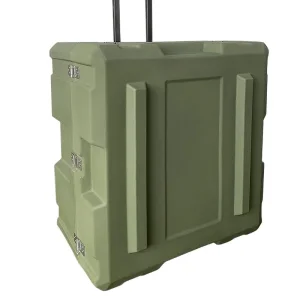
Heavy-Duty Rotomolded Defense & Field Logistics Container (Ethiopia Spec)
-
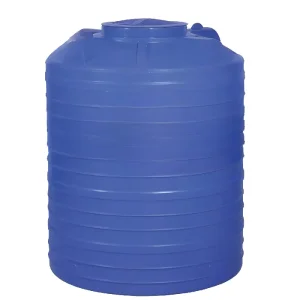
High-Capacity Polyethylene Potable & Agro Chemical Storage Tank System
-
Commercial Aquatic Sports & Lake Tana Tourism Marine Rotomolded Platform
-
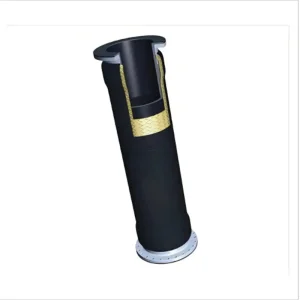
High-Abrasion Industrial Slurry & Irrigation Dredging Rubber Hoses
Rotational Molding Industrial Landscape in Ethiopia & East Africa
An in-depth assessment of Ethiopia’s rapidly modernizing infrastructure, domestic polymer fabrication limits, and the strategic pivot toward high-performance OEM manufacturing partnerships.
Infrastructure Expansion & GERD Impact
With mega-projects like the Grand Ethiopian Renaissance Dam (GERD), extensive municipal water grids, and river-basin diversion schemes across Oromia, Amhara, and Sidama, Ethiopia’s demand for structural polyethylene products has expanded beyond conventional low-grade water tanks into high-tensile dredging floats, desilting pontoons, and pipeline containment systems.
- Hydraulic desilting and floating pumping stations
- UV-resistant agricultural canal water barriers
- Municipal catchment and chemical dosing tanks
Severe Water Scarcity & Agricultural Modernization
Agriculture drives over 32% of Ethiopia's GDP. Intensifying dry spells across the Rift Valley and Eastern lowlands necessitate commercial rainwater harvesting, bulk agro-chemical storage, and closed mobile liquid tanks. Rotomolded LLDPE vessels provide the essential environmental stress-crack resistance (ESCR) missing from blow-molded or welded sheet alternatives.
- Food-grade FDA compliance for coffee and tea processing
- Fertilization and liquid fertilizer dosing infrastructure
- Subsurface modular cisterns and transport tanks
Local Tooling & Machinery Deficits
While domestic industrial parks (Hawassa, Bole Lemi, Dire Dawa) are growing, local manufacturing in Ethiopia faces heavy constraints in multi-axis CNC aluminum tooling, polymer pulverization facilities, and computerized multi-arm carousel rotomolding ovens. Procuring turnkey OEM rotomolded units engineered to spec eliminates years of capital expenditures and local raw-material bottlenecks.
- Zero local tooling amortisation risks for complex geometries
- Fully tested foam-filled marine and industrial components
- Direct container delivery via the Addis-Djibouti freight corridor
Resolving the Strategic Manufacturing Gap in Ethiopia
For municipal contractors, international EPC consortiums, and Ethiopian state utilities, sourcing specialized rotational molded items locally has frequently resulted in premature structural failure. Substandard locally available tanks and pontoons frequently utilize recycled resins with inadequate carbon black or UV-8/UV-20 stabilization, leading to polymer degradation under Ethiopia's intense high-altitude solar radiation.
Our OEM rotomolding production ecosystem bridges this gap by delivering ISO 9001 and CE certified engineering solutions directly from our smart manufacturing plant. We supply tailor-made, high-precision rotomolded assemblies that meet exact hydraulic, mechanical, and ballistic performance criteria.
Ethiopia Project Deployment Checklist
Key considerations our engineering team reviews before mold fabrication and dispatch:
- UV Index Compatibility: Specialized antioxidant & hindered amine light stabilizer (HALS) package.
- Hydrostatic Finite Element Analysis: Ribbing profile designed to avoid bulging under 1.6+ SG fluids.
- Logistics Optimization: Stackable nesting geometries engineered for 40ft High Cube container loads into Djibouti.
- Molded-in Threaded Inserts: Marine-grade stainless steel (SUS316/304) or brass inserts, leak-proof without welding.
Global Rotomolding Trends & Engineering Disciplines
Transitioning from basic open-flame manual systems to precision bi-axial computerized closed-cell casting: how modern OEM rotational molding outperforms competing polymer fabrication methods.
| Performance Parameter | Rotational Molding (OEM Factory Spec) | Blow Molding | Injection Molding | FRP (Fiberglass Composite) |
|---|---|---|---|---|
| Internal Residual Stress | Zero residual stress; polymer melts without hydraulic shear pressure. | Moderate to high hoop stress near mold pinch-offs. | High directional orientation and molded-in shear stresses. | Variable cure shrinkage stresses, delamination prone. |
| Wall Thickness Uniformity | Engineered via rotational cycle speed ratio (bi-axial speed profiling). | Thin corners, parison sag issues on deep profiles. | Very uniform, but limited to thin-to-medium walls (<6mm). | Manual hand lay-up causes significant thickness variance. |
| Tooling Cost & Lead Time | Low-to-moderate tooling costs; fast CNC aluminum / cast tooling (2-4 wks). | High tooling expenses; complex cooling channel requirements. | Extremely high steel tooling cost; lengthy lead time (8-16 wks). | Low tool cost, but very slow production cycle per unit. |
| Complex Hollow Geometries | Exceptional; seamless single-piece hollow bodies with encapsulated inserts. | Restricted to bottle or simple canister geometries. | Hollow parts require multi-piece split molding and ultrasonic welding. | Requires multi-part bonding or internal bladder mandrels. |
| Impact Resistance (Cold/Hot) | Superior ductile toughness; no seam lines or knit lines to propagate cracks. | Pinch-off lines represent continuous points of mechanical weakness. | Brittle crack propagation under multi-axial impact loads. | Brittle gel-coat cracking; low ductile energy absorption. |
| Polyurethane Foam Filling | Seamless in-situ high-density PU injection (closed cell 35-45 kg/m³). | Not practically viable inside automated line. | Not compatible with continuous molding cycle. | Secondary foaming often leads to internal air voids. |
Multi-Layer Co-Rotomolding
By synchronizing drop-box systems inside high-temperature cycles, we cast multi-layer structures: an ultra-tough outer protective shell with UV20+ pigments, a foamed middle core for insulation or buoyancy, and an anti-static or ultra-pure inner food-contact barrier.
FEA Structural & Dynamic Hydro Testing
All OEM items undergo 3D Finite Element Analysis (FEA) simulating hydrostatic pressure, external soil surcharge, and wave-induced cyclical bending. This prevents wall buckling in large dredging floats and subsea pipeline tie-in buoyancy modules.
Microprocessor Thermocouple Telemetry
Our rotomolding ovens utilize continuous wireless internal-air-temperature (PIAT) telemetry. By monitoring the exact polymer melting phase, cross-linking plateau, and cooling curve, we eliminate brittle under-cures and degraded over-cures.
Why International & Ethiopian Contractors Partner with Our China Factory
Combining world-class production economies, precision CNC tooling suites, and reliable multimodal shipping into Djibouti Port for seamless distribution to Addis Ababa and regional hubs.
Scale & Capacity Reliability
Equipped with advanced carousel, shuttle, and swing-arm rotational molding machinery capable of casting monolithic parts up to 6.5 meters in diameter or length. Over 1,000 m² of specialized production footprint ensures high output for urgent infrastructure tenders.
In-House Tooling & Prototyping
We do not outsource mold making. Our in-house CNC mold engineering center fabricates heavy-wall cast aluminum and fabricated steel molds with custom textures, embedded client logos, lifting lugs, and calibrated parting lines with rapid turnaround.
Polymer Supply Chain Dominance
Direct volume sourcing of virgin linear low-density polyethylene (LLDPE), high-density polyethylene (HDPE), and cross-linked resins (XLPE) ensures batch stability, lower resin price overheads, and traceable laboratory certificates of analysis (COA).
Specialized Deployment Sectors Across the Ethiopian Economy
Custom rotomolded systems engineered to address distinct environmental and operational challenges in East Africa's most dynamic economy.
Hydraulic Silt Dredging & Dam Basins
Silt buildup threatens reservoir capacity in Ethiopian dams (Tekeze, Gilgel Gibe, GERD). Our modular polyethylene pipe floats and tie-in floats secure dredging pipelines against surging river currents without corrosion or rust-induced failure.
- High-buoyancy closed-cell PU core
- Impact-resistant outer LLDPE shell
- Galvanized or SS304 clamping bolt hardware
Agro-Industrial Processing & Fertilizers
Commercial plantations in Awash, Gambela, and Southern Nations require chemical batching tanks, pesticide storage, and liquid molasses containers resistant to high ambient temperatures and aggressive chemical solutions.
- High chemical compatibility (pH 1-14)
- Molded-in gallon/liter calibration markers
- Integrated anti-slosh internal baffle ribs
Municipal Water Grids & Sanitation
Rapid urban growth in Addis Ababa, Dire Dawa, Bahir Dar, and Hawassa strains municipal water infrastructure. Our water tanks and septic chambers provide durable, non-leaching containment with over 30 years of design service life.
- 100% food-grade LLDPE inner layer
- Algae-resistant light-blocking middle layer
- Anti-crack subterranean ribbed profiles
Field Logistics, Relief & Emergency Containers
Relief missions, defense deployment, and telecom installations in rugged areas (Danakil, Somali Region) demand air-droppable, waterproof, and impact-proof logistics transit cases for sensitive electronic gear and emergency provisions.
- Ingress Protection IP67 airtight seals
- Molded stacking ribs & pressure valves
- Drop-tested from heights up to 3 meters
Inland Lakes Aquaculture & Floating Marinas
Freshwater fisheries on Lake Tana, Lake Chamo, and Lake Hawassa are transitioning to high-density polyethylene floating docks, modular fish-farming pontoon systems, and safety navigation buoys that withstand wave wear without rusting.
- Skid-proof interlocking surface texture
- 350 kg/m² load capacity per pontoon module
- Ecological inertness; no chemicals leech into lake ecosystems
Hydropower Floating Debris & Trash Barriers
Water hyacinth infestations and floating tree debris pose serious hazards to turbine intakes across Ethiopian hydroelectric stations. Our heavy-duty floating barriers intercept floating waste before it enters penstocks and spillways.
- Steel wire rope / chain pass-through design
- High-visibility warning colors (International Orange/Yellow)
- Anti-fouling, self-shedding exterior
Enterprise Procurement Standards & Verification Procedures
Stringent factory acceptance testing (FAT) routines applied to every OEM production run to satisfy international inspection authorities and public tender specifications.
Ultrasonic Wall-Thickness Audits
Calibrated high-frequency ultrasonic transducers map wall thickness across corners, parting lines, and deep draw areas to verify compliance with engineering drawings (tolerances kept within ±0.5mm).
Low-Temperature Dart Drop Testing
Per ASTM D5420 and ISO 6603 standards, test coupons and full-scale samples are conditioned at -20°C to verify brittle-ductile transition curves and resin cross-linking integrity before batch release.
Hydrostatic Pressure & Leak Proofing
Liquid vessels undergo 48-hour pressure hold testing with pneumatic differential sensors. Flotation equipment is submerged to confirm 100% watertight shell integrity prior to polyurethane foam injection.
Standard OEM/ODM Engagement Workflow for Ethiopian Clients
Our engineering and commercial team facilitates seamless cooperation across technical definition, sample validation, and commercial customs clearance:
Heavy-Duty Dredging Floats, Pipelines & Marine Navigation Infrastructure
Certified marine flotation equipment, dredging pipelines, and mooring buoys engineered to operate reliably in harsh riverine, dam, and offshore environments.
-
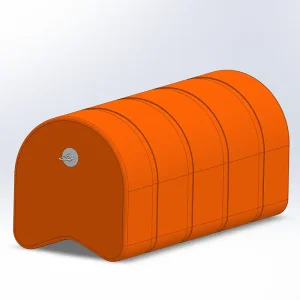
Modular Pipeline Float Tie-In Buoyancy Collar for Submerged Lines
-
Heavy-Duty Subsea & River Pipeline Continuous Support Buoyancy Floats
-
Precision Engineered Under-Water Tie-In Pipe Positioning Float
-
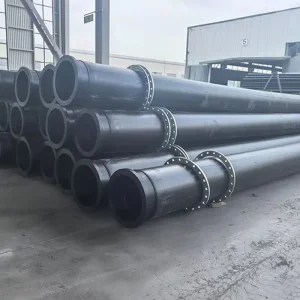
Industrial Grade HDPE Dredging & Tailings Transport Discharge Pipeline
-
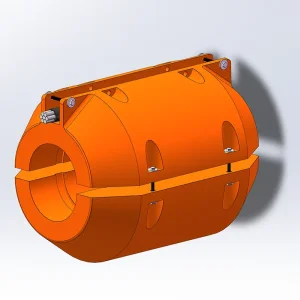
Hydro Dredging Pipe Floats with Integrated Submersible Cable Troughs
-
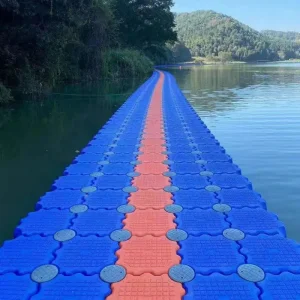
Modular Interlocking Boat Pontoon Float for Marine Dock Platforms
-
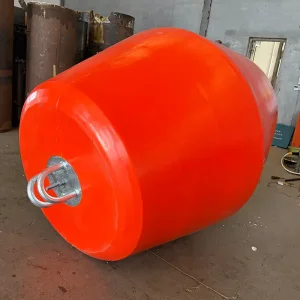
High-Tension Steel-Frame Reinforced Offshore Vessel Mooring Buoy
-
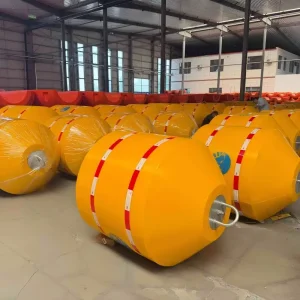
Rotomolded Marina Berth & Harbor Channel Mooring Positioning Buoy
Frequently Asked Questions: Rotomolded Manufacturing & Ethiopian Importation
Comprehensive technical guidance for procurement managers, project engineers, and import specialists.
B_total = (W_pipe + W_slurry + W_hardware) × Safety Factor (1.2 to 1.35). For river desilting projects near the Blue Nile or mining tailings transfers, we account for slurry densities ranging between 1.3 kg/L and 1.8 kg/L, guaranteeing that at least 25% of the float's diameter remains safely above the water surface to accommodate surge waves.