
High-Performance Pipelines Engineered for Moroccan Operations
Pre-engineered heavy-duty conveyance pipes optimized for high-abrasion phosphate transport, pressurized seawater transfer, and deep-water dredging across Atlantic and Mediterranean maritime corridors.
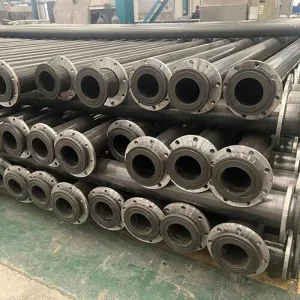
Best Durable Pipeline for Efficient Fluid Transport Supplier, Products
Engineered for high-volume brine and potable water distribution across Safi, Jorf Lasfar, and Casablanca municipal intake networks.
Explore Specifications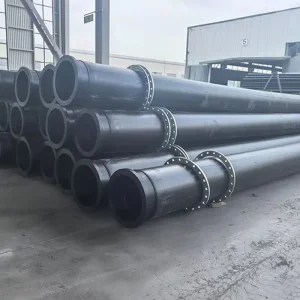
Best Heavy-Duty Pipeline for Safe and Efficient Transport Companies, Company
Designed for severe slurries in the Khouribga–Jorf Lasfar axis, featuring ultra-high abrasion resistance and pressure tolerance.
Explore Specifications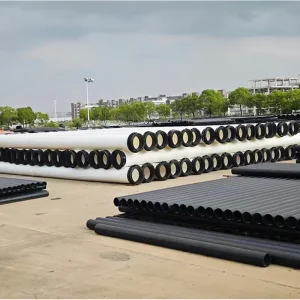
ODM Heavy-Duty Pipeline for Versatile Water and Fluid Transport Product, Quotes
High-tensile, crack-resistant pipes designed for inter-basin water highways, agricultural irrigation canals, and flood mitigations.
Explore Specifications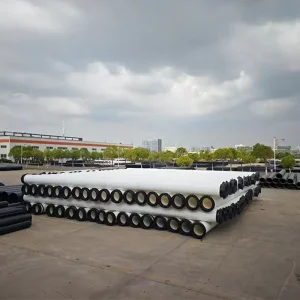
ODM High-Density Pipeline for Efficient Liquid and Gas Transport Manufacturers, Factories
Seamless high-density polymer matrices providing absolute impermeability against chemical reagents, hydrocarbons, and industrial liquids.
Explore SpecificationsCommercial & Engineering Dynamics of Pipelines in Morocco
As the gateway between the Atlantic, the Mediterranean, and sub-Saharan Africa, the Kingdom of Morocco is undergoing a transformative infrastructure expansion driven by mining modernization, water security, and world-class port complexes.
OCP Group & Phosphate Slurry Corridors
Morocco holds over 70% of the world's phosphate reserves. The transportation paradigm has evolved from traditional rail haulage to cutting-edge hydraulic slurry pipelines. The flagship 235 km Khouribga-to-Jorf Lasfar slurry corridor revolutionized rock phosphate conveyance by cutting logistical costs by 90% and conserving millions of cubic meters of process water annually.
Mining contractors and tailings management operators across the Gantour and Oulad Abdoun basins demand pipelines and flotation equipment with superior inner-wall hardness (Shore D 65+), resistance to slurry cavitation, and high burst tolerances under persistent dynamic cyclic loads.
National Desalination Master Plan & Water Highways
Faced with structural drought and shifting precipitation cycles, Morocco has launched the National Drinking Water Supply and Irrigation Programme (PNAEPI 2020-2027). The landmark Casablanca Mega-Desalination Plant (300 million m³/year capacity), alongside active installations in Agadir, Chtouka Ait Baha, and Safi, demands extensive pipeline corridors.
High-salinity brine discharge and deep-water ocean intake lines require pipelines impervious to biological marine fouling, galvanic reaction, and high hypersaline corrosion—attributes where high-grade polyethylene outperforms traditional ductile iron and lined carbon steel.
Tanger Med & Atlantic Port Maritime Expansion
Tanger Med is the leading container port on the Mediterranean and African continent. Along with the upcoming Nador West Med energy hub and the Atlantic deep-water port at Dakhla, ongoing capital dredging, harbor deepening, and sediment maintenance are continuous priorities.
Dredging contractors operating along the wave-swept Atlantic coastline require robust rotomolded polyethylene pipe floats, flexible marine rubber discharge hoses, and heavy-duty mooring buoys capable of weathering high tidal surges, UV index ratings exceeding 10, and heavy maritime traffic.
Shifting Dynamics in International Pipeline Procurement
Global engineering, procurement, and construction (EPC) conglomerates are actively re-evaluating material lifecycles, carbon footprints, and supply chain redundancies in heavy industrial fluid transfer.
The Decisive Shift from Steel to PE100-RC
Traditional carbon steel pipes, even when externally coated with epoxy and lined internally with cement mortar, suffer irreversible degradation when exposed to North African saline groundwater and acidic mine tailings. Global EPCs serving Morocco increasingly mandate PE100 and PE100-RC (Resistant to Crack) formulations.
The molecular ductility of polyethylene absorbs water hammer transients up to 1.5 times nominal working pressure without brittle fracture, eliminating cathodically protected joint maintenance and lowering overall life-cycle expenditure.
Tier-1 EPC Procurement Standards
Major European, Moroccan, and Middle Eastern EPC contractors operating in North Africa impose stringent technical qualification gates. Suppliers must demonstrate full compliance with ISO 4427, EN 12201, and ASTM F714 standards for municipal pipelines, alongside PIANC guidelines for dredging buoyancy equipment.
Procurement audits prioritize raw material traceability—demanding verifiable virgin grade resins (such as Borouge, SABIC, or Sinopec PE100) with complete Melt Flow Rate (MFR) and Carbon Black Dispersion reports to combat premature thermal and photo-oxidative aging under Moroccan sunlight.
Total Cost of Ownership (TCO) vs Initial Capex
In high-throughput slurry pipelines and floating dredging strings, maintenance downtime represents the single largest operational cost. Traditional steel pipe floats frequently suffer puncture-induced sinking, weld corrosion, and high drag in rough Atlantic swells.
Next-generation rotational molding uses high-resilience LLDPE shells filled with 40-45 kg/m³ closed-cell polyurethane foam. Even if breached by maritime debris or rock collisions, zero water penetration occurs, maintaining pipeline alignment and eliminating catastrophic subsea line failure.
| Performance Indicator | High-Density Polyethylene (PE100 / Juhua) | Lined Carbon Steel (API 5L) | Ductile Iron Pipe (DI) |
|---|---|---|---|
| Corrosion Resistance in Seawater | Complete Immunity (pH 1 - 14) | Requires cathodic anodes & multi-layer epoxy | Vulnerable to galvanic attack if lining cracks |
| Phosphate Slurry Wear Rate | Up to 4x Better Abrasion Life vs Steel | Rapid gouging; requires recurring pipe rotation | High friction head loss; brittle inner liners |
| C-Factor (Hazen-Williams Roughness) | 150 - 155 (Stays smooth permanently) | 120 - 130 (Decays over time due to rust) | 130 (Subject to biological tuberculation) |
| Weight per Meter (Buoyancy load) | Lightweight (Density ~0.95 g/cm³) | Heavy (~7.85 g/cm³); requires massive floats | Heavy (~7.1 g/cm³); cumbersome logistics |
| UV Degradation in Morocco (UV Index 10+) | UV8 / UV15 Carbon Black Stabilized (>30 yrs) | Coating peels under extreme solar cycling | External bitumen degrades and chalks |
China's Manufacturing Resilience: Engineering Precision & Volume
Shandong Binzhou Juhua Rubber & Plastic Co., Ltd. leverages Industry 4.0 automated rotational molding systems to deliver flotation and heavy pipeline components with unmatched dimensional stability and rapid lead times to North Africa.
Automated Variable-Frequency Rotomolding
Our intelligent rotational molding cells feature computer-controlled biaxial arm kinematics and multi-zone infrared thermal feedback. This completely eliminates manual operator variance, guaranteeing that high-stress radii and mounting flanges achieve uniform wall thickness tolerances within ±3%.
This structural consistency prevents thermal warping under extreme day-to-night temperature fluctuations in the Moroccan desert (such as Ouarzazate or the phosphate plateaus of Benguerir).
Closed-Cell Polyurethane Foaming Technology
Every Juhua dredging pipe float shell is injected with high-density, fire-retardant, closed-cell polyurethane foam (40–45 kg/m³). In contrast to lower-grade alternatives that absorb water over prolonged immersion, our closed-cell matrix exhibits water absorption under 1% by weight after continuous hydrostatic pressure exposure.
Even if an errant dredging workboat impacts the float shell at high velocity, buoyancy remains 100% stable, ensuring uninterrupted pumping operations.
Standardized Tooling & Spare Part Interchangeability
With more than two decades of dedicated rotational molding expertise and over 1,000 m² of specialized mold archives, our standardized halves guarantee exact mating tolerances. Marine contractors in Casablanca or Tangier can interchange float halves across production runs spanning multiple years without drilling or modification.
Fast-turnaround CNC molds enable bespoke pipeline diameters from 110 mm up to 1,200 mm, tailored to specific outside pipe diameters and slurry densities.
Direct Freight Lanes to Casablanca, Tanger Med & Agadir
Through strategic export dispatch from Qingdao and Tianjin ports, Juhua coordinates continuous containerized (40ft High Cube) and bulk break vessel deliveries directly to Moroccan ports with comprehensive maritime documentation, EUR.1 / CO certifications, and third-party inspection (SGS/BV) compliance.
Localized Engineering Scenarios Across Morocco
From the arid high plateaus of mining basins to high-energy Atlantic coastal ports, our pipeline and buoyancy systems are engineered to address specific hydrological and environmental challenges.
Khouribga & Benguerir Tailings Flotation
Tailings decantation ponds in open-pit phosphate mines require floating dewatering pumps and surface bypass lines. Juhua pipe floats provide 30% buoyancy reserve over heavy slurry weights, preventing silt entrapment and line submergence.
- Slurry densities: 1.35 to 1.60 t/m³
- Reinforced UV15 polymer shells
Casablanca Desalination Intake Lines
Deep seawater intake pipelines require non-leaching, non-toxic materials conforming to environmental health regulations. Our large-bore HDPE pipelines maintain smooth laminar intake flow, reducing marine organism impingement and pumping energy draw.
- Diameters up to DN1200
- Hypersaline brine outfall resistance
Tanger Med & Nador Dredging Corridors
Harbor fairway maintenance dredging requires discharge pipelines that flex with dynamic Atlantic swell conditions. Juhua pipe floats, armored rubber dredge hoses, and mooring navigation buoys form an integrated, highly visible maritime pipeline corridor.
- Impact-absorbing polyurethane fill
- IALA-compliant safety colors
Noor Solar & Green Hydrogen Hubs
From the concentrated solar power (CSP) cooling reservoirs in Noor Ouarzazate to emerging green ammonia production zones near Guelmim, our pipelines transport demineralized water and aggressive chemical reagents with complete molecular inertness.
- Thermal tolerance from -40°C to +60°C
- Zero permeation joint fusion
Buoyancy Calculation for Marine Slurry Pipelines
A frequent failure point in dredging and slurry transport across the Atlantic coast of Morocco is under-calculating buoyant reserve when slurry densities fluctuate under heavy dredging passes.
The Juhua Buoyancy Sizing Formula:
Where:
- W_pipe: Dry weight of the HDPE or rubber pipeline per linear section (kg).
- V_internal × ρ_slurry: Mass of the transported fluid. Note: For Moroccan phosphate slurry, density typically ranges from 1.30 to 1.55 t/m³ (significantly heavier than seawater at 1.025 t/m³).
- Safety Margin (1.25 – 1.35): Provides sufficient freeboard so that approximately 1/4 to 1/3 of the pipe diameter remains visible above the waterline, preventing wave drag and sub-surface scouring.
Integrated Pipelines, Buoyancy & Marine Infrastructure
Browse our complete catalog of industrial-grade pipelines, clamp-on rotomolded pipe floats, floating barriers, and marine mooring buoys serving ports and industrial projects across Morocco.
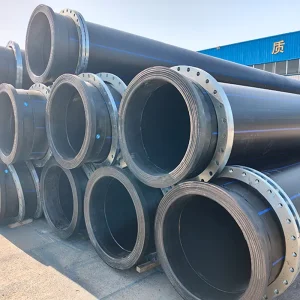
ODM High-Performance Pipeline for Industrial and Municipal Transport Suppliers, Companies
Certified for high-volume municipal water distribution, industrial effluent bypass, and wastewater transport lines.
Explore Specifications
OEM Industrial-Grade Pipeline for Reliable Fluid Transport Companies, Factory
Engineered to resist aggressive chemicals, acidic process water, and corrosive leaching fluids in industrial processing zones.
Explore Specifications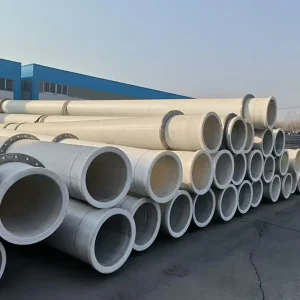
ODM Industrial-Strength Pipeline for Efficient Fluid and Material Transport Supplier, Quotes
Thick-walled high-strength polymer piping designed specifically for coarse slurry and sand backfilling applications.
Explore Specifications
High-Quality Robust Pipeline for Reliable Fluid and Material Transport Manufacturers, Factory
Long-distance pressure conveyance pipeline built to resist environmental stress cracking (ESCR) under intensive sunlight.
Explore Specifications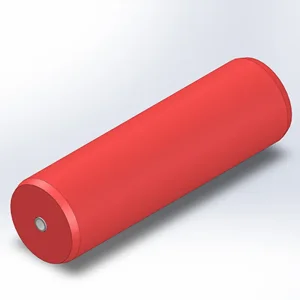
Custom Floating Barrier Systems for Effective Water Safety and Pollution Control Product, Factories
Interconnected modular booms designed for reservoir debris containment, silt deflection, and port perimeter environmental security.
Explore Specifications
High-Quality Pipe Floats for Floating Pipeline Support and Water Transfer Product, Company
Rotomolded virgin PE shells filled with closed-cell polyurethane foam, clamp-fastened for dredge discharge lines up to 1200mm OD.
Explore Specifications
ODM Mooring Buoy for Secure Vessel Anchoring and Stable Marine Mooring Systems Manufacturers, Manufacturer
Heavy-duty marine anchoring buoys reinforced with central steel structural load frames for workboats, tugs, and dredging vessels.
Explore Specifications
ODM Mooring Buoy for River Terminals and Workboat Berths Product, Quotes
Impact-absorbing, non-marking buoyant markers built to withstand repeated berthing impacts and high-velocity river currents.
Explore SpecificationsEngineering, Procurement & Logistics Q&A for Moroccan Clients
Key technical considerations, import standards, and operational guidelines answered by our senior pipeline and flotation engineers.
How do Juhua HDPE pipelines compare to rubber-lined carbon steel in Moroccan phosphate slurry?
While rubber-lined steel offers high initial rigidity, it suffers from heavy tare weight, catastrophic liner debonding, and vulnerable flange connections. Juhua PE100/PE100-RC pipelines exhibit a natural molecular flexibility that resists slurry erosion up to 3–4 times longer than mild steel. Furthermore, the Hazen-Williams C-factor remains at 150 permanently, preventing scaling and reducing pumping power costs by up to 25% over the asset life cycle.
What UV stabilization rating is used to withstand high solar radiation in Morocco?
Morocco experiences extreme UV index ratings (often exceeding 10–11 in summer across the interior and southern zones). All Juhua rotomolded pipe floats and marine buoys are synthesized with 100% virgin LLDPE/HDPE compounded with hindered amine light stabilizers (HALS) and a minimum of 2.0–2.5% finely dispersed carbon black (or color-matched UV15 additive packages). This guarantees over 15 to 20 years of continuous outdoor exposure without embrittlement or surface chalking.
What is the standard shipping lead time from your factory to Casablanca or Tanger Med?
Production cycles for standard-diameter pipelines and pipe floats range from 7 to 15 business days depending on order volume. Ocean freight transit from Qingdao, Tianjin, or Shanghai directly to Casablanca or Tanger Med takes approximately 28 to 35 calendar days. We provide comprehensive export packaging, nesting smaller diameters inside larger pipes to optimize container space and minimize landed freight costs.
Are custom float dimensions available for non-standard pipe outer diameters?
Yes. Our in-house mold tooling department engineers custom CNC molds to fit non-standard steel pipes, armored discharge hoses, or pre-insulated lines with outer diameters ranging from 110 mm up to 1200 mm. We also engineer integrated channels for electrical power cables and hydraulic lines required for floating dredging cutter heads and decanting booster pump stations.
How does Juhua assure quality compliance for Moroccan government & OCP tenders?
All production batches are governed under strict ISO 9001, ISO 14001, and ISO 45001 quality management matrices. We provide certified raw material mill test certificates (MTC), hydrostatic burst testing reports (ISO 1167), tensile elongation at break tests, and foam density verification. We routinely coordinate independent pre-shipment inspections with global bureaus such as SGS, Bureau Veritas, and TÜV Rheinland.
What fasteners and accessories are supplied for marine dredging lines?
For installations in Atlantic saltwater or aggressive chemical tailings, we supply heavy-duty connection hardware in hot-dip galvanized grade 8.8 steel or marine-grade AISI 316 stainless steel. Fasteners feature nylon-insert lock nuts and anti-crush backing plates to prevent stress concentrations on the polyethylene float clamping ears under high wave action.
Plan Your Moroccan Pipeline & Buoyancy Project
Connect directly with our senior pipeline specialists. We provide free hydraulic head loss calculations, buoyancy sizing assessments, and competitive FOB/CIF Casablanca freight proposals within 24 hours.
Send Inquiry Now