
High-Integrity Pipeline Systems for Pakistan Projects
Pre-qualified pipelines and high-buoyancy modules manufactured to meet the high mechanical stress, silt abrasion, and variable operating pressures of major national developments.
Commercial & Industrial Pipeline Landscape in Pakistan
A strategic cross-examination of operational realities, economic corridors, and modern piping needs across Sindh, Punjab, Balochistan, and Khyber Pakhtunkhwa.
CPEC & Gwadar Maritime Expansion
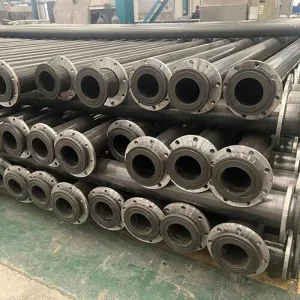
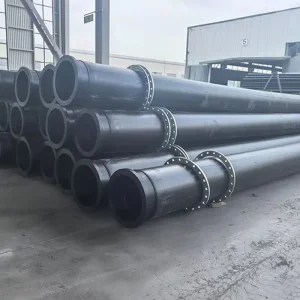
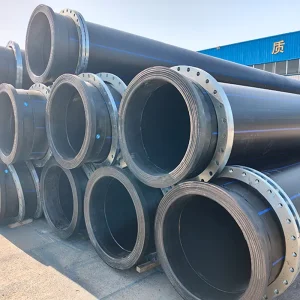
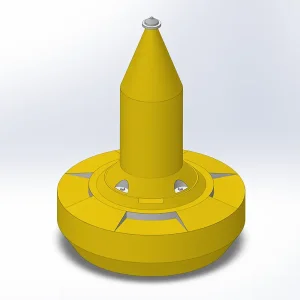
Under the China-Pakistan Economic Corridor (CPEC), the development of Gwadar Free Zone and deep-sea berths requires heavy-duty dredging pipelines, marine buoys, and seawater cooling conduits.
The hyper-saline Arabian Sea conditions accelerate oxidation on traditional steel piping, shifting infrastructure specifications decisively toward rotomolded PE floaters and 100% virgin resin HDPE (PE100) piping.
Thar Coal Field Mine Dewatering
The Thar lignite mining sector in Sindh encounters continuous sub-surface saline aquifers that must be dewatered safely over extensive distances to prevent pit-wall collapse.
Dewatering pipelines require exceptional tensile resilience, UV resistance in desert environments reaching 50°C, and smooth inner hydraulic bores (C=150) to minimize pump head losses across hundreds of kilometers.
Indus Basin Canal Rehabilitation
Pakistan operates one of the world's largest contiguous irrigation networks. Seepage and siltation reduce water transmission efficiency by up to 40% across provincial irrigation networks.
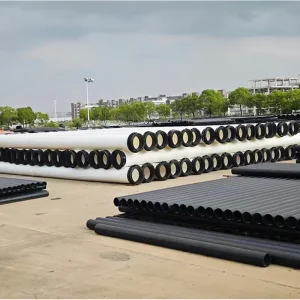
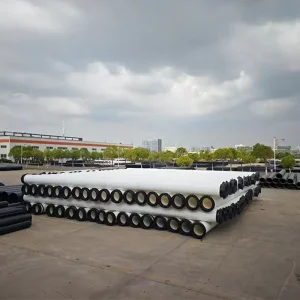
Modernized irrigation schemes utilize large-diameter polyethylene canal linings, siphon lines, and suction/discharge pipelines to ensure controlled agricultural flow and resilient flood mitigation.
Localized Engineering Use Cases & Operating Demands
Custom-engineered pipe geometries and specialized buoyancy accessories developed to resolve extreme field constraints throughout Pakistan.
Port Dredging Silt Discharge
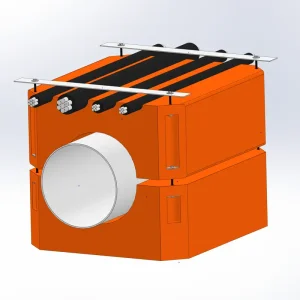
At Port Qasim and Karachi Port Trust, continuous silt accretion demands uninterrupted trailer suction hopper dredger operations. Polyethylene pipe floats maintain positive pipe freeboard, counteracting heavy sand-slurry loads up to 1.6 t/m³.
Industrial Effluent & Petrochemicals
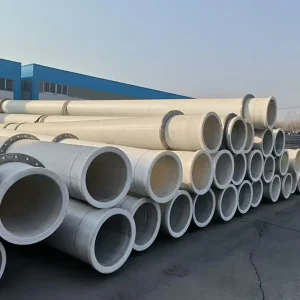
In the industrial corridors of Kot Lakhpat, Sundar (Lahore), and Korangi (Karachi), aggressive chemical effluents cause rapid pinhole leaks in concrete and steel pipes. High-grade PE resists acids, hydrocarbons, and alkalis between pH 1 and pH 14.
Hydroelectric Penstocks & Desilting
Northern hydropower projects across the Indus and Swat rivers face glacial flour and quartz-heavy sediment that erodes turbine assemblies. Desilting intake lines require high ring stiffness (SN8 to SN16) to withstand scouring abrasive velocity.
Municipal High-Pressure Potable Water
Water utility boards (WASA Lahore, KWSB Karachi, WASA Faisalabad) prioritize joint-free electrofusion welded pipeline networks that prevent pathogen infiltration from adjacent sewage ditches, safeguarding urban drinking water safety.
Chinese Manufacturing Strength & Direct Supply Resilience
Leveraging Shandong's petrochemical integration, world-class rotomolding capacity, and integrated logistics routes to deliver capital project cost savings.
Scale, Automated Control & Interchangeability
Our Binzhou manufacturing hub features automated multi-arm carousel rotomolding systems and electronic real-time ultrasonic wall thickness checks. Every pipe float and conduit is produced with pinpoint structural concentricity.
Standardized mold geometry guarantees that modular float shells match existing dredging assets across successive pipeline replacement contracts.
Integrated Raw Material Polymer Chemistry
We source certified Sinopec and PetroChina virgin polyethylene compounds loaded with 2.5% dispersed channel carbon black and sterically hindered amine light stabilizers (HALS).
This formulation delivers field resistance against degradation caused by Southern Pakistan's intense sub-tropical UV radiation and extreme surface temperatures.
Optimized Belt-and-Road Maritime Logistics
With direct dispatch channels from Qingdao Port to Karachi and Gwadar ports, shipments benefit from established maritime lanes with 14–18 days typical transit windows.
Our nesting packaging strategies maximize 40-foot HQ container utilization, lowering freight overheads for Pakistani EPC contractors and project concession holders.
Worldwide Industrial Trends: Polyethylene vs Conventional Steel
How international maritime standards and infrastructure asset managers are accelerating total lifecycle optimization through high-performance polymer transitions.
Elimination of Cathodic Protection Costs
Unlike carbon steel pipes requiring sacrificial zinc anodes, dielectric coatings, and impressed current systems, PE pipelines remain chemically inert to soil salts, stray currents, and biofouling.
Hydraulic Superiority & Hazen-Williams Efficiency
With an ultra-smooth internal bore that resists tuberculation and scale calcification, PE pipeline networks save up to 25% pumping energy over decades of continuous high-volume discharge.
Rotomolded Closed-Cell Polyurethane Infill
Modern dredging pipe floats rely on resilient PE outer skins encasing marine-grade, hydro-phobic rigid polyurethane foam (35–45 kg/m³), ensuring continuous buoyancy even if pierced by marine debris.
Technical Roadmap: Smart Flotation & Advanced Polymers
Pioneering advancements in pipeline materials and flotation monitoring for next-generation dredging and civil water applications.
PE-RT II & Multi-Layer Extrusion
Adopting high-temperature resistant polyethylene (PE-RT Type II) and co-extruded barrier layers for industrial hot-water process lines and chemical slurries up to 95°C.
Integrated IoT Strain & Freeboard Sensors
Embedding wireless telemetry nodes within float hulls to monitor ballast levels, dynamic swell stress, and slurry balance during continuous marine discharge runs.
Ultra-High-Molecular Weight (UHMWPE)
Deploying UHMWPE-lined conduits delivering 4-to-7 times higher abrasion wear life than conventional carbon steel under intense quartz-laden dredging flow.
Zero-Carbon Recycled Thermoplastics
Integrating certified post-industrial circular polymers without compromising stress-crack resistance (FNCT > 1000h) to meet UN sustainability agendas.
Pakistani Standards, Testing & Technical Support
Engineered to satisfy PSQCA specifications, international FIDIC tender standards, and direct onsite jointing criteria.
PSQCA & International Standards
Our pipe and float runs are fabricated in full compliance with ISO 4427, EN 12201, ASTM F714, and PSQCA specifications, supported by accredited third-party test reports (SGS, BV, Intertek) verifying tensile yield, elongation, and hydrostatic burst strength.
EPC Contractor Liaison & Support
We provide bilingual (Chinese/English) technical submittal documentation, comprehensive buoyancy calculation tables, and butt-fusion welding operational guidelines tailored for contractors bidding on major public tenders.
Marine Fastening & Hardware Durability
Floater clamp sets and pipeline accessories incorporate Class 8.8 galvanized or 316-grade marine stainless steel threaded fasteners, eliminating hardware failure across Pakistan's humid and coastal installations.
Pipeline & Flotation Technical Inquiries
Direct technical answers addressing installation calculations, material grades, import clearance, and operational lifecycles.
Total Float Buoyancy ≥ (Dry Pipe Weight + Full Slurry Mass + Fasteners) × 1.25 to 1.30 Safety Reserve Factor.
This 25–30% reserve prevents pipeline submersion during sudden flow spikes or heavy swell action.
Comprehensive Marine Buoyancy & Heavy-Duty Fluid Lines
Industrial piping, marine navigation, and offshore mooring buoys engineered for complex civil, mining, and port dredging networks.


Start Your Pipeline Specification Review
Our engineering support team delivers full buoyancy sizing, pressure derating checks, packaging proposals, and direct FOB/CIF quotations within 24 hours.
Send Inquiry Now