
Priority Engineering Deployments for Ghana Coastal & River Operations
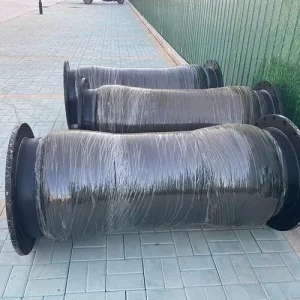
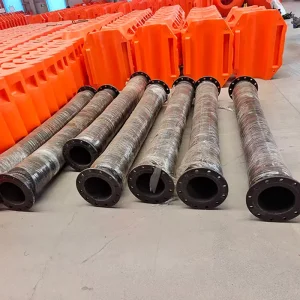
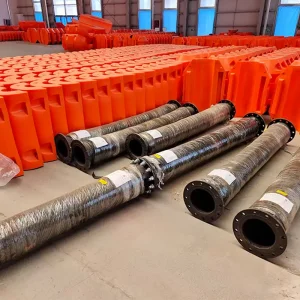
Heavy-duty slurry lines, suction-discharge hoses, and dynamic offshore assemblies optimized for hydraulic dredging, port land reclamation, and river desilting.
Industrial Landscape & Rubber Hose Demand in Ghana
Strategic economic expansion across West Africa is triggering rigorous technical criteria for fluid handling equipment in the Gulf of Guinea.
Deepwater Ports & Maritime Expansion
The continuous capacity expansions at the Port of Tema and Port of Takoradi require continuous maintenance dredging, capital channel deepening, and bunkering operations. Traditional rigid steel pipes fail rapidly under open sea swell dynamics, compelling EPC port contractors to switch to self-floating rubber hoses and high-pressure flexible discharge systems that endure cyclic bending fatigue.
Gold, Bauxite & Manganese Tailings
Ghana is Africa's preeminent gold producer. Across mining operations in Tarkwa, Obuasi, and Ahafo, abrasive tailings slurries with high quartz percentages rapidly scour ordinary conduit walls. Reinforced slurry rubber hoses with thick natural gum or synthetic wear-resistant linings provide up to four times the operating lifecycle of standard steel pipe, preventing plant downtime and environmental contamination.
Volta River Basin Water Engineering
Ecological desilting, hydro-dam intake channel maintenance along Lake Volta, and municipal flood prevention projects throughout Greater Accra demand scalable, lightweight water-sediment transport lines. Hose lines must withstand equatorial UV radiation, tropical thermal degradation (ambient temperatures regularly crossing 35°C), and microbial growth without delamination.
Global Supply Chain Dynamics & Engineering Trends
How state-of-the-art polymer formulations and manufacturing methodologies are reshaping fluid and slurry transportation economics globally.
Evolution Toward High-Modulus Elastomeric Matrixes
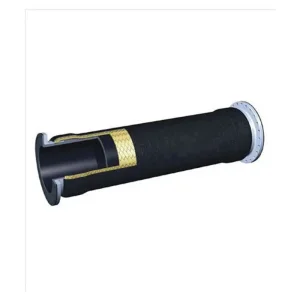
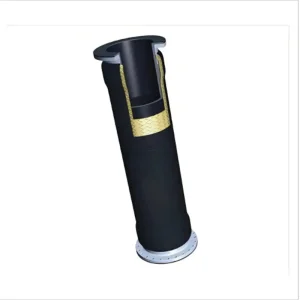
Globally, heavy industrial operators have phased out unreinforced, low-grade rubber piping. Modern infrastructure projects specify multi-ply tire-cord textile carcasses interlocked with high-tensile spring steel helix wire. This architectural matrix achieves full vacuum resistance (up to -0.09 MPa) during deep suction phases, while preserving elasticity to damp hydraulic shocks and water hammer effects from slurry pumping engines.
Self-Floating Integrated Technology
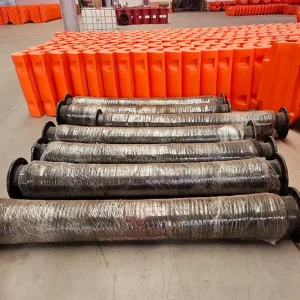
Offshore dredging projects are rapidly shifting from standard pipeline/clamp-on float systems to integral self-floating rubber hoses. Closed-cell polyethylene foam rings are built directly into the outer carcass layers, guaranteeing buoyancy even if the outer sheath incurs surface mechanical cuts from tugboat maneuvers or marine debris.
| Hose Configuration | Primary Application Profile | Wear-Lining Material Spec | Max Operating Pressure | Service Life Advantage |
|---|---|---|---|---|
| Dredge Discharge Hose | Sand and silt transport from CSD dredgers to shore | Natural Rubber (DIN 53516 ≤ 50mm³) | 15 to 25 Bar (217 - 362 PSI) | 3x over unlined composite pipes |
| Tailings Slurry Hose | Gold & bauxite ore processing plants | Carbon-Black Reinforced BR / SBR / Ceramic | 10 to 20 Bar (145 - 290 PSI) | Zero maintenance in heavy vibration areas |
| Self-Floating Rubber Hose | Harbor capital projects, open-swell dredging | Compound NR/EPDM with PE Closed-Cell Foam | 12 to 20 Bar (174 - 290 PSI) | Eliminates pontoons; avoids snap fatigue |
| Armored Ceramic Slurry Hose | Extremely sharp, coarse gravel & copper/gold ores | Hexagonal Alumina Ceramic Mosaic Tiles | 10 to 16 Bar (145 - 232 PSI) | Up to 10x longer service vs steel bends |
The China Manufacturing Engine: Competitive Edge for African Importers
Delivering heavy industrial reliability without the crushing capital premiums of European or North American manufacturing brands.
Unmatched Production Capacity & Lead Times
With automated, computer-monitored vulcanization autoclaves up to 60 meters in length and robotic cord-winding looms, Chinese factories can manufacture custom bore diameters (from 100mm to 1200mm) at scale. Where European suppliers cite 16 to 24 weeks for bespoke slurry hoses, our fully integrated plants deliver finished batches in 20 to 30 days.
Direct-to-Port Direct Maritime Corridors
Situated in Shandong's premier coastal manufacturing belt, our goods ship directly via Qingdao and Tianjin to Tema Port and Takoradi Port. Bulk packaging engineering maximizes 40ft High Cube container volumetric capacity, significantly cutting landed freight costs per meter of heavy elastomeric hose.
Engineered Custom Flange & Coupling Integrations
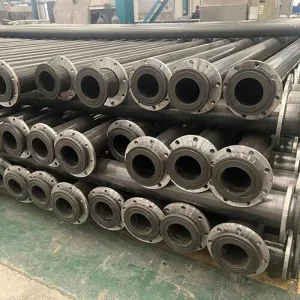
Every industrial project in Ghana operates under varying piping standards (DIN, ANSI, JIS, or BS). We forge and vulcanize integrated fixed flanges, sandwich flanges, or rotatable carbon-steel flanges directly into the hose bodies, guaranteeing leak-tight seals under intense pump pulsation and thermal cyclic expansion.
Procuring Rubber Hoses for an Active Mining or Marine Tender in Ghana?
Our application engineering department provides immediate bill-of-materials analysis, pressure drop calculations, and custom coupling design for EPC contractors and procurement managers.
Strategic Sourcing Checklist: Rubber Hoses in West Africa
Key parameters engineering procurement and supply teams must evaluate to ensure zero equipment failure in equatorial conditions.
1. Slurry Particle Morphology & PH Matrix
In gold mining operations in Ghana's Ashanti and Western Regions, acidic or alkaline chemical cyanidation tailings mix with fine-to-medium silica sands. The hose liner must not only resist physical impingement cutting (measured under DIN 53516 standards) but must also resist chemical oxidation and swell from process reagents.
2. Environmental Ozone & High Heat Resistance
Outdoor storage in tropical ports like Tema subjects synthetic rubber covers to aggressive ultraviolet radiation and high atmospheric humidity. Outer covers compounded from high-grade chloroprene (Neoprene) or EPDM polymers prevent ozone micro-cracking, preserving inner carcass cord reinforcement from moisture penetration and rust.
3. Working Bend Radius & Carcass Kink Resistance
Floating pipelines at sea face heavy swell forces near the Ghanaian coast. Rubber dredge hoses must be calculated with a minimal safety bend factor (typically 3 to 4 times the nominal diameter). Double-wire helix reinforcements ensure the cross-sectional flow area does not bottleneck or kink during severe multi-axial vessel rolls.
Frequently Asked Questions for Ghana Hose Procurement
Authoritative technical and logistical answers addressed to supply chain directors, marine superintendents, and project estimators.
Why choose reinforced rubber hoses over HDPE or steel pipes for dredging in Ghana?
HDPE and steel lines are brittle or rigid. In open water conditions along the Gulf of Guinea or moving dredge ladders, wave action and vessel maneuvers exert extreme torsional stress. Flexible rubber hoses absorb swell oscillations, eliminate flange fractures, damp pump vibrations, and offer significantly higher wear resistance against abrasive quartz sand than standard steel pipes.
What shipping terms and transit timelines apply when exporting to Tema or Takoradi?
We routinely execute shipments under FOB, CIF, or CFR terms. Average ocean shipping transit from northern Chinese ports (Qingdao/Tianjin) to Tema Port or Takoradi Port is approximately 32 to 40 days. All export hoses are crated, coiled, or secured in custom steel-frame crates to prevent carcass flattening during container loading and unloading.
Can rubber hoses be customized to match existing European or American pipeline flange standards?
Yes. Our integrated machine shop engineers custom flanges conforming to EN 1092-1, ASME/ANSI B16.5, AS 2129, and SABS standards. Flanges can be manufactured from carbon steel, galvanized steel, or stainless steel, and vulcanized permanently with full-face rubber gaskets to seal corrosive chemicals and seawater.
How do you verify the quality and pressure ratings before hoses are shipped to Ghana?
Every production run undergoes strict quality assurance protocols adhering to ISO 9001 and ISO 14001 frameworks. We perform hydrostatic burst pressure testing (holding at 1.5x working pressure), internal vacuum collapse tests, tensile adhesion verification, and DIN abrasion volume loss assessments on sample rubber specimens.
Extended Slurry, Dredging & Marine Barrier Solutions for Ghana
Explore our complete catalog of industrial rubber piping, heavy-duty dredge discharge systems, and modular protective containment infrastructure.
Ready to Streamline Your Rubber Hose Sourcing for Ghana?
Connect directly with our engineering division for tailored buoyancy sizing, DIN abrasion resistance reports, and competitive factory-direct CIF quotation packages.
Send Inquiry Now