
High-Buoyancy Modular Floats & Marine Anchorage Systems
Featured rotational-moulded polyethylene flotation modules certified for marina berths, dredging discharge pipelines, offshore mooring grids, and severe marine working conditions.


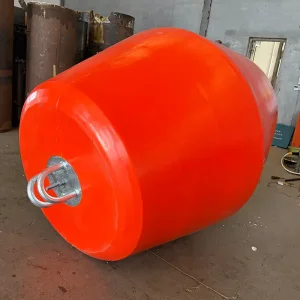

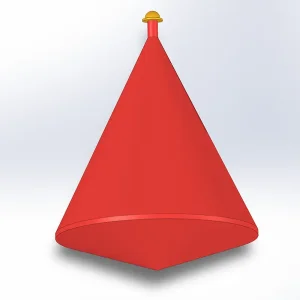
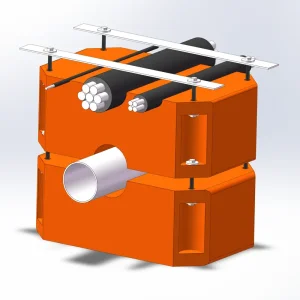
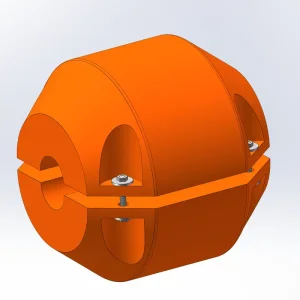
Evaluating the Best Polyethylene Dock Floats Suppliers: The Structural Shift from Traditional Steel Pontoon to Rotomolded Polymers
Marine civil engineering infrastructure operates in the world's most unforgiving environments. Saltwater saline attack, relentless cyclic wave fatigue, chemical runoff, hydrocarbon contamination, and destructive UV photodegradation have consistently exposed the vulnerabilities of legacy steel pontoon systems and unprotected expanded polystyrene (EPS) billets.
As premier global engineering projects shift toward resilient, circular marine infrastructure, Rotomolded Polyethylene (PE) Dock Floats have established undisputed dominance as the world standard. Shandong Binzhou Juhua Rubber & Plastic Co., Ltd. (branded globally as Juhua / Giant Rubber) stands at the pinnacle of this technological transformation, delivering monolithic, seamless, high-density polyethylene dock floats and deepwater pipeline flotation systems engineered precisely to project specifications.
By leveraging computerized variable-frequency thermal controls and closed-cell polyurethane (PU) marine core stabilization, modern rotomolded dock floats eliminate seam-failure risks entirely. Whether supporting high-end marina berthing pontoons, deep-draft heavy dredging discharge lines, floating solar photovoltaic (FPV) arrays, or offshore containment barriers, sourcing from premier suppliers ensures zero environmental leeching, total corrosion immunity, and a documented maintenance lifecycle exceeding two decades.
Material Performance Comparison Matrix
Empirical laboratory analysis demonstrates why virgin rotational-grade PE outclasses alternative structural materials in aquatic marine environments:
- Corrosion Vulnerability: Steel (High Rust) vs PE (100% Inherent Immunity)
- Impact Elastic Recovery: Fiberglass (Brittle Fracture) vs PE (High Ductility)
- Environmental Water Absorption: Raw EPS (>5% Volume) vs Encapsulated PE (<0.05%)
- Maintenance Cost Over 15 Yrs: Steel ($$$$ Frequent Coating) vs PE ($0 Passive)
China Factory 4.0: Supply Chain Resilience, Automation & Scale
Inside the Huimin County manufacturing campus: How automated temperature modulation, CNC mold tooling, and integrated supply chains deliver unmatched delivery speed and dimensional repeatability.
Electronic Multi-Zone Thermal Profiling
Traditional rotomolding suffers from thermal shadowing, leading to variable wall thickness and localized brittleness. Juhua's Factory 4.0 infrastructure utilizes digital infrared pyrometers and variable-frequency airflow control across bi-axial rotational cycles, ensuring uniform wall thickness across corner radiuses within ±0.5mm tolerances.
- Elimination of internal residual stresses
- Consistent resin melt index dispersion
End-to-End Raw Material Polymer Traceability
We source exclusively certified prime virgin LLDPE/HDPE resins compounding C8 hexene/octene co-monomers. Every masterbatch incorporates chemical antioxidants and hindered amine light stabilizers (HALS-class UV absorbers, minimum UV16/UV20 rating), retaining >85% of elongation at break even after 20,000 hours of accelerated weathering.
- Standard ASTM D1693 ESCR compliance (>1000 hrs)
- Zero regrind compromise on structural shells
High-Capacity Supply Chain Agility & Export Logistics
Operating a dedicated 10,000+ m² rotomolding complex with extensive CNC mold repositories, Juhua rapidly mobilizes custom and standardized production. Strategically situated in Shandong near Qingdao Port, bulk export shipments bypass intermediate bottlenecks, guaranteeing strict EPC construction timetables.
- Standard interchangeability for worldwide fleet spares
- Turnkey packing optimization for 40'HQ ocean containers
Macro Industry Solutions: Engineered Hydrodynamic Performance
How global marine engineers, EPC port authorities, dredging contractors, and industrial plants implement custom-tailored polyethylene dock float configurations.
Modern Marina Berths & Yacht Harbors
Encapsulated dock floats serve as foundational pontoons for luxury yacht slips, commercial docks, and rowing clubs. Foam-filled PE enclosures prevent sinking in collision scenarios while resisting bilge fuel spills, bilge lubricants, and aggressive barnacle adhesion.
Capital Dredging & Slurry Transport
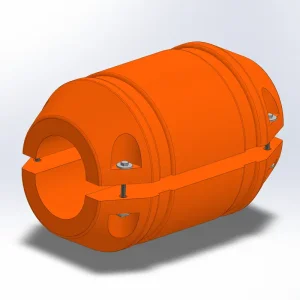
Clamp-on split PE pipe floats secure steel or HDPE slurry discharge pipelines. Engineered buoyancy compensates dynamically for turbulent hydrodynamic lift, wave slamming forces, and varying slurry density up to 1.6 t/m³ during non-stop channel deepening.
Offshore Aquaculture Grids & Floating Pens
Heavy-duty marine mooring buoys and pontoon floats provide dependable tensioning for fish cages and deep-sea aquaculture grids, absorbing massive horizontal kinetic loads from seasonal typhoons without fracturing mooring brackets or deforming.
Reservoir Intakes, Dams & Floating Barriers
Interlinked floating barriers, silt curtains, and intake protection buoys deflect invasive aquatic weeds, floating timber, and surface trash away from hydroelectric turbine intakes and critical municipal drinking water abstraction pumps.
Global Enterprise Sourcing: Total Cost of Ownership (TCO) Analysis
Procuring dock floats for EPC mega-projects requires scrutinizing direct acquisition costs against operational expenditure, freight footprint, replacement intervals, and salvage value.
| Evaluation Parameter | Rotomolded Virgin PE Dock Floats | Welded Steel Pontoon Systems | Expanded Polystyrene (EPS) Billets | Concrete Floats with Core |
|---|---|---|---|---|
| Initial Capital Expenditure (CAPEX) | Moderate / Highly Competitive | High (Specialist fabrication) | Low (Economical initially) | High (Weight & material cost) |
| Cathodic / Anti-Corrosion Needs | Zero (Inherent chemical resistance) | Mandatory sacrificial anodes & epoxy | Not applicable | Rebar passivating admixtures |
| Water Penetration Risk | Zero (Hermetic sealed shell + closed PU) | High at weld stress cracks | Severe (Gradual waterlogging) | Low unless concrete fissures |
| Impact Absorption & Flexibility | Superior (Elastomeric ductility) | Prone to permanent buckling/dents | Brittle disintegration / crumbling | Prone to spalling under collision |
| Environmental Contamination Risk | None (Food-contact grade PE resin) | Rust scaling & paint flake hazard | Severe microplastic particle shedding | Negligible |
| Expected Service Life (Marine) | 15 to 25+ Years (Documented) | 7 to 12 Years (With repainting) | 3 to 6 Years before sinkage | 20 to 30 Years (Static waters) |
| 15-Year TCO Evaluation | Lowest Lifecycle Cost | 2.8× Higher due to dry-dock maintenance | 3.2× Higher due to repeated replacement | 1.9× Higher due to installation craneage |
Certified Compliance Protocols
Every lot manufactured at Juhua conforms to rigorous maritime safety, structural load, and environmental cleanliness standards demanded by international EPC auditors:
- ASTM D1998-15: Standard specification for polyethylene rotational molded structural bodies.
- PIANC Guidelines: Design of floating docks and marina berths under hydrodynamic wave action.
- RoHS & REACH: Heavy metal-free, non-toxic formulations guaranteeing zero marine ecosystem harm.
- Buoyancy Verification: Hydrostatic submersion pressure testing conducted across production batches.
Localized Engineering Support, Turnkey Customization & Ironclad Warranties
Engineering procurement is never simply an e-commerce transaction. It represents an enduring capital commitment. Shandong Binzhou Juhua provides comprehensive design support from pre-bid stage through site commissioning.
Our engineering bureau models finite element stress distributions (FEA), designs bespoke flange pockets, molded-in cable and utility troughs, and adapts mounting bolt spacing to timber, hot-dip galvanized steel, or aluminum marina truss systems.
Transparent Warranty Commitment: Our polyethylene dock floats and pipeline buoyancy modules come backed by an industry-leading manufacturer warranty: starting when the buyer hands over the goods to the investor and concluding 18 months after handover date or 12 months after project installation date, whichever milestone is reached first.
Technology Roadmap: The Next Frontier in Polyethylene Flotation
Anticipating the technological demands of 2026–2035: How circular polymers, smart telemetry, and subsea composite chemistry are shaping next-generation marine buoyancy systems.
IoT-Enabled Smart Marine Telemetry
Integration of low-power satellite and LoRaWAN hydro-sensors directly into molded internal cavities. Next-generation navigation buoys and pontoon floats provide autonomous data monitoring of water salinity, temperature, GPS tilt-shock orientation, and cathodic condition in real time.
Circular Bio-Circular Polyethylene Blends
Collaborating with petrochemical leaders to commercialize certified ISCC PLUS mass-balanced polymers derived from renewable bio-feedstocks. Achieving net-zero carbon marine infrastructure while preserving identical molecular weight distribution and tensile toughness.
Syntactic Composite Deepwater Cores
Advancing past conventional low-density PU foams into microsphere-reinforced syntactic foam composites. This enables subsea tie-in pipeline buoyancy modules to withstand hydrostatic pressures up to 300 meters water depth without cell collapse or loss of displacement buoyancy.
Polyethylene Dock Floats & Buoyancy Systems: Engineering FAQ
Comprehensive, authoritative answers to the primary technical queries encountered by port developers, marina designers, and international procurement committees.
Hollow rotomolded dock floats rely entirely on the air displacement within the hermetic PE shell. While cost-efficient for calm sheltered waters, any puncture from submerged debris or dynamic boat impact causes buoyancy loss. Foam-filled floats contain expanded, marine-grade closed-cell polyurethane (PU) foam with a density of 32–40 kg/m³. If the outer poly shell is breached, the closed-cell foam absorbs less than 3% water by volume, preserving pontoon buoyancy and preventing catastrophic dock sinking.
Unstabilized polyethylene experiences chain scission from intense solar ultraviolet rays, turning chalky and brittle. Juhua utilizes rotational molding resins compounded with advanced Hindered Amine Light Stabilizers (HALS) and Carbon Black or marine color pigments rated at UV8 to UV20 levels. This formulation neutralizes free radicals generated by photo-oxidation, retaining elastic tensile strength and elongation metrics over 15 to 20 years in extreme Middle Eastern, Southeast Asian, and African marine sun exposure.
Pipeline floats are precision-molded in two complementary semicircular halves. The inner bore is contoured to match the exact Outer Diameter (OD) of the steel or HDPE pipe. The two halves are clamped over the pipeline and clamped rigidly using high-tensile hot-dip galvanized or Marine Grade 316 Stainless Steel bolt-nut assemblies with Belleville spring washers. Molded anti-slip ribbed patterns on the inner surface prevent the float modules from axial migration under dynamic wave surges.
To deliver an engineered calculation sheet, provide: 1) Pipe Outer Diameter and structural wall thickness; 2) Pipe material (HDPE, carbon steel, rubber); 3) Specific gravity of conveyed medium (e.g., clear water @ 1.0 t/m³ vs sand/tailings slurry @ 1.3–1.6 t/m³); 4) Environmental conditions (wave height, tidal current velocity, inland river vs open offshore); 5) Desired freeboard percentage; 6) Fastener material preference and container delivery port.
Yes. Juhua houses an in-house tooling CNC center capable of producing specialized rotational casting steel and aluminum molds from client STEP/DWG drawings. Molded features include customized flange attachment slots, pass-through conduit channels for electrical and potable water utility piping, customized brand logos, and specific IALA chromatic safety colors (high-visibility safety orange, navigational yellow, marine blue, or signal red).
The formal warranty coverage period initiates upon the exact date the commercial buyer formally hands over the completed installation goods to the project owner/investor. It terminates 18 months following that handover date, or 12 months after the practical project installation date, whichever milestone elapses first. During this term, defects arising from polymer manufacturing or structural welding are fully supported by factory engineering replacement guarantees.
Offshore Pipeline Flotation, Mooring Systems & Heavy Slurry Hoses
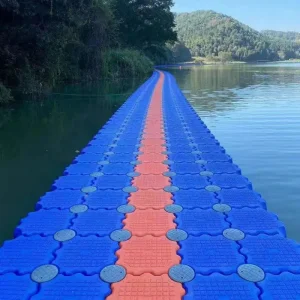
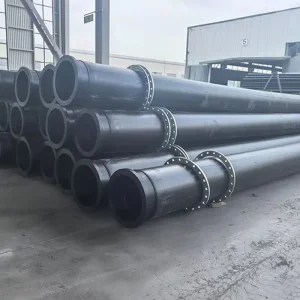
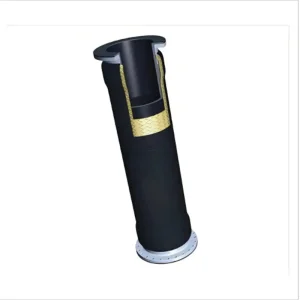
Explore our extended series of deepwater subsea buoyancy units, pontoon platforms, berthing mooring buoys, and mining slurry pipelines ready for rapid international dispatch.

Connect Directly with Marine Flotation Engineering
No intermediaries, sales brokers, or trading layers. Consult directly with the engineering factory that calculates, designs, tests, and manufactures your flotation systems.
Direct Telephone Hotline
Instant engineering consultation for urgent pipeline tenders and dredging projects.
+86-158-6665-7686Project Drawings & Spec Desk
Submit CAD, STEP drawings, and pipe schedules for rapid freeboard sizing within 24h.
[email protected]Manufacturing Campus
West Industrial Park, Lizhuang Town, Huimin County, Binzhou City, Shandong Province, China.
Factory Tours by Appointment