
Engineered Subsea & Pipeline Buoyancy Solutions
Pre-engineered and custom-rotomolded subsea floats, tether support modules, and umbilical buoyancy elements manufactured to API 17L and DNV GL standards.

OEM Pipeline Float for Floating Pipeline Systems and Water Transfer Projects Manufacturers, Factories
Get Factory Quote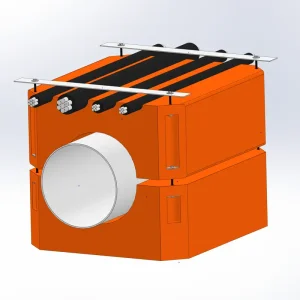
Best Advanced Pipe Floats with Cable Troughs – Reliable Floating Support for Marine and Industrial Pipelines Company, Quotes
Get Factory Quote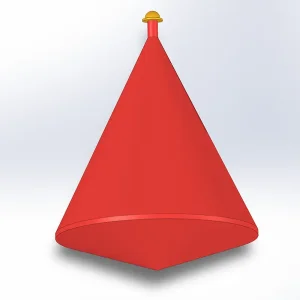
ODM Heavy-Duty Marine Buoys for Reliable Navigation & Offshore Safety Manufacturer, Companies
Get Factory Quote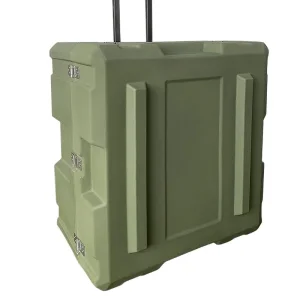
ODM Heavy-Duty Rotomolded Military Airdrop Storage Container Supplier, Factory
Get Factory Quote
OEM Pipe Floats For Reservoir Intake And Temporary Bypass Lines Quotes, Pricelist
Get Factory Quote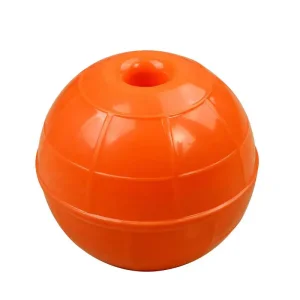
ODM Heavy-Duty ABS Float Ball for Water Engineering Projects Suppliers, Quotes
Get Factory Quote
High-Quality Water Boat Pontoon Floating – Stable and Modular Floating Platforms Supplier, Products
Get Factory Quote
Best Precision Marine Buoys for Safe and Efficient Navigation Manufacturer, Factories
Get Factory QuoteEngineering Buoyancy Under Hyperbaric Subsea Conditions
Subsea buoyancy units are mission-critical mechanical assets required to counter catastrophic hydrostatic collapse, cyclic hydrodynamic fatigue, and chemical ingress in ultra-deep ocean environments.
Offshore Oil, Gas & Subsea Tie-Ins
Distributed Buoyancy Modules (DBMs) and subsea pipeline tie-in floats establish precise Wave, Lazy-S, and Steep-S riser configurations. Sized to manage bending moment distributions, mitigate seabed scour, and preserve structural integrity across the splash zone down to benthic sea floors exceeding 3,000 meters.
Floating Offshore Wind & Dynamic Cables
Floating substructures and dynamic power export umbilicals require resilient, creep-resistant buoyancy collars. Modern rotational-moulded cross-linked shells and high-density hollow glass microsphere syntactic foam cores ensure dynamic cable excursion envelopes are safely respected under severe 100-year storm surges.
Oceanographic Science & Subsea Mining
Scientific benthic landers, ROV/AUV neutral buoyancy packs, and deep-sea mineral extraction umbilical lifters demand zero hydrostatic water absorption. Our factory-controlled vacuum infusion and exothermic curing cycles prevent micro-fissures and guarantee long-term stability during multi-year deployments.
Global Industrial Landscape & Subsea Material Selection
Procuring subsea buoys demands navigating material trade-offs between rotational virgin polyethylene (PE), cross-linked polyurethane elastomers, and high-performance glass micro-balloon syntactic foam.
| Buoyancy Architecture | Operational Depth | Material Core Synthesis | Water Absorption (ISO 62) | Hydrostatic Creep Resistance | Compliance Standards |
|---|---|---|---|---|---|
| Shallow Water Pipeline Floats | 0 – 100 m | Virgin LLDPE Shell + Closed-Cell PUR Foam | < 0.05% after 28 Days | Moderate (Dynamic Freeboard Stabilized) | ISO 9001:2015 |
| Intermediate Continental Shelf Buoys | 100 – 600 m | Cast Polyurethane Skin + Macro-Syntactic Core | < 0.02% at 6 MPa | High (Low long-term volumetric shrinkage) | API 17L1 / 17L2 |
| Deepwater Distributed Modules (DBM) | 600 – 1,800 m | Syntactic Foam (Glass Micro-spheres + Epoxy) | < 0.01% at 18 MPa | Ultra-Low Isobaric Void Collapse | DNV-ST-E272 |
| Ultra-Deep Seabed & ROV Blocks | 1,800 – 4,000+ m | Isostatic Grade Syntactic Carbon-Phenolic Matrix | Impermeable (< 0.005%) | Zero Measurable Creep under 400 Bar | Bureau Veritas Hyperbaric |
Subsea Hydrodynamic Reserve Buoyancy Formula (Engineers' Benchmark)
In offshore subsea engineering, estimating buoyancy solely on dry nominal weights causes catastrophic immersion errors. Sizing must calculate total submerged wet weight, marine growth loading, clamping tether squeeze, and hydrostatic foam compression margins:
B_net = [V_displaced × ρ_seawater(z,T,S)] - [W_dry_module + W_clamp + ΔW_absorption + ΔW_growth] ≥ W_submerged_payload × 1.25
Factory safety margin protocol: Always engineer a 25% to 35% net buoyancy safety reserve to accommodate isobaric matrix densification, seasonal water salinity shifts (1,020 to 1,029 kg/m³), and bio-fouling accretions over multi-decade installation life.
Factory Certification, Hyperbaric Testing & Localized Support
How our direct manufacturing facilities guarantee structural reliability from raw molecular compounding through full-scale hyperbaric batch validation.
API 17L1 / 17L2 & DNV Compliance
Every subsea buoy clamp and module undergoes strict material mechanical characterization, covering shore hardness, tensile elongation, shear modulus, and impact resilience. Clamping assemblies are calibrated with non-metallic internal elastomeric liners to prevent fatigue fretting or localized pinching of dynamic umbilicals.
On-Site Hyperbaric Pressure Vessels
Factory-integrated hydrostatic autoclave pressure chambers simulate real seabed depths up to 50 MPa (5,000 meters of seawater equivalent). Batch tests evaluate water absorption under pressure (WAUP), crush pressure resistance, and bulk modulus stability over prolonged cyclic dwell phases.
Worldwide Port Logistics & Packing
Direct export logistics engineered for international dredging contractors and offshore EPC buyers. Buoyancy shells and internal clamp halves are palletized using heavy-duty ISPM-15 heat-treated cradles, moisture barrier wraps, and sea-freight container packing designed to prevent handling abrasions during maritime transits.
Localized Engineering Case Studies & Global Deployments
Real-world offshore projects require tailored hydrodynamic configurations suited to local marine weather conditions, thermal profiles, and water current dynamics.
North Sea Harsh Wave Configurations
High wave frequencies in the northern North Sea impose heavy cyclic fatigue on dynamic risers. Custom rotational PE floats with reinforced elastomeric internal sleeves absorb violent bend oscillations, decoupling surface storm energies from the submerged wellhead manifolds with zero clamp slippage.
Gulf of Mexico Ultra-Deep Riser Tethering
In water depths exceeding 2,200 meters, high benthic pressures cause conventional closed-cell foam to collapse. We manufactured engineered isostatic syntactic foam assemblies with epoxy matrix-stabilized hollow ceramic spheres, retaining over 98.7% nominal buoyancy across multi-year operational cycles.
Middle East High-Salinity Dredge Pipelines
The hyper-saline and extreme heat conditions of the Arabian Gulf require exceptional UV stabilization and environmental stress-crack resistance (ESCR). Our virgin PE dredging floats ensure zero hull embrittlement, minimal thermal distortion, and effortless interchangeability across dredging maintenance cycles.
Next-Generation Subsea Buoyancy & Smart Marine Tech
Pioneering advancements across structural composite synthetics, acoustic sensing, and low-carbon circular manufacturing.
Cross-Linked Rotomolding
Precision computerized rotational moulding lines featuring automatic thermal measurement, eliminating internal wall thickness variations and stress concentrations.
Integrated IoT Sensor Nodes
Embedded acoustic transponders and internal strain gauges monitoring in-situ hydrostatic pressure, water intrusion, and clamp tension telemetry directly to topside vessels.
Syntactic Graphene Aerogels
Developing ultra-lightweight carbon aerogel composite microspheres, reducing dry block weight by 32% while pushing crush pressure ceilings beyond 6,000 meters.
Bio-Based Thermoset Resins
Formulating marine-degradation-resistant bio-epoxies and 100% recyclable high-strength outer shells, reducing cradle-to-gate carbon footprints by 45% for green offshore wind projects.
Technical Procurement FAQ: Subsea Buoys & Factory Quotes
Clear, uncompromised technical guidance for marine contractors, offshore procurement managers, and subsea engineers.
To deliver an accurate quote and structural buoyancy calculation, our engineering team requires: (1) Pipe/cable outer diameter (OD) and continuous tolerance margins; (2) Operational water depth and design safety factor; (3) Fluid density inside the pipeline (slurry, hydrocarbons, or seawater); (4) Hydrodynamic current velocity profiles and site location; (5) Required service life (e.g., 10 vs 25 years); and (6) Hardware grade preferences (Super Duplex, Titanium, or 316L Stainless Steel). We typically return verified 3D CAD envelope drawings, buoyancy load calculations, and FOB/CIF commercial pricing within 24 hours.
Closed-cell polyurethane foam depends on gas trapped inside polymer cell walls, making it lightweight and cost-effective for shallow surface and near-shore dredging operations (0 to 100 meters). However, under deep hydrostatic pressure, the gas compresses, causing irreversible volumetric collapse, loss of buoyancy, and eventual water logging. Syntactic foam utilizes rigid, hollow glass or ceramic micro-balloons encapsulated within an incompressible epoxy or polyurethane matrix. This enables the module to resist immense isobaric hydrostatic pressures down to 4,000+ meters with virtually zero water uptake or permanent deformation.
Each batch produced in our factory is subject to rigorous Non-Destructive Testing (NDT) and hydro-pressure verification. Key stages include: (1) Dimensional and weight audits in ambient conditions; (2) Full-immersion hyperbaric chamber testing at 1.5 times the rated operational pressure to verify Water Absorption Under Pressure (WAUP); (3) Clamp shear-holding verification on sacrificial pipe sections to certify zero axial slippage under dynamic tension; and (4) Polyurethane skin holiday spark testing to verify 100% pinhole-free outer barrier encapsulation.
All our subsea floats, mooring buoys, and pipeline buoyancy units come with standard project warranties: valid for 18 months from the date of port delivery or 12 months from commercial field installation, whichever occurs first. Extended 5- to 10-year service life warranties are readily available for offshore syntactic modules. We provide comprehensive on-site installation supervision manuals, digital clamp torque logs, and replacement halves that are 100% interchangeable with existing operational units batch after batch.
Specialized Subsea Riser, Dredge & Marine Infrastructure Inventory
Heavy-duty marine pontoons, rotational storage cells, deepwater pipeline clamps, and foam-filled mooring buoys manufactured for long-term ocean service.
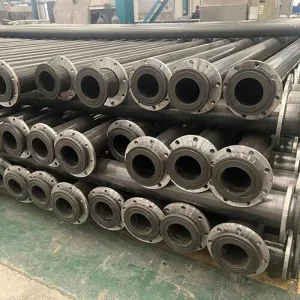
High-Quality Robust Pipeline for Reliable Fluid and Material Transport Manufacturers, Factory
Get Factory Quote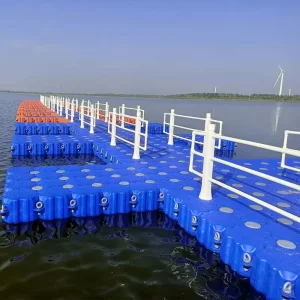
Custom Premium Floating Boat Pontoon for Safe and Stable Water Platforms Products, Quotes
Get Factory Quote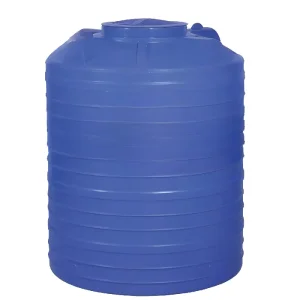
Custom Polyethylene Rotomolded Water Storage Tank – Durable and Safe Liquid Storage Solution Supplier, Factories
Get Factory Quote
Custom Custom Pipe Floats for Floating Water Pipeline and Marine Support Projects Suppliers, Manufacturers
Get Factory Quote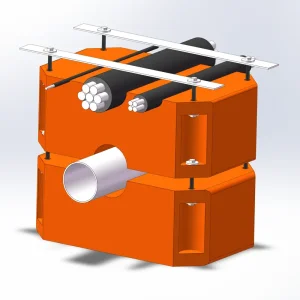
ODM Durable Cable-Integrated Pipe Floats for Submerged Infrastructure Supplier, Manufacturer
Get Factory Quote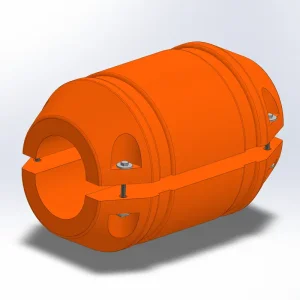
Custom Durable Pipe Floats for Reliable Marine Operations Suppliers, Manufacturers
Get Factory Quote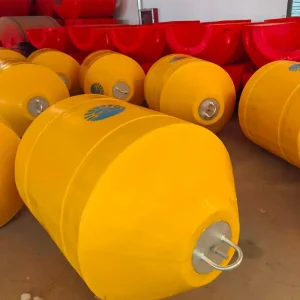
Best Foam-Filled Mooring Buoy for Marinas, Anchorages and Offshore Facilities Manufacturer, Factories
Get Factory Quote