Primary Marine Flotation & Water Navigation Buoys
Engineered for extreme hydrodynamic environments, port access fairways, offshore energy zones, and heavy industrial dredging corridors. Explore verified OEM/ODM products.
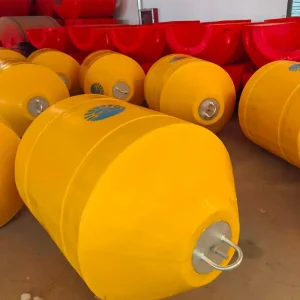
ODM Mooring Buoy for Reliable Vessel Anchoring and Floating Marine Infrastructure
Explore Product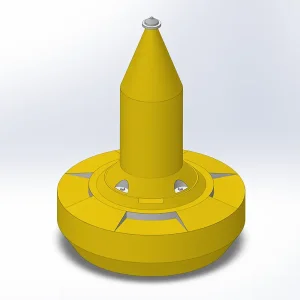
Best Reliable Floating Buoys for Coastal Navigation and Offshore Projects Suppliers, Factory
Explore Product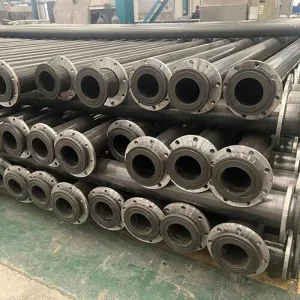
Best Durable Pipeline for Efficient Fluid Transport Supplier, Products
Explore Product
High-Quality Reliable Marine Navigation Buoy for Safe Waterways Manufacturer, Product
Explore Product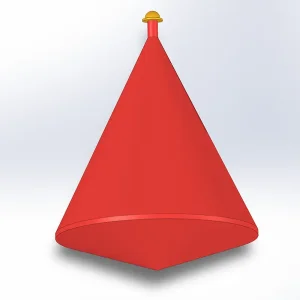
High-Quality High-Visibility Marine Buoys for Safe Offshore Operations Pricelist, Factory
Explore Product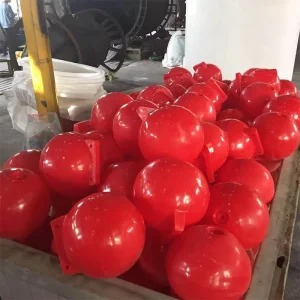
Best PE Float Ball – Durable Buoyancy Solution for Water Projects Products, Quotes
Explore Product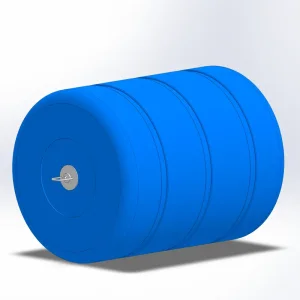
ODM Floating Barrier Systems for Water Safety and Project Efficiency Manufacturer, Company
Explore Product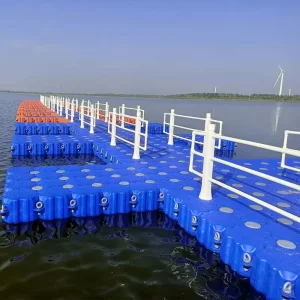
Custom Premium Floating Boat Pontoon for Safe and Stable Water Platforms Products, Quotes
Explore ProductGlobal Waterway Navigational Infrastructure: Evolution & Dynamics
Modern global maritime logistics requires unprecedented reliability from Aids to Navigation (AtoN). Port expansions, deeper draft channels, and complex offshore energy infrastructure demand next-generation navigational buoys engineered for zero-failure operational lifespans.
Transition from Steel to High-Polymer PE
For decades, painted marine steel hulls dominated port fairways. However, aggressive galvanic corrosion, coating degradation, high maintenance drydock costs, and collision susceptibility have accelerated an industry-wide shift toward high-molecular rotational molded Polyethylene (PE). Rotomolded hulls offer inherent corrosion resistance, high kinetic impact absorption, and self-colored UV-stabilized pigments conforming to IALA E-108 standards without requiring hazardous recoating cycles.
AtoN Digitalization & Smart Telemetry
The contemporary navigation buoy is no longer merely a passive geometric marker. The integration of AIS (Automatic Identification System) Transponders, solar MPPT charging arrays, IoT meteo-oceanographic telemetry sensors, and satellite remote diagnostics transforms each floating unit into an intelligent real-time data node. Modern buoys continuously relay current speed, wave amplitude, water salinity, and battery health to port vessel traffic service (VTS) centers.
Demands of Mega-Vessel Navigation
As post-Panamax and ultra-large container vessels (ULCVs) exceeding 24,000 TEU navigate constricted channel drafts, dredging fairways must expand continuously. Navigation buoys deployed along primary fairway margins are subject to turbulent hydrodynamic wake wash, high surface current shear, and accidental vessel contact. Buoys must possess high righting moments, massive reserve buoyancy, and impact-forgiving skins to maintain operational orientation.
Supply Chain Resilience, Automation & Process Precision
How Shandong Binzhou Juhua Rubber & Plastic Co., Ltd. redefines marine flotation manufacturing through variable-frequency rotational control, integrated quality assurance, and complete industrial supply chains.
Computerized Rotomolding Systems
Our workshop leverages multi-arm bi-axial rotational molding machines with automated variable-frequency speed control and continuous temperature monitoring. Thermal uniformity throughout the oven chamber prevents localized polymer thinness, producing buoy bodies with uniform wall thickness (up to 18-22mm depending on specification) and eliminating internal micro-voids.
100% Virgin Polymer Sourcing
We strictly utilize virgin linear low-density and high-density polyethylene (LLDPE/HDPE) compounds pre-compounded with UV20+ stabilizers and anti-aging agents. Unlike cheap post-consumer recyclates that become brittle under marine solar exposure, our raw resins maintain tensile strength and flexural modulus even under the extreme solar radiation indices of the Arabian Gulf and equatorial waters.
Integrated Tooling & Mold Workshop
Our Binzhou manufacturing hub houses dedicated in-house CNC mold manufacturing tooling. From standard lateral marks, cardinal marks, and spherical floats to bespoke dredging tie-in collars and customized mooring hulls, custom geometries transition from CAD 3D models to finished cast aluminum or fabricated sheet steel molds in compressed production lead times.
High-Pressure Foam In-Situ Filling
To ensure unsinkable operational performance, buoy interior hulls are filled with closed-cell expanded polystyrene (EPS) or high-density polyurethane (PU) foam with a cross-linked structure. In the event of catastrophic shell puncture caused by high-energy vessel impact, the hydrophobic foam core prevents water intrusion, maintaining 90%+ buoyancy capacity indefinitely.
Material Engineering Benchmark: Polyethylene vs. Steel vs. GRP
A rigorous engineering comparison illustrating why rotational molded polyethylene provides the lowest total cost of ownership (TCO) and superior survivability in harsh coastal and offshore operational zones.
| Evaluation Parameter | Rotomolded Monoblock PE (Juhua Standard) | Fabricated Marine Carbon Steel | Glass-Reinforced Plastic (GRP / Fiberglass) |
|---|---|---|---|
| Corrosion & Rust Resistance | Completely Immune No rust, zero cathodic protection required. | Severe Vulnerability Requires sacrificial zinc anodes, blasting, painting. | Resistant Osmosis risk over long-term subsea exposure. |
| Collision Energy Absorption | Elastic Recovery High impact absorption; deflects and pops back. | Plastic Denting Plate rupture, weld fracturing, hull breaches. | Brittle Cracking Delaminates and fractures on sharp impacts. |
| Maintenance Cycle Frequency | 5 to 8 Years Bio-fouling simply jet-washed; self-colored resin. | 1 to 2 Years Regular drydocking, scraping, shot-blasting, repainting. | 3 to 4 Years Gelcoat repair, marine growth cleaning. |
| Operational Weight & Handling | Lightweight Up to 60% lighter; smaller crane vessels needed. | Very Heavy Requires heavy-lift maritime crane vessels for placement. | Moderate Lightweight, but internal steel ballast required. |
| Unsinkability Under Hull Puncture | 100% Unsinkable Solid closed-cell EPS / PU foam filled matrix. | High Sinking Risk Hollow chambers flood if puncture occurs. | Conditional Unsinkable only if foam filled core is specified. |
| UV Degradation Resistance | UV20+ Stabilized Compounded pigments resist severe sun bleaching. | Paint Dependent Topcoat degrades, chalks, and fades rapidly. | Gelcoat Micro-crazing Surface chalks and resin brittleness occurs. |
| 15-Year Total Cost of Ownership (TCO) | Lowest Overall Cost Minimal maintenance, no re-coating, zero downtime. | Extremely High High logistics, recoating, zinc anodes, shipyard bills. | Moderate Higher initial acquisition cost; moderate repairs. |
Engineering Scenarios & Localized Deployment Solutions
Real-world engineering analyses from international waterways demonstrating how our flotation systems solve stability, buoyancy balance, and safety challenges.
Deepwater Port Fairway Demarcation
Arabian Gulf Terminal Approach | High Salinity, 48°C Ambient
The Challenge: Thermal Degradation & High Mooring Tension
A port authority in the Middle East faced rapid chalking, coating peel, and catastrophic internal ballast shifting on traditional steel navigation buoys in a 22-meter deep approach channel exposed to high summer heat (UV index > 11) and heavy swell.
The Juhua Solution: Modular PE AtoN Buoy with Central Mooring Core
We deployed 2.4-meter diameter rotational molded polyethylene navigation buoys engineered with virgin UV20+ stabilized LLDPE. The hull incorporated an internal hot-dip galvanized steel structural tension core running from top lifting eye to bottom mooring bridle, ensuring that all anchoring catenary loads were transferred through high-tensile steel rather than the polymer skin. Buoys maintained color chromaticity conforming to IALA Red/Green without color shift over 48 continuous months of operation.
High-Velocity River Silt Reclamation
Southeast Asian Estuary | 3.2 m/s Current Velocity
The Challenge: Slurry Line Submergence & Catenary Buckling
A cutter suction dredging (CSD) project operating an 800mm discharge steel pipeline encountered severe pipe float submergence when the discharged slurry density spiked from 1.15 to 1.62 t/m³, resulting in localized pipeline sinkage, anchor dragging, and excessive joint stress on flexible rubber hoses.
The Juhua Solution: Staged Hydrodynamic Pipe Floaters with Integrated Trough
Our engineering team recalibrated total buoyancy utilizing our 1.30 reserve safety index. We supplied custom-molded twin-half HDPE pipe floats with high-density polyurethane filling and high-tensile stainless steel 316 connection bolts. Floats were profiled with hydrodynamic rounded ends to diminish flow drag by 28%, maintaining an exact freeboard ratio of 25% above the waterline despite heavy slurry density fluctuations.
Hydroelectric Dam Debris & Trash Barrier
South American River Basin | Seasonal Flash Flooding
The Challenge: Submerged Timber Impact & Turbine Choking
During monsoon periods, massive floating logs and surface debris threatened to overwhelm intake trash racks at a major hydroelectric facility, creating potential hydraulic head loss and turbine shutdown risks.
The Juhua Solution: Interlinked Heavy-Duty Polyethylene Floating Boom System
We delivered an interlinked floating barrier line utilizing cylindrical rotomolded PE floats with reinforced through-shaft internal channels. The system featured heavy-duty submerged galvanized steel curtain screens (1.2m depth) and internal energy-absorbing rubber dampers. The entire boom withstood dynamic debris impact loads exceeding 450 kN without shell structural rupture.
Engineering Calculation: Buoyancy Sizing & Freeboard Mechanics
A rigorous approach to sizing dredge pipe floaters, navigation aids, and mooring systems to ensure absolute stability under varying sea states and slurry densities.
Dredging Discharge Floating Pipeline Buoyancy Criterion
To prevent pipeline submergence during dense sand/gravel pumping, total float net buoyancy ($F_B$) must exceed the cumulative mass of pipe shell ($W_p$), internal medium ($W_m$), and couplings/flanges ($W_a$) with a minimum reserve coefficient ($\alpha$) between 1.25 and 1.35:
F_Total_Net = V_float × ρ_water × g - M_float × g

F_Total_Net ≥ [ M_pipe + (π × (ID_pipe / 2)² × L_pipe × ρ_slurry) + M_accessories ] × g × α_reserve
- ρ_slurry (Slurry Density): Never calculate for pure water (1.00 t/m³). Sand and gravel dredging typically ranges from 1.30 to 1.70 t/m³.
- α_reserve (Safety Margin Factor): 1.25 for sheltered rivers and lakes; 1.35 to 1.45 for coastal fairways with wind wave action.
- Design Freeboard Target: The pipeline must rest with approximately 20% to 25% of its outer diameter elevated consistently above the undisturbed waterline.
Frequently Asked Questions: Buoy Systems & Factory Specifications
In-depth technical answers addressing critical queries regarding AtoN compliance, structural durability, lead times, and custom rotomolding capabilities.
Specialized Flotation, Dredging & Marine Logistics Lines
From heavy slurry transport pipelines and cable-trough pipe floats to versatile floating boat pontoons and high-capacity mooring buoys. Review our complete export range.
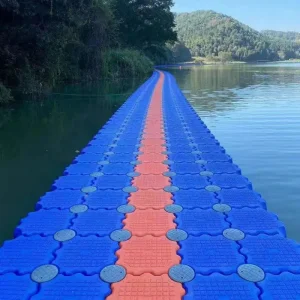
High-Quality Versatile Floating Boat Pontoon for Water Projects Products, Company
Explore Product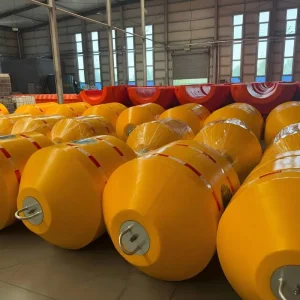
High-Quality Mooring Buoy for Commercial Berths, Marinas and Offshore Holding Areas
Explore Product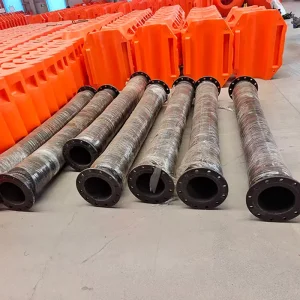
Custom Flexible Rubber Hoses for Advanced Fluid and Sediment Transport Products, Quotes
Explore Product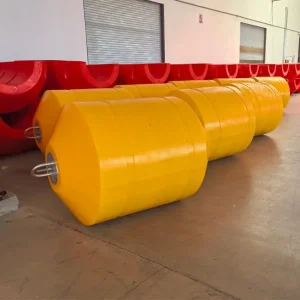
Best Polyethylene Mooring Buoy – Reliable Floating Solutions for Modern Marine Projects
Explore Product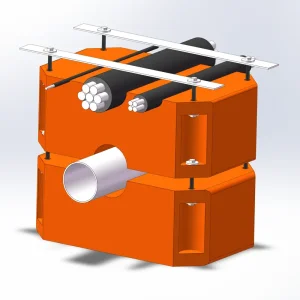
ODM Durable Cable-Integrated Pipe Floats for Submerged Infrastructure Supplier
Explore Product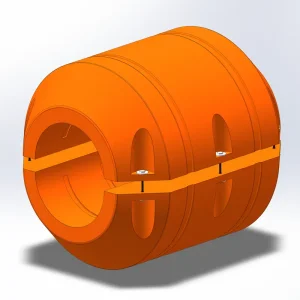
OEM Pipeline Float for Floating Pipeline Systems and Water Transfer Projects Factories
Explore Product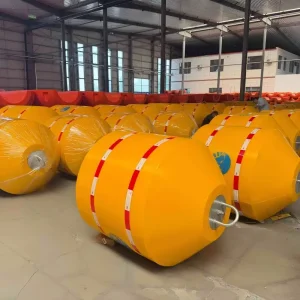
ODM Custom Mooring Buoy for Vessel Berthing, Marina Use and Offshore Anchorage Pricelist
Explore Product