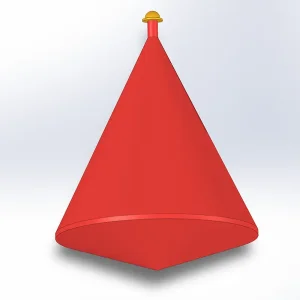
Engineered Marine Floats & Buoyancy Systems
Precision-molded floating HDPE assemblies developed for offshore stability, hydraulic sand-dredging pipelines, containment booms, and maritime navigation channels.
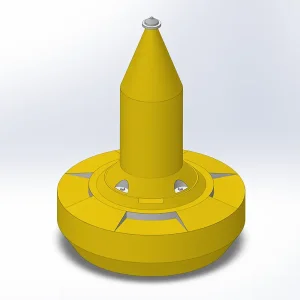
Custom High-Performance Marine Buoys
View Specs & Pricelist
Custom Pipe Floats for Stable Pipeline Support
Request Factory Quote
ODM Floating Barriers for Water Protection
Source Direct ODM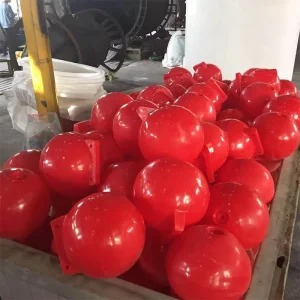
Best PE Float Ball – Durable Buoyancy Solution
Get Batch Pricing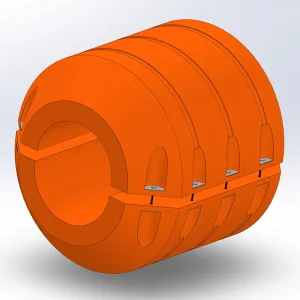
ODM High-Buoyancy Floats for Marine Projects
Engineering Pricelist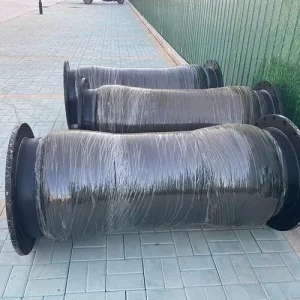
Durable Rubber Hoses for Fluid & Sediment Transport
Explore Factory Supply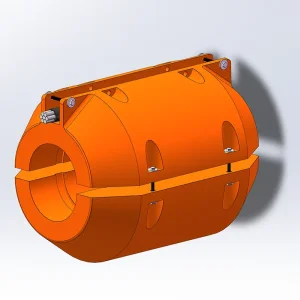
ODM Pipe Floats with Cable Channels
View Technical Quote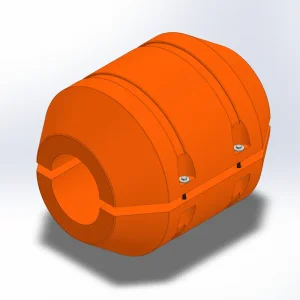
High-Quality Pipe Floats for Slurry Discharge
Inquire Company ModelWhy Global EPCs Source Custom Floating HDPE from Chinese Advanced Manufacturing
Shandong Binzhou Juhua Rubber & Plastic Co., Ltd. (operating as Juhua and Giant Rubber) anchors China’s premier industrial cluster for marine polymer synthesis and rotational molding. Over the past two decades, Chinese rotomolding engineering has graduated from manual casting to automated, closed-loop PLC thermal cycles. This industrial transformation delivers measurable competitive dividends to international offshore contractors, harbor reclamation authorities, and mining enterprises.
Operating from Lizhuang Town, Huimin County in Binzhou, our integrated facility capitalizes on direct access to ultra-high-grade virgin LLDPE and HDPE petrochemical resins compounded with micron-dispersed carbon black and Class 8 UV inhibitors. The result is a marine hull structure that achieves complete chemical inertness in high-salinity seawater, resisting aggressive acidic or alkaline industrial tailing slurries without environmental stress cracking (ESCR > 1000 hours under ASTM D1693).
- Variable-Frequency Speed Regulation: Bi-axial rotational cycles provide uniform wall thickness control (within ±0.5mm tolerances) even at critical outer radii and bolt-recess flanges.
- Closed-Cell Hydrophobic Polyurethane Core: Internal high-pressure foaming generates an ultra-stable core (35–45 kg/m³) that maintains 100% buoyancy retention even if the outer shell experiences accidental mechanical rupture.
- Standardized Split-Collar Modularity: Interchangeable half-shells allow high-density container nesting, decreasing freight footprint by up to 42% while enabling rapid on-site bolt torquing.
| Engineering Property | Testing Standard | Juhua Certified Value |
|---|---|---|
| Raw Material Matrix | ASTM D1238 / ISO 1183 | Virgin High-Density LLDPE / HDPE |
| Polymer Shell Density | ISO 1183-1 | 0.935 – 0.945 g/cm³ |
| Environmental Stress Crack (ESCR) | ASTM D1693 (Condition B) | > 1,000 Hours (Zero Failure) |
| Tensile Strength at Yield | ISO 527-2 (50 mm/min) | ≥ 21.0 MPa |
| Elongation at Break | ISO 527-2 | ≥ 450% |
| Izod Impact Resistance | ISO 180 (at -40°C) | No Break (Ductile Performance) |
| Internal Foam Density | ISO 845 | 38 – 45 kg/m³ Closed-Cell PU |
| UV Weathering Degradation | ASTM G154 (Cycle 1) | UV20 Rating (20,000 hrs marine QUV) |
Engineering Rule of Thumb: Buoyancy Safety Sizing Formula
The single most severe design flaw encountered in dredging and slurry pipelines is configuring buoyancy based upon an empty pipe or standard fresh water. In dynamic sea trials and river reclamation, fluctuating slurry density, turbulence, and residual sediment settlement immediately escalate the submerged weight. Juhua engineers mandate the following sizing equation:
* Note: For standard offshore operations, target a static waterline where approximately 25% (one quarter) of the pipe float's outer diameter remains clearly elevated above the wave crest (Freeboard Height). Re-validate all mechanical fasteners and collar seating after the first 72 hours of pump operational vibration.
Industrial-Scale Water Solutions & System Integration
From the extreme abrasive tailings lines of South American copper mines to massive port expansions across Southeast Asia and the Middle East, our custom floating HDPE platforms withstand unyielding hydraulic pressures.
Marine Dredging & Harbor Deepening
Offshore capital dredging demands continuous slurry transit under rolling swell conditions. Our clamp-on pipe floats protect steel, HDPE, and flexible rubber lines from flexural fatigue, maintaining continuous alignment and visual maritime awareness for trailing suction hopper dredgers (TSHD) and cutter suction vessels.
Mine Tailings & Slurry Dewatering
Industrial ponds in metallurgical extraction feature high-density, toxic tailings slurries (specific gravities often surpassing 1.35 to 1.50). Juhua custom engineers high-displacement floats with customized bolt fasteners (SS316/Hot-Dip Galvanized) and cable troughs for automated power telemetry.
Floating Barriers & Debris Defense
Hydroelectric power dam intakes, municipal drinking reservoirs, and coastal marinas require robust silt and trash barriers. Our interconnected rotomolded containment barriers create an impenetrable line of defense against floating timber, macro-plastics, and industrial hydrocarbon residues.
Offshore Solar (FPV) & Modular Pontoons
As floating photovoltaic (FPV) arrays scale globally across reservoirs and sheltered coastlines, Juhua provides structural pontoon modules engineered for cyclic wind loads, seismic sloshing, and high ultraviolet exposure, maintaining structural integrity across a 25-year operational lifecycle.
IALA-Compliant Navigation Markers
Navigational buoys must comply with strict chromaticity coordinates and retro-reflective standards under IALA recommendations. Our pigmentation compounds use high-durability cadmium-free organic pigments molded throughout the wall, eliminating the need for periodic re-painting.
Custom Tooling & Rapid OEM Prototyping
When legacy off-the-shelf float geometry fails to meet subsea tie-in requirements or unique offshore umbilical bundling, our in-house CNC casting and sheet-metal mold fabrication units deliver tailored CAD-to-mold turnarounds in less than 25 business days.
Market Evolution & EPC Supply Chain Governance
Procurement teams face stricter green certifications, complex shipping corridors, and tighter project timelines. Here is how modern floating HDPE manufacturing is adapting.
Macro Industry Trends Transforming Flotation
1. Integration of Smart Marine Telemetry (IoT): Modern floating pipelines and navigation networks are no longer passive equipment. Marine contractors increasingly require integrated cable conduits or internal compartments inside pipe floats to house sensor arrays, real-time stress strain gauges, GPS tracking nodes, and automated cathodic monitoring systems.
2. Circular Economy & Low-Carbon Resin Blends: With international tenders enforcing Scope 3 emissions reporting, Juhua is pioneering closed-loop rotational molding practices. We offer certified post-industrial recycled HDPE cores encapsulated within virgin UV-stabilized exterior envelopes, lowering carbon footprints without compromising tensile strength.
3. Transition from Steel Pontoon Floats to Modular HDPE: Corrosion, heavy dry-dock maintenance, and dangerous sinking risks from rust pinholes have accelerated the global phase-out of traditional welded steel pontoons. HDPE floats provide a permanent, non-leaching, zero-corrosion alternative that yields up to a 60% reduction in lifetime operating expenditures.
EPC Contractor Procurement Verification Checklist
Before issuing a Letter of Credit (L/C) or releasing down payments for bulk pipe floats and navigation buoys, engineering procurement managers must demand verified third-party laboratory evidence verifying:
- Wall Thickness Ultrasound Validation: Minimum 8 to 16 mm thickness (scaled to float volume) with uniform distribution at the parting seam line.
- Hydrostatic Immersion Testing: 48-hour hydrostatic submergence trials ensuring zero water permeation through foam core cells.
- Fastener Metallurgy Certification: Marine Grade 316 Stainless Steel or ISO 1461 Hot-Dip Galvanized hardware to prevent rapid electrolytic cell corrosion.
- Nesting & Container Volume Optimization: Precision-molded taper locks that permit compact packing inside standard 40ft High Cube containers.
Frequently Asked Questions by Marine & Pipeline Engineers
Concrete technical answers addressing displacement calculation, saltwater endurance, warranty protection, and custom manufacturing parameters.
What are pipeline floats and how do they function in dredging?
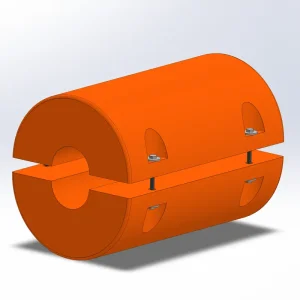
Pipeline floats (also designated as dredge floats or buoyancy collar modules) are two-piece, clamp-on polyethylene bodies engineered to encase discharge pipelines (steel, HDPE, or rubber hoses). They provide distributed buoyancy, preventing the line from sinking to the sea or river bed, minimizing hydraulic pumping resistance, maintaining visible channel markings, and absorbing hydrodynamic wave motion.
How do engineers accurately calculate the number of floats required?
Calculate the sum of three key weights: the empty pipe self-weight, the maximum volume of transported slurry at full discharge density, and the weight of connecting flanges and bolts. Divide this total gross operating weight by the net buoyancy capacity per float unit, and multiply by a safety margin coefficient between 1.20 and 1.30. This ensures approximately 25% of the float remains above the static waterline.
Why is rotational molded polyethylene preferred over steel pontoons?
Polyethylene is chemically inert and completely impervious to saltwater corrosion, electrolytic galvanic reaction, and micro-fouling adhesion. Unlike fabricated steel floats that require constant dry-docking and recoating, HDPE will not rust or puncture easily upon low-velocity impact with service craft. If punctured, our closed-cell polyurethane foam filling prevents flooding and loss of buoyancy.
What is the standard warranty period and commercial protection?
The formal warranty commences on the date the client/contractor formally hands over the completed equipment installation to the project investor and concludes either 18 months following that handover date or 12 months from the certified operational commissioning date, whichever threshold is achieved first. Comprehensive quality tracking numbers are heat-stamped onto each unit.
What technical data must buyers supply for custom tooling and quotes?
To generate an immediate, exact technical proposal, please supply: 1) Exact pipe outer diameter (OD) and pipe wall thickness/SDR; 2) Pipe material type (HDPE, carbon steel, or rubber); 3) Specific gravity/density of the conveyed fluid or slurry; 4) Site conditions (wave heights, flow currents, open sea or calm lake); 5) Desired freeboard percentage; 6) Destination port for shipping logistics.
Can custom colors, corporate markings, and cable troughs be molded?
Yes. We mold floating HDPE units in high-visibility Safety Orange, Traffic Yellow, Marine Red, or custom corporate RAL colors. High-intensity reflective warning panels, molded-in debossed or embossed logos, top-mounted warning light brackets, and longitudinal cable channels for dredge power cables or data lines are fully customizable.
What should be inspected at the pipeline shore-connection transition?
At the shore-water interface, dynamic tidal fluctuations introduce localized flexural shear stress. Pipeline floats must be spaced progressively closer as the line approaches the landfall connection point to counter ground friction and intermediate settling forces. Ensure flexible rubber hoses or ball-joint links are incorporated to relieve bending moments.
What is the recommended procedure during first pump start-up?
During initial commissioning, purge air slowly to avoid severe water-hammer surges. As the slurry discharge reaches steady operating concentration, conduct visual inspection along the entire floating line. Verify that the designed freeboard target (approx. 25% of float diameter above water) is achieved and that mechanical clamp bolts remain securely seated without pipeline slip.
Manufacturing Base
West Industrial Park, Lizhuang Town, Huimin County, Binzhou, Shandong, China
Specialized Modular Flotation & Marine Accessories
Engineered for extended durability, subsea installation precision, modular pontoon flexibility, and high-impact navigation guidance.
Best Pipe Floats for Pipeline Support & Water Transfer
View Factory Details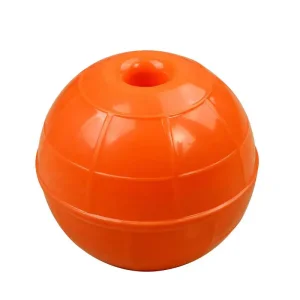
ODM Heavy-Duty ABS Float Ball for Water Projects
Get Immediate Quote
High-Quality Robust Floating Boat Pontoon
Inspect Platform Specs
ODM Rotomolded Surfboard – Low-Maintenance
Request Pricelist
Pipeline Float System for Subsea Installations
View Subsea Solutions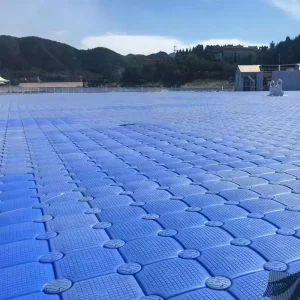
High-Performance Pontoon for Water Platforms
Source Direct Factory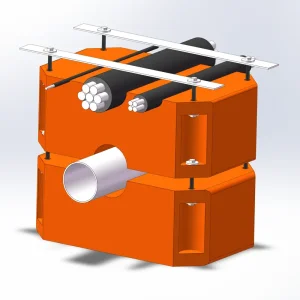
Pipe Floats with Cable Troughs for Operations
Request Detailed Quote