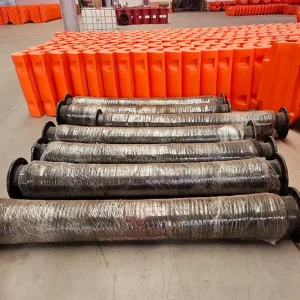
Modular Fleet & Assembly Modules
High-Buoyancy Modular Floating Work Systems
Explore initial core rotomolded PE units designed for ultra-heavy slurry load discharge, mooring operations, and offshore stability.
ODM Rotomolded Surfboard – Durable, Safe, and Low-Maintenance Water Sports Solution
Configure Module
Best Polyethylene Mooring Buoy – Reliable Floating Solutions for Modern Marine Projects
Configure Module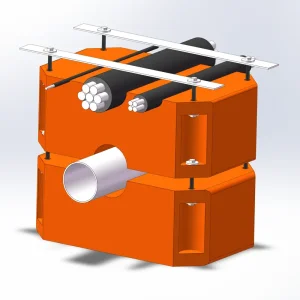
High-Quality Reliable Pipe Floats with Cable Troughs for Efficient Marine Operations
Configure Module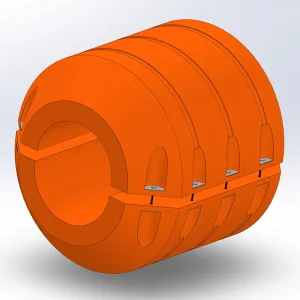
ODM High-Buoyancy Floats for Marine Projects Suppliers, Pricelist
Configure Module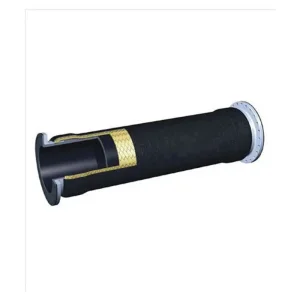
High-Quality Heavy-Duty Rubber Hose for Water and Marine Projects Supplier
Configure Module
ODM Mooring Buoy for Secure Vessel Anchoring and Stable Marine Mooring Systems
Configure Module
OEM Advanced Modular Pipe Floats with Integrated Cable Channels Manufacturer
Configure Module20+
Years Dedicated Roto-moulding R&D
80+
Global Maritime Territories Reached
100%
Virgin High-Density PE Resins Used
350+ kg/m²
Dynamic Marine Payload Capacity
Industry Macro Whitepaper
Global State of Custom Floating Work Platforms
Strategic analysis of marine civil construction shifts toward non-corrosive, modular thermoplastic floating substructures.
The Macro-Industrial Transition: Steel Pontoons vs. High-Molecular Polyethylene
Historically, civil hydraulic contractors and dredging operators relied on welded carbon-steel pontoons and concrete caissons for floating staging platforms. While providing mass, these legacy materials present severe degradation challenges: cathodic corrosion, coating failure, marine organism encrustation, and escalating dry-dock maintenance costs. Modern maritime projects across Southeast Asia, the Middle East, the North Sea, and Latin America have increasingly abandoned steel pontoons in favor of modular rotational-moulded ultra-high molecular weight polyethylene (UHMWPE/HDPE) systems.
At Shandong Binzhou Juhua Rubber & Plastic Co., Ltd. (Juhua), our production lines leverage advanced variable-frequency thermal controls and multi-axis rotational molding machines. By utilizing specialized UV20+ stabilized polyethylene compounds filled with closed-cell high-density polyurethane (PU) foam, our custom floating platforms overcome puncture and catastrophic flooding risks entirely. Even if outer shells suffer high-energy mechanical impact from workboats or subsea pipeline handling equipment, the hydro-impermeable internal matrix guarantees non-submersible performance.
Zero Electrochemical Decay
Unlike steel hulls requiring sacrificial anode replacements and regular sandblasting, Juhua rotomolded structures exhibit zero corrosion in aggressive brine, hypersaline industrial tailing ponds, and acidic slurry environments.
Hydrodynamic Modularity
Interlocking pin configurations allow platforms to scale instantaneously from simple 20 m² pump service rafts to expansive 2,500 m² heavy-excavator supporting work docks with dynamic wave dissipation properties.
Lifecycle Cost Reduction
By eliminating rust remediation, specialized dry-dock inspections, and repainting shutdowns, asset owners achieve an estimated 42% operational expenditure reduction over a standard 15-year marine deployment cycle.
Engineering Precision
Buoyancy Modeling & Structural Stability Architecture
The mathematical principles behind platform sizing, Metacentric Height (GM) stability, and reserve freeboard safety coefficients.
Comprehensive Platform Buoyancy Equilibrium Formulation
A frequent failure mode in floating platform deployments is the catastrophic miscalculation of live dynamic loads, wave slamming impacts, and asymmetric crane operation overturning moments. At Juhua, our engineering department mandates structural reserve buoyancy safety factors ranging between 1.50 to 2.20 depending on water classification (sheltered harbor vs. exposed nearshore breakwaters).
The dynamic buoyancy equation balancing total vertical mass equilibrium against seawater volumetric displacement is expressed as:
Net Reserve Buoyancy (B_res) = [ V_total × ρ_water × g ] - [ (M_platform + M_superstructure + M_payload + M_dynamic_live) × g ] ≥ SF × M_total
Where:
V_total represents aggregate submerged displacement volume of the PE pontoons (m³).
ρ_water represents salinity-adjusted liquid density (typically 1.025 t/m³ for coastal marine, 1.000 t/m³ for freshwater).
M_dynamic_live incorporates equipment operations (pumps, drilling rigs, crew movement, mooring line tension surges).
SF represents the design Safety Factor (minimum 1.30 per Bureau Veritas / DNV guidelines for unattended modules, 1.60+ for crew-occupied decks).
Metacentric Height (GM) Assurance
Every custom work platform undergoes transverse and longitudinal metacentric analysis to confirm GM remains positive under 100% rated deck windage and eccentric equipment handling conditions.
Finite Element (FEA) Stress Modeling
Inter-pontoon connection ears, galvanized structural pins, and internal aluminum/hot-dip galvanized steel sub-frames are verified under cyclic wave fatigue to avoid localized shear yield.
Wall Uniformity via Variable Frequency
Utilizing automated electronic multi-zone temperature controls, Juhua guarantees uniform wall thicknesses across critical pontoon corners, eliminating structural thin points inherent to legacy rotomold setups.
Versatile Field Deployments
Engineered Turnkey Use Cases: From Offshore Ports to Tailing Dams
Delivering tailor-made marine stability solutions adapted to specific hydraulic and geotechnical site constraints.
Harbor Dredging & Navigation Maintenance
During navigational berth dredging and capital channel widening, Juhua floating platforms support booster pumps, subsea power cable junction tie-ins, and flexible dredging discharge pipelines without disrupting normal vessel traffic.
Mining Tailings Dewatering & Slurry Intake
Mining operations feature high chemical saturation and abrasive slurry suspension. Our acid-resistant, chemically inert PE platform modules host high-volume slurry intake pumps, telemetry units, and operator walkways safely across tailings ponds.
Floating Photovoltaic (FPV) Maintenance
As massive solar arrays deploy on reservoirs and hydropower storage lakes, our modular floats serve as continuous perimeter security, central inverter station platforms, and stable service walkways engineered for zero biological contamination.
Bridge Pier Inspection & Core Drilling
Equipped with specialized moon-pools, modular Juhua work rafts allow civil geotech teams to transport drill rigs and geotechnical sounding probes to mid-river pier footings, keeping crew safety paramount under active river flows.
Marine Oil Spill Containment & Emergency Response
Deployable within hours, our interlocking pontoon units anchor rapid-skimmer pumps and store temporary containment bladders inside sheltered bays during environmental remediation and hazardous spill response.
Offshore Aquaculture Feed & Operations Hubs
Our heavy-duty pontoons withstand marine biofouling and rough open sea swell, forming unyielding bases for automatic feeding silos, power generators, crew quarters, and fish-cage mooring interconnects.
Trust & Reliable Governance
Regulatory Compliance & Stringent Factory Certification
Manufactured under rigorous ISO management controls to satisfy international port authority criteria.
Material Traceability & Global Port Standards Compliance
As an established Chinese manufacturing enterprise shipping across North America, Europe, Oceania, and Africa, Shandong Binzhou Juhua Rubber & Plastic Co., Ltd. operates under strict quality criteria. Raw polymer feeds (high-density linear polyethylene, grade 6440 or equivalent) undergo rigorous melt flow index (MFI), density gradient, and environmental stress crack resistance (ESCR) testing per ASTM D1693 protocols.
Our floating work platforms and pipe float components fully satisfy European CE certifications, ISO 9001:2015 quality management procedures, ISO 14001 environmental frameworks, and meet maritime safety guidelines stipulated by PIANC (World Association for Waterborne Transport Infrastructure) and US Coast Guard buoyancy criteria for commercial marine service docks.
ASTM UV & Impact Resistance
Compound blends feature concentrated carbon black or UV20+ hindered amine light stabilizers (HALS), guaranteeing over 15 years of uninterrupted structural integrity under intense tropical solar irradiation without chalking or brittle crack propagation.
Hydrostatic Compression Checks
Pontoons and marine buoys undergo periodic submersion testing to verify watertight seams, foam expansion adhesion, and zero water ingress at maximum design ballast and immersion depth.
Third-Party Inspection Support
We welcome third-party technical inspection bodies—including SGS, BV, and Lloyd's Register—for pre-shipment factory acceptance testing (FAT), verifying dimensional tolerances, wall thickness gauges, and weld integrity.
Next-Generation Roadmap
Engineering Outlook: Smart Marine Platforms (2026–2030)
Pioneering sensor integration, closed-loop circular rotomolding, and automated self-ballasting work platforms.
IoT Structural Health Telemetry
Embedding integrated load cells, hydrostatic depth transducers, and LoRaWAN/Satellite modules within platform hinge joints to report live platform strain, mooring tension, and bilge conditions directly to port control desks.
100% Circular Maritime Polymers
Advancing our proprietary material recipes to incorporate up to 35% chemically upcycled ocean-recovered plastics without sacrificing tensile elongation, notch impact toughness, or ESCR service life ratings.
Autonomous Dynamic Trimming
Development of internal pneumatic ballast chambers actuated by smart solonoids to automatically counter heavy eccentric loads (such as crawler cranes moving along deck edges), maintaining a horizontal working deck automatically.
Technical Clarifications
Frequently Asked Questions on Floating Work Platforms
Detailed engineering responses answering the primary inquiries posed by marine infrastructure procurement leads.
What load capacity per square meter can a custom PE platform sustain?
Standard rotomolded modular pontoons provide single-layer payloads of approximately 300 to 380 kg/m² at 50% immersion. By employing multi-layer stack architectures or integrating structural steel sub-deck lattices with high-displacement pontoon blocks, safe working capacities exceed 800 to 1,500 kg/m², sufficient to accommodate skid-mounted drilling apparatus, excavators, and heavy slurry discharge pipe tie-ins.
How do PE modular platforms react to rough open-water swell and currents?
Our platforms incorporate flexible polymer connecting pins and elastomeric articulation joints. This modular flexibility permits the deck assembly to gently articulate with wave action, dissipating dynamic hydro-shear stress rather than rigidly resisting hydrodynamic energy, which prevents the cracking failures commonly experienced by welded rigid steel hulls.
Can the platform substructure be penetrated or sunk by accidental collision?
No. Juhua heavy-duty platforms are manufactured with thick high-density PE shells and filled under vacuum with closed-cell polyurethane (PU) foam with a hydrophobic density of 32–38 kg/m³. If the exterior skin is breached during workboat berthing or metal drop incidents, the foam core completely prevents liquid intrusion, keeping buoyancy levels intact.
What warranty governance and operational lifespans are guaranteed?
Our manufacturer warranty begins on the date the buyer delivers the equipment to the investor and extends for 18 months following handover, or 12 months from on-water installation commissioning, whichever arrives first. In actual field conditions, UV20+ stabilized PE platforms routinely provide an operational lifespan exceeding 15 to 20 years in seawater.
Complete System Assemblies
Integrated Flotation, Pipelines & Specialized Buoyancy Systems
Review additional matched infrastructure solutions from our facility, engineered to fit directly into your marine pipeline and platform layouts.
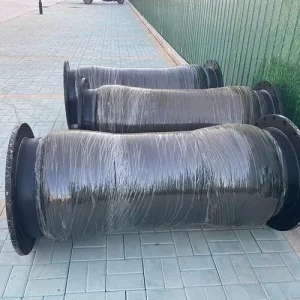
Best Durable Rubber Hoses for Efficient Fluid and Sediment Transport Products
Configure Module
OEM Heavy-Duty Pipeline Float for Stable Floating Pipeline Systems
Configure Module
Best Modular Subsea Pipeline Float – Reliable Deepwater Support Manufacturer
Configure Module
ODM Durable Cable-Integrated Pipe Floats for Submerged Infrastructure Supplier
Configure Module
Custom Pipe Floats for Stable Pipeline Support and Reliable Floating Systems
Configure Module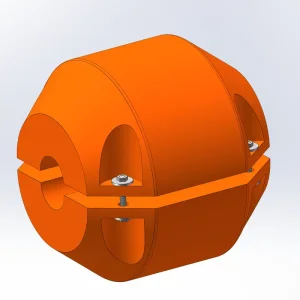
ODM Pipe Floats for Pump Discharge and Water Transfer Lines Manufacturers
Configure Module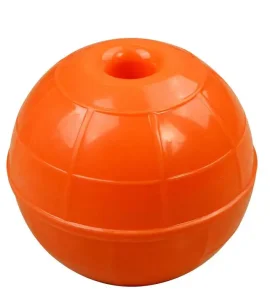
OEM ABS Float Ball – Durable Buoyancy Support for Water Projects
Configure Module