
Engineered Dredging & Mooring Solutions
Direct manufacturer supply of rotationally moulded pipeline floats, modular buoyant tie-in units, and heavy-duty floating platforms engineered to ISO 9001 and marine dredging standards.
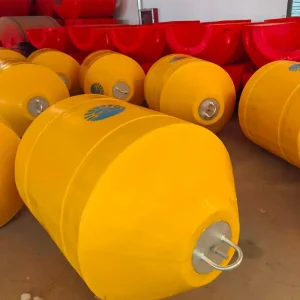
Custom Mooring Buoy for Marinas, Harbors and Offshore Anchorage Systems
Technical Specs & Quotes
High-Quality Pipeline Float Tie-In – Modular Buoyancy Solution for Deepwater
Request Pricelist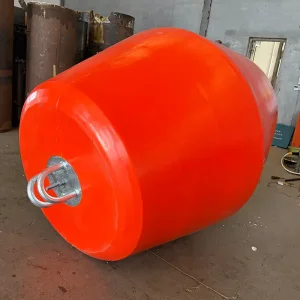
Best Offshore Mooring Buoy for Secure Vessel Anchoring & Floating Systems
Manufacturer Inquiries
Best Modular Subsea Pipeline Float – Reliable Deepwater Submersible Support
Engineering Specs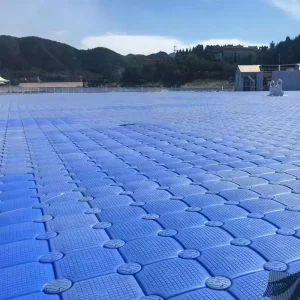
Best High-Performance Floating Boat Pontoon for Modular Water Platforms
Platform Factory Quote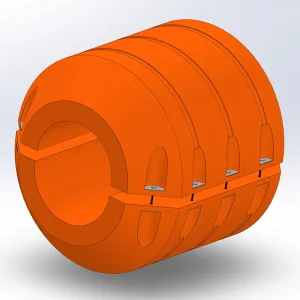
ODM High-Buoyancy Floats for Marine Projects Suppliers, Pricelist
ODM Sizing Guide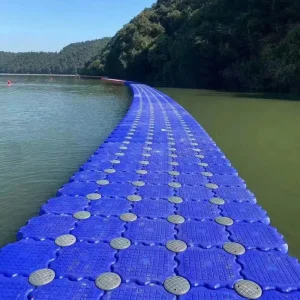
OEM Advanced Floating Boat Pontoon for Custom Water Platforms Supplier
Request Drawing File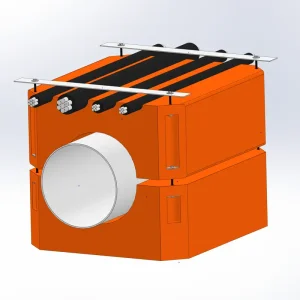
Custom Customizable Floating Pipe Supports with Cable Troughs Company
Custom CAD PricingGlobal Market Dynamics & The HDPE Dredging Pipeline Paradigm Shift
Comprehensive engineering analysis on why hydraulic dredging projects, mining reclamation, and municipal port developers worldwide are transitioning from traditional carbon steel discharge lines to UV-stabilised HDPE pipelines paired with rotational-moulded PE floats.
Hydraulic Abrasion Resilience
Traditional steel pipelines incur acute wall thinning when handling high-velocity coarse sand, silt, and heavy mine tailings. High-Density Polyethylene (PE100/PE80) exhibits an abrasion-resistance coefficient up to 4 to 6 times higher than standard carbon steel, substantially curbing friction losses and eliminating slurry turbulence degradation.
This molecular advantage significantly extends operation windows between asset rotations, mitigating unscheduled stoppages during high-capacity port reclamation campaigns.
Saline Corrosion & Biofouling Immunity
Marine environments rapidly oxidize metallic structures through galvanic action, demanding sacrificial anodes and costly toxic anti-corrosion coatings. Rotomolded PE outer float shells combined with extruded virgin PE pipelines provide absolute immunity against saltwater pitting, biochemical leaching, and barnacle infestation.
The resulting zero-rust architecture guarantees full chemical stability across broad pH spans (pH 1.0 to 14.0), making it essential for harsh mining tailings ponds.
Hydrodynamic Flexibility & Shock Dissipation
Rigid discharge pipelines suffer catastrophic flange fractures under severe wave surges, storm tides, and strong cross-currents. HDPE exhibits a low flexural modulus that safely absorbs cyclic ocean swell kinetics and hydraulic water hammer shocks without permanent mechanical deformation.
Coupled with resilient closed-cell PU-filled pipe float modules, the entire floating line behaves as a continuous, self-damping hydrodynamic ribbon.
| Evaluation Parameter | Juhua Virgin HDPE Dredging Pipe | Conventional Carbon Steel Pipe | Standard PVC / Rubber Flexible Line |
|---|---|---|---|
| Slurry Abrasion Index (Sand Slurry) | 0.28 (Highest Resistance, Self-Polishing) | 1.00 (Standard Baseline Reference) | 0.65 – 1.40 (Rapid Shear Wear) |
| Seawater Corrosion Rate | 0.00 mm/year (Completely Inert) | 0.15 – 0.45 mm/year (Accelerated Oxidation) | 0.00 mm/year (Subject to UV embrittlement) |
| Dry Bulk Weight (Nominal OD 500mm) | ~62 kg/m (Lightweight, Easy Towing) | ~165 kg/m (Demands heavy floating rigs) | ~85 kg/m (Pliant, High Flow Drag) |
| Elastic Modulus (Hydrodynamic flex) | ~950 - 1100 MPa (Excellent shock damping) | ~205,000 MPa (Rigid, risk of flange shear) | ~3,000 MPa (Prone to vacuum collapse) |
| Operational Lifespan | 15 - 25+ Operating Years | 3 - 7 Operating Years (Demands Re-lining) | 2 - 5 Operating Years |
Engineered for Demanding Geographic & Hydrodynamic Conditions
Proven operational stability across multi-continental dredge sites: from sub-zero Arctic tailings pipelines to high-UV equatorial port expansion zones.
Nearshore Land Reclamation & Megaports
Deployed extensively across the Middle East, Southeast Asia, and European container terminal expansions. Accommodates Cutter Suction Dredgers (CSD) and Trailing Suction Hopper Dredgers (TSHD). High buoyancy reserves keep massive discharge lines visible and stable, preventing channel obstructions for commercial maritime traffic.
Tailings Disposal & Mine Slurry Transport
Engineered for high specific-gravity slurry (1.3 to 1.8 t/m³) common in South American and African copper, gold, and iron mining ponds. Customized pipe floats with integrated cable troughs allow single-run power distribution to submersible intake pumps and monitoring systems without auxiliary pontoon catenary cables.
Inland River Desilting & Flood Containment
In narrow inland channels, shallow drafts require rapid deployment and maneuverability. Our interchangeable modular pipeline floats enable tight bend radii and simple shore tie-in transitions. UV-stabilised compounds with high-grade masterbatch maintain daytime visibility across heavy public water navigation sectors.
Naval Flotation Calculation Standard: Total Buoyancy Sizing Principle
Underestimating the working weight of a pipeline when charged with heavy slurry is the leading cause of marine pipeline sinking, joint fatigue, and subsea drag. Sizing must calculate the worst-case specific gravity (SG) under pump operation:
B_total ≥ [W_pipe + W_accessories + (V_internal × ρ_slurry)] × Safety Factor (1.20 ~ 1.30)
Operational Parameter: Maintain minimum 25% pipeline diameter (freeboard) exposed above the water surface to accommodate wind-wave action, mitigate dynamic hydrodynamic slamming, and allow inspection access.
Factory Precision, Scaling Capacity & Raw Material Security
How Juhua leverages China’s premier industrial chemical ecosystem in Binzhou, Shandong to guarantee on-time export delivery, strict wall uniformity, and competitive capital expenditure.
Variable-Frequency Rotomolding
Our facility operates automated multi-axis rotational moulding lines with variable-frequency speed control and computerized internal temperature probes. This eliminates micro-porosity and ensures consistent shell wall thickness even at tight flange corners.
Automated Closed-Cell PU Infill
Float shells are filled with high-density closed-cell polyurethane foam (≥35 to 45 kg/m³). Even if the heavy-duty outer polyethylene shell suffers accidental impact punctures from maritime debris or vessel collision, the hydrophobic foam core prevents water ingress, preserving buoyancy.
Logistical Integration & Loading Efficiency
Direct arterial rail and highway connectivity to Qingdao and Tianjin ports ensures fast turnaround. Our nesting float designs and standardized outer dimensions optimize 40ft High Cube container cube utilization, significantly lowering ocean freight costs for EPC contractors.
Technological Roadmap: The Future of Smart Marine Flotation
Anticipating the demands of autonomous dredging vessels, offshore wind foundation trenching, and strict international environmental requirements.
IoT-Enabled Smart Dredge Floats
Next-generation pipe floats integrate flush-mounted LPWAN (LoRa / NB-IoT) telemetry sensors. These low-power units measure real-time draft depth, mechanical stress concentration, mooring chain tension, and internal pressure across long floating discharge lines, alerting operations centers before pipeline failure occurs.
Circular Economy & Recycled Polymers
Aligning with European and international zero-microplastic and green marine construction frameworks, Juhua is engineering recyclable multi-layer co-extrusion technologies. High-performance recycled maritime PE compounds can now form inner structural layers without reducing shell crack resistance.
High-Pressure Subsea Tie-In Floats
Deepening harbor basins requires flotation modules capable of enduring hydrostatic pressure at depths exceeding 25 to 50 meters during controlled submersion. We are developing specialized syntactic micro-balloon foam cores to handle deepwater deployment without volume loss or water absorption.
Global Compliance, Quality Control & Site Technical Assistance
Ensuring compliance with international classification society standards and tender specifications for offshore marine and mining operations.
Verified Raw Materials
Every batch of virgin PE raw material undergoes testing for Melt Flow Index (MFI), Environmental Stress Crack Resistance (ESCR ASTM D1693), and tensile yield strength before rotomolding. Carbon black and UV stabilizers are thoroughly compounded into the melt to resist harsh sunlight degradation.
Tender-Ready Technical Documentation
We provide EPC project teams with complete submittal packages, including hydrostatic calculations, detailed dimensional CAD/BIM drawings, finite element analysis (FEA) for clamping bolt points, and material certificate of analysis (COA) documents suitable for port authority approvals.
Installation Guidance & Warranty
We supply stainless steel 304/316 or galvanized fasteners, torque specifications, and site installation instructions to ensure secure pipe clamping without slippage. Standard manufacturer warranties cover 18 months from buyer handover to investor, or 12 months from on-water installation.
Frequently Asked Questions by Dredging Contractors & Marine Engineers
Key technical considerations regarding dredging pipelines, buoyancy calculations, fasteners, and installation requirements.
What are pipeline floats, and what is their primary function?
Pipeline floats (also termed dredge buoyancy modules or pipe pontoons) are modular, clamp-on rotomolded polyethylene bodies fitted symmetrically around discharge pipes. They support dredging and water-transfer pipelines on the water's surface, maintain proper pipeline alignment, and ensure high visibility for passing vessels.
How do you accurately calculate the quantity of floats required?
Total buoyancy must exceed total system weight under working conditions: aggregate pipe weight, slurry contents (accounting for slurry specific gravity), and related fittings. Floats should provide 20% to 30% surplus buoyancy beyond this combined weight, keeping approximately one-quarter of the pipe diameter above the waterline.
Why is rotomolded polyethylene preferred over welded steel floats?
Polyethylene is inert to saline corrosion, resistant to UV degradation, and impervious to industrial chemicals. Unlike steel floats, PE will not rust, does not shed coatings into marine environments, and absorbs wave impacts without denting or puncturing, eliminating periodic repainting and dry-dock maintenance.
What is the standard warranty period for Juhua marine products?
The standard warranty begins on the date the buyer hands over the goods to the investor and concludes 18 months from that handover date, or 12 months after the on-water installation date, whichever occurs first.
What parameters are required to provide an engineered quotation?
Please provide the exact pipe outer diameter (OD), pipe material and wall thickness, conveyed slurry density (SG), pipeline operational length, deployment conditions (river, reservoir, open sea), required freeboard height, color/marking needs, and the destination port.
Can floats, mooring buoys, and barriers be customized to custom CAD files?
Yes. Float bodies are precision-matched to your specified outer pipe diameter. Wall thickness, color, warning reflective strips, and cable conduit troughs can all be modified. In-house mold fabrication enables custom rotomolded parts to be manufactured directly from client CAD or 3D drawings.
Specialized Slurry Conveyance, Flexible Hoses & Moorings
Equip your entire dredge line from one manufacturing partner. Fully matched components designed for mechanical interoperability and straightforward assembly on site.
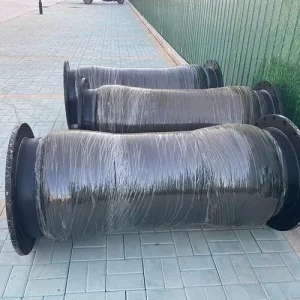
Best Durable Rubber Hoses for Efficient Fluid and Sediment Transport
Hose Specs & Quotes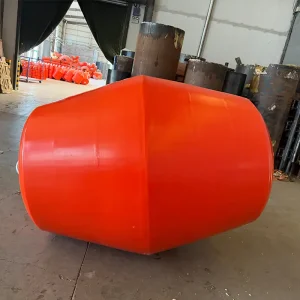
High-Quality Mooring Buoy with Reinforced Connections for Marine Projects
Mooring Product Pricing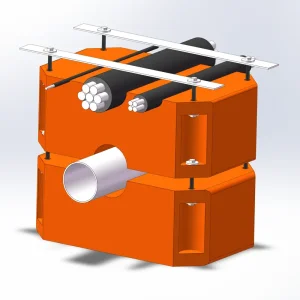
High-Quality Reliable Pipe Floats with Cable Troughs for Marine Operations
Request Factory Quote
ODM Subsea Tie-In Pipeline Float – Reliable Underwater Pipeline Buoyancy
Subsea Product Catalog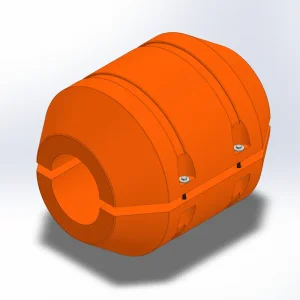
Custom Pipeline Float For Subsea Tie-In And Controlled Positioning
Custom Position Data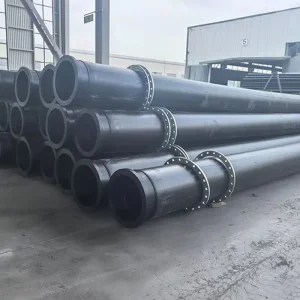
Best Heavy-Duty Pipeline for Safe and Efficient Dredge Transport
HDPE Pipeline Specs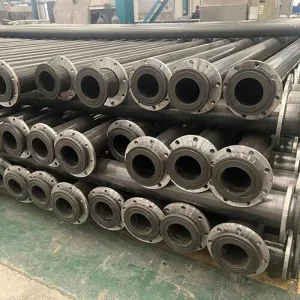
Best Durable Pipeline for Efficient High-Volume Fluid Transport
Bulk Supply Pricing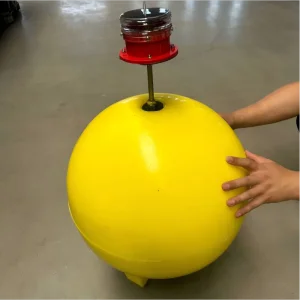
High-Quality LED-Equipped Floating Ball for Safe Water Operations
Night-Safety DetailsConsult Directly With Marine Flotation Specialists
Review your slurry density calculations, pipe dimensional tolerances, and container packing configurations directly with factory technical staff.
Plant Location: West Industrial Park, Lizhuang Town, Huimin County, Binzhou City, Shandong Province, China.