
Industrial Mooring & Pipeline Flotation Fleet
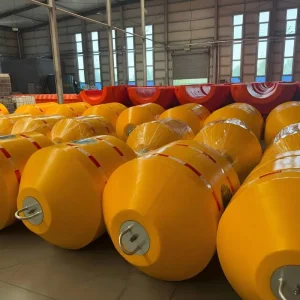
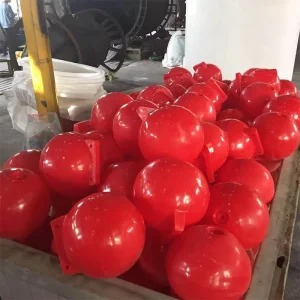
High-density rotomolded polyethylene (HDPE/LLDPE) floats manufactured with closed-cell polyurethane foam fill for superior impact resilience, hydrodynamic equilibrium, and continuous buoyancy.

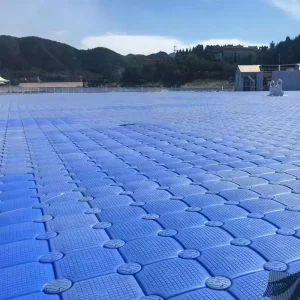
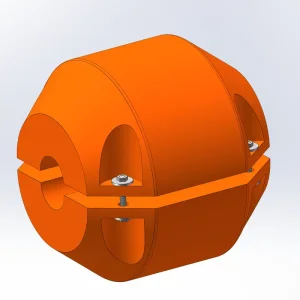
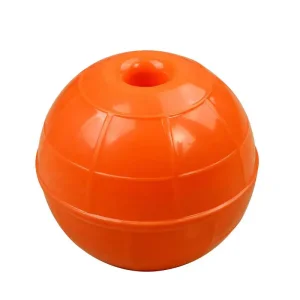
The Structural Shift in Mooring Float Engineering: Steel vs. Polyethylene
In high-energy maritime environments, offshore terminals, and municipal dredging arteries, mooring floats serve as critical kinetic energy absorbers, tension transfer links, and spatial positioning anchors. For decades, the global marine sector relied extensively on welded mild-steel buoys. However, severe electrolytic galvanic reaction, aggressive chloride ion pitting, mechanical fatigue, and crippling maintenance downtime have triggered an undeniable industry transition.
Modern engineering demands rotationally molded high-density virgin polyethylene (HDPE / LLDPE) composite flotation hulls integrated with hot-dip galvanized internal structural steel skeletons (Q235B / Q355B or 316L stainless steel) and high-density, closed-cell polyurethane (PU) or expanded polystyrene (EPS) cores. These advanced polymer systems deliver zero saltwater corrosion, exceptional impact recovery, non-marking hulls, and an engineered operating life exceeding 15 to 20 years with negligible field maintenance.
| Performance Dimension | Rotomolded Polyethylene (PE) Floats | Traditional Welded Steel Buoys | Fiberglass Reinforced Plastic (FRP) |
|---|---|---|---|
| Corrosion & Saltwater Resistance | Absolute Immunity (Zero Oxidation, pH 2-12) | Severe Pitting; Requires Continuous Sacrificial Anodes | Moderate; Prone to Gelcoat Osmosis & Delamination |
| Impact Kinetic Absorption | Elastic Hull Deflection; High Tensile Energy Dissipation | Plastic Deformation, Denting, Hull Seam Cracking | Brittle Failure, Shattering under Vessel Impact |
| Lifecycle Maintenance OPEX | Virtually Zero (Pigmented in Melt; No Repainting) | High (Periodic Dry-Docking, Blasting, Recoating) | Moderate (Gelcoat Repair & Structural Patching) |
| Mooring Working Load Capacity | Up to 120+ Tonnes with Internal Central Tension Rig | High Load Capacity (Structural Steel Weldments) | Limited Load (Stress Concentration Risks) |
| Environmental Safety & Circularity | 100% Recyclable Polymer; Heavy-Metal Free | Rust Leaching, Toxic Anti-Fouling Paint Runoff | Non-Recyclable Landfill Composite Waste |
Strategic Advantages of Sourcing from Chinese Marine Flotation Hubs
China has consolidated its position as the preeminent global manufacturing ecosystem for specialized marine polymers and rotomolded offshore flotation systems. Centered in heavy-industry engineering corridors such as Binzhou, Shandong Province, the convergence of petrochemical refining, precision metallurgy, and multi-axis rotational molding technology offers global EPC buyers decisive technical and commercial advantages.
Precision Variable-Frequency Rotomolding
Equipped with massive computer-controlled bi-axial rotational carousels featuring dynamic infrared temperature profiling, Shandong Binzhou Juhua Rubber & Plastic Co., Ltd. ensures continuous, uniform wall thickness from 8mm to 22mm. This eliminates thin spots, internal voids, and residual molded-in stress that trigger sudden catastrophic failure under hydrodynamic surge.
Integrated Vertical Metallurgy & Tooling
Unlike Western fabricators that outsource CNC mold carving and heavy steel fabrication to secondary subcontractors, our integrated facility executes mold casting, hot-dip galvanizing, and tensile link machining in-house. This cuts customized prototype-to-production turnaround times by more than 55% while maintaining strict dimensional tolerances.
Economies of Scale & Raw Material Security
Direct supply contracts with top-tier domestic petrochemical complexes ensure access to certified food-grade, virgin linear low-density polyethylene (LLDPE) compounds pre-compounded with UV-stabilizer packages (UV8 to UV20+). High purchasing leverage insulates global procurement contracts from volatile international resin spot prices.
Industry Trends: Smart Sensing, Bio-Resilience & Offshore Wind Mooring
The mooring and marine flotation sector is moving rapidly beyond passive buoyancy blocks into dynamic, telemetry-enabled marine positioning systems. Driven by the expansion of offshore floating wind, deep-sea aquaculture, and smart autonomous harbor navigation, next-generation mooring floats integrate digital sensors and advanced polymer chemistries.
IoT Telemetry & Line Load Sensing
Modern offshore mooring buoys increasingly feature embedded internal load cells, tri-axial accelerometers, and satellite GPS/Beidou transceivers. These transmit real-time catenary line tension, roll/pitch harmonics, and water salinity data directly to harbor SCADA consoles, warning port operators of anchor slippage before failure.
Floating Offshore Wind Array Tethers
With floating wind turbines (spar buoys, semi-submersibles, and tension-leg platforms) moving into water depths of 100 to 500 meters, specialized modular subsea distributed buoyancy modules (DBMs) and high-load surface pick-up floats are engineered to prevent mooring tether seabed chafing and severe fatigue wear.
Bio-Inert & Microplastic-Free Resins
Environmental regulations from international maritime organizations (IMO and PIANC) mandate zero heavy-metal leaching and strict anti-fragmentation standards. Virgin cross-linked polyethylenes eliminate microplastic shedding and prevent invasive bio-encrustation without deploying toxic biocidal cuprous oxide coatings.
Localized Application Scenarios: Demanding Real-World Deployments
A generic, off-the-shelf float cannot survive across radically divergent marine environments. Hydrodynamic shock forces, temperature shifts, sediment density, and chemical aggressors demand project-specific flotation engineering tailored to field conditions.
01 / Deepwater Port Terminals
Commercial container and bulk cargo ports require heavy-duty mooring buoys capable of handling vessel displacements of 5,000 to 50,000 DWT. Fitted with through-hull forged steel tie rods, non-sparking rub rails, and solar navigation lanterns compliant with IALA recommendations.
02 / High-Energy Open Ocean Aquaculture
Offshore fish farm containment cages deployed in open storm paths require flexible, high-reserve buoyancy floats. High-elasticity polymer hulls endure perpetual cyclical wave smashing without weld fracture or localized hull deformation.
03 / Mining Tailings & Acid Waters
Hydraulic gold, copper, and iron tailings discharge lines operate in harsh acid/alkaline slurry ponds (pH 2.0 to 11.5). Non-polar PE float shells completely resist chemical attack, preventing slurry pipeline submergence and costly environmental spills.
04 / Arctic & Freezing Reservoirs
In high-latitude municipal reservoirs and hydroelectric intake dams, freezing ice-sheet expansion crushes rigid hulls. Specialized low-temperature impact polyethylenes maintain high ductile fracture toughness down to -40°C.
Macro Industry Solutions & Global Enterprise Procurement Demands
International EPC contractors, marine logistics operators, and port authorities evaluate flotation suppliers across rigorous technical criteria. Mooring floats are not simple commodities; they are risk-critical infrastructure assets where a single product failure can trigger catastrophic pipeline separation, vessel drift, or multimillion-dollar berth collisions.
EPC Tender Compliance & Traceability
Global infrastructure contracts demand comprehensive material origin certifications, mill test reports (MTR) for internal steel skeletons, and third-party resin raw-material melt flow index (MFI) and density verification (ASTM D1238 / ISO 1183).
Optimized Ocean Freight Logistics
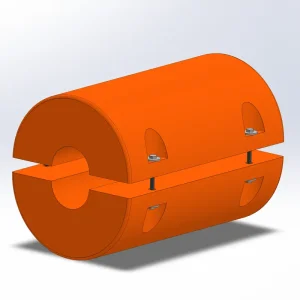
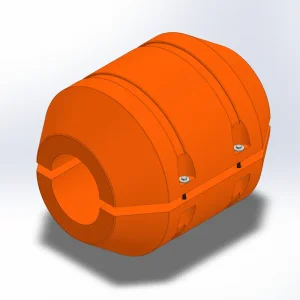
Flotation modules inherently feature high volume-to-weight ratios. Advanced custom design focuses on nested modular geometries, detachable hardware, and stackable semi-cylindrical pipeline halves that optimize standard 40-foot High Cube (40HC) container utilization.
Turnkey Hardware Integration
Procurement teams demand complete matched packages including studlink mooring chains, swivel shackles, galvanized anchor plates, sacrificial zinc collars, quick-release hooks, and mooring bridles delivered alongside the rotomolded buoyant hulls.
Hydrodynamic Reserve Buoyancy & Mooring Load Calculation
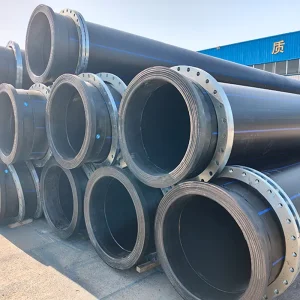
A common engineering pitfall during float procurement is undersizing reserve buoyancy under dynamic slurry transport or heavy tidal current drag. For dredging pipeline strings and surface mooring points, buoyancy must factor in full slurry density, wet fouling accretion, and hydraulic wave slam.
Standard Engineering Reserve Formula
To ensure stable surface freeboard (preventing submerged suction cavitation and line sagging), total nominal buoyancy must exceed total system wet weight by a safety factor (SF) of 1.25 to 1.35:
Total Net Buoyancy (B_net) = [ W_pipe + (V_internal × ρ_slurry) + W_hardware + W_fouling ] × Safety Factor (1.25 – 1.35)
- W_pipe: Dry mass of HDPE / steel discharge pipe section per meter.
- V_internal × ρ_slurry: Mass of pumped medium (sand/water slurry typically ranges from 1.3 to 1.7 t/m³; clean seawater is 1.025 t/m³).
- W_hardware: Flange bolts, rubber discharge sleeves, central tension member steel rings, and mooring shackles.
- Target Freeboard: Approximately 25% to 30% of the float outer shell diameter should maintain daylight exposure above calm waterlines.
Frequently Asked Technical & Procurement Questions
Clear, authoritative technical answers addressing specification dilemmas, materials science, customization capabilities, and field warranty parameters.
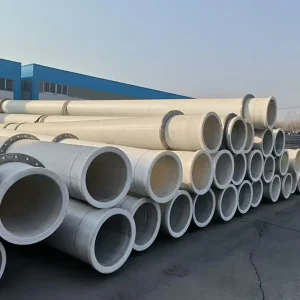
Heavy-Duty Barriers, Pipelines & Flotation Hardware
Engineered for harsh marine conditions, water intake safety containment, industrial effluent conveyance, and severe weather dredging bypass operations worldwide.

Initiate Your Custom Marine Flotation Technical Review
Bypass intermediary brokers. Submit your pipeline outer diameter, slurry specific gravity, site wave loads, and required freeboard metrics directly to our senior rotational molding engineering group for calculation sheets, 3D CAD models, and export container packing layouts.