Featured Marine Containment & Pipeline Flotation Inventory
Explore heavy-duty, marine-grade rotational-moulded flotation units designed for global offshore containment and transport reliability.



Global Industry Evolution: Modernizing Aquatic Spill Containment
Strategic shifts in international environmental regulations (IMO, EPA, OPRC 90) and dynamic oceanic infrastructure needs.
Rigid Steel to Linear Polyethylene
Early containment infrastructure relied on bulky, rust-prone coated steel floats that degraded rapidly under marine biofouling. Modern solutions demand UV-stabilized High-Density Polyethylene (HDPE) and cross-linked polyurethane cores, eliminating corrosion risks while maximizing hydro-dynamic drag containment.
Tiered Rapid Response Standards
Global standards now enforce strict deployment windows: offshore terminals and nearshore drilling assets must control hydrocarbon spread within 60 to 120 minutes. Custom containment systems must feature standardized quick-connect pins (ASTM F962/Universal Slide) and high-tear tensile skirts.
Total Lifecycle Durability
Contractors prioritize solutions that endure 10+ years without microplastic shedding. Rotomoulded monolithic shells resist hydrocarbon penetration, severe wave slamming, and ambient salinity, providing the highest return on capital expenditure for reclamation and dredging fleets.
Global Procurement Demands: Engineering Specifications Matrix
Comprehensive baseline metrics evaluated by international EPCs, port authorities, and environmental defense departments.
| Containment Parameter | Harbor / Calm Water Standard | Offshore / Deepsea Dynamic Grade | Industrial Slurry / Tailings Class |
|---|---|---|---|
| Freeboard Height (Buoyancy) | 150 mm – 300 mm | 450 mm – 900 mm | 300 mm – 500 mm (High Density PE) |
| Draft / Skirt Depth | 300 mm – 500 mm | 600 mm – 1500 mm | Custom Geotextile Weighted Skirt |
| Tensile Strength (Load Chain) | ≥ 40 kN (Galvanized Grade 30) | ≥ 120 kN (Forged Alloy Steel 80) | ≥ 80 kN (Integrated Ballast Assembly) |
| Moulded Shell Thickness | 6 mm – 8 mm Virgin LLDPE | 10 mm – 16 mm UV8/UV20 PE | 12 mm – 18 mm Cross-Linked Polymers |
| Reserve Buoyancy Ratio | Minimum 1.5 : 1 | Optimal 3.0 : 1 – 4.5 : 1 | Slurry Reserve Calculated ≥ 2.2 : 1 |
Global Interoperability
Moulded to integrate seamlessly with existing multi-national marine assets and standard quick-release mooring configurations.
Polymer Integrity
Chemically inert, resisting hydrocarbons, aromatic fuels, acids, and caustic mining runoffs without structural embrittlement.
Hydraulic Freeboard
Pre-calculated buoyancy ratios guarantee pipeline and barrier equilibrium even under extreme wave-induced dynamic pitch.
Engineered Support
Turnaround on CAD schematics, fluid dynamics evaluations, and custom mould tooling proposals for rapid tenders.
China Factory 4.0: Supply Chain Resilience & Manufacturing Rigor
How Juhua leverages high-precision rotational molding, electronic telemetry, and vertical production control to protect international projects.
Closed-Loop Temperature Control
Our Huimin plant integrates variable-frequency rotation cycles and electronic multi-probe infrared thermal measurement. This eliminates micro-thinning at angular radii, achieving uniform 100% stress-relieved wall thickness across oversized containment shells.
Interchangeability Guarantee
Global operators depend on immediate component swapping. Utilizing precision-machined CNC dies, every modular boom segment, dredging collar, and mooring eye retains tight dimensional tolerance (±1.5mm), safeguarding onsite field fit across multi-year purchasing batches.
End-to-End Maritime Outfitting
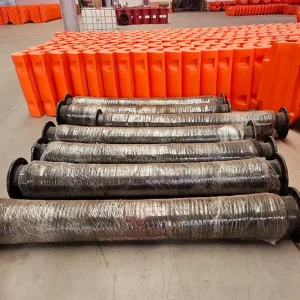
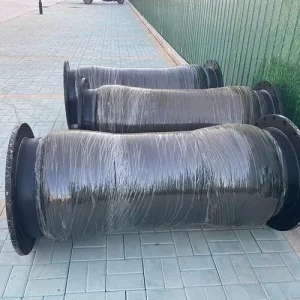
Eliminate multi-vendor coordination overhead. As a dedicated OEM/ODM manufacturer, we co-extrude HDPE discharge pipelines, synthesize high-abrasion rubber slurry transfer hoses, and rotomould flotation systems simultaneously under one unified QA audit scheme.
Engineered Field Deployments: Demanding Real-World Scenarios
Operational case studies demonstrating customized flotation reliability across divergent oceanic and industrial topographies.
Harbor Deepening & Silt Curtailment
During mega-containership channel dredging, localized silt plumes threaten sensitive benthic habitats. Our weighted curtain floats maintain a vertical particulate boundary across 4-knot tidal sweeps without hydro-planing.
Offshore Bunkering & Terminal Safety
Deployed around ship-to-ship transfer zones and crude oil terminals, high-buoyancy oil containment barriers isolate emergency fuel spills, preventing sheen spread into commercial shipping corridors.
Hydroelectric & Intake Debris Barriers
Rotomoulded floating trash booms placed upstream of power station turbine intakes deflect thousands of tons of floating logs, biomass, and refuse, averting turbine shutdown emergencies.
Engineering & Procurement FAQ
Direct technical answers addressing physical parameters, slurry buoyancy calculations, material longevity, and warranty terms.
What are pipeline floats?
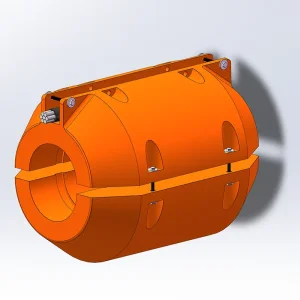
Pipeline floats — also called dredge floats or buoyancy modules — are clamp-on polyethylene bodies fitted around discharge pipes to keep a dredging or water-transfer pipeline afloat, aligned and visible on the water surface.
How do I calculate how many floats I need for my pipeline?
Total float buoyancy must exceed total weight. Add the weight of the pipe itself, the conveyed medium inside it (water or slurry) and all accessories. As an engineering standard, provide 20% to 30% reserve buoyancy so the pipeline floats with roughly one quarter of its diameter continuously above the waterline.
Are polyethylene floats suitable for seawater use?
Yes. Polyethylene (PE) is inherently resistant to saltwater corrosion, solar UV radiation, and aggressive chemical attack. Unlike traditional coated steel floats, rotomoulded PE will never rust, flake, or degrade in hypersaline marine environments.
How long is the standard warranty period?
The standard warranty begins the day the buyer hands over the equipment to the investor and extends 18 months after that handover date, or 12 months after the official installation date — whichever comes first.
What information is needed for an accurate pipe float specification?
We require the exact pipe outer diameter (OD), pipe substrate material and wall thickness, conveyed medium and target slurry density, pipeline overall length, environmental dynamics (river, reservoir, port or offshore), desired freeboard, color/identification coding, and destination port.
Can booms, floats, and navigation buoys be fully customized?
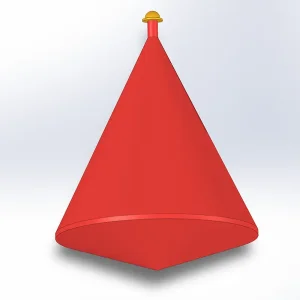
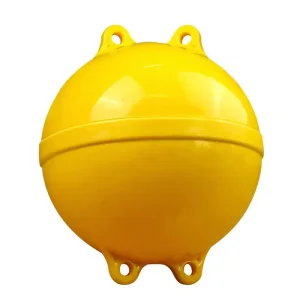
Yes. Float bodies are precision-moulded to matched pipeline ODs. Hull colors, internal polyurethane foaming densities, retro-reflective markings, topmarks, and chain-through internal steel structures are completely customizable to exact project engineering blueprints.
Integrated Infrastructure Flotation & Transfer Solutions
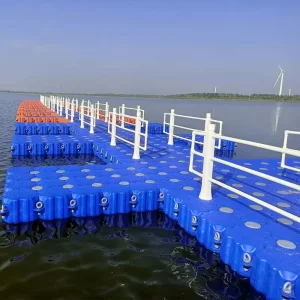
Complete your aquatic array with matched dredging pipelines, specialized pontoons, tie-in floats, and offshore navigational markers.