
Primary Offshore Flotation Systems
Engineered with seamless rotational molding, closed-cell polyurethane foam matrices, and high-impact virgin polyethylene shells for harbor protection, heavy dredging, and deepwater cable support.
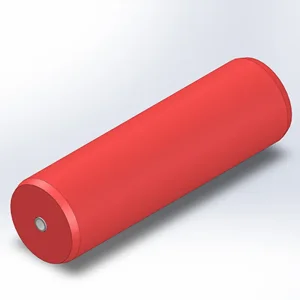
Custom Floating Barrier Systems for Effective Water Safety and Pollution Control Product, Factories
Explore Barrier Systems
Custom Mooring Buoy for Marinas, Harbors and Offshore Anchorage Systems Manufacturers, Quotes
Explore Mooring Buoys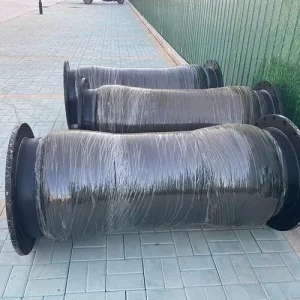
Best Durable Rubber Hoses for Efficient Fluid and Sediment Transport Products, Factory
Explore Rubber Hoses
ODM Deepwater Pipeline Support Floats – Reliable Subsea Buoyancy Solutions Manufacturer, Companies
Explore Subsea Floats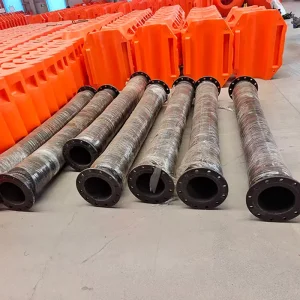
High-Quality High-Performance Rubber Hoses for Water and Slurry Transport Suppliers, Factories
Explore Slurry Hoses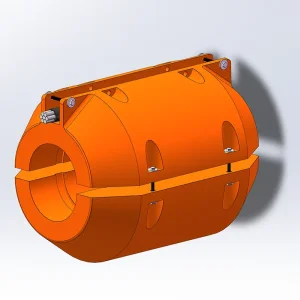
OEM Advanced Cable-Supporting Pipe Floats for Marine Projects Products, Factories
Explore Cable Floats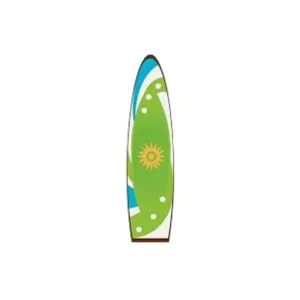
ODM Rotomolded Surfboard – Durable, Safe, and Low-Maintenance Water Sports Solution Manufacturers, Pricelist
Explore Rotomolded Boards
High-Quality Pipe Floats for Floating Pipeline Support and Water Transfer Product, Company
Explore Pipe FloatsThe Global Transition: Next-Gen Buoy At Sea Technologies
How the shift from conventional oxidized steel buoys to monolithic rotational-molded polymers is reshaping marine navigation, offshore energy resilience, and maritime ecological longevity.
Material Shift from Steel to LLDPE
Traditional maritime buoys relied on welded carbon steel shells, which suffer from accelerated galvanic corrosion, biofouling, and paint degradation under severe oceanic salinity. Modern offshore operators demand seamless Linear Low-Density Polyethylene (LLDPE) shells.
- Zero rust or electrochemical oxidation in hypersaline environments
- Pigmented with colorfast masterbatch (UV20+ stabilization rating)
- Elastic deformation prevents cracking during high-energy vessel impacts
- Significantly reduced dry displacement weight, cutting maintenance mobilization costs
Advanced Hydrodynamic Stability
Deploying a buoy at sea requires precision ballast and metacentric height calculation. Whether deployed in strong tidal currents or high-swell breakwaters, specialized hull geometry guarantees constant upright orientation.
- Engineered center of gravity to optimize visual focal plane under sea state 6
- Integral skirt, fin, and counterweight keel options for rapid self-righting
- Reduced hydrodynamic drag coefficients in high-velocity estuary channels
- Mooring eye structural integrity tested to high cyclic tensile ratings
Smart IoT & AtoN Digitization
A contemporary marine buoy is no longer a passive floating marker; it acts as an intelligent offshore telemetric station equipped with integrated solar-electric nodes and maritime communication beacons.
- Seamless bracket accommodation for self-contained LED marine lanterns
- Support for AIS (Automatic Identification System) AtoN Type 1 and Type 3
- Hydro-meteorological sensor packages for real-time wave/current telemetry
- Satellite (Iridium) and cellular IoT data uplink compatibility
Industrial Rotomolding Precision & Metocean Sizing
Shandong Binzhou Juhua Rubber & Plastic Co., Ltd. applies variable-frequency rotational control, automated electronic thermal management, and precision closed-cell EPS/PU infill for indestructible structural integrity.
Naval Architecture Sizing Model: Dynamic Reserve Buoyancy
Under-sizing floats and buoys is the single greatest hazard in offshore hydraulic engineering. When sizing mooring buoys, navigation aids, or offshore dredging pipe floats, the hydrodynamic working state must account for slurry specific gravity, submerged mooring chain catenary weight, and breaking wave crest loads.
Where ρ_seawater = 1,025 kg/m³, SF (Safety Factor) ≥ 1.25 to 1.35 for calm marine harbors, and SF ≥ 1.50 to 1.80 for severe open-ocean deployments exposed to cyclonic wave actions.
Rotomolded wall thickness ranging from 8mm to 18mm with zero internal joint seams to eliminate catastrophic pressure weld fissures.
Injected EPS or polyurethane (35–45 kg/m³) ensures zero water absorption even if the outer shell experiences physical breach or ballistic puncture.
Through-chain or central steel mandrel tension bar (hot-dip galvanized Q235B or 316L stainless) transmits mooring loads directly without hull compression.
Interchangeability
Precision matched mold configurations guarantee identical outer diameter and bolt-hole centerlines across manufacturing runs, facilitating quick replacement of dredging floats and marker modules in the field.
Anti-Impact Elasticity
High-grade virgin polyethylene possesses extraordinary impact tenacity. High-speed crew boats and support tenders rebound on collision without catastrophic hull breaches or vessel structural hull damage.
UV20+ Weathering
Compound mixed with hindered amine light stabilizers (HALS) and antioxidant additives ensures resilience against intense tropical equatorial sunlight without polymer embrittlement or surface chalking.
Non-Adhering Surface
The non-polar nature of ultra-smooth polyolefin materials significantly reduces the anchor adhesion of barnacles, marine algae, and mollusks, decreasing dry-dock biological cleaning intervals.
International Compliance, IALA Guidelines & Quality Engineering
Ensuring cross-border maritime safety compliance, navigational visual accuracy, and institutional reliability across international water boundaries.
IALA Recommendations (A & B)
Full strict compliance with the International Association of Marine Aids to Navigation and Lighthouse Authorities (IALA) Recommendation E-108 on the manufacturing of plastic buoys.
- Strict chromaticity coordinates matching IALA Red, Green, Yellow, White, and Black
- Region A (Port Lateral Red) & Region B (Port Lateral Green) chromatic standardization
- Conical, cylindrical, spherical, and pillar superstructure matching topmark specs
- Daymark visibility calculated using IALA contrast and luminosity indices
PIANC & Port Engineering Standards
Mooring buoys and offshore tie-in assemblies conform to World Association for Waterborne Transport Infrastructure (PIANC) recommendations for harbor approach fairways and terminal berthing design.
- Dynamic surge and heave load calculations based on 100-year return storm conditions
- Safe Working Load (SWL) and Proof Load testing for all structural steel tension bridles
- Environmental risk mitigation: zero heavy-metal leaching or microplastic shedding
- Safe deployment compatibility for quick-release harbor hooks and hawser eyes
Institutional Quality Management
Manufactured under rigorous ISO 9001:2015, ISO 14001:2015, and ISO 45001:2018 verified environmental and occupational safety management architectures.
- Every manufacturing batch tracked by raw material melt index and density records
- Factory hydrostatic immersion pressure testing and wall thickness ultrasonic checks
- Certified marine test certificates (MTC) supplied with raw materials and galvanized bridles
- Handover guarantee: Complete warranty and inspection documentation for EPC audits
Engineered for Rigorous Marine Operations
From shallow coastal harbor basins to exposed offshore energy platforms, Juhua buoyancy assemblies operate across demanding geographic sectors.
Deepwater Harbor Dredging
Equipping capital dredging operations with robust clamp-on pipeline floats. Sized specifically for high-density quartz sand and coral limestone slurry (density up to 1.65 t/m³), keeping the discharge pipeline aligned and stable against cross-channel currents.
Offshore Wind & Subsea Cables
Subsea power umbilical and export cable installation requires specialized floats with cable troughs. These provide distributed buoyancy to preserve minimal bend radius (MBR) and avoid cable fatigue cracking near touchdown zones.
Environmental Containment
Heavy-duty floating barriers and oil-debris boom systems installed across river mouths, dam reservoirs, and industrial cooling water intakes to block floating plastics, aquatic invasive weeds, and sediment runoff before turbine degradation occurs.
Offshore Anchorage & Single-Point Mooring
Custom-engineered cylindrical and spherical mooring buoys deployed across industrial marinas, commercial anchorages, and fuel transfer terminals to support workboats, commercial barges, and support vessels safely off dock structures.
Technology Roadmap & Next-Decade Flotation Innovations
Continuous R&D investments driving modern marine buoy materials, autonomous sensor payloads, circular polymer chemistry, and extreme-environment reliability.
Smart Sensor Integration
Embedding multi-parametric oceanographic micro-sensors directly within the rotational molding chamber for factory-sealed monitoring of ocean temperature, salinity, and wave spectral energy.
Circular Polyolefin Matrix
Transitioning toward 100% circular, chemically upcycled marine plastics certified under ISCC PLUS, reducing lifecycle carbon emissions by 42% while retaining high tensile impact properties.
Self-Powering Kinetic Buoyancy
Harnessing internal pendular wave-energy micro-generators paired with high-efficiency flexible organic solar skins to provide unlimited energy autonomy in polar winter conditions.
Autonomous Swarm Mesh Networks
Equipping marine buoys at sea with decentralized 5G-NTN satellite mesh nodes, functioning as floating dynamic relay networks for autonomous surface vessels (ASVs) and subsea drones.
Critical Engineering & Procurement Inquiries Answered
Comprehensive engineering insights for dredging superintendents, port authority directors, and marine project procurement leads.
What are the mechanical advantages of PE floats over welded steel buoys at sea?
Polyethylene (PE) floats and buoys do not undergo galvanic oxidation, rust, or chemical pitting in seawater. Unlike steel buoys that demand frequent sandblasting, recoating, and sacrificial anode replacements every 24–36 months, rotomolded PE units are maintenance-free, exhibit elastic rebound during impacts, and significantly decrease vessel hull damage during berthing maneuvers.
How is buoyancy reserve calculated for high-density dredging slurry pipelines?
A common error is sizing floats based on pure water weight. For heavy dredging (sand, gravel, silt), the working medium specific gravity can reach 1.4 to 1.8 t/m³. Flotation sizing must sum: empty pipe weight + weight of the pipe completely filled with dense slurry + float weight + hardware fasteners. The gross float buoyancy must exceed this total weight by 25% to 30%, ensuring approximately one-quarter of the pipe diameter stays safely above the water surface for freeboard stability.
What happens if the outer polymer shell of a marine buoy is punctured?
Juhua floats and buoys are filled with industrial-grade closed-cell expanded polystyrene (EPS) or high-density polyurethane (PU) foam core. Because the foam consists of independent closed microscopic cells, water ingress is localized only to the mechanical cut. The overall buoy will not flood, capsize, or lose buoyancy, ensuring uninterrupted navigational aids and pipeline security.
What is the official warranty lifecycle policy for international projects?
The standard industrial warranty framework begins on the date the buyer hands over the equipment to the investor/asset owner, and concludes 18 months after that handover milestone, or 12 months after the official site installation date, whichever benchmark comes first. Full technical guidance on mooring layout, bolt torque specifications, and inspection frequency is provided.
What exact engineering parameters are required for custom buoy fabrication?
To produce an exact engineering quote and sizing drawing, please specify: exact steel/HDPE pipe outer diameter (OD), pipe wall thickness, medium density (slurry/freshwater/fuel), operating site characteristics (sheltered harbor, river channel, or open ocean swell), wave/current dynamics, desired daymark visual height, color/marking guidelines (IALA compliance), and discharge destination port.
Can custom colors, topmarks, and cable routing troughs be integrated?
Yes. Utilizing modern CNC rotational molding toolsets, we customize wall thickness, integrate galvanized structural tie-in pass-throughs, and produce internal cable-carrying troughs. Topmarks, radar reflectors, and lantern mounting plates can be pre-molded or secured via marine-grade 316 stainless steel inserts according to project technical drawings.
Advanced Marine Pipelines, Float Modules & Subsea Systems
Explore specialized tie-in buoyancy equipment, marine-grade rubber delivery conduits, and high-strength barrier pontoons for comprehensive waterway management.
Custom Reliable Pipeline Floats for Marine and Engineering Projects Company, Pricelist
Explore Reliable Floats
High-Quality Pipeline Float Tie-In – Modular Buoyancy Solution for Deepwater Pipelines Supplier, Pricelist
Explore Tie-In Systems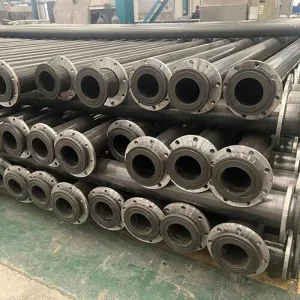
High-Quality Robust Pipeline for Reliable Fluid and Material Transport Manufacturers, Factory
Explore Robust Pipelines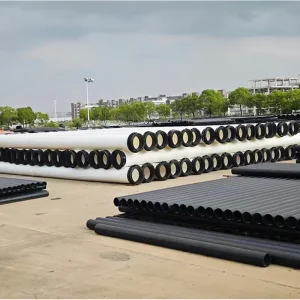
ODM Heavy-Duty Pipeline for Versatile Water and Fluid Transport Product, Quotes
Explore Fluid Transport
OEM Innovative Pipeline Float System for Reliable Deepwater Support Companies, Quotes
Explore Deepwater Support
High-Quality Durable Floating Barriers for Water Protection Projects Product, Pricelist
Explore Water Barriers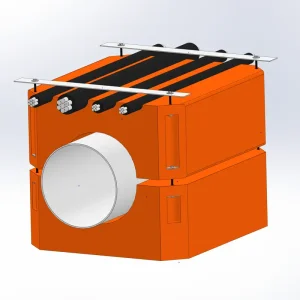
Custom Customizable Floating Pipe Supports with Cable Troughs Company, Pricelist
Explore Trough Supports