Engineered Marine Flotation Systems
High-density rotomolded components tailored to slurry hydraulic discharge lines, offshore cable routing, and deepwater navigation security.




Global Commercial & Industrial Landscape
Modern dredging operations have evolved from simple channel maintenance to massive land reclamation, deep-sea mining, and coastal climate adaptation projects.
Maritime Infrastructure Megaprojects
Harbors globally are expanding berths to accommodate post-Panamax mega container vessels. Floating discharge lines require higher volumetric displacement, high-impact crack resistance, and modular clamp interchangeability to support non-stop 24/7 dredge schedules.
Shift Toward Non-Corrosive Polymers
Traditional steel pontoons suffer catastrophic rust, paint peeling, and high hull-maintenance overhead. Virgin rotomolded polyethylene (PE) shells with closed-cell polyurethane foam cores have emerged as the dominant engineering standard across saline offshore corridors.
High-Efficiency Slurry Transport
As mining tailings and hydro-demolition pipelines convey slurries with specific gravities exceeding 1.6 t/m³, engineering teams require accurate buoyancy margins to guarantee uninterrupted slurry flow without pipeline submersion risks.
Localized Application Scenarios & Hydrodynamic Design
Each marine site presents unique hydrodynamic, wave-loading, and medium-density challenges. Our pipeline floats deliver targeted performance across complex environments.
Coastal Land Reclamation
During long-distance hydraulic sand conveyance, high tidal ranges and constant wave cresting impose heavy shear stresses on pipeline joints. Our pipe floats maintain buoyant stability and prevent dynamic lateral bending across open coastal channels.
Riverbed Desilting & Flood Corridors
River navigation channels require rapid repositioning of dredge discharge lines. High-visibility UV-stabilized orange and yellow outer shells give maritime vessels clear line-of-sight day and night, reducing navigational collisions in narrow inland waterways.
Industrial Mining Tailings Transport
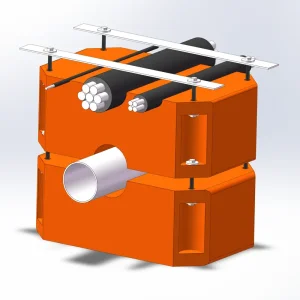
Conveying abrasive tailings across settling ponds requires dedicated cable-trough configurations. Integrated cable and power-cord recesses protect auxiliary submersible pump cabling from abrasive wear and environmental weathering.
Engineering Hydrodynamic Sizing Formulation
An undersized float leads to line sinking under heavy slurry flow, while an oversized float incurs unnecessary windage resistance. Calculating proper net displacement requires precise working conditions:
Where W_medium assumes working slurry density (often 1.3 to 1.8 kg/L rather than fresh water), and the safety reserve keeps at least 25% of the float outer shell safely elevated above the waterline.
China Factory Supply Chain Resilience & Efficiency
Based in Binzhou, Shandong—a prime polymer manufacturing hub—Shandong Binzhou Juhua Rubber & Plastic Co., Ltd. combines raw material access with modern rotational molding technology.
Automated Thermal Rotational Molding
Our facility utilizes variable-frequency multi-axis rotational molding arms equipped with electronic automatic pyrometers. This ensures uniform plasticization temperature across every square centimeter of the mould, eliminating fragile thin spots.
Complete System Integration Under One Roof
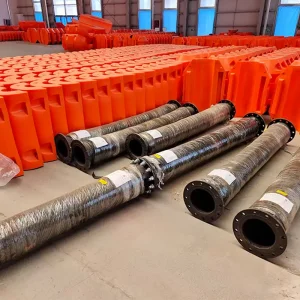
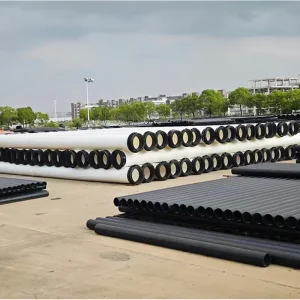
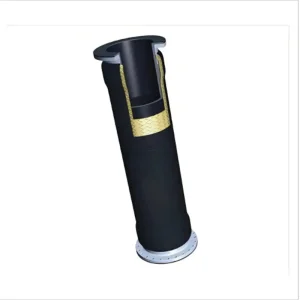
We supply matched systems that bridge pipe floats, industrial wear-resistant HDPE pipelines, specialized discharge hoses, and galvanized connection hardware. This eliminates component mismatches and streamlines on-site assembly.
Rapid Tooling & Port Proximity
With an in-house tooling workshop, custom mould prototypes for non-standard pipe diameters can be turned around within days. Our proximity to Qingdao and Tianjin ports ensures streamlined container loading and lower inland haulage costs.
Technology Roadmap & Future Outlook
As dredging operations move deeper and environmental standards tighten, marine pipeline buoyancy technology is advancing across three key dimensions.
Phase 1: Material Circularity & Bio-Polymers
Formulating UV-stabilized composite blends that integrate recyclable virgin LLDPE with high-tensile impact modifiers, extending outer shell working life to over 15 years in extreme high-UV equatorial waters without embrittlement.
Phase 2: IoT Sensorized Smart Buoys
Embedding solar-powered telemetry sensors, GPS geofencing, and internal strain gauges within mooring buoys and pipe floats to transmit real-time telemetry regarding pipeline alignment, tilt angles, and stress anomalies via 4G/Satellite to dredging control stations.
Phase 3: Deepwater Subsea Modular Syntactic Systems
Developing hybrid syntactic polyurethane foams paired with rotomolded shells designed to withstand hydrostatic pressures up to 100 bar, opening new applications in subsea tie-in, offshore trench backfilling, and marine renewable power line positioning.
Localized Support & Global Compliance Assurance
Strict adherence to international maritime guidelines ensures our flotation systems pass third-party classification body surveys with complete material traceability.
IALA Navigation Markings Compliance
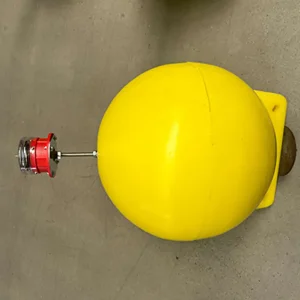
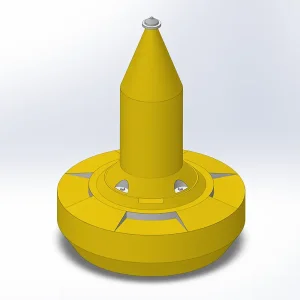
Our ocean and coastal navigation buoys are produced in strict compliance with the International Association of Marine Aids to Navigation and Lighthouse Authorities (IALA) Aism standards for color coordinates, surface retroreflectivity, and radar cross-section visibility.
Material Batch Certification & Traceability
Every production batch includes complete Mill Test Certificates (MTC) detailing density, tensile yield strength, elongation at break, and ASTM D1693 environmental stress-crack resistance (ESCR) data, ensuring reliable compliance documentation for project audits.
Full-Lifecycle Technical Support
Our direct engineering teams deliver comprehensive layout diagrams, pipeline connection alignment schemes, and on-site assembly guidance. Backed by an 18-month warranty post-handover (or 12 months post-commissioning), project risk is minimized from delivery through operation.
Frequently Asked Questions
Direct answers to the most common engineering and procurement questions regarding pipe floats, buoys, and marine barriers.
What are pipeline floats?
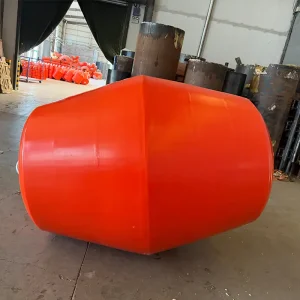
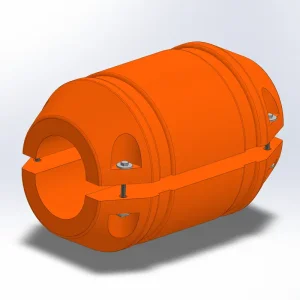
Pipeline floats, also referred to as dredge floats or buoyancy modules, are paired semicircular clamp-on polyethylene bodies designed to encase discharge pipes. They keep slurry or dredging pipelines afloat, aligned, and clearly visible above the water surface during marine operations.
How do I calculate how many floats I need for my pipeline?
Total float buoyancy must exceed the aggregate weight of the pipeline, the conveyed medium (slurry or water), and all fittings. Sizing should incorporate a 20% to 30% buoyancy safety reserve, ensuring roughly one-quarter of the pipe diameter remains consistently above the waterline.
Are polyethylene floats suitable for seawater use?
Yes. High-grade rotational molding polyethylene features high resistance to saltwater corrosion, marine bio-fouling, UV degradation, and chemical erosion. Unlike steel floats, PE floats never rust, peel paint, or require recoating in marine environments.
How long is the standard warranty period?
Our standard industrial warranty commences on the date the client hands over the equipment to the investor and extends for 18 months after the handover date, or 12 months following the active on-site installation date, whichever occurs first.
What parameters are required for an accurate specification quote?
Please provide the exact pipe outer diameter (OD), pipe material, wall thickness/SDR, slurry density (specific gravity), pipeline length, marine site conditions (open sea, tidal port, or calm lake), required freeboard, and destination discharge port.
Can floats and buoys be customized to unique specifications?
Yes. Float inner diameters are matched to your exact pipe outer diameter. Foam densities, color coding, reflective banding, integrated cable grooves, and connection hardware can all be tailored to project specifications. Custom parts can also be manufactured from client CAD drawings.
Specialized Flotation & Marine Accessories
From subsea pipeline tie-ins to heavy-duty dredging discharge hoses and illuminated navigation markers, explore our complete manufacturing lineup.