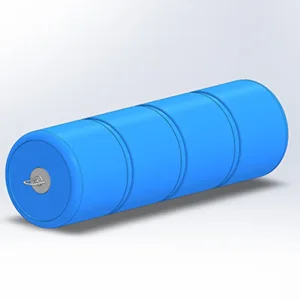
Precision ODM Small Buoy & Pipeline Float Solutions
Engineered to deliver high buoyancy with low drag resistance across marine operations, aquaculture, and nearshore infrastructure.


Global Marine Buoyancy Landscape & Technical Realities
A macroeconomic and structural overview of the transition from legacy steel and elastomeric solutions to advanced linear low-density polyethylene (LLDPE) rotational molding.
The Global Commercial Context
Over 70% of global water infrastructures are undergoing operational revamps toward zero-maintenance, non-corrosive floating assemblies. Small buoys (outer diameter < 1200mm) represent the fastest-growing market subsegment, driven by rapid expansions in offshore renewable energy clusters, smart harbor automation, and intense inland water resource monitoring across the Americas, Europe, and Southeast Asia.
Material Degradation Thresholds
Traditional steel buoys carry severe operational expenditure liabilities: constant sandblasting, recoating, and sacrificial anode replacements. Virgin-grade UV-stabilized polyethylene, coupled with closed-cell polyurethane core matrices, delivers a calculated operational lifespan exceeding 15 years in high-salinity and extreme UV indices without hydrodynamic drag degradation.
ODM Customization Imperatives
Generic off-the-shelf buoys frequently fail under site-specific dynamics. Sizing mistakes often result from evaluating buoyancy based solely on dry weight. Offshore civil works require calculated reserve buoyancy (20% to 35% margin) incorporating localized dynamic ballast, surface wave chop, and sensor payload weight distribution.
Technical Roadmap: The Next Decade of Buoy Design
From simple visual markers to instrumented, self-powered Edge-AI monitoring nodes, small buoy technology is transforming rapidly. Our engineering roadmap integrates multi-axial stress resistance, sustainable biopolymer shells, and integrated sensory channels.
Phase 1: Rotomolding Automation
Computerized variable-frequency speed controls and electronic automated temperature mapping across bi-axial oven arms, eliminating residual internal stresses in LLDPE hulls.
Phase 2: Hybrid Polyurethane Foaming
High-pressure, closed-cell polyurethane foam injection (35–45 kg/m³) ensuring zero water absorption (< 0.05 g/cm³) even in the event of continuous outer hull puncture by heavy debris.
Phase 3: Sensor & Conduit Integration
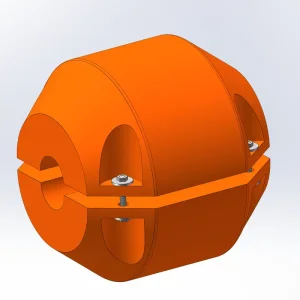
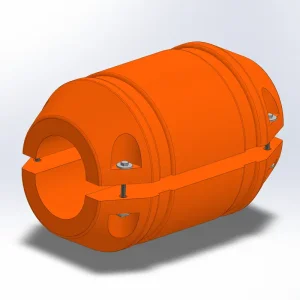
Internalized wiring conduits, integrated solar flange inserts, and subsea cable troughs built straight into the core mold structure for seamless industrial deployment.
Localized Application Scenarios: Engineering Deployments
How ODM small buoys and pipeline supports perform across mission-critical field operations worldwide.
Offshore Aquaculture Pens
Small mooring and perimeter tension buoys keep submersible cages positioned in stormy waters. UV-20 stabilization prevents brittle failure caused by high solar radiation in equatorial fish farming hubs.
Dredging Tailings & Slurry
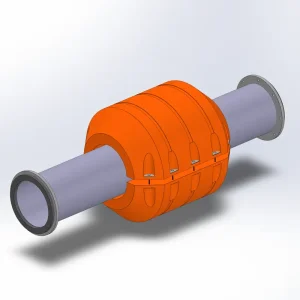
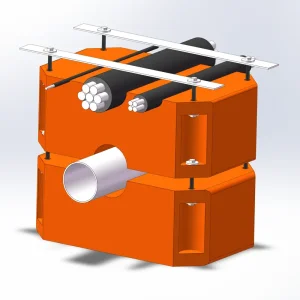
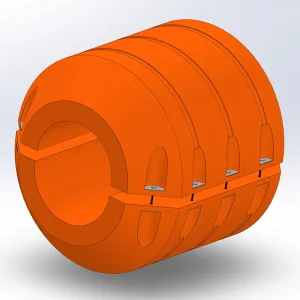
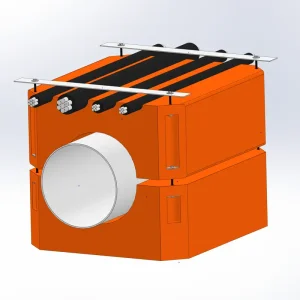
Equipped with cable troughs and clamp-halves to secure hydraulic booster cables alongside pipelines. Keeps discharge pipes balanced even when handling high-density mining slurry up to 1.6 t/m³.
Harbor Security & Demarcation
Small navigation buoys designate military security zones, shallow reef warnings, and marina fairways. Integrated reflective bands and LED solar mounts ensure IALA maritime compliance.
Hydro Dam & Spillway Booms
Linked in series to form trash and safety barriers, these buoys withstand rapid current drags, intercept riverine timber, and prevent human debris from blocking intake turbines.
China Factory Supply Chain Resiliency & Cost Efficiency
Why Tier-1 marine engineering contractors leverage Shandong Binzhou Juhua's direct manufacturing infrastructure over regional distributors.
Integrated Petrochemical Clusters
Located in the heart of Shandong's chemical manufacturing hub, Juhua secures direct pipeline access to premium Sinopec virgin LLDPE polymers. This insulates our customers from raw material market volatility and guarantees uniform resin melt-flow index (MFI) batch after batch.
Logistical Hub Proximity (Qingdao Port)
Our Huimin County factory provides direct inland freight links to Qingdao Port and Tianjin Port. This guarantees prompt break-bulk shipping or 40HQ container stuffing within 48 hours of lot completion, drastically cutting international transit schedules and handling risks.
In-House Tooling & Mold Workshop
By operating our own CNC aluminum mold-making workshop, we slash lead times on bespoke ODM/OEM designs from the industry average of 60 days down to under 18 days. This enables swift deployment of custom flange collars, through-cable holes, or specialized mooring rings.
Small Buoy Technical Parameters & Indicative Pricelist
Benchmark procurement matrix across common standard and ODM small buoy configurations. Final quotations depend on raw material indexing, foam filling densities, and hardware configurations.
| Model Category | Dimensions (Dia × H) | Net Buoyancy (kg) | Wall Thickness | Core Filling | Reference Price (USD / Unit) |
|---|---|---|---|---|---|
| Micro-Mooring Buoy (MB-400) | 400 mm × 650 mm | 55 kg | 6.0 mm - 8.0 mm | Closed-Cell PU Foam | $45.00 - $68.00 |
| Mid-Marker Nav Buoy (NB-600) | 600 mm × 1100 mm | 160 kg | 8.0 mm - 10.0 mm | Closed-Cell PU Foam | $110.00 - $155.00 |
| Modular Cable Support (CS-500) | 500 mm × 800 mm | 115 kg | 7.0 mm - 9.0 mm | Rigid EPS / PU | $75.00 - $105.00 |
| Subsea Tie-In Modular Block | 650 mm × 900 mm | 220 kg | 10.0 mm - 12.0 mm | High-Density Syntactic PU | $180.00 - $260.00 |
| Demarcation Barrier Ball (BB-300) | 300 mm × 300 mm | 22 kg | 5.0 mm - 6.5 mm | Hollow / Light EPS | $18.00 - $28.00 |
* Engineering Note: Pricing above reflects FOB Chinese Port (Qingdao/Tianjin) tiered volume discounts. Custom masterbatch colors (IALA Yellow, Red, Green, White), custom embedded 316 stainless-steel hardware, or hot-dipped galvanized center-tie rods will be factored into formal engineering estimates.
Compliance, QA Protocols & Warranty Framework
Juhua engineering ensures every manufactured lot meets rigorous maritime safety and environmental protection protocols.
Hydrostatic & Crush Resistance Testing
Random batch tests in pressurized containment vessels simulate localized wave impact and subsea depths. Shells are tested for tensile break elongation (> 400%) in accordance with ASTM D638 standard protocols.
International Certification Standards
Our rotational molding facilities operate under ISO 9001:2015 Quality Management, ISO 14001:2015 Environmental Management, and comply with maritime navigational aids guidance set by IALA (AISM).
Direct Contractual Warranty Terms
Full manufacturing warranty starts upon buyer handover to investor, remaining valid for 18 months post-handover or 12 months after field installation (whichever comes first), guaranteeing shell and matrix integrity.
Frequently Asked Questions (Technical & Procurement FAQ)
Practical answers to the most common questions raised by offshore engineers, marine contractors, and supply procurement teams.
What is the advantage of rotational molded polyethylene over steel or fiberglass buoys?
Rotomolded polyethylene (PE) is inherently resistant to saltwater corrosion, marine growth, and chemical attack. Unlike steel, it never rusts, requires no periodic sandblasting or painting, and bounces back from impacts with service vessels without permanent denting or coating failure.
How do you calculate necessary reserve buoyancy for small offshore buoys?
The total buoyancy must account for the static dry weight of the buoy, mooring chains, dynamic wave/current drag, and any mounted instrumentation. Engineers apply a safety factor of 1.2 to 1.35 × (total dry weight + anchor load) to ensure sufficient freeboard above the waterline.
Can you provide custom color matching and IALA navigation markings?
Yes. Colors are integrated directly into the raw polyethylene powder during rotomolding using premium UV-stabilized pigments. We supply standard IALA colors (Yellow, Green, Red, White) as well as custom marine safety patterns and reflective labeling.
What foam filling is used inside the small buoy bodies?
We use closed-cell polyurethane (PU) foam with a core density between 35 and 45 kg/m³. If the polyethylene shell is punctured in a heavy collision, the closed-cell structure prevents water ingress and ensures continuous flotation.
What is the typical production lead time for custom ODM molds?
For custom small buoy tooling, CAD/3D mold design and CNC tooling take 14 to 20 days. Initial sample sign-off takes 3 to 5 days, followed by container production rates of 100 to 300 units weekly per mold station.
What data is required to generate an accurate quotation and engineering review?
Please share the outer diameter, required working buoyancy, target application (river, harbor, or offshore), mooring load parameters, installation method, order quantities, and preferred destination port.
Comprehensive Flotation Engineering Catalog
Explore our high-performance mooring buoys, subsea installation modules, marine safety barriers, and rotomolded marine products.