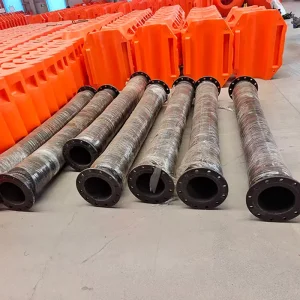
High-Performance Discharge Pipeline Floats & Assemblies
Engineered with zero-weld seamless polyethylene shells and closed-cell polyurethane cores, calibrated for extreme dynamic hydraulic loads and harsh oceanic weather.
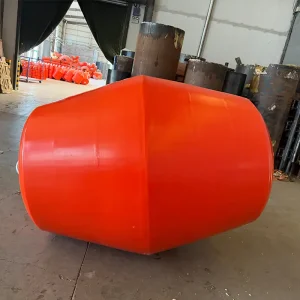

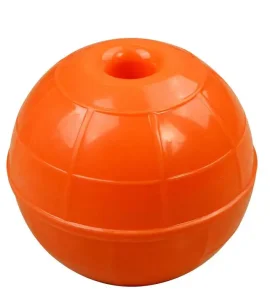
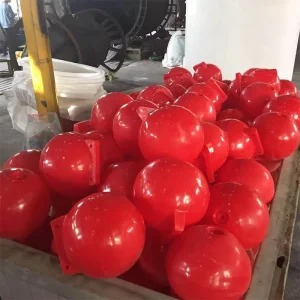
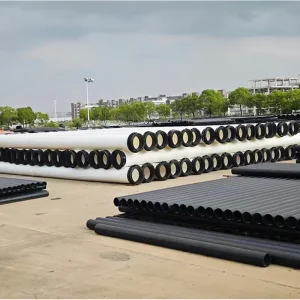
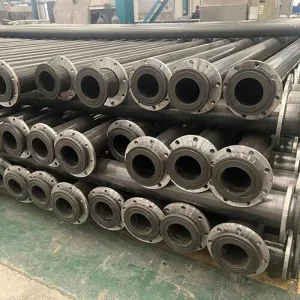

Commercial Status & Industrial Demand for Dredge Discharge Pipelines
From capital dredging in megaport developments to deep-channel maintenance and tailings management, buoyant marine discharge systems provide the backbone for modern hydraulic sediment transfer.
The Evolution of Marine Slurry Transport: Transition from Steel Pontoons to Engineered PE Floats
Across the international marine dredging sector, the historical reliance on fabricated steel pontoons and rigid metallic buoys has rapidly declined over the past decade. Modern hydro-engineering projects dictate higher efficiency, rapid redeployment, lower maintenance costs, and absolute resistance to electrolytic degradation. In aggressive saltwater settings and corrosive tailings ponds, steel flotation modules suffer catastrophic corrosion, wall thinning, weld fatigue, and sudden sinking hazards when hulls are breached.
Rotomolded virgin Polyethylene (HDPE/LLDPE) dredge discharge pipeline floats—filled with high-density, closed-cell polyurethane foam—have established total market dominance. Even in the event of high-impact hull gouging from workboats or floating debris, the hydrophobic micro-cellular matrix prevents water infiltration, preserving positive reserve buoyancy under extreme working pressures.
Corrosion Immunity
Polyethylene is completely chemically inert to seawater, industrial acids, municipal effluent, and aggressive saline slurries. Eliminates sacrificial zinc anodes, anti-fouling coatings, and continuous repainting cycles entirely.
Impact Damping Dynamics
The flexible molecular structure of rotational-molded PE naturally absorbs wave-induced shock loads and slamming forces between adjacent pipeline segments, preventing pipeline shear stress and joint disconnection.
Standardized Interchangeability
Fabricated through precision variable-frequency CNC machinery and uniform tooling, ensuring identical semi-circular shells that clamp effortlessly onto standard HDPE, steel, or flexible rubber dredging hoses.
Buoyancy Reserve Sizing & Hydrodynamic Design Roadmap
A rigorous engineering framework for specifying pipe float dimensions, density calculations, and clamp intervals based on ASTM and ISO marine standards.
The Mechanical Hazard of Under-Calculating Operating Slurry Density
The single most destructive operational error documented in pipeline dredging is calculating flotation capacity based purely on clean water density (1,000 kg/m³ or 1.025 t/m³ for seawater). In commercial dredging, high-solid slurry transfers (coarse gravel, silt, consolidated clay, and iron ore tailings) yield aggregate operational densities between 1,300 kg/m³ and 1,850 kg/m³.
When an operating pipeline transitions from idle to full hydraulic slurry transfer, an under-specified system loses its reserve freeboard, sinks beneath wave action, drags the bed, and incurs localized pipeline kinking or flange breakage under torsional wave drag.
Where W_pipe is the bare dry weight of the discharge pipe, W_slurry represents the internal volumetric capacity multiplied by maximum peak slurry density, and W_fittings accounts for galvanized steel bolts, quick-action flanges, backing rings, integrated cable trays, and sediment build-up on the exterior shell.
Virgin Polymer Matrix
Formulated with UV8/UV16 stabilized LLDPE/HDPE with antioxidant additives. Engineered to resist up to 20,000 hours of direct equatorial solar exposure without embrittlement or micro-cracking.
Polyurethane Core Fusion
Injected with 35–45 kg/m³ closed-cell hydrophobic polyurethane foam. Withstands cyclic hydrostatic pressure and limits water absorption to <1% even if outer wall sustains mechanical puncture.
Anti-Slip Ribbing
Inner radial circumference features precision-molded gripping ribs. Resists axial sliding along the pipeline during sudden surges, pump hammer transients, and wave heave.
Marine Hardware Inclusions
Supplied complete with hot-dip galvanized Grade 8.8 or marine-grade 316 stainless steel bolts, nylon self-locking nuts, and oversized load-distributing washers.
Global Project Scenarios & Tailored Engineering Setups
Different hydraulic environments place vastly different hydrodynamic moments on pipeline floats. Review our purpose-built configurations for global marine contractors.
Deep Sea Capital Dredging
Equipped with hydrodynamic tapered ends to lower drag coefficients against ocean currents, allowing trailing suction hopper dredgers (TSHD) uninterrupted discharge.
Land Reclamation & Coastal Expansion
Maintains uninterrupted alignment over multi-kilometer sand conveyance conduits transferring millions of cubic meters from dredge borrow zones to urban shorelines.
Tailings Ponds & Slurry Extraction
Built with chemically modified polymer blends resilient against extreme pH variations, hydrocarbon films, and abrasive mineral tailings in mining reservoirs.
Inland Riverbed & Canal Desilting
Compact outer diameters allow discharge lines to operate inside narrow navigational canals without obstructing commercial barge traffic or river locks.
Offshore Cable-Integrated Discharge
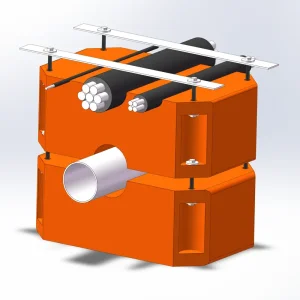
Engineered with recessed molded top cable troughs that securely run dredge power supplies, instrumentation, and fiber optics along the discharge line without pinching.
Turnkey Marine Solutions: From Tooling to Site Integration
A systematic engineering execution workflow guaranteeing dimensional precision, raw material certification, and rigorous batch traceability.
1. 3D Hydrodynamic CAD
Custom modeling of pipeline OD, buoyant displacement profile, and inner grip surfaces calculated to client specifications and operating limits.
2. Computerized Rotomolding
Variable-frequency biaxial rotation and electronic internal thermal tracking ensure consistent wall thickness across all corners and stress points.
3. Hydrostatic Testing
Every production batch undergoes destructive wall thickness gauging, puncture resistance drop testing, and closed-cell water absorption checks.
4. Optimized Export Nesting
Symmetrical modular halves are securely nested for international container loading, maximizing shipping efficiency and reducing ocean freight overhead.
5. Site Support & Spares
Long-term parts interchangeability with rapid-dispatch fastening kits and warranty protection spanning 18 months post-delivery or 12 months post-install.
Frequently Asked Questions: Dredge Discharge Pipeline Floats
Direct technical answers addressing hydraulic buoyancy sizing, structural durability, bolt tensioning, and chemical resistance.
High-Spec Flotation Components, Marine Buoys & Subsea Systems
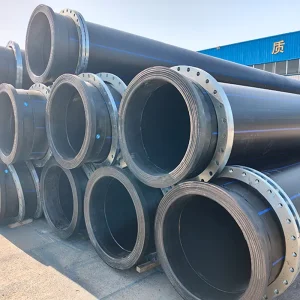
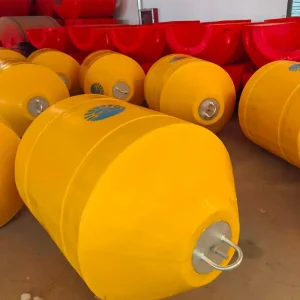
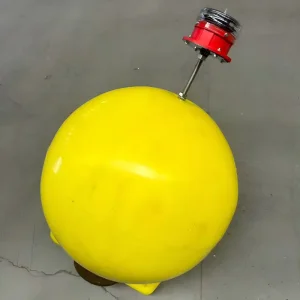
Explore specialized dredging equipment including cable-integrated pontoons, offshore mooring buoys, navigation markers, and heavy-duty slurry transfer pipelines.