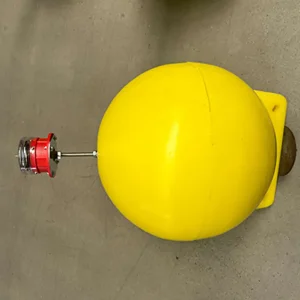
Featured Flotation & Pipeline Product Systems
Direct manufacturer supply for certified rotomolded pipe floats, heavy-duty marine buoys, perimeter floating barriers, and slurry handling rubber infrastructure.
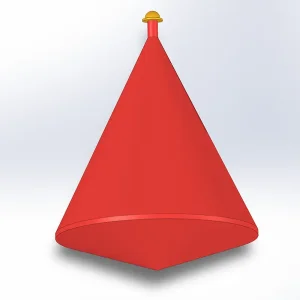
ODM Heavy-Duty Marine Buoys for Reliable Navigation & Offshore Safety Manufacturer, Companies
Request ODM Quote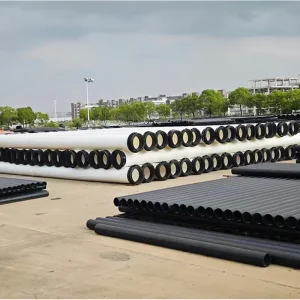
ODM Heavy-Duty Pipeline for Versatile Water and Fluid Transport Product, Quotes
Request ODM Quote
High-Quality Durable Floating Barriers for Water Protection Projects Product, Pricelist
Get Pricelist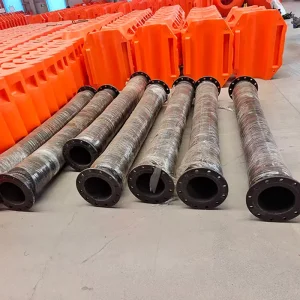
High-Quality High-Performance Rubber Hoses for Water and Slurry Transport Suppliers, Factories
Factory Direct Price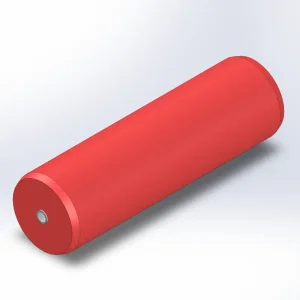
Best Reliable Floating Barriers for Marine and Industrial Protection Supplier, Factory
Inquire Supplier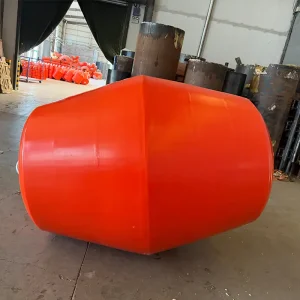
Best Foam-Filled Polyethylene Mooring Buoy for Reliable Marine Anchoring Supplier, Suppliers
Technical Specs & Quote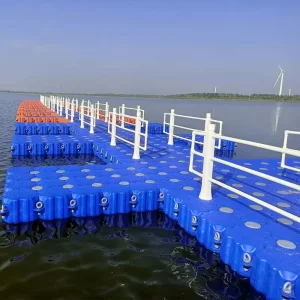
Custom Premium Floating Boat Pontoon for Safe and Stable Water Platforms Products, Quotes
Custom Pontoon Quote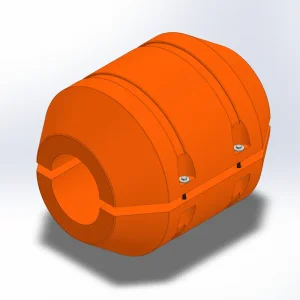
High-Quality Durable Floats for Safe and Efficient Pipeline Support Manufacturers, Products
Manufacturer SpecsGlobal Commercial & Industrial Status of Dredge Hoses
In mega-infrastructure projects ranging from deepwater maritime fairway dredging to hyper-abrasive mineral processing, dredge hoses represent the mission-critical hydraulic conduit connecting trailing suction hopper dredgers (TSHD), cutter suction dredgers (CSD), and overland booster discharge pipelines.
Severe Mechanical & Hydraulic Demands
Modern dredge operations convey coarse slurries containing gravel, sharp silica sand, coral rock fragments, and viscous mud under pressures frequently reaching 15 bar to 30 bar. Conveyance speeds exceed 4 to 7 m/s, causing accelerated gouging wear and cavitation along inner wall profiles.
Standard off-the-shelf industrial hoses experience catastrophic delamination and structural carcass rupture. Realizing sustainable operational margins demands tailor-built ODM dredge hoses with chemically bonded wear indicators and graduated vulcanized plies.
Dynamic Oceanic Bending Moments
Nearshore sea states subject discharge strings to multi-axial bending, hydrodynamic swells, wave shear, and cyclical torsional strain. A dredge hose positioned at the trunnion elbow, discharge stern, or stern gimbal must bend continuously without ovalizing or kinking.
Through finite-element-optimized spring steel spirals and high-tensile polyester synthetic cords, ODM custom hose manufacturing provides precise bending radii down to 3.5× to 4× inner diameter (ID) while preserving hydraulic cross-section integrity.
Supply Chain Shift to ODM Partnerships
Engineering, Procurement, and Construction (EPC) dredging contractors have moved away from non-customized wholesale sourcing. High project downtime costs—which can exceed $35,000 daily for large dredgers—demand direct collaboration with specialized ODM manufacturers capable of producing custom end flanges.
Direct ODM quotes ensure custom fitments such as cast-in steel nipples, vulcanized rubber flanges, and sandwich-type swivels matched precisely to HDPE pipe interfaces.
Emerging Industry Trends & Slurry Hose Technology Roadmap
Advanced polymer chemistry, integrated flotation composites, and digital Internet-of-Things (IoT) condition monitoring are fundamentally transforming dredging fluid transfer architecture.
Nano-Ceramic Elastomeric Liners
Incorporation of micro-embedded ceramic hexagonal tiles within high-grade natural rubber (NR) and synthetic polymers. Extends liner abrasion resistance by 300% to 500% over standard gum rubber when transferring abrasive magnetite, phosphate, or granite slurry.
Self-Floating Concentric Foams
Transition from external clamp-on floats to integral self-floating dredge hoses. Utilizes multi-layer closed-cell polyethylene / polyurethane foams laminated under vulcanization to prevent water ingress even after puncture or severe hull collision.
Embedded Wear Sensor Arrays
Real-time continuous measurement via conductive polymer grids and inductive RFID wear nodes embedded at 25%, 50%, and 75% liner depletion depths. Transmits ultrasonic telemetry to the dredger bridge to eliminate unexpected pipeline blowouts.
Super-Duplex Corrosion Terminations
Coupling terminations cast in specialized high-molybdenum duplex stainless steels and titanium-stabilized alloys. Engineered specifically for hyper-saline desalination brine and acidic copper / gold tailings disposal pipelines.
Engineer's Sizing & Buoyancy Reserve Methodology
A frequent error encountered by procurement teams is estimating pipeline buoyancy based on static fresh water or empty pipe mass. In dredge slurry hydraulic engineering, total buoyancy must be calibrated to high-density sediment mixtures during active pumping cycles:
Total Float Buoyancy (kg) ≥ [ M_pipe + M_hose + M_fittings + (V_internal × ρ_slurry) ] × Safety Factor (1.25 – 1.35)
- ρ_slurry (Slurry Density): Silt and fine sands range from 1.3 to 1.6 t/m³; dense iron ore tailings or heavy gravel reach 1.8 to 2.2 t/m³.
- Freeboard Calculation: A properly calibrated floating assembly ensures that approximately 25% of the pipe/float outer diameter remains elevated above the hydrodynamic waterline under maximum operating payload.
- Initial Pump Commissioning Protocol: Flotation stability, clamp bolt torque tension, and trunnion hose bending angles must be monitored during initial high-pressure water test cycling before introducing abrasive sediment.
Localized Application Scenarios & Macro Solutions
Deploying slurry transfer equipment across varied marine geologies requires customized composite assemblies, specialized pressure ratings, and certified UV/chemical resistance properties.
1. Deepwater Port Expansion & Harbor Deepening
Operating Environment: Severe commercial navigation lanes, continuous vessel wash, open sea swell, mixed sediment ranging from silt to bedrock.
Technical Solution: Armored discharge dredge hoses paired with rotomolded polyethylene pipe floats and illuminated navigation buoys. Provides uninterrupted 24/7 channel clearing while marking pipeline corridors to prevent maritime collisions.
2. Coastal Reclamation & Island Infrastructure
Operating Environment: Long-distance discharge lines reaching 3,000 to 10,000 meters; continuous 24-hour hydraulic pumping of sharp reef sand and coral fragments.
Technical Solution: Highly flexible heavy-duty rubber suction and delivery hoses functioning as dynamic articulation joints between rigid HDPE overland pipes, mitigating expansion stresses and ground subsidence.
3. River Basin De-silting & Reservoir Maintenance
Operating Environment: Narrow channel paths, rapid river currents, variable seasonal water heads, debris intrusion, and municipal intake proximity.
Technical Solution: Lightweight modular pipe floats with cable troughs combined with debris-deflecting floating barriers. Maintains steady dredging pipeline alignment while shielding water turbines and intake gates.
4. Hard-Rock Mining Tailings & Chemical Slurry
Operating Environment: Extreme solids concentration (up to 65% w/w), abrasive metal oxides, fluctuating pH (acidic leach / alkaline tailings ponds).
Technical Solution: Custom synthesized EPDM and chlorosulfonated polyethylene (CSM) dredge hoses engineered for simultaneous corrosive and gouging wear resistance, coupled with foam-filled mooring buoys for perimeter pond maintenance.
5. Subsea Pipeline Tie-In & Deep Trench Backfilling
Operating Environment: High hydrostatic external pressures, restricted diver handling windows, subsea umbilical crossings.
Technical Solution: Staged-buoyancy pipeline tie-in floaters and collapse-resistant steel-ring-reinforced suction hoses, providing micro-controlled positioning during seabed settling operations.
6. Full-System Turnkey Integration for EPC Dredging
Operating Environment: Complex mega-tenders demanding synchronized compliance with ISO 9001, PIANC flotation standards, and classification society approvals.
Technical Solution: Unified supply packaging matching custom dredge hoses, heavy-duty HDPE pipe segments, rotomolded floats, and polyurethane-foamed buoys under single-source accountability.
Shandong Binzhou Juhua: Two Decades of Manufacturing Integrity
Operating from West Industrial Park, Lizhuang Town, Huimin County, Binzhou, Shandong Province, Shandong Binzhou Juhua Rubber & Plastic Co., Ltd. (operating the Juhua and Giant Rubber industrial brands) delivers proven flotation and fluid transport engineering.
Precision Rotomolding Automation
Our expansive 1,000 m² rotational moulding facilities incorporate variable-frequency rotational drives, digital multi-zone thermal tracking, and automated resin cooling cycles. This guarantees consistent shell wall thickness, eliminating localized weak points across high-impact polyethylene floats and marine buoys.
Severe Environment Polymer Formulation
Float shells are fabricated from virgin LLDPE/HDPE resins compounded with 2.5% nanoscale carbon black and specialized UV stabilizers. The resulting cellular composite exhibits complete corrosion immunity against marine saltwater, bio-fouling, petroleum hydrocarbons, and Arctic-to-Equatorial thermal cycles (-40°C to +60°C).
Strict Quality Control & Warranty Guarantee
Every production batch undergoes hydro-burst pressure analysis, Charpy impact testing, tensile strain validation, and weld integrity inspection. Backed by our explicit warranty protocol: valid through 18 months from investor handover or 12 months from final operational installation.
Frequently Asked Questions on ODM Dredge Hoses & Quotes
In-depth technical answers addressing the critical sizing, material choice, and procurement queries submitted by global port engineers, marine contractors, and EPC project directors.
What parameters are required to receive an accurate ODM dredge hose quote?
To produce an exact engineering drawing and commercial quote, our technical department requires: inner diameter (ID), total length between flange faces, operating and burst pressure (bar/psi), medium slurry density, mineral composition/grain size distribution, required minimum bending radius, and flange specification (standard ANSI, DIN, JIS, or bespoke dredge nipple dimensions).
What is the difference between suction, discharge, and armored dredge hoses?
Discharge hoses feature multi-layer fabric and high-tensile cords built to withstand extreme outward internal pressure. Suction hoses incorporate heavy helical spring-wire skeletons to prevent vacuum collapse under high negative pressures. Armored dredge hoses integrate hardened steel rings or ceramic plates directly inside the elastomeric inner tube to resist high-velocity rock impact.
How does an ODM supplier balance hose flexibility and wear life?
Flexibility is governed by the cord braiding angle, carcass thickness, and spiral steel pitch. Wear life is determined by the inner rubber polymer grade and thickness (commonly 12 mm to 35 mm). By customizing the inner tube elastomer using compounding recipes of cis-1,4-polyisoprene and synthetic styrene polymers, we achieve elongation at break >450% while minimizing DIN volume abrasion loss below 50 mm³.
Why use rotational molded polyethylene pipe floats instead of steel pontoons?
Polyethylene pipe floats never rust, pit, or corrode when deployed in hyper-saline oceanic environments, eliminating repetitive sandblasting and anti-fouling coatings. Furthermore, our closed-cell polyurethane foam filling ensures that even in the rare event of puncture from debris or vessel collision, the float retains over 95% of its buoyancy capacity.
How are replacement spare parts handled across international job sites?
Standardized rotational molding molds ensure precision interchangeability across our entire line of dredge pipe floats, mooring buoys, and rubber hose couplers. Spares produced years apart feature identical bolt-hole patterns and clamp profiles, ensuring rapid, bolt-on replacement without on-site modification or downtime.
What is the standard warranty coverage and export documentation provided?
Every shipment is covered by our standard engineering warranty ending 18 months from investor handover or 12 months from site commissioning. Each batch is accompanied by comprehensive mill test certificates (MTC), hydrostatic proof-pressure test reports, polymer density verification, and international packing compliance (ISPM-15 export crating).
Specialized Subsea Flotation & Barrier Infrastructure
Explore customized slurry hose assemblies, subsea pipeline tie-in floats, intake protection barriers, and solar-powered smart marine navigation balls.
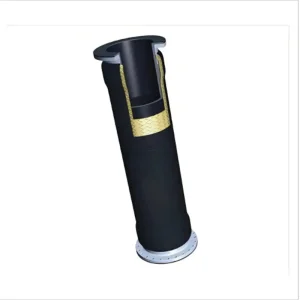
Custom Premium Rubber Hoses for Reliable Water and Slurry Transport Supplier, Products
Custom Hose Quote
ODM Floating Barrier Systems for Water Safety and Project Efficiency Manufacturer, Company
ODM Barrier Pricing
OEM Pipe Floats For Reservoir Intake And Temporary Bypass Lines Quotes, Pricelist
Bypass Float Specs
ODM Floating Barriers for Water Protection and Environmental Management Supplier, Factories
Environmental Barrier Quote
High-Quality Mooring Buoy with Reinforced Connections for Marine Projects Product, Companies
Mooring Buoy Quote
High-Quality Advanced Pipeline Float System for Secure Subsea Installations Supplier, Factories
Subsea System Inquiry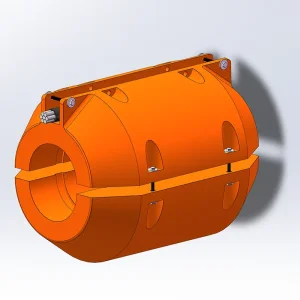
OEM Advanced Cable-Supporting Pipe Floats for Marine Projects Products, Factories
Cable Float Specs