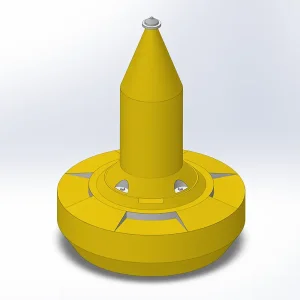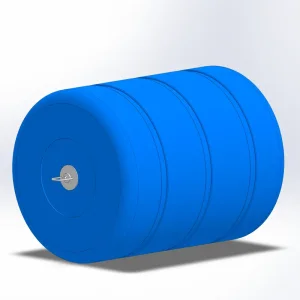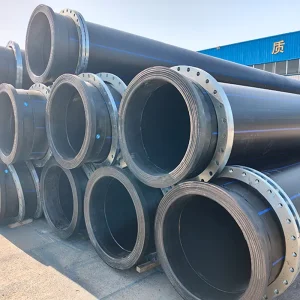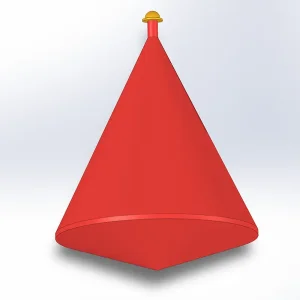
High-Quality High-Visibility Marine Buoys for Safe Offshore Operations
View Specifications
Direct engineered inventory: Rotomolded virgin HDPE outer skins, UV-stabilized matrices, and polyurethane core infusions for extreme hydrodynamic duty.
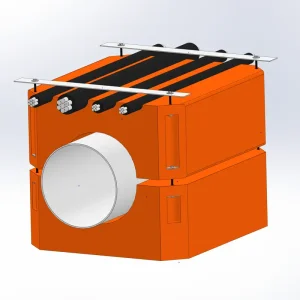
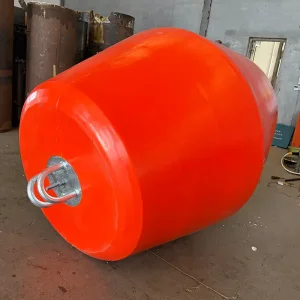

Shandong Binzhou Juhua Rubber & Plastic Co., Ltd. delivers customized ODM/OEM buoyancy systems for mission-critical hydraulic dredging, trailing suction hopper dredgers (TSHD), and mine tailing corridors.
Addressing structural procurement pain points across global dredging sectors: hydrodynamic stability, chemical resistance, and non-catastrophic mechanical failure modes.
Traditional steel and poor-grade hollow floats degrade rapidly under alternating wave kinetics and cyclic slurry shock. Juhua ODM floats feature variable-thickness internal ribs matched with virgin LLDPE/HDPE blends, neutralizing micro-cracking and wall collapse during tidal changes.
Mine tailings and dredging slurries operate at specific gravities between 1.3 and 1.8 t/m³. If a pipeline stalls, solids settle at the inverted crown, drastically shifting the center of gravity. Our precision-engineered buoyancy reserves prevent catastrophic pipeline rolling and sub-surface sinkage.
Tropical land reclamation projects subject floats to UV indices of 11+. Compounded with marine-grade carbon-black stabilizers and specialized hindered amine light stabilizers (HALS), our polymer mantles retain over 88% tensile elongation after 10,000 continuous hours of exposure.
Marine dredging pipelines must never be sized based on empty-weight static displacement. EPC project specifications require a reliable buoyancy safety factor ($K_b \ge 1.25$ to $1.30$) calculated across complete dynamic immersion:
Where ρ_water represents local seawater or estuarine water density (typically 1.025 t/m³ vs 1.000 t/m³ in freshwater), and W_slurry_max accounts for the maximum solid-volume transport density during operational continuous dredge runs. Failure to calibrate for dynamic freeboard results in premature submergence and uncontrolled scouring.
The progression of rotomolding manufacturing at Juhua: from basic structural buoyancy modules to connected smart flotation units.
High-precision single-mould rotational thermal cycles. Focus on wall thickness uniformity, eliminating internal stress concentrations, and introducing rust-free 316 stainless-steel marine fastening clamps.
Closed-cell PU foam core filling with density ratings of 35-45 kg/m³. Ensures water absorption remains under 1.5% even if external PE skin experiences abrasive rupture against underwater reefs or metal hulls.
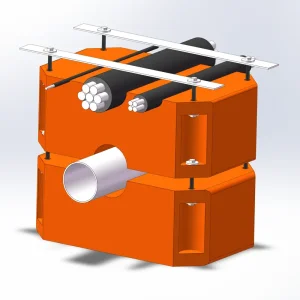
Streamlined low-drag profiles reducing side-current dragging forces by up to 24%. Integral anti-slip channels, cable-trough configurations, and integrated subsea pipeline tie-in points.
Integration of IoT strain gauges, tilt telemetry sensors, and embedded RFID/satellite transponders to deliver real-time load distribution and wear warnings to onshore terminal command stations.
Exporting to marine contractors in 80+ countries requires rigorous mechanical testing protocols conforming strictly to maritime industry practices.
Every production batch is calibrated with computer-controlled variable-frequency furnace cycles and electronic multi-axis thermography, verifying consistent nominal wall thickness from end-flange to central body.
Destructive drop tests from 5-meter heights at sub-zero temperatures verify that crack propagation resistance and ductile failure boundaries comfortably exceed ASTM D1998 and relevant marine classification standards.
Clear, accountable protection: standard factory coverage extends 18 months from buyer handover or 12 months from final operational installation. Each shell includes serialized batch coding for instant resin batch traceability.
Comprehensive technical guidance compiled from international hydro-engineering inquiries and dredging procurement audits.
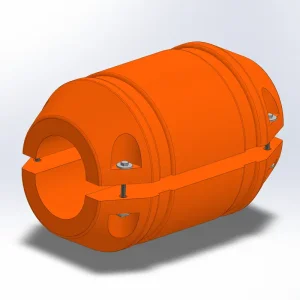
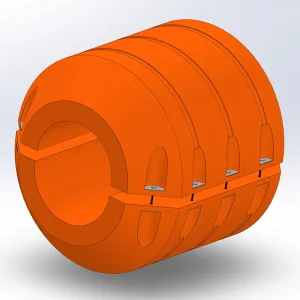
Pipeline floats, also referred to as dredge pipe floats or buoyancy jackets, are modular, semicircular clamp-on bodies manufactured from rotomolded polyethylene and usually infused with polyurethane foam. They clamp securely around steel, HDPE, or armored rubber slurry lines. By displacing sufficient water, they counteract the heavy self-weight of the pipe and its dense internal slurry, maintaining pipeline alignment, providing surface visibility, and keeping bending stresses well within safe operational limits.
Accurate float sizing requires aggregating the deadweight of the pipe conduit, all joining flanges/bolts, and the internal slurry medium at maximum design density (often 1.6 to 1.8 kg/L during heavy sand extraction). Total float buoyancy should provide a 20% to 30% reserve margin over this aggregate figure. This keeps approximately one quarter of the pipeline diameter above the waterline, providing visual monitoring lines and preventing catastrophic sinking if slurry settles during pump shutdowns.
Welded steel floats are vulnerable to galvanic corrosion, weld fatigue, and joint cracking under cyclical wave actions; once punctured, unfoamed steel drums lose buoyancy immediately and sink. Conversely, virgin rotomolded polyethylene is completely inert in saltwater, resists micro-cracking from rough handling, and incorporates closed-cell polyurethane foam cores that prevent water ingress even after puncture.
To deliver an optimized ODM proposal, engineering teams should provide: Outer diameter (OD) and wall thickness of the pipe, host pipe substrate (HDPE, steel, rubber hose), medium slurry density, maximum current speed and wave height at the deployment site, target freeboard elevation, and internal trough requirements for dynamic control cables or electrical lines.
Our comprehensive factory assurance covers manufacturing defects, polymer stress fractures, and core degradation. The warranty takes effect when the buyer delivers the equipment to the investor/site operator and runs for 18 months from that handover date, or 12 months after completed project installation, whichever milestone arrives first.
Comprehensive flotation equipment, containment systems, and heavy-duty polymer pipelines engineered for offshore dredging, port security, and mine tailings disposal.