
High Water Float & Buoyancy System Configurations
Engineered rotomolded high-water floats built for offshore dredging, slurry pipeline discharge, navigation channels, and extreme marine hydraulic applications. Direct factory specifications with interchangeable clamp modules.

OEM Heavy-Duty Pipeline Float for Stable Floating Pipeline Systems Company, Factory
View Engineering Details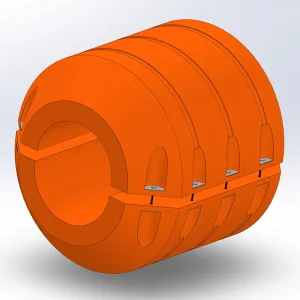
ODM High-Buoyancy Floats for Marine Projects Suppliers, Pricelist
View Engineering Details
High-Quality Advanced Pipeline Float System for Secure Subsea Installations Supplier, Factories
View Engineering Details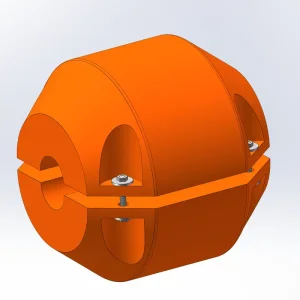
High-Quality Durable Pipe Floats for Safe Operations Products, Company
View Engineering Details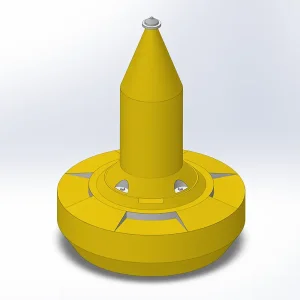
High-Quality Reliable Marine Navigation Buoy for Safe Waterways Manufacturer, Product
View Engineering Details
Best Reliable Floating Buoys for Coastal Navigation and Offshore Projects Suppliers, Factory
View Engineering Details
High-Quality High-Visibility Marine Buoys for Safe Offshore Operations Pricelist, Factory
View Engineering Details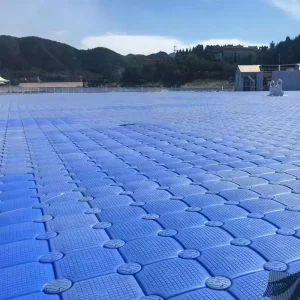
Best High-Performance Floating Boat Pontoon for Modular Water Platforms Company, Factories
View Engineering DetailsEngineering Fundamentals of Industrial High Water Floats
In harsh marine engineering, land reclamation, dredging discharge, and open-pit mining tailings transfer, high water floats serve as the mission-critical flotation component maintaining structural pipeline integrity above volatile waterlines.
Polyolefin Polymer Rheology
Fabricated using virgin Linear Low-Density Polyethylene (LLDPE) reinforced with molecular-grade carbon black or UV-stabilized masterbatch (UV8/UV20 rating). Resists environmental stress cracking (ESCR > 1000 hrs per ASTM D1693) and maintains high impact ductility at -40°C.
Closed-Cell Core Hydrodynamics
Inner chambers are pressurized and filled with hydrophobic, high-density closed-cell polyurethane foam (35–45 kg/m³). In the event of an exterior shell rupture via high-velocity projectile impact or sharp aggregate abrasion, zero water ingress occurs, preserving buoyant equilibrium.
Hoop Stress Distribution
Engineered with ribbed exterior shock arches and internal axial load baffles. Mechanical fastening channels securely clamp High-Density Polyethylene (HDPE) or steel delivery dredge pipelines without inducing point-concentrated fatigue failure during wave heave and cyclic pitch motion.
B_net ≥ (M_pipe + M_slurry + M_accessories) × K_reserve, where K_reserve is specified between 1.25 and 1.40 for open littoral waters to compensate for wave slamming, current drag coefficient, and biological barnacle fouling.
Chinese OEM/ODM Factory Scale & Cost-Engineering Dynamics
Located in the heart of China’s rotational moulding cluster in Shandong Province, Binzhou Juhua leverages an integrated industrial ecosystem that fuses polymer synthesis, CNC tooling fabrication, automated rotational molding furnaces, and international export logistics.
The global demand for high water floats spans challenging geographies—from the salt-pan mining sites of Western Australia to coastal land reclamation in Rotterdam, and deepwater canal dredging across Southeast Asia. Sourcing through our Binzhou production facility provides EPC contractors, dredging conglomerates, and maritime equipment distributors with structural supply advantages that Western tier-one moulders struggle to match:
Tooling Amortization
In-house CNC mold milling produces custom paired-shell aluminum molds within 14–21 days. Rapid prototyping reduces tooling capital expenditure by up to 60% compared to European or North American tooling shops.
Bulk Polymer Purchasing
Direct pipeline off-take of Sinopec and PetroChina virgin polyethylene pellets minimizes raw material volatility. High-efficiency automated pellet pulverizing generates uniform 35-mesh powder for uniform wall thickness control.
Continuous Furnace Arrays
Operating multi-arm shuttle and carousel rotational moulding stations capable of holding molds up to 4,500 mm in diameter. 24/7 variable-frequency cycle management delivers output capacities over 350 metric tons monthly.
Intermodal Port Proximity
Immediate access to Qingdao and Tianjin deepwater ports simplifies 40HQ container packing. Half-shell nesting design minimizes volumetric ocean freight shipping costs, saving up to 45% in sea logistics expenses.
Enterprise Sourcing Matrix & Operational Rigor
Tier-1 dredging companies (e.g., Jan De Nul, DEME, Boskalis, Van Oord) and international civil engineering entities enforce stringent testing metrics for floating pipeline containment. Below is our quantitative quality benchmark.
| Physical / Mechanical Property | International Standard | Juhua Factory Certified Spec | Significance for Marine Slurry Operations |
|---|---|---|---|
| Outer Shell Tensile Yield Strength | ASTM D638 / ISO 527 | ≥ 22.5 MPa | Prevents casing splitting during high wave flexure and surging. |
| Elongation at Break | ASTM D638 / ISO 527 | ≥ 450% | Allows elastic deformation upon severe rocky sea bottom collisions. |
| Low-Temperature Impact Energy (-40°C) | ARM Low Temp Dart Impact | ≥ 120 J | Eliminates brittle shattering in Arctic, Canadian, or Alpine conditions. |
| Polyurethane Core Density | ASTM D1622 / ISO 845 | 38 – 42 kg/m³ | Provides optimal load-to-weight buoyancy efficiency without crushing. |
| Core Closed-Cell Ratio | ASTM D2856 / ISO 4590 | ≥ 92.5% | Guarantees lifelong buoyancy even if exterior skin is breached. |
| Accelerated UV Weathering | ASTM G154 (Cycle 1, 2000h) | Tensile retention ≥ 85% | Prevents chalking, crazing, and photo-oxidation in equatorial seas. |
Localization Support, Regulatory Compliance & Warranty Framework
Executing offshore pipeline projects demands more than just hardware. It requires adherence to regional environmental safety regimes, maritime navigation rules, and legally binding warranty covenants.
Maritime Regulatory Alignment
Navigational and marker buoys adhere fully to the International Association of Marine Aids to Navigation and Lighthouse Authorities (IALA) AISM guidelines. Buoy shells feature pigmentation that satisfies chromaticity coordinates for lateral, cardinal, and isolated danger systems.
Environmental & Eco-Toxicity Audits
Our raw polyethylene resins are 100% recyclable, non-leaching, and chemically inert, complying with EU RoHS, REACH, and California Proposition 65 requirements. Polyurethane blowing agents are completely zero-ODP and low-GWP, preventing aquatic micro-contaminant release into sensitive coral or fishing zones.
Structured Warranty & EPC Risk Escrow
Our warranty framework commences upon documented handover to the project investor, extending for 18 months post-handover or 12 months from on-water commissioning (whichever occurs first). We provide mill test certificates, ultrasonic wall thickness logs, and third-party Lloyd's/SGS witness testing on demand.
Emerging Technology Trends in Flotation Infrastructure
The transition from passive floating drums to smart, sensor-integrated, sustainable buoyancy platforms is redefining marine asset life cycles.
IoT Telemetry & In-Situ Load Cells
Next-generation ODM floats feature integrated embedded strain gauges, GPS geo-fencing beacons, and ultrasonic slurry wear transducers. Operational data transmits over LoRaWAN or NB-IoT networks directly to dredger bridge SCADA consoles, warning of slurry blockage or localized submersion before a catastrophic pipe sink occurs.
Circular Maritime Polymers
Binzhou Juhua is pioneering closed-loop chemically depolymerized resins, infusing up to 30% recycled ocean-bound polyolefin waste without degrading physical stress-crack resistance. Life-cycle assessments (LCA) demonstrate a 42% reduction in Scope 3 greenhouse gas footprints for port infrastructure builds.
Fluoropolymer-Free Slick Antifouling
By compounding specialized silicone-hydrophobic additives directly into the rotomolding charge, the outer wall achieves a non-stick surface tension (< 22 mN/m). Algae, barnacles, and marine tube worms slide off under standard hydrodynamic flow, eliminating toxic biocide paints and costly high-pressure hydro-blasting cycles.
Localized Engineering Case Application Matrices
Real-world floating pipelines encounter radical hydrodynamic variances across rivers, reservoirs, deep offshore lanes, and industrial mining tailing ponds.
Scenario A: High-Density Mining Tailings
Operational Setting: Mineral processing tailings transport with specific gravities from 1.45 to 1.70 g/cm³ across sub-zero tailing impoundments.
Engineering Adaptation: Integrated high-water floats with asymmetric lower ballast geometries to prevent pipe rollover. Fasteners feature Dacromet or hot-dip galvanized grade 8.8 bolts coupled with internal neoprene buffer gaskets to prevent pipe fretting under surge pulses.
Scenario B: Open Ocean Land Reclamation
Operational Setting: Mega cutter-suction dredger discharging coarse seabed sand over 4,000 meters in 2.5-meter wave swells.
Engineering Adaptation: High-displacement floats equipped with tapered hydrodynamic end cowlings. This reduces longitudinal wave impact forces on the pipeline flanges by 32%, dampening cyclical shock fatigue on flexible rubber hose couplings.
Scenario C: Hydro-Dam Trash Barrier & Intake
Operational Setting: Hydroelectric turbine penstock intake protection against floating timber, urban debris, and storm flotsam.
Engineering Adaptation: High water float units equipped with deep-drop high-tensile stainless steel wire mesh curtains. Floats act as synchronized tensile anchor points resisting breaking tensile loads exceeding 150 kN during flash flood crests.
Specialized Float, Navigation Buoy & Pipeline Accessories
Explore secondary heavy-duty marine solutions, including armored rubber dredging hoses, high-visibility marine navigation markers, modular aquaculture buoys, and mooring platforms.
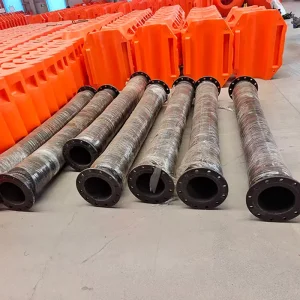
High-Quality High-Performance Rubber Hoses for Water and Slurry Transport Suppliers, Factories
View Engineering Details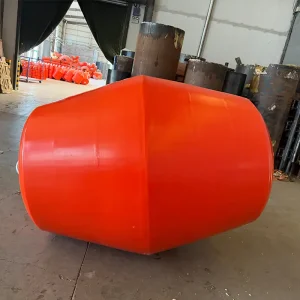
Best Foam-Filled Polyethylene Mooring Buoy for Reliable Marine Anchoring Supplier, Suppliers
View Engineering Details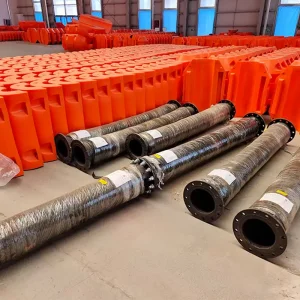
Custom Heavy-Duty Rubber Hose for Marine and Water Management Projects Suppliers, Manufacturers
View Engineering Details
Best Precision Marine Buoys for Safe and Efficient Navigation Manufacturer, Factories
View Engineering Details
High-Quality Pipe Floats for Water Transfer, Mining and Marine Pipeline Systems Manufacturer, Pricelist
View Engineering Details
ODM Heavy-Duty Marine Buoys for Reliable Navigation & Offshore Safety Manufacturer, Companies
View Engineering Details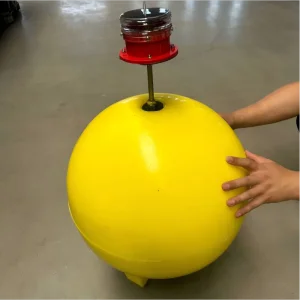
High-Quality LED-Equipped Floating Ball for Safe and Efficient Water Operations Factory, Factories
View Engineering Details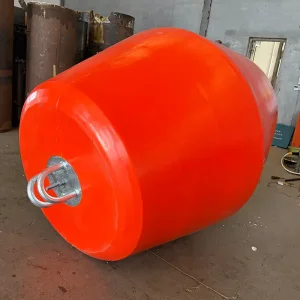
High-Quality Mooring Buoy For Aquaculture Grids And Floating Marine Platforms Pricelist, Factories
View Engineering DetailsPipeline Buoyancy Dimensioning & Installation Protocol
A rigorous step-by-step engineering checklist designed for pipeline operators, dredging superintendents, and procurement executives to avoid catastrophic under-buoyancy.
Phase 1: Metric Ingestion
Document outer diameter (OD) of the steel or HDPE pipe, wall thickness (SDR rating), slurry specific gravity (typical range: 1.15–1.65 t/m³), flange connection weight, and accessory cable payload.
Phase 2: Reserve Freeboard
Establish targeted waterline freeboard. Dredging pipelines require roughly 25% to 30% of the float outer diameter to remain dry above still water level to counter cross-wave overturning moments.
Phase 3: Spacing & Torque
Compute module spacing. Floats can be installed edge-to-edge or pitched intermittently. Tighten 304/316 or HDG bolts in an alternating cross-pattern to 120–140 Nm to prevent axial slippage on pipe skins.
Phase 4: Commissioning Run
Execute clear-water test pumping followed by staged high-density slurry intake. Monitor pipeline deflection angles, flexure bend radii, and shore transition abutment stress during tidal shifts.
Frequently Asked Questions: High Water Float Engineering & Sourcing
Comprehensive technical and commercial answers addressing polymer longevity, foam filling dynamics, custom tooling, and supply chain logistics.
What is the structural difference between low-cost blow-molded floats and rotomolded high-water floats?
Blow-molded floats exhibit non-uniform corner wall thinning, high residual molecular stress, and low wall thicknesses (typically under 4 mm), making them prone to catastrophic stress-cracking in turbulent open water. Rotomolded high water floats manufactured by Juhua feature seamless, biaxially rotated shells with heavy walls (8 mm to 18 mm depending on float class). Furthermore, blow-molded floats are typically hollow, whereas our heavy-duty marine floats are pressure-injected with high-density closed-cell polyurethane foam, guaranteeing that physical shell puncturing does not cause buoyancy collapse.
How do you guarantee that closed-cell polyurethane foam does not delaminate or absorb water over decades of submersion?
We utilize a specialized polyurethane formulation with a closed-cell content exceeding 92% (tested per ASTM D2856) and an in-situ core density calibrated to 38–42 kg/m³. Before foam injection, the inner surface of the rotomolded polyethylene shell undergoes heat-retentive surface treatment, fostering a mechanical anchor interface with the polyurethane foam. Water absorption is rigorously maintained below 0.5% by volume under hydrostatic pressure testing (ASTM D570). Even when continuously submerged in hypersaline marine environments, the closed-cell matrix prevents capillary water ingress.
Can the internal bore diameter of your pipe floats be matched precisely to non-standard pipeline dimensions?
Yes. While our standard tooling inventory covers common outer diameters from 110 mm up to 1,200 mm (including standard SDR 11, SDR 17, and SDR 26 pipes), we routinely deliver ODM customizations. We manufacture modular aluminum inserts to adjust internal bore clamping diameters for custom steel pipe schedules, armored dredge rubber discharge hoses, or pipelines with external cable trays and electrical power feed conduits.
How does Juhua manage thermal expansion and bolt-clamping integrity in extreme deserts or equatorial conditions?
Polyethylene exhibits a relatively high coefficient of linear thermal expansion (~1.5–2.0 × 10⁻⁴ /K). If clamped rigidly without stress-relief geometry, thermal cycling can cause bowing or localized hoop fatigue. Our ODM high-water floats incorporate axial expansion rib recesses and oversized flange contact counter-bores. We specify grade 316 stainless steel or Dacromet-coated fasteners with heavy-duty Belleville conical spring washers and nylon lock nuts. This ensures constant clamping tension through seasonal temperature fluctuations ranging from -30°C to +65°C.
What is the standard delivery lead-time for large-scale mining or port projects requiring 500+ float pairs?
With over 1,000 square meters of dedicated rotomolding manufacturing space and continuous automated carousel ovens in our Binzhou facility, standard orders of 500–1,000 pairs can be produced and containerized within 15–20 business days following mold calibration. If custom tooling is required, aluminum CNC mold fabrication requires an additional 14 days. Ocean shipping from nearby Qingdao port directly connects to major deepwater ports worldwide with minimal transfer latency.