
Featured Dredging & Marine Flotation Line (Batch 01)
Engineered for high-abrasion sediment clearing, chemical-resistant fluid conveyance, and severe sea-state offshore operations.
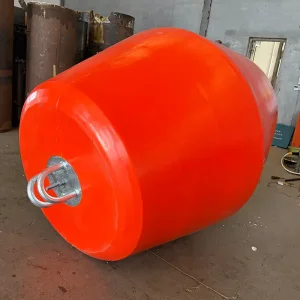
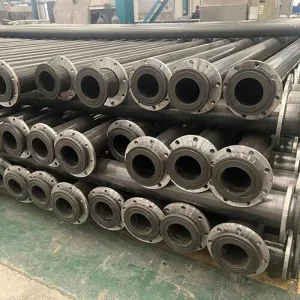

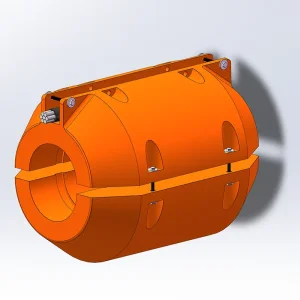
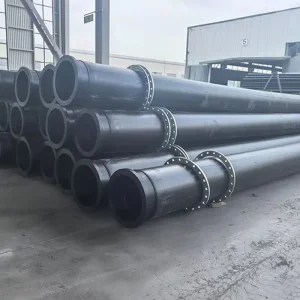


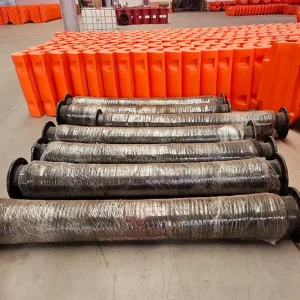
The Engineering Paradigm of Petroleum Dredging Pipelines
A comprehensive treatise on fluid dynamics, material integrity, and hydrodynamic stability in hazardous petrochemical marine environments.
Petroleum dredging pipelines operate under severe, multiaxial stresses that differentiate them fundamentally from standard civil or agricultural slurry conduits. When dredging operators conduct harbor deepening, trenching for subsea oil pipelines, or desiltation around single-point mooring (SPM) crude terminals, the dredging infrastructure encounters an aggressive combination of hydrodynamic wave actions, abrasive sand matrices, volatile hydrocarbon traces, and intense ultraviolet radiation. The structural design of modern dredging pipeline floats and flexible transfer pipes requires exact calculation of hoop stress, tensile limits, bending stiffness, and localized impact tolerance.
As prominent ODM petroleum dredging pipeline suppliers & factories, manufacturers must engineer specialized floating conduits that safeguard continuous transfer operations without structural failure. Conventional steel floating pipelines often exhibit accelerated galvanic corrosion when exposed to sulfur-rich marine sediments and brackish waters containing crude oil residue. Consequently, the offshore petroleum sector has transitioned definitively toward high-density polyethylene (HDPE PE100) shells, reinforced synthetic rubber slurry hoses, and ultra-high-molecular-weight polyethylene (UHMWPE) internal wear layers. This multi-material approach ensures maximum resistance to cyclic fatigue, preventing premature flaking, tearing, and environmental contamination.
Molded from specially stabilized virgin PE or customized nitrile elastomer liners designed to withstand aromatic hydrocarbons, oil mists, and industrial chemical runoff without polymer swelling or matrix embrittlement.
High-density polyurethane (PU) foam core engineered with a closed-cell ratio exceeding 92%. In the rare event of an outer shell rupture caused by vessel collision, the float will not absorb water or compromise line buoyancy.
Accommodates severe bend radii and continuous tidal articulation. High tensile strength hardware and reinforced fastening ribs distribute bending moments evenly along the pipeline body.
Technical Calculation: Buoyancy Reserve Engineering
Engineering standard protocol states that total pipeline float buoyancy must exceed the aggregate dry weight of the steel/HDPE pipe, the maximum wet density of the conveying slurry or petroleum-laden sediment (often calculated between 1.3 to 1.8 t/m³), and the associated flange connectors. A net safety factor of 25% to 30% positive freeboard reserve is maintained to ensure stability during storm surges.
China Factory Supply Chain Advantages in ODM Pipeline Production
How concentrated industrial ecosystems, raw material integration, and automated rotational molding elevate global project competitiveness.
For global engineering, procurement, and construction (EPC) contractors managing large-scale maritime dredging tenders, sourcing directly from specialized Chinese industrial hubs such as Shandong offers unparalleled strategic advantages. Chinese manufacturers have vertically integrated the rotational molding process, mold design, raw resin polymerization, and polyurethane injection into single contiguous manufacturing facilities. This eliminates logistical handoffs, drives down unit production costs, and accelerates manufacturing velocity from preliminary tool design to bulk containerized dispatch.
Modern Chinese ODM factories utilize state-of-the-art rotational molding machines with electronic automatic temperature measurement, variable-frequency speed controls, and high-precision CNC tooling. This guarantees uniform wall thickness throughout the float body—especially around structural corners, bolt recesses, and load-bearing flanges where stress concentrations typically occur. By relying on complete supply chain ecosystems that include domestic steel forging for galvanized flange rings and specialized petrochemical formulation for antioxidant/UV stabilizers, Chinese ODM suppliers achieve up to 35% shorter lead times compared to Western counterparts.
In-house tooling workshops can fabricate bespoke rotational casting molds within 10 to 15 calendar days based on customized pipeline outer diameters (OD) or irregular cable trough profiles.
With facilities exceeding thousands of square meters and multi-arm rotational carousels operating 24/7, high-volume orders for port deepening projects are fulfilled without manufacturing bottlenecks.
Proximity to international container terminals like Qingdao and Tianjin enables rapid consolidation, nested sea-worthy packing schemes to maximize container cube utilization, and seamless export clearance.
Global Procurement Specifications: OEM vs. ODM Technical Architectures
A strategic engineering matrix analyzing the performance differential between traditional stock floats and tailored ODM petroleum transfer pipelines.
International energy conglomerates, offshore terminal operators, and dredging contractors face divergent procurement pathways. Standard off-the-shelf pipe floats (OEM catalog builds) satisfy baseline freshwater water transfers. However, harsh petroleum dredging applications demand customized Original Design Manufacturing (ODM). ODM partners develop specialized molds to accommodate non-standard pipe outer diameters, integrated internal anti-slip ridges, cable conduits for instrumentation lines, and chemical additives tailored to the precise pH, salinity, and temperature of the working waters.
| Evaluation Parameter | Standard OEM Catalog Floats | Juhua Custom ODM Petroleum Dredging System |
|---|---|---|
| Raw Polymer Shell | Recycled or generic commercial PE | 100% Virgin Food/Marine-Grade LLDPE (UV-8 to UV-20 Stabilized) |
| Internal Core Material | Low-density EPS foam or hollow body | Closed-Cell Polyurethane Foam (35-45 kg/m³ density, >92% closed-cell) |
| Hydrocarbon Resistance | Degrades and swells under continuous contact | Formulated for high resistance to oil sheens, crude residues & diesel |
| Structural Hardware | Grade 4.8 standard zinc-plated bolts | Hot-Dip Galvanized Grade 8.8 or Marine-Grade 316 Stainless Steel |
| Slurry Impact Tolerance | Brittle fracturing under sub-zero or high-impact waves | High notch impact strength tested down to -40°C |
| Design Tailoring | Fixed outer and inner diameters | Custom OD sizing, cable/wire troughs, anti-axial slippage grooves |
Localized Support, Maritime Compliance & Global Safety Standards
Ensuring cross-border compliance across Middle Eastern, North American, European, and Asian coastal jurisdictions.
Executing dredging campaigns in or adjacent to petroleum installations requires adherence to rigorous global maritime certifications. Equipment failure in these critical sectors can trigger catastrophic ecological oil spills, prolonged port closures, and punitive environmental fines. A qualified ODM supplier delivers comprehensive documentation packages, verifying material chemical composition, wall-thickness ultrasonic test maps, hydrostatic burst test certifications, and drop-weight impact data in conformity with ISO 9001, ISO 14001, and Bureau Veritas or DNV-GL third-party inspection protocols.
Furthermore, localized technical support represents a core pillar of operational reliability. From the Persian Gulf to the North Sea, ambient operational parameters vary widely. In high-salinity, high-temperature Gulf environments where water temperatures reach 38°C and ambient solar exposure causes surface thermal loads above 65°C, rotomolded formulations require tailored antioxidant suites to prevent premature photo-oxidation. Conversely, cold-climate installations in Scandinavia and Canada demand high ductility polymers with superior Charpy impact resilience to survive ice scraping and sub-zero slurry pumping.
Every production batch undergoes comprehensive quality testing, including 24-hour water absorption immersion tests, wall-thickness ultrasonic verification across critical sections, and mechanical tensile testing on cut-out specimens to prove structural compliance prior to shipment.
100% recyclable, non-leaching polyethylene formulations guarantee zero heavy-metal release into delicate coastal ecosystems. Our manufacturing processes utilize ozone-safe, CFC-free foaming agents, supporting clients' ESG goals and global green port accreditation metrics.
Engineering Case Scenarios: Global Deployment Profiles
Field-proven performance across demanding petrochemical terminals, mining reclamation sites, and navigation channels.
Location: Middle East / Arabian Gulf
Challenge: Heavy sedimentation surrounding an offshore Single Point Mooring crude discharge terminal under extreme UV radiation and water temperatures reaching 38°C.
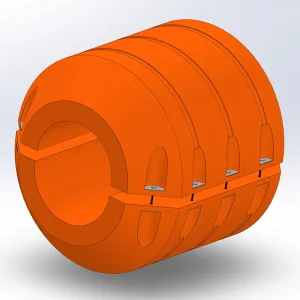
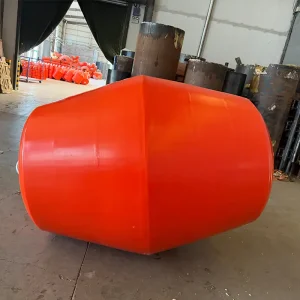
Solution: Custom-engineered orange UV-20 HDPE pipe floats with high-density polyurethane filling, clamping around a DN600 steel discharge line to ensure zero axial slipping.
Location: Southeast Asia
Challenge: High-abrasion silt mixed with industrial oil refinery effluent causing chemical degradation of standard rubber pontoon sleeves.
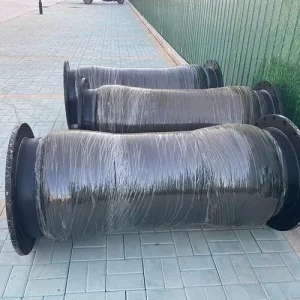
Solution: ODM heavy-duty composite rubber slurry hoses paired with chemical-resistant polyethylene floats featuring integrated sensor wire troughs for real-time acoustic flow monitoring.
Location: Northern Europe / Baltic Sea
Challenge: Sub-zero operational conditions requiring pipeline flexibility without structural cracking under brittle fracture stress states.
Solution: High-impact virgin LLDPE pipeline float modules tested to survive severe mechanical ice collisions, keeping the subsea dredge discharge line reliably suspended and visible.
Technological Frontiers & Future Market Trajectories
The evolution of smart, monitored marine buoyancy modules and sustainable circular manufacturing.
The marine flotation and petroleum dredging sector is undergoing a transformative technological transition centered on digitisation and material sustainability. Traditional passive pipe floats are increasingly upgraded to "smart buoyancy nodes" through the integration of low-power IoT transponders, RFID tags, and strain gauges. These modules enable predictive maintenance algorithms to monitor pipeline strain, dynamic draft levels, and sediment build-up in real time, alerting dredge operators before a pipeline grounds or capsizes due to over-densified slurry.
In parallel, global circular economy mandates are accelerating research into advanced bio-based polyethylenes and mechanical recycling protocols for expired float shells. Top-tier Chinese manufacturers lead this charge by establishing closed-loop recovery chains where de-foamed polyethylene bodies are cleaned, re-granulated, and remolded into non-critical ballast blocks and utility floats. This substantially lowers the cradle-to-gate carbon footprint of marine infrastructure works.
Embedded telemetry beacons monitoring position via GPS and draft clearance via micro-pressure sensors, allowing remote detection of slurry siltation and line tipping risks.
Eco-conscious manufacturing utilizing reclaimable PE shells and eco-friendly polyurethane blowing agents designed to decouple industrial marine flotation from carbon-heavy fossil streams.
Combining rotational outer shells with co-extruded UHMWPE inner contact surfaces to deliver five times the abrasion life of standard carbon steel conduits under slurry flow.
Advanced Marine Mooring & Infrastructure Line (Batch 02)
Heavy-duty navigation buoys, high-impact floating barriers, and subsea tie-in buoyancy elements for offshore operations.


Engineering Knowledge Base: Technical Q&A
Comprehensive engineering insights regarding buoyancy sizing, chemical resilience, and international warranty terms.