
Engineered Marine Flotation Assemblies & Assemblies
OEM and ODM buoyancy modules manufactured from UV-resistant hexene virgin MDPE shells and polyurethane foam matrices, precision-fitted to international pipe dimensions.
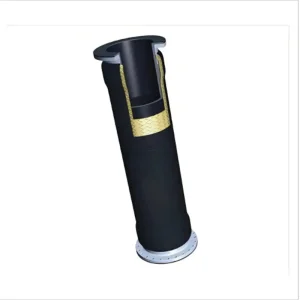
Custom Premium Rubber Hoses for Reliable Water and Slurry Transport
Explore Engineering Specs
Custom Innovative Floating Boat Pontoon for Versatile Water Platforms
Explore Engineering Specs
OEM Pipeline Float for Floating Pipeline Systems & Water Transfer
Explore Engineering Specs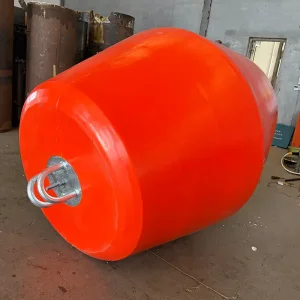
Best Offshore Mooring Buoy for Secure Vessel Anchoring & Systems
Explore Engineering Specs
ODM Mooring Buoy for Marina Berths & Offshore Mooring Systems
Explore Engineering Specs
Custom Pipe Floats – High Buoyancy for Marine Pipeline Projects
Explore Engineering Specs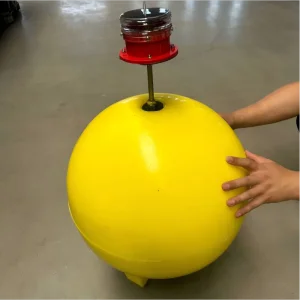
LED-Equipped Floating Ball for Safe Navigation & Operations
Explore Engineering Specs
Heavy-Duty Pipe Floats for Floating Water Pipeline & Dredge Support
Explore Engineering SpecsThe Evolution of Global Pipeline Flotation Systems
Navigating surging demand across maritime capital dredging, deep-water land reclamation, offshore tailing conveyance, and coastal resilience infrastructure.
Capital Dredging & Mega Port Deepening
As post-Panamax and Ultra Large Container Vessels (ULCVs) exceed drafts of 16.5 meters, global port operators require dredging discharge pipelines operating continuously at volumetric capacities exceeding 12,000 m³/h. Traditional steel pontoons fail due to rapid marine fouling and fatigue stress; monolithic rotomolded polyethylene floaters provide the required ductile resilience and corrosion immunity.
Mining Tailings & Slurry Transport
Tailings containment ponds and overland hydraulic ore conveyance lines encounter extreme specific gravity slurries ($SG 1.35 - 1.65$). Floater failure means submerged steel or HDPE pipelines, causing immediate cataclysmic project stoppage. ODM engineered floaters incorporate high-density PUR cores to maintain net buoyancy even in the event of outer shell mechanical puncture.
Offshore Renewable & Floating PV Systems
The proliferation of offshore floating photovoltaic (FPV) arrays and offshore subsea electrical umbilical cable crossings requires cable-trough integrated pipe floaters. These hybrid buoyancy modules shield delicate high-voltage power conduits while stabilizing accompanying ballast and cooling water pipelines against cyclic oceanic harmonic resonance.
Global Enterprise Sourcing & Buoyancy Sizing Criteria
International dredging contractors (DEME, Jan De Nul, Van Oord, Boskalis) evaluate contract manufacturing vendors against strict hydrodynamic performance and mechanical fatigue standards.
Reserve Buoyancy Calculation
Procurement requires safety factors ($SF$) between 25% and 35% above the combined submerged tare weight of the pipe, heavy slurry, and steel flanges to guarantee that exactly 20% to 25% of the outer diameter stays above water for operational surveillance.
UV20+ Photostabilization
Offshore solar irradiance can destroy unstabilized polyolefins within 18 months. Leading tier-1 buyers mandate hindered amine light stabilizers (HALS) conforming to ASTM G154 weathering standards to guarantee a minimum lifespan of 15 years in tropical latitudes.
Fastener Metallurgy & Torque
Electrolytic corrosion rapidly dissolves standard carbon steel hardware in warm, oxygen-rich seawater. Premium ODM specifications require Hot-Dip Galvanized Grade 8.8 bolts or Austenitic 316 Stainless Steel with internal torque-bearing backing plates.
Interchangeable Shell Geometry
To streamline warehouse inventory across global regional hubs, half-shell buoyancy units must feature symmetrical alignment dowels, guaranteeing that any upper half pairs seamlessly with any lower half on site without manual adjustment.
| Pipe Outer Diameter (OD) | Float Inner Diameter (ID) | Outer Diameter (OD) | Unit Total Length | Total Net Buoyancy (Pair) | Polyurethane Core Density | Primary Industrial Application |
|---|---|---|---|---|---|---|
| 110 mm - 160 mm | 110 mm - 165 mm | 500 mm | 800 mm | 120 kg - 150 kg | 35 - 38 kg/m³ | River Desilting, Municipal Bypass, Micro-tailings |
| 200 mm - 315 mm | 205 mm - 325 mm | 700 mm - 850 mm | 1,000 mm - 1,200 mm | 320 kg - 580 kg | 38 - 42 kg/m³ | Sand Pumping, Harbors, Fish Farm Feed Lines |
| 400 mm - 560 mm | 410 mm - 575 mm | 1,100 mm - 1,300 mm | 1,200 mm - 1,500 mm | 850 kg - 1,750 kg | 40 - 45 kg/m³ | Medium Slurry Conveyance, Tailings, Port Dredging |
| 630 mm - 800 mm | 645 mm - 815 mm | 1,400 mm - 1,800 mm | 1,500 mm - 2,000 mm | 2,100 kg - 4,200 kg | 42 - 45 kg/m³ | Major Capital Land Reclamation, Deep-Water Mining |
| 900 mm - 1200 mm | 920 mm - 1225 mm | 2,000 mm - 2,400 mm | 2,200 mm - 2,800 mm | 5,500 kg - 9,800 kg | 45 - 50 kg/m³ | Ultra-Heavy Cutter Suction Dredging, Oceanic Outfalls |
Under-sizing float buoyancy by assuming clean freshwater specific gravity ($1.000$) instead of saturated mineral slurry specific gravity ($1.450 - 1.800$) will submerge discharge lines when the cutter dredge reaches high-density sediment strata. Always calculate net buoyancy under maximum clogged pump-choke pressures.
China Factory 4.0: Industrial Scale, Robotics & Resilience
Inside our advanced Binzhou manufacturing complex: How modern polymer engineering, closed-loop thermal rotomolding, and automated polyurethane injection eliminate delamination risk.
Closed-Loop Thermal Rotomolding
Using variable-frequency drive (VFD) rocking-and-rolling ovens equipped with multi-point infrared pyrometer sensors, our molds ensure isotropic polymer flow. This eliminates thin corner radiuses, localized residual stresses, and micro-porosity across all structural ribs.
High-Pressure Metered PUR Injection
Our two-component polyol and isocyanate reaction injection machines deliver a microcellular closed-cell foam with a 95%+ non-interconnecting void structure. Even in severe impact collisions, zero water penetration occurs throughout the interior core volume.
Vertical Integration & Raw Material Hedging
Positioned within Shandong’s advanced petrochemical corridor, our direct rail line access and multi-thousand-ton polymer resin reserves protect international EPC buyers from volatile international freight tariffs and monomer price spikes.
Automated Quality Assurance Lifecycle
Resin Granulation & Melt Flow Verification
Raw hexene copolymer MDPE resin undergo MFI (Melt Flow Index) verification and pigment-stabilizer dry blending.
Bi-Axial Heat Soak & Fusion
Computer-controlled 360-degree rotational heat cycling ensures molecular cross-fusion without material oxidation.
Ultrasonic Wall Scans
High-precision ultrasonic thickness probes inspect 16 critical structural points to confirm zero wall thinning at corners.
Precision Core Infill
Calculated gram-weight chemical injection with continuous digital backpressure balancing to prevent internal voids.
Drop Impact & Hydrostatic Test
Cryogenic drop dart tests (-20°C) and pressurized water tank immersion verify skin adhesion and integrity.
Buoyancy Physics & Hydrodynamic Load Mechanics
Formulas and engineering calculations for specifying pipeline float pairs under complex current, wind, and slurry conditions.
The Core Buoyancy Equilibrium Formulation
To prevent pipeline sagging or premature fatigue at discharge flange connections, total net float displacement must overcome the aggregate gravity vector of the entire fluid-solid system:
Where:
• F_buoyancy = Submerged displacement volume of the PE floater × ρ_water
• ρ_slurry = Slurry density (typically 1,300 to 1,650 kg/m³ for dredging silt/sand)
• ρ_water = Surrounding water density (1,000 kg/m³ freshwater / 1,025 kg/m³ marine)
• SF_reserve = Safety Factor Margin (Minimum 1.25 for lakes, 1.35 for open sea)
When operating in exposed tidal channels, cross-current drag forces ($F_D = 0.5 \cdot \rho \cdot v^2 \cdot C_d \cdot A$) create cyclic torque moments along the pipe axis. Our hydrodynamic rounded-shoulder float profiles reduce the drag coefficient ($C_d$) from 1.15 down to 0.72, reducing anchoring system loads by up to 37%.
Internal Anti-Slip Rib Mechanics
Pulsating slurry flow creates intense longitudinal vibration vectors. Without friction-enhancing geometry, smooth clamp-on floaters walk along the pipe, causing catastrophic line sag.
- Precision engineered negative-tolerance inner diameter matched to outer pipe tolerance ranges.
- Embedded vulcanized EPDM friction liners prevent slippage on wet HDPE/Steel surfaces.
- Reinforced through-bolt lugs distribute bolt torque evenly to prevent localized wall crushing.
Engineered Resilience Across Challenging Marine Environments
Field-proven installations operating under extreme salinities, severe UV exposure, and sub-zero Arctic slurry freeze conditions.
Hypersaline & High Thermal Dredging
Operating at water temperatures exceeding 42°C and salinities over 45 PSU, floating pipelines suffer from polymer softening and accelerated photo-oxidation. Our high-melt-index MDPE compound with carbon-black stabilization prevents thermal sagging and eliminates UV embrittlement during long installations.
High Energy Wave Fatigue
Operating within sea states experiencing significant wave heights ($H_s$) exceeding 2.5m, pipeline floaters face extreme cyclic bending loads. The high elastic strain recovery of virgin rotational-grade polyethylene absorbs wave slam impacts without developing micro-cracks or stress fractures.
High Altitude Heavy Tailings Ponds
At altitudes above 3,500m with diurnal temperature swings of 40°C, tailings lines carry dense copper slurries ($SG \ge 1.55$). Our thick-wall engineered float designs prevent thermal vacuum buckling and maintain stable buoyancy despite slurry surges.
Industrial Flotation Engineering FAQ
Detailed answers to questions from dredging contractors, EPC buyers, and project engineers.
To size accurately, determine the dry weight of your discharge pipe per meter (including flanges and backing rings) and calculate the full internal volume multiplied by your maximum anticipated slurry density (e.g., 1.4 to 1.6 t/m³ for compact silt and sand). Add a 25% to 30% reserve buoyancy margin. Total net buoyancy must ensure at least 20% to 25% of the pipe diameter rides above water to prevent sinking under pump restart shock waves.
Welded steel pontoons are vulnerable to electrochemical seawater corrosion, require continuous anti-fouling coatings, and quickly sink if punctured. Seamless rotomolded polyethylene floaters are chemically inert, will not rust, and resist bio-fouling. Their closed-cell PUR foam core keeps them afloat even if their outer shell is punctured during heavy workboat collisions.
Our ODM designs feature engineered negative-tolerance inner diameters, molded interior friction ribs, and internal recesses designed to grip around HDPE fusion joints or rubber hose collars. When torqued to specified Newton-meter ratings using high-tensile hardware, the clamp exerts uniform radial compression that holds the pipe securely without ovalizing it.
Standard commercial warranty runs 18 months from delivery or 12 months from installation handover. When specified with our UV15 to UV20 stabilization formulations and closed-cell polyurethane foam, our MDPE floater shells have a design life of 10 to 15+ years in harsh marine conditions.
Yes. As a full-service ODM/OEM manufacturer, we design and machine custom aluminum rotomolding tooling to fit unusual pipe diameters, integral subsea power cable troughs, quick-release lifting eyes, and IALA-compliant maritime navigation markings (Signal Yellow, International Orange, Marine Green).
Floater dimensions are designed around 40-foot High Cube (40HC) container dimensions. Symmetrical half-shells can be nested together, minimizing empty air space and reducing landed freight costs per unit by 25% to 40% compared to bulky, non-nestable single-piece pontoons.
Specialized Navigation Buoys, Float Balls & Barriers
Marine navigation aids, environmental containment booms, and fluid transport infrastructure built for demanding offshore and industrial sites.
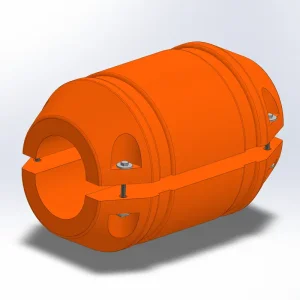
ODM Reliable Pipe Floats for Marine Dredge Projects
Explore Engineering Specs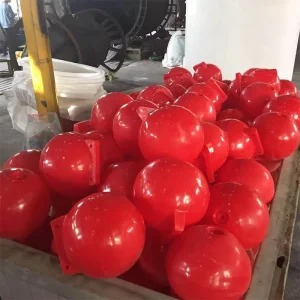
Best PE Float Ball – Heavy-Duty Water Management Buoyancy
Explore Engineering Specs
Mooring Buoy for Aquaculture Grids & Floating Marine Platforms
Explore Engineering Specs
Marine Navigation Buoy for Safe Channel & Harbor Marking
Explore Engineering Specs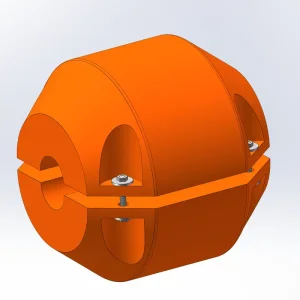
High-Quality Durable Pipe Floats for Offshore Safety Lines
Explore Engineering Specs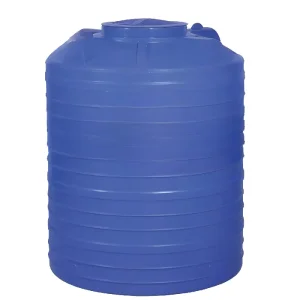
Rotomolded Polyethylene Storage Tank – Liquid Management
Explore Engineering Specs
Durable Floating Barriers for Water Surface Protection
Explore Engineering Specs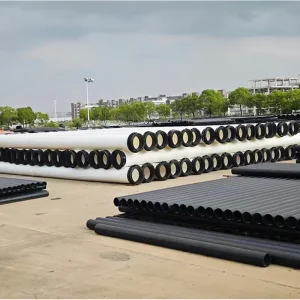
ODM Heavy-Duty Pipeline for Long-Distance Slurry Transport
Explore Engineering SpecsRequest Custom Engineering & Buoyancy Calculations
Work directly with our naval architects and rotomolding engineers. Provide your project parameters to receive buoyancy calculations, 2D/3D CAD approval drawings, and a detailed CIF quotation.