
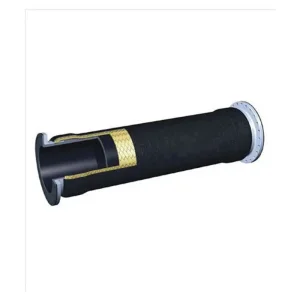
Precision Dredging Components
Engineered Flotation & Marine Discharge Solutions
High-integrity dredge discharge hoses, wear-resistant elastomeric lines, and high-density rotational molded polyethylene pipeline floats built for harsh hydraulic slurries and open-sea operations.
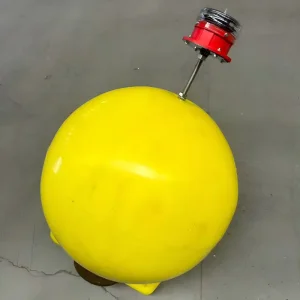
ODM High-Visibility Floating LED Ball for Marine and Freshwater Safety Manufacturers, Pricelist
Explore Product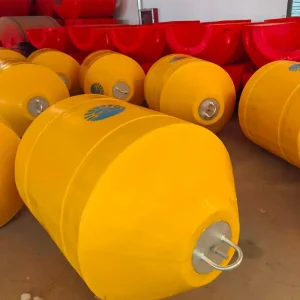
Best Custom Mooring Buoy for Boat Berths, Harbors and Offshore Stations Manufacturers, Pricelist
Explore Product
High-Quality Advanced Pipeline Float System for Secure Subsea Installations Supplier, Factories
Explore Product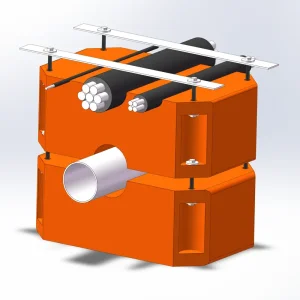
High-Quality Reliable Pipe Floats with Cable Troughs for Efficient Marine and Pipeline Operations Quotes, Factory
Explore Product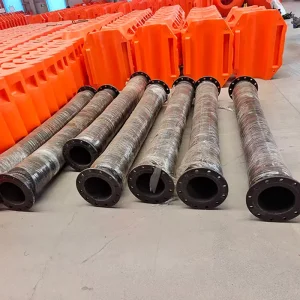
High-Quality High-Performance Rubber Hoses for Water and Slurry Transport Suppliers, Factories
Explore Product
ODM Durable Cable-Integrated Pipe Floats for Submerged Infrastructure Supplier, Manufacturer
Explore Product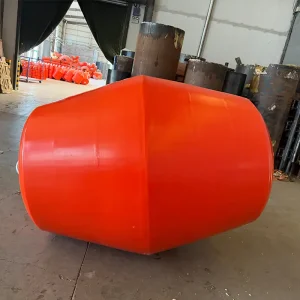
High-Quality Mooring Buoy with Reinforced Connections for Marine Projects Product, Companies
Explore Product
Industry Whitepaper Insights
Technological Shift: Global Discharge Hose Landscape & Fluid Slurry Dynamics
Industrial dredging operations and slurry extraction projects operate under relentless mechanical loads. Modern hydraulic slurry transport requires comprehensive alignment between fluid mechanics, elastomeric compounds, and polymer physics. As capital dredging reaches deeper drafts and mineral tailings require continuous non-clogging conveyance, the design of OEM Discharge Hoses has evolved from basic rubber conduits to high-strength multi-layer composite conduit architectures.
Hydraulic Wear Optimization
Internal liners compounded with high-grade synthetic rubbers, including modified cis-1,4-polybutadiene and chlorosulfonated polymers, resist continuous micro-cutting caused by sharp gravel and heavy slurry velocities exceeding 4.5 m/s.
Torsional & Flexural Integrity
Multi-strand high-tensile carbon steel spirals integrated with synthetic textile cord plies allow maximum bend elasticity under violent sea currents without wall buckling, kinking, or catastrophic delamination during pressure spikes.
Corrosion-Proof Coupling Flanges
Integrated vulcanized steel collars and fixed/swivel forged flanges treated with thermoset epoxy or marine hot-dip galvanization ensure smooth slurry transitions, zero gasket leakage, and complete electrochemical isolation against saltwater.
Advanced Manufacturing 4.0
China Factory 4.0: Supply Chain Resilience & Quality Rigor
Operating from our West Industrial Park facility in Huimin County, Binzhou City, Shandong, our plant integrates automated rotational molding lines with digital temperature control loops and precision rubber vulcanization calenders. We maintain 100% material traceability from virgin resin pellets to completed assemblies.
20+
Years Manufacturing Leadership
80+
Export Nations Served
100+
Specialized Engineers & Techs
1000m²
Automated Rotomolding Core
Automated Variable-Frequency Control
Our rotational molding machinery incorporates continuous variable-frequency rotational axes and infrared temperature matrices, delivering uniform shell thickness across our entire line of pipe floats and navigation modules.
Standardized Interchangeability
Tight dimensional tolerance parameters eliminate replacement fit issues on marine rigs. Floating modules, dredge clamps, and rubber hoses match standard dredging pipe dimensions without on-site modifications.
Rigorous Hydrostatic Testing
Every custom-built discharge hose assembly undergoes hydrostatic burst tests at 1.5 to 2.0 times rated working pressure, continuous vacuum collapse testing, and ultrasonic wall thickness scans prior to maritime export.
Hydrodynamic Engineering Standard
Slurry Specific Gravity & Dynamic Flotation Mechanics
Flotation failure commonly stems from static sizing based solely on clean water density. Marine contractors must account for slurry sediment concentrations, hydraulic pipe surges, tidal changes, and sediment buildup on pipe walls.
Critical Pipeline Buoyancy Engineering Formula
F_buoyancy ≥ (W_pipe + W_liner + (V_internal × ρ_slurry) + W_accessories) × K_reserve
Where K_reserve must be calibrated between 1.25 and 1.35 to maintain a stable freeboard profile (minimum 25% outer pipe diameter above water level). High slurry densities (>1.6 t/m³) require adjusted float pair distributions to avoid submerged drag and pipeline bending.
| Application Medium | Specific Gravity (t/m³) | Recommended Reserve (K) | Target Freeboard Ratio | Flotation Strategy |
|---|---|---|---|---|
| Clear Seawater / Cooling Runoff | 1.02 – 1.05 | 1.20 | 25% – 30% Above Waterline | Standard Polyethylene Clamps |
| Riverbed Desilting / Fine Silt | 1.15 – 1.30 | 1.25 | 25% Above Waterline | Reinforced Polyurethane Foam Filled |
| Coastal Land Reclamation (Coarse Sand) | 1.40 – 1.65 | 1.30 | 22% – 25% Above Waterline | Heavy-Wall PE Shell + Cable Trough |
| Hard Rock Tailings / Iron Mineral Slurry | 1.70 – 2.10 | 1.35 – 1.40 | 20% – 25% Above Waterline | Continuous High-Buoyancy Modular Blocks |
Global Deployments
Localized Marine Engineering & Operational Scenarios
From Middle East reclamation islands to Australian mineral ports and European deepwater dredging, our discharge systems provide reliable uptime under demanding environmental conditions.
Offshore Port Deepening & Berths
Tidal currents in active shipping channels impart substantial cyclical shear on discharge lines. Integrated rubber hoses paired with marine buoys maintain pipe alignment without drifting into navigation lanes.
Hydraulic Island Reclamation
Pumping sharp abrasive sand over long distances demands consistent internal pipe bores. High-tensile suction and discharge hoses minimize friction losses across multi-kilometer offshore links.
Mining Tailings & Slurry Transport
For tailing ponds with chemical residue or varying acidity, rotationally molded shells with UV-stabilized virgin polymer matrices provide long-term corrosion resistance without maintenance.
Inland Desilting & Reservoir Bypass
Reservoir maintenance teams use lightweight modular clamp halves that bolt on without heavy cranes, facilitating rapid installation and redeployment across shifting work zones.
Industrial Marine Trash & Silt Curtains
Demarcating marine safety zones and trapping surface runoff, our floating barriers resist prolonged UV radiation and marine fouling while protecting intake channels and waterways.
Custom Subsea Tie-Ins & Pontoons
We design and manufacture bespoke buoyancy modules, dock pontoons, and pipeline tie-in collars to project drawings, maintaining reliable stability throughout offshore subsea installations.
Industrial Flotation Inventory
Heavy-Duty Flotation & Marine Accessories
Comprehensive commercial pontoons, offshore mooring buoys, pipeline floats with built-in cable passages, and impact-resistant rotational molded containers.

Custom Custom Mooring Buoy for Marina Berths and Offshore Supplier, Manufacturer
Explore Product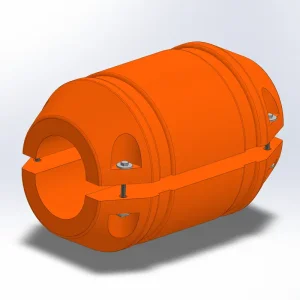
Custom Durable Pipe Floats for Reliable Marine Operations Suppliers, Manufacturers
Explore Product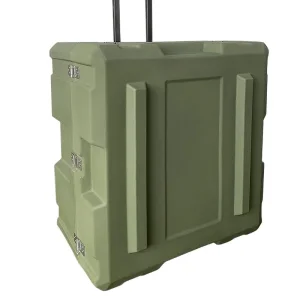
ODM Heavy-Duty Rotomolded Military Airdrop Storage Container Supplier, Factory
Explore Product
Custom Pipe Floats for Floating Pipeline Stability in Water Transfer and Industrial Projects Companies, Factory
Explore Product
High-Quality Water Boat Pontoon Floating – Stable and Modular Floating Platforms Supplier, Products
Explore Product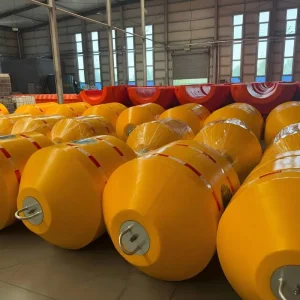
High-Quality Mooring Buoy for Commercial Berths, Marinas and Offshore Holding Areas Manufacturers, Products
Explore Product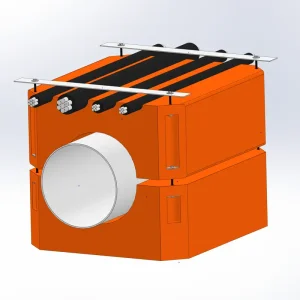
Custom Customizable Floating Pipe Supports with Cable Troughs Company, Pricelist
Explore Product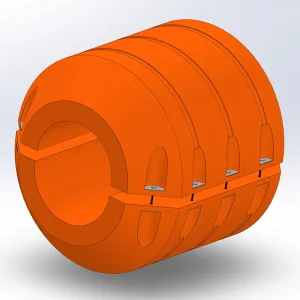
ODM High-Buoyancy Floats for Marine Projects Suppliers, Pricelist
Explore Product
Technical FAQ
Frequently Asked Questions: Specifications & Procurement
Answers to technical and operational questions asked by dredging contractors, marine project managers, and procurement teams.
What is the structural difference between discharge rubber hoses and suction hoses?
Discharge hoses are engineered primarily to handle positive internal hydrostatic pressure and high velocity without ballooning or burst failures; their reinforcement consists of multiple layers of high-tensile cord and synthetic fabric. Suction hoses, conversely, incorporate heavy helical steel wire springs within the carcass to prevent atmospheric collapse when operated under high vacuum conditions behind dredge pumps.
What are pipeline floats, and what is their functional purpose?
Pipeline floats, also recognized in commercial dredging as dredge buoyancy modules or pontoon collars, are two-piece rotational molded polyethylene shells filled with closed-cell polyurethane foam. Clamped around steel, HDPE, or composite dredge lines, they maintain the pipeline in a planned buoyant state, preventing sea floor rubbing and keeping the slurry passage visually clear for marine traffic.
How do you accurately calculate the float quantity required for a marine slurry line?
Total buoyancy must exceed total pipeline weight under full operating load. Compute the dry weight of the pipeline, flange connections, and rubber joints, and add the weight of the conveyed medium using its slurry density (not clear water). Apply a safety buoyancy margin of 20% to 30% so that roughly one-quarter of the pipe diameter remains exposed above the waterline.
Why is rotational molded polyethylene preferred over fabricated steel floats in seawater?
Steel floats are susceptible to weld fatigue, internal condensation, rust, and salt corrosion. Once their coating fails, localized pitting can lead to water intrusion and unexpected sinking. High-density polyethylene (HDPE/LLDPE) is chemically inert, resists UV radiation, absorbs vessel impacts through elastic deformation, and contains closed-cell polyurethane foam that prevents water ingress even if the outer shell is punctured.
What is the standard warranty coverage on OEM discharge assemblies and floats?
Standard warranty begins when the buyer formally hands over the completed equipment to the project investor, running for 18 months post-handover or 12 months after on-site installation, whichever expires first. Warranty coverage protects against raw material delamination, premature shell cracking, and weld or flange separation during normal rated operational parameters.
What project parameters are required for a customized OEM quotation?
To establish an engineering specification, provide: pipe outside diameter (OD), inner working pressure (bar/PSI), abrasive medium details (density, particle grain distribution), shore transition parameters, current velocities, freeboard target, preferred flange types (e.g., DIN, ANSI, customized swivel), and destination port for container pack optimization.