
Engineered Dredging & Marine Flotation Systems (Batch I)
Precision-molded polyethylene dredging modules, heavy-duty discharge lines, and subsea tie-in buoyancy assemblies engineered to withstand rigorous hydraulic stresses and continuous marine wave fatigue.



Engineering Rigor in Modern Dredging Pipeline Manufacture
Understanding the interplay between high-density polyethylene polymer mechanics, rotational molding thermodynamics, and offshore hydrodynamic forces in capital dredging campaigns.
High-Density Polyethylene Molecular Integrity
Unlike conventional carbon steel conduits that suffer rapid galvanic pitting and destructive sediment scour, specialized dredging HDPE pipes formulated with PE100 or bimodal PE100-RC resins offer superior chemical inertness, high slow crack growth (SCG) resistance, and elasticity modules capable of absorbing severe water hammer transients and cyclic bending moments.
Computerized Rotational Molding Precision
Operating in Binzhou, Shandong, our facility integrates variable-frequency rotation cycles, PLC closed-loop electronic thermal sensing, and dual-axis rotational casting. This ensures zero-internal-stress formation, uniform shell wall distribution, seamless outer casings, and an unbroken hydrophobic envelope packed with polyurethane foam for absolute buoyancy retention.
Systemic Interoperability & Safety Factors
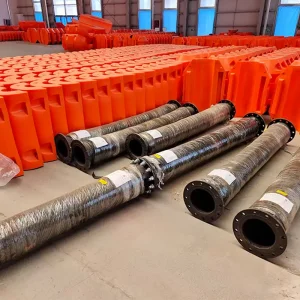
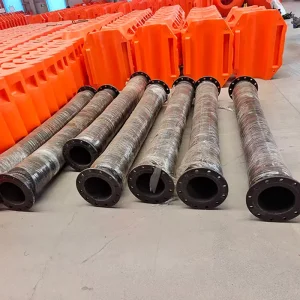
Pipelines function not as isolated conduits, but as complex hydromechanical systems. Juhua engineers every component—including HDPE stub ends, galvanized steel backing flanges, quick-coupling collars, and high-abrasion synthetic suction/discharge rubber hoses—to guarantee identical pressure classes, mechanical ratings, and effortless field modularity.
Emerging Trends & International Sourcing Demands
Strategic purchasing criteria evaluated by Tier-1 marine contractors, dredging consortiums, and national port development authorities.
Mega-Bore Diameters (Up to OD 1200mm+)
Modern mega-dredgers and ultra-large trailing suction hopper dredgers (TSHD) demand discharge diameters exceeding 900mm to 1200mm, demanding specialized heavy wall extrusion and matching giant dual-clamp buoyancy pontoons capable of keeping dense slurry lines buoyant.
Total Cost of Ownership (TCO) Optimization
Procurement teams have transitioned from low-bid capex models to lifecycle analysis. HDPE lines demonstrate up to 6x longer operational lifespan in abrasive sand/gravel slurry service compared to unlined mild steel, drastically curtailing mobilization downtime and pipe rotation labor.
Rigid Environmental Standards & Non-Toxicity
Sensitive coastal biospheres require zero-leaching pipelines. Certified food-grade virgin PE100 resins eliminate heavy metal leaching into estuaries, while robust closed-cell PUR foam fill inside the floats ensures zero foam bead shedding into marine ecosystems even in case of outer shell rupture.
Turnkey Containerized Logistics Design
Global shipping rate fluctuations dictate compact, nestable modularity. Juhua designs pipe float half-shells and pipeline lengths with stackable contours optimized for 40ft High Cube container volumetric utilization, dropping sea-freight overheads by up to 35% per shipment.
Engineering Formula: Slurry Buoyancy Sizing
A fatal mistake in marine pipeline engineering is calculating displacement based solely on pure seawater displacement. In actual dredging operations, high-density slurry containing sharp sand, coral fragments, or iron tailings drastically increases lineal pipe mass.
- Target Freeboard: Ensure approximately 25% to 30% of the pipe diameter remains visible above the water surface to counter storm surges.
- Slurry Density Factor: Calculations must model slurry densities ranging from 1.3 t/m³ to 1.85 t/m³ rather than clean water (1.0 t/m³).
- Dynamic Reserve Coefficient: Marine currents and tidal harmonics demand an ultimate safety reserve factor of 1.25x – 1.35x.
Where B_total represents net float displacement capacity in seawater, W_slurry is calculated via internal volume multiplied by peak sediment specific gravity, and W_hardware covers bolts, stub ends, and backup rings.
Comprehensive Infrastructure Deployment Scenarios
End-to-end engineered buoyancy and piping assemblies formulated for diverse environmental hydromechanics.
| Application Vector | Primary Hydraulic Stresses | Recommended Piping Configuration | Flotation Module Matrix | Key Operational Safeguard |
|---|---|---|---|---|
| Port & Berth Deepening | Heavy commercial vessel wakes, tidal reversions, high cyclic flexing | HDPE SDR 11 / SDR 17 with reinforced molded stub flanges | High-visibility Orange/Yellow PE Shell with PUR 35kg/m³ core | Integrated marine cable troughs for power & instrumentation |
| Ocean Land Reclamation | Abrasive silica sand, dynamic coastal breakers, continuous 24/7 delivery | High molecular weight HDPE PE100 with ductile backing rings | Staggered cylindrical buoyancy pontoons with stainless 316 hardware | Wear-resistant rubber reduction joints to dissipate shock waves |
| Mining Tailings & Slurry | Extremely high specific gravity (up to 1.9), corrosive acidic/basic fluids | Extra thick wall SDR 9 HDPE or steel-wire reinforced composite lines | Heavy-duty oversized clamp floats sized for critical gravity loading | Acid/alkali-resistant bolt caps and cathodic-protected fasteners |
| Estuary & River Desilting | Shallow waterways, high silt deposition, submerged debris abrasion | Flexible HDPE lines combined with flexible suction/discharge hoses | Streamlined low-drag modular floats allowing shallow drafts | Quick-connect pin-locking systems for rapid repositioning |
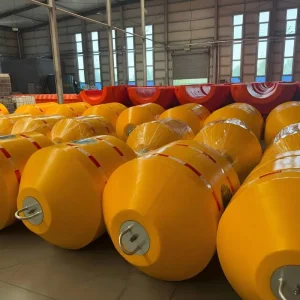
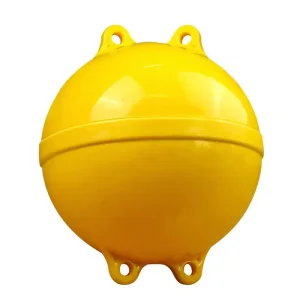
| Reservoir Water Transfer | Seasonal thermoclines, deep water head pressures, intake fluctuations | Subsea tie-in calibrated buoyancy HDPE assemblies | ABS float balls and modular pipeline tie-in pontoons | Staged ballast compartments for controlled subsea alignment |
Global Standards Compliance & Factory Verification
Rigorous multi-stage destructive and non-destructive quality control protocols validating mechanical performance prior to port dispatch.
International Standards Alignment
All pipeline extrusions and molded buoyancy modules are manufactured in strict compliance with ISO 4427-2, ASTM D3035, ASTM F714, and PIANC guidelines. Material batches undergo continuous melt flow index (MFI), hydrostatic burst testing, and carbon black dispersion verification.
UV Radiation & Hydrolytic Resistance
Marine environments impose harsh solar radiation cycles. Our formulations incorporate grade UV-8 to UV-12 hindered amine light stabilizers (HALS), guaranteeing continuous color brilliance, impact resistance, and elongation retention even across intense equatorial zones like the Middle East, Southeast Asia, and Latin America.
Traceable Quality & Warranty Policy
Every Juhua production lot features stamped serial identifiers recording mold temperature, cycle pressure, and polymer resin lot data. All systems are protected under an extensive industrial warranty: effective from handover to investor up to 18 months, or 12 months from site commissioning.
Technology Roadmap: The Next Era of Dredging Infrastructure
Pioneering advancements in digital telemetry, nano-engineered abrasion barriers, and circular polymer recycling.
Monolithic Rotomolding
Complete rollout of fully automated high-volume rotational molding cycles with continuous wall-thickness ultrasonic verification for zero-defect buoyancy shells.
IoT Telemetry Floats
Integration of low-power LoRaWAN buoyancy modules fitted with GPS beacons, draft monitoring sensors, and accelerometers to monitor pipeline bending fatigue in real time.
Graphene-Modified Liners
Development of ultra-slick nano-composite HDPE inner liners engineered to drop slurry friction loss by 18%, decreasing dredging pump power requirements and wear.
Bio-Circular Polymers
Pioneering zero-carbon ocean-bound plastic recycling chains into non-structural buoyancy jackets, fulfilling global ESG marine infrastructure procurement criteria.
Frequently Asked Questions by Dredging Specialists
Comprehensive engineering clarifications addressing specification, buoyancy calculation, materials durability, and installation protocols.
What are pipeline floats?
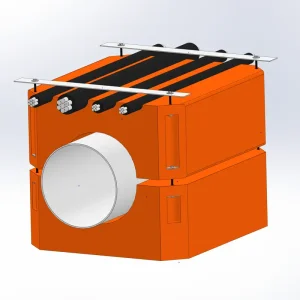
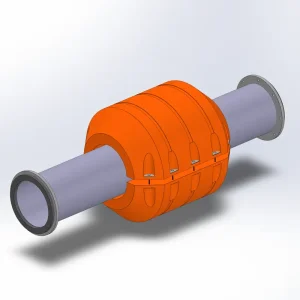
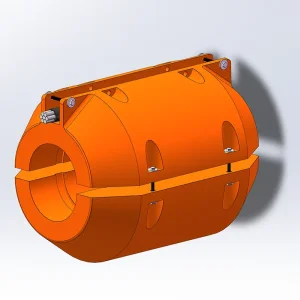
Pipeline floats—also known as dredge floats, pipe pontoons, or marine buoyancy modules—are clamp-on polyethylene bodies fitted around discharge pipes to keep a dredging or water-transfer pipeline afloat, aligned, and visible on the water surface during marine operations.
How do I calculate how many floats I need for my pipeline?
Total buoyancy must exceed total weight. Add the weight of the pipe itself, the conveyed slurry medium at maximum concentration, and all fittings/accessories. Floats must supply at least 20% to 30% more buoyancy than this combined weight so roughly one quarter of the pipe diameter stays clear above the waterline.
Are polyethylene floats suitable for seawater use?
Yes. Virgin polyethylene (PE) is completely inert to saltwater corrosion, marine biofouling, UV degradation, and harsh chemical attack. Unlike steel drums or pontoon barges, PE never oxidizes, does not require cathodic anode protection, and prevents costly coating reapplications.
How long is the warranty period?
The standard industrial warranty starts on the date the buyer officially hands over the completed equipment to the project investor and concludes 18 months following that handover date, or 12 months after the initial operational installation date, whichever milestone comes first.
What information is needed for an accurate specification?
Please supply: pipe outer diameter (OD), material and wall thickness/SDR rating, conveyed medium and slurry specific gravity (density), pipeline overall length, environmental conditions (river, reservoir, port, offshore waves), target freeboard, color/marking needs, and port of delivery.
Can floats and buoys be customized?
Yes. Float bodies are custom-dimensioned to your exact pipe outer diameter, and wall thickness, color, reflectivity, and internal polyurethane foam density can be tailored. Custom rotomolded tooling can also be engineered directly to client CAD drawings for unique subsea or platform geometries.
Specialized Marine Flotation & Conduits Portfolio (Batch II)
Explore heavy mooring buoys, cable-trough modules, subsea tie-in solutions, and flexible high-pressure sediment delivery hoses manufactured to global industrial standards.

Procure Matched Dredging Pipe & Buoyancy Systems Directly from Factory
Eliminate intermediary markups and configuration mismatches. Connect directly with our Binzhou production engineering facility for computerized draft calculations, custom tool design, stress verification, and optimized export packing solutions.
- Dedicated calculation sheets based on your specific slurry specific gravity and wave profile.
- Complimentary technical drawings and 3D step files for CAD pipeline layout alignment.
Factory Direct Support · Response within 24 Hours
Submit Engineering Parameters