
Engineered Marine Pipe Floats & Barrier Modules
High-integrity polyethylene floating infrastructure built to withstand dynamic maritime waves, aggressive chemical exposure, and intensive dredging transfer lines.




Macro-Procurement Demands for OEM Flowing Balls & Pipeline Buoyancy
Strategic supply chain analysis for engineering procurement managers, port authorities, and environmental mitigation directors demanding robust, wear-resistant spherical and modular flotation units.
In modern industrial aquatic projects, the procurement of flowing balls, hollow spherical shade elements, and clamp-on modular pipeline floats has transitioned from a generic commercial purchase to an exact hydrodynamic science. Global multi-utility consortia, dredging contractors, tailings dam operators, and open-pit mining operations across Latin America, Australia, North America, and Southeast Asia face compounding operational hurdles. These include extreme solar irradiation, chemical tailings leaching, hydraulic cavitation, wind-driven drift velocities, and aggressive oceanic wave regimes.
Procurement directors require certified manufacturing integrity. An OEM flowing ball or pipe float is not merely a plastic vessel; it functions as an engineered environmental barrier and critical buoyancy component. Failure of buoyancy modules in dredging operations risks catastrophic line snapping, unscheduled production halts costing up to tens of thousands of dollars per hour, and major ecological contamination. As a direct response, Shandong Binzhou Juhua Rubber & Plastic Co., Ltd. applies proprietary rotational molding protocols, continuous electronic thermal logging, and high-density polyurethane filling to produce verified flotation units that operate reliably in open oceans and mining reservoirs.
Cost-Efficiency & Reduced TCO
Virgin grade polyethylene shells prevent galvanic rusting, bio-fouling encrustation, and frequent repainting cycles inherent to legacy welded steel buoys, cutting maintenance expenditure by up to 65% over a 15-year service window.
High-Energy Impact Absorption
Rotomolded linear low-density polyethylene (LLDPE) provides elastomeric flexibility under sudden mechanical stresses, absorbing boat bumps, channel debris impacts, and dynamic shoreline surges without fracture.
UV Stabilization Matrix (UV8/UV15)
Synergistic incorporation of hindered amine light stabilizers (HALS) and fine-particle carbon black guarantees zero molecular chain breakdown under blistering equatorial UV exposures up to 18,000 kJ/m² annually.
Macro-Industry Solutions & System Integration
Engineered flotation architectures configured to meet the stringent structural and environmental demands of water authorities, mining enterprises, and offshore infrastructure.
1. Mining Tailings & Slurry Transport
High-density tailings containing heavy metal ores and abrasive minerals exert intense internal pipe loads. Juhua's custom pipe floats and spherical ballast dampeners provide surplus buoyancy factors exceeding 130%, ensuring the discharge pipeline maintains optimal hydraulic leveling without seabed dragging or excessive hydrodynamic drag under tidal swings.
2. Evaporation & Algae Control Shade Balls
In municipal reservoirs, chemical retention basins, and agricultural holding tanks, mass-deployed flowing balls form a continuous floating blanket. This physical matrix mitigates up to 90% of water loss caused by solar evaporation, halts carcinogenic bromate formulation by blocking UV reactions with naturally occurring bromide, and starves benthic algae of sunlight.
3. Harbor Expansion & Dredging Tie-Ins
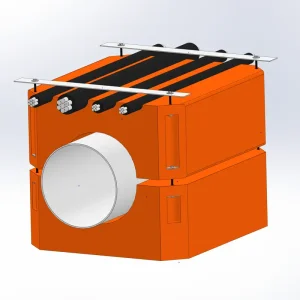
During deep-channel port desilting, pipelines encounter turbulent wakes and dynamic ship traffic. Our modular pipe floats equipped with auxiliary cable troughs allow simultaneous transmission of high-voltage dredge pump cables and telemetry circuits, reducing operational footprint and eliminating dangling hazard lines.
4. Industrial Spill & Debris Containment
Coupled with heavy-duty underwater ballast curtains and tension-rated galvanised or stainless steel internal mooring components, floating ball barriers establish impermeable perimeter barriers preventing floating litter, invasive macrophytes, and hydrocarbon films from fouling hydro-electric turbines.
5. Offshore Aquaculture Grids
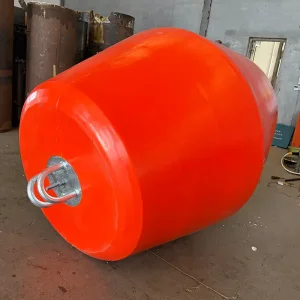
High-seas aquaculture cages require stable, continuous submerged tension. Juhua's closed-cell EPS and PU-filled mooring buoys retain flotation characteristics under variable ballast cycles, remaining unsinkable even in the rare event of puncture from floating marine debris.
6. Subsea Pipeline Tie-In Positioning
Engineered tie-in floats allow controlled pipeline sinking and exact seabed touchdown geometry. Variable ballast cavities permit step-by-step water ingestion, providing subsea contractors with precise millimeter-level depth control during delicate spool-piece installations.
Technical Specifications & Quality Parameters
Rigorous thermodynamic mold management, variable frequency rotational kinetic profiling, and ASTM-certified polymer raw materials define every batch.
| Performance Indicator | Testing Standard | Juhua Industrial Value | Procurement Advantage |
|---|---|---|---|
| Raw Polymer Base | ISO 1183 / ASTM D1505 | High-Grade Virgin LLDPE / HDPE | Zero regrind contamination; absolute crack resistance |
| Environmental Stress Crack (ESCR) | ASTM D1693 (Condition B, 100% Igepal) | > 1,000 Hours Non-Failure | Unmatched survivability in corrosive mine effluents |
| Tensile Strength at Yield | ASTM D638 (Speed 50 mm/min) | ≥ 21.5 MPa | Resists severe shear forces exerted by pipe joints |
| Elongation at Break | ISO 527-2 | ≥ 450 % | Superior impact resilience under rough wave impacts |
| Internal Core Fill Material | ASTM C578 / ISO 845 | Rigid Closed-Cell EPS / PU (≥ 35 kg/m³) | Zero water penetration if outer wall is compromised |
| Water Absorption Rate | ASTM D570 | ≤ 0.05 % (by weight) | Maintains certified net buoyancy across 20+ years |
| Wall Thickness Uniformity | Ultrasonic Thickness Gauge | ± 0.5 mm variance limit | Eliminates structural hot-spots and thin corners |
Engineering Guidance: Precise Pipeline Flotation Equilibrium
Underestimating slurry specific gravity is the leading cause of submerged pipelines in dredging contracts. The flotation system must be sized for dynamic working mass, not idle water:
• B_total: Required aggregate gross float displacement buoyancy (kg).
• D_in: Pipe internal bore diameter (m) • L: Effective length of pipeline section (m).
• ρ_slurry: Bulk density of hydraulic dredged mixture (typically 1,300 – 1,650 kg/m³ for iron ore/sand tailings).
• K_safety: Engineering reserve factor (Recommend 1.25 to 1.30 to guarantee 25% pipeline diameter remains exposed above calm waterline).
Global Commercial Landscape & Localized Compliance
Delivering tailored OEM floating ball manufacturing, certified maritime documentation, and localized logistics support across global maritime hubs.
Full Regulatory Documentation
Every export lot is dispatched alongside raw material certificate of analysis (COA), UV age acceleration test logs, weld-free burst reports, and hydrostatic buoyancy proof tests adhering to ISO 9001:2015 frameworks.
Optimized Containerized Stacking
Spherical flowing balls and semi-circular pipeline floats are engineered with nesting geometries. Custom nesting matrices maximize volumetric utilization inside 40ft High Cube containers, trimming overseas ocean freight expenditures by up to 28%.
Guaranteed Handover Warranty
Our standard commercial warranty coverage extends 18 months from official handover to the project investor or 12 months post-commissioning verification, supported by immediate spare parts allocation and rapid technical liaison.
Frequently Asked Technical Questions
Direct technical clarifications addressing polymer durability, sizing calculations, and custom OEM manufacturing capabilities.
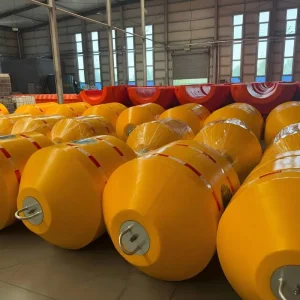
Pipeline floats (also termed dredge pipe floats or buoyancy jackets) are cylindrical, two-piece clamp-on shells designed to encapsulate steel or HDPE discharge pipelines, securing flotation, alignment, and visibility on water surfaces. In contrast, flowing balls (or shade balls) are independent, hollow spherical elements deployed en masse across large reservoirs to suppress evaporation, deter wildlife, and curb algae proliferation. Both leverage hollow rotomolded or blow-molded polyethylene formulations.
Buoyancy sizing must encompass the gross dry weight of the pipeline, fittings, flange bolting, and the conveyed medium at maximum anticipated slurry density. The aggregate float displacement must exceed this combined operational load by 20% to 30%. Sizing for a 25% freeboard maintains stability under choppy wave dynamics and prevents line sagging between modules.
Polyethylene is chemically inert and completely impervious to seawater corrosion, eliminating galvanic degradation and recurring rust scaling. Rotomolded PE provides uniform wall thickness without brittle weld seams. When filled with marine-grade closed-cell polyurethane or expanded polystyrene foam, our floats retain buoyant performance even if punctured by high-impact marine collisions.
To provide precise buoyancy specifications and quotations, our engineering team requires: (1) Pipe outer diameter (OD), (2) Pipe material and wall thickness/SDR, (3) Conveyed medium characteristics and slurry density (kg/m³), (4) Total floating pipeline length, (5) Site environmental conditions (estuary, tailings pond, open sea wave heights), and (6) Destination discharge port for nested shipping optimization.
Yes. Juhua operates dedicated mold tooling facilities. We customize float internal clamp diameters, integrated cable/wiring troughs, corporate high-visibility pigmentation (safety orange, navigation yellow, maritime white), reflective marking bands, and specialized internal ballast chambers to exact customer engineering blueprints.
Our standard warranty period commences on the date of goods handover to the investor and concludes 18 months post-handover or 12 months after commissioning, whichever transpires first. This is backed by comprehensive manufacturing defect compensation and fast-track spare component dispatch.
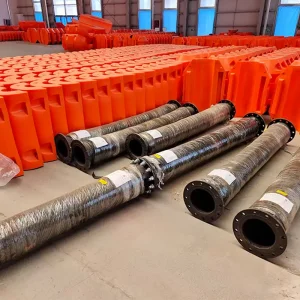
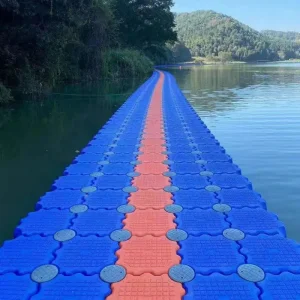
Heavy-Duty Mooring, Dredging Hoses & Subsea Flotation
Complementary heavy-duty flotation components manufactured under strict rotational molding and polymer extrusion protocols.


Consult a Flotation Technical Specialist
Skip generic sales agents. Send your pipeline specifications, slurry specific gravity readings, and project CAD drawings directly to our chief rotomolding engineering division for immediate calculation reviews.