
High-Integrity Flotation Modules & Pipeline Hardware
Explore the flagship OEM/ODM pipeline and hose buoyancy portfolio. Sized to nominal diameter, customized for high-dynamic open ocean hydrodynamic loading, and backed by verifiable lot-traceable QA certifications.
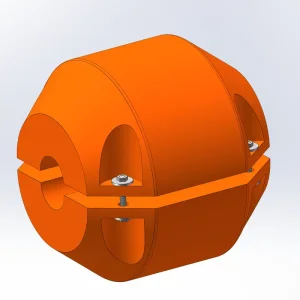

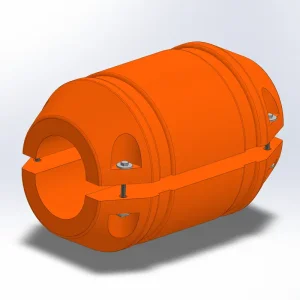


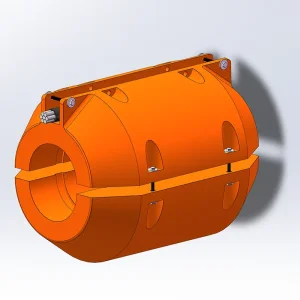
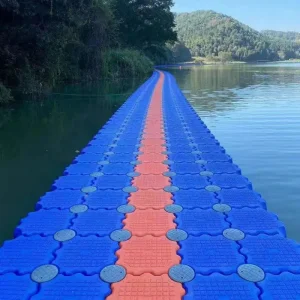
Marine Flotation Infrastructure: The Global Operational Landscape
In modern offshore construction, river engineering, deep-water port operations, and mineral reclamation, continuous slurry and fluid conveyance relies entirely on flotation line integrity. As heavy dredge pumps increase volumetric discharge capacity, traditional steel pontoons and rigid, non-cushioned collars face systemic obsolescence.
Capital Dredging & Navigational Channels
Global shipping megatrends require maritime channels exceeding 18 to 24 meters in draft. Massive Trailing Suction Hopper Dredgers (TSHD) and Cutter Suction Dredgers (CSD) discharge abrasive sand, rock slurries, and silt through high-diameter flexible rubber hoses and HDPE discharge pipelines. Marine hose floats must neutralize massive self-weight while dampening cyclical wave shear, surge action, and tidal currents.
Tailings Disposal & Industrial Slurry
From the iron ore terminals of Pilbara to the copper extraction basins in the Atacama, tailings management requires leak-proof floating discharge lines across settling lagoons. Slurry densities often range from 1.35 to 1.70 t/m³, demanding non-permeable flotation modules that withstand extreme UV exposure, corrosive brine chemistry, and severe diurnal thermal expansion swings.
Offshore Single Point Mooring (SPM) Systems
Offshore terminal operations transferring hydrocarbons, liquid bulk, and desalted water rely on floating hose strings operating under continuous bending fatigue. OEM hose floats fitted to subsea and surface hoses deliver precise reserve buoyancy, preventing kink failure at the flange neck and protecting marine assets against catastrophic sub-surface sinking.
Hydrodynamic Architecture & Reserve Buoyancy Formulas
A hose float cannot be treated as a generic plastic tank. Operating in dynamic ocean states requires meticulous structural engineering, rotational casting precision, and hydro-mechanical equilibrium calculations.
Virgin LLDPE Compound Shell
Molded from virgin Linear Low-Density Polyethylene (LLDPE grade 6440 or equivalent) enriched with 2.5% carbon black or hindered amine light stabilizers (HALS UV-8 / UV-20). The shell exhibits yield tensile strength exceeding 18.5 MPa and ultimate elongation over 400%, maintaining anti-cracking flexibility down to -40°C.
Closed-Cell Polyurethane Foam Core
High-pressure in-situ injection of closed-cell polyurethane (PUR) foam with an expanded core density of 32–45 kg/m³. With a closed-cell content exceeding 92%, water absorption is restricted to under 0.05 g/cm³ even when outer skins experience dynamic puncture during rough vessel collisions.
Stress-Relieved Fastener Architecture
Equipped with hot-dip galvanized grade 8.8 bolts or marine-grade AISI 316 stainless steel hardware. Engineered anti-tear recessed bolt wells distribute clamping torque over wide circular washers, preventing surface stress concentrations and pipe ovalization under violent marine pitching.
Scientific Flotation Sizing: Engineering Governing Equation
Underestimating working slurry specific gravity is the number-one reason floating pipelines submarine under heavy pumping. Buoyancy design must account for submerged pipe self-weight, maximum internal slurry density, hydrodynamic wave slamming factor, and joint accessory mass:
• W_pipe, W_lining, W_flanges: Dry deadweight of steel/HDPE host pipe, internal vulcanized elastomer lining, backing rings, and blind flanges (kg).
• ID & L: Internal diameter (m) and continuous string length (m) of the uncoupled hose segment.
• ρ_slurry: Conveyed medium density (typically 1,000 kg/m³ for freshwater, 1,025 kg/m³ for seawater, 1,300–1,650 kg/m³ for abrasive dredging sand slurry).
• γ_reserve: Engineering Safety Reserve Factor. Mandatory benchmark: γ ≥ 1.25 to 1.35 for sheltered harbors; γ ≥ 1.50 to 1.60 for offshore swell and open bay breakwaters.
| Nominal Hose / Pipe OD (mm) | Float Inner Diameter (mm) | Outer Diameter × Length (mm) | Net Buoyancy Capacity (kg/pair) | Recommended Working Medium |
|---|---|---|---|---|
| Φ 250 mm (10") | 255 – 260 mm | Φ 750 × 1000 mm | 260 kg | River Silt, Harbor Maintenance |
| Φ 355 mm (14") | 360 – 365 mm | Φ 900 × 1100 mm | 480 kg | Fine Sand Slurry, Tailings Bypass |
| Φ 500 mm (20") | 505 – 515 mm | Φ 1200 × 1300 mm | 950 kg | Heavy Sand Reclamation, Port Deepening |
| Φ 710 mm (28") | 718 – 725 mm | Φ 1600 × 1800 mm | 2,350 kg | Deep-Sea Capital Dredging, High-Density Slurry |
| Φ 900 mm (36") | 910 – 920 mm | Φ 2000 × 2200 mm | 4,700 kg | Mega-TSHD Discharge Strings, SPM Emergency Line |
| Φ 1200 mm (48") | 1210 – 1225 mm | Φ 2400 × 2600 mm | 7,850 kg | Super-Harbor Land Reclamation Projects |
Field Deployment Profiles Across Harsh Global Environments
Flotation dynamics change dramatically between high-salinity desert coastal margins, sub-zero freshwater river systems, and equatorial cyclone belts. See how our OEM hose float configurations solve real operational hurdles.
Persian Gulf & Red Sea High-UV High-Salinity Desalination
Operating Challenge: Surface water temperatures exceeding 38°C, ultra-high UV index (12+), and hypersaline brine backwash with salinity over 45,000 ppm causing severe environmental embrittlement.
OEM Configuration: High-density carbon-black compound shells treated with dual Hindered Amine Light Stabilizers (UV-20). Equipped with Grade 316L molybdenum-alloy hardware to eradicate pitting and crevice corrosion.
Southeast Asian Estuary Monsoon Dredging
Operating Challenge: Rapid riverbed sedimentation, violent localized monsoons, multi-knot shear cross-currents, and floating debris collision impacting the pipeline string.
OEM Configuration: Low-drag hydrodynamic tapered teardrop bodies designed using Computational Fluid Dynamics (CFD). Molded-in lateral ribs absorb compressive impact while maintaining uniform axial clamp load on rubber hoses.
Australian & South American Mine Tailings Lagoons
Operating Challenge: Ultra-heavy slurry densities (SG 1.45–1.70), continuous acidic or caustic pH (pH 3–11), and severe tailing pond drawdown requiring dry beach dragging without crack rupture.
OEM Configuration: Ultra-thick 14–18 mm outer rotational shells reinforced with high-density polyurethane filling. Integrated high-abrasion sacrificial wear pads prevent hull wear during bank dragging.
Why Binzhou, Shandong Drives Global OEM Flotation Production
Procuring marine flotation hardware requires assured industrial capacity, reliable raw polymer feeds, zero-defect rotational tooling, and optimized shipping logistics. Juhua Rubber & Plastic delivers full-spectrum integration from Binzhou, Shandong.
Raw Material Synthesis & Proximity
Positioned directly within Shandong’s advanced petrochemical industrial cluster, our factory secures continuous, lot-certified virgin polyethylene resins (Sinopec / PetroChina) without import tariff volatility or port delivery holdups. Bulk pipeline resin feeding guarantees uncompromised polymer purity free from recycled regrind contamination.
Variable-Frequency CNC Rotomolding
Our heavy-duty rotomolding carousels feature variable-frequency biaxial speed control, real-time infrared mold wall thermometry, and automated multi-zone oven temperature regulation. This ensures every millimeter of the float shell achieves consistent nominal wall thickness, eradicating corner thinning and localized stress cracks.
Turnkey Export Logistics Optimization
Floats represent high-volume, lightweight cargo. Our facility utilizes custom nested stacking jigs, modular paired interlocking, and specialized container-stuffing software. We routinely load up to 25% more usable buoyancy volume per 40ft High Cube (HC) container, drastically minimizing maritime freight expenditure per project meter.
Stringent Quality Governance & Localized Technical Support
We work to one non-negotiable benchmark: Quality First, Reputation First, Service First. Marine equipment must not fail mid-operation. We subject our raw inputs and finished flotation assemblies to exhaustive destructive and non-destructive validation.
ASTM & ISO Destructive Material Testing
Every raw material batch undergoes Melt Flow Index (MFI) verification (ASTM D1238), Environmental Stress Crack Resistance testing (ESCR ASTM D1693 > 1,000 hrs under 10% Igepal solution), and Charpy notched impact validation down to -40°C. Batch tracking logs are archived for ten years to verify trace authenticity.
Hydrostatic Submergence & PUR Density
Randomly selected production units undergo submerged hyperbaric pressure chamber cycling to simulate extreme wave slam and localized water depth pressures. Foam core biopsies verify uniform density distribution (≥ 35 kg/m³) and confirm zero voiding behind the outer polyethylene casing.
Global Engineering Handover & Warranty
Every purchase order includes tailored installation spacing calculations, torque-tension bolt sequence charts, and complete on-site deployment guidelines. Backed by an ironclad warranty extending 18 months from investor project handover or 12 months from on-water installation, whichever comes first.
Next-Generation Flotation Architecture (2026–2030)
As offshore dredging ventures farther into exposed sea straits and zero-carbon offshore energy projects ramp up globally, pipeline flotation must evolve beyond inert plastic collars into smart, circular, ultra-durable infrastructure components.
IoT-Enabled Flotation Telemetry Modules
Embedding autonomous solar-powered micro-sensors into the recessed upper collar of pipeline floats. These telemetry pods log draft depth, acceleration-based wave slamming loads, internal core moisture ingress, and GPS line divergence in real time, alerting dredge asset masters over satellite LoRaWAN before pipeline failure occurs.
Bio-Circular Resins & Chemical Recyclability
Pioneering marine flotation modules fabricated with up to 30% ISCC-plus certified chemically-recycled polymers and bio-attributed polyolefins without sacrificing tensile ductility or UV lifespan. Developing thermo-reversible cross-linked polyurethane cores to facilitate end-of-life foam extraction and complete polymer circularity.
Integrated Cable Troughs & Dynamic Umbilicals
With offshore wind parks requiring high-voltage floating transmission lines and subsea robotic umbilical lines, our R&D wing produces modular floats with molded axial perimeter cable troughs, protecting delicate fiber-optic sensor lines alongside primary dredging and water discharge hoses.
Engineered Flotation Solutions & Marine Barriers
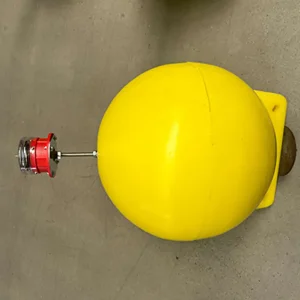
Review our specialized deepwater tie-in flotation units, debris boom floating barriers, navigational marker buoys, and heavy-duty pontoon platforms engineered for rugged service.




Frequently Asked Engineering & Procurement Questions
In-depth responses covering hydrodynamic sizing, chemical resistance, mechanical clamping guidelines, and logistics considerations for global project tenders.