
OEM Modular Floating Pipes Company & Factories
High-buoyancy, UV-stabilized rotomolded polymer solutions and integrated dredging pipeline modules engineered for heavy industrial slurs, coastal reclamation, and offshore operations.
Modular Flotation & Marine Pipeline Fleet (Part I)
Field-proven dredging, water bypass, and utility pipe floats manufactured to standard outer diameter calibrations with integrated wear resistance.
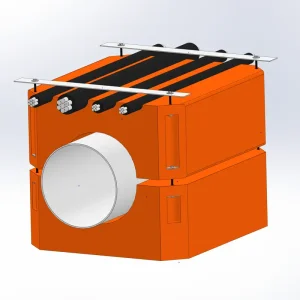
Custom Customizable Floating Pipe Supports with Cable Troughs Company, Pricelist
View Specifications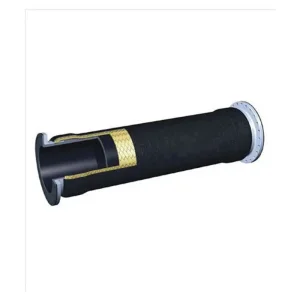
High-Quality Heavy-Duty Rubber Hose for Water and Marine Projects Supplier, Factories
View Specifications
ODM Floating Barriers for Water Protection and Environmental Management Supplier, Factories
View Specifications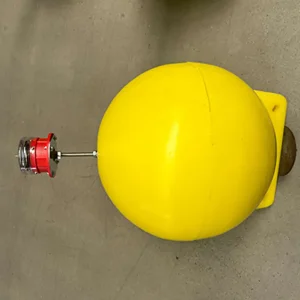
ODM Floating Ball with LED Light – Reliable Marine Navigation and Safety Manufacturer, Pricelist
View Specifications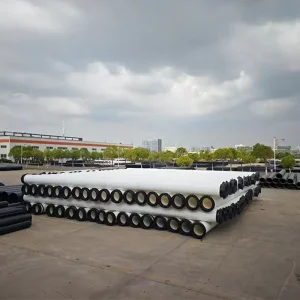
ODM High-Density Pipeline for Efficient Liquid and Gas Transport Manufacturers, Factories
View Specifications
High-Quality Pipe Floats for Industrial Water Lines and Floating Pipeline Support Manufacturers, Companies
View Specifications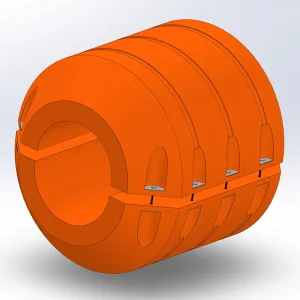
ODM High-Buoyancy Floats for Marine Projects Suppliers, Pricelist
View Specifications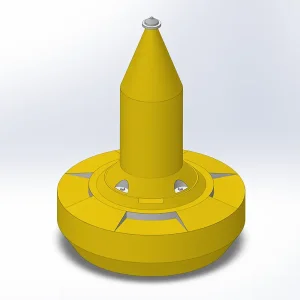
Best Reliable Floating Buoys for Coastal Navigation and Offshore Projects Suppliers, Factory
View SpecificationsGlobal Commercial & Industrial Landscape for Modular Floating Systems
A deep-dive technical assessment of why multinational dredging consortia, mining ventures, and municipal utilities are shifting from welded steel pontoons to rotationally molded OEM modular floating pipes.
TCO & Corrosion Immunity
Traditional steel pontoon infrastructure incurs severe lifecycle costs, typically requiring recoating or cathodic protection every 24 to 36 months in hypersaline marine environments. OEM virgin HDPE modular floating shells deliver total immunity to galvanic corrosion, reducing total cost of ownership (TCO) across 15-year industrial project cycles by upwards of 42%.
Hydrodynamic Dynamic Flexing
Rigid conveyance channels face catastrophic flange fatigue when subjected to 1.5m+ oceanic swells. Modular pipe floats act as articulated hydrodynamic joints. By pairing split-collar buoyancy bodies with specialized elastomer rubber marine hoses and continuous HDPE DR11 pipelines, dynamic bending moments are safely distributed across the line.
Multi-Utility Hybrid Channels
Modern port reclamation projects require simultaneous transport of tailing solids, dynamic telemetry, high-voltage power for submersible slurry pumps, and chemical dosing conduits. Modern modular floating pipes integrate cable and service troughs directly into the rotomolded crown, eliminating precarious parallel utility lines.
Engineering Consensus: Global dredging standards (such as IADC guidelines) increasingly mandate buoyant systems that maintain positive freeboard under accidental puncture. By filling structural polyethylene shells with closed-cell polyurethane foam (≥35 kg/m³ density), modern modular floating assemblies ensure floatability even under severe vessel contact collisions.
Localized Industrial Deployment Scenarios
Engineered buoyancy profiles must address distinctive regional hydrodynamic shear, temperature fluctuations, and chemical media characteristics across varied global operating environments.
Tailings Management
Deployed in lithium, copper, and iron ore extraction ponds across the Atacama and Australian outback. These environments involve high solids density (SG 1.35 to 1.60), chemical leaching agents, and extreme day-night thermal swings. Formulated UV stabilizers (UV8 to UV15) prevent embrittlement under intense solar radiation.
Mega-Port Reclamation
Essential in Persian Gulf and Southeast Asian maritime mega-projects where trailing suction hopper dredgers (TSHD) pump abrasive sea sand across multi-kilometer floating lines. Split floats with reinforced anti-slip collars prevent rotational slip along the discharge axis amidst cross-tidal currents.
Reservoir Desilting & Utilities
Used for potable water reservoirs and hydroelectric dam spillways in North America and Europe. Demands non-leaching, virgin food-contact grade resins (NSF/ANSI Standard 61 compliant) that guarantee zero chemical leaching while preserving continuous intake operations.
Emergency Industrial Bypass
Applied during civil wastewater plant maintenance or flood defense pump-arounds. Lightweight modular components can be deployed by a 3-person team without shore cranes, snapping securely over HDPE pipes to facilitate rapid fluid diversion.
China Factory Ecosystem: Supply Chain Resilience & OEM Agility
How state-of-the-art rotational molding clusters in Shandong Province deliver superior production consistency, material science breakthroughs, and rapid turnaround for turnkey EPC contractors.
Computerized Rotomolding Cells
Our modern Huimin, Binzhou production facilities operate multi-axis, rock-and-roll and carousel rotomolding machines with multi-zone closed-loop temperature tracking. This system eliminates cold-spot thinning, ensuring uniform shell thickness (±0.5mm variance) from the central body to critical outer flange corners.
Upstream Polymer Integration
Positioned within China's primary petro-industrial hub, we maintain continuous access to prime LLDPE (Linear Low-Density Polyethylene) grades with optimized melt index (MFI 3.5 - 5.0 g/10min) and environmental stress crack resistance (ESCR > 1000 hrs per ASTM D1693), stabilizing price volatility for bulk OEM purchasers.
Rapid Tooling & Prototyping
In-house CNC patternmaking and cast-aluminum mold fabrication shorten customized tooling lead times from the industry standard 8 weeks down to 14 days. Bespoke internal diameters, cable conduit recesses, and corporate branding molds can be produced, verified, and placed on the casting floor swiftly.
| Evaluation Parameter | Juhua OEM Factory Benchmark | Standard European Fabricators | Regional Artisan Workshops |
|---|---|---|---|
| Raw Polymer Base | 100% Virgin LLDPE 7149U + UV15 | Standard Virgin PE80/PE100 | Recycled Regrind + Low UV Blend |
| Core Buoyancy Fill | Closed-Cell PU Foam (≥35-40 kg/m³) | Closed-Cell PU Foam (32-35 kg/m³) | Air-filled (Hollow) / EPS Scrap Beads |
| Tensile Yield Strength | ≥ 21.5 MPa (ISO 527-2) | ≥ 19.0 MPa | ≤ 14.0 MPa (Prone to stress cracking) |
| Hardware Fasteners | Grade 316 Stainless / Class 8.8 HDG | Grade 304 Stainless Steel | Standard Carbon Steel Zinc-plated |
| Mold Customization Speed | 12 - 16 Business Days | 6 - 8 Weeks | Limited Tooling Capability |
Technical Roadmap: Smart Sensing & Eco-Polymers (2025-2030)
Flotation systems are evolving from passive displacement modules into intelligent, instrumented assets integrated into digital port twin architectures.
IoT In-Float Telemetry
Embedding self-powered, solar-scavenging wireless sensor nodes directly into polyurethane internal cores. Real-time feedback transmits pipeline strain, structural inclination, internal core moisture ingress, and localized ambient seawater temperature via NB-IoT or LoRaWAN networks.
Self-Healing Microcellular Liners
Development of secondary polyolefin skin boundaries capable of cross-linking when breached by dredging debris or propeller strikes. This keeps the internal core hydrophobic and extends deployed operations before field turnaround is needed.
Bio-Circular Polyethylene (Bio-PE)
Advancing drop-in bio-circular feedstocks derived from renewable organic waste streams without compromising tensile elasticity or UV aging characteristics, directly assisting EPC contractors in meeting stringent ESG criteria on coastal infrastructure projects.
Localization Support, Regulatory Compliance & Field Assurance
Supplying modular marine assets globally requires verified alignment with regional environmental policies, maritime safety standards, and logistical realities.
ASTM & ISO Certification
Our manufacturing aligns with ISO 9001:2015 quality frameworks, with products verified through independent testing laboratories: ASTM D638 for Tensile Properties, ASTM D790 for Flexural Performance, and ASTM D256 for Izod Impact Strength.
Maritime Visual Standards
Our pipeline floats, navigation buoys, and barrier modules comply with International Association of Marine Aids to Navigation and Lighthouse Authorities (IALA) guidelines for maritime visual contrast. High-chroma UV-stabilized pigments (RAL 1023 Yellow, RAL 2004 Orange, RAL 3020 Red) maintain visibility across busy commercial sea channels.
Interchangeability & Containerization
Designed around standard ISO 40ft High Cube freight configurations. Standardized semi-circular body halves nest efficiently within cargo containers, lowering ocean freight expenditures per net buoyant ton. Flange drillings and bolt-down recesses follow standard patterns, ensuring seamless pairing with existing pipeline inventories on site.
Frequently Asked Technical Questions (FAQ)
Clear, engineering-backed answers addressing the operational calculations, material limits, and logistics requirements of our modular floating pipeline systems.
Total Net Float Buoyancy ≥ (W_pipe + W_contents + W_fittings) × SF, where the Safety Factor (SF) typically ranges between 1.20 and 1.30 (a 20% to 30% positive reserve margin). For clear water (Specific Gravity = 1.0), the internal weight equals the internal volumetric capacity times 1,000 kg/m³. When pumping dense mineral slurry or sea-dredged coarse sand where SG reaches 1.30 to 1.65 kg/L, this internal load increases substantially. Calculating buoyancy using empty or clean-water parameters will lead to sub-surface sagging, elevated hydrodynamic drag, and pipeline grounding. Our engineering department verifies freeboard models based on your exact slurry density, pipe wall schedule (e.g., SDR 11, SDR 17), and flange hardware weight.
Modular Flotation & Marine Pipeline Fleet (Part II)
Heavy-duty anchor buoys, high-buoyancy modular shells, deep-water positioning units, and cable-supporting pipe floats ready for export dispatch.
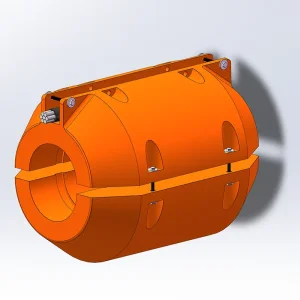
OEM Advanced Cable-Supporting Pipe Floats for Marine Projects Products, Factories
View Specifications
ODM Mooring Buoy for Marina Berths, Vessel Anchorage and Offshore Mooring Systems Suppliers, Manufacturers
View Specifications
ODM Pipe Floats for Floating Water Pipelines and Marine Support Systems Manufacturers, Manufacturer
View Specifications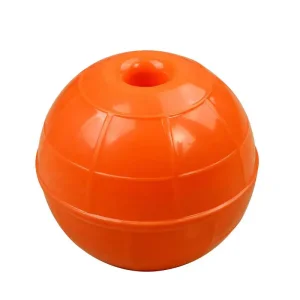
ODM Heavy-Duty ABS Float Ball for Water Engineering Projects Suppliers, Quotes
View Specifications
ODM Mooring Buoy for Reliable Vessel Anchoring and Floating Marine Infrastructure Product, Quotes
View Specifications
Custom Reliable Marine Buoys for Safe Waterway Operations Suppliers, Products
View Specifications
High-Quality Durable Floats for Safe and Efficient Pipeline Support Manufacturers, Products
View Specifications
Best Advanced Pipe Floats with Cable Troughs – Reliable Floating Support for Marine and Industrial Pipelines Company, Quotes
View SpecificationsConnect Directly with Our Huimin Flotation Plant
Bypass brokers and generic export trading houses. Engage with the technical specialists who formulate polymers, calculate hydrodynamics, and machine casting molds.
Technical Bid Desk
Transmit your engineering drawings, pipe schedules, and project requirements for direct hydrodynamic buoyancy verification.
Email: [email protected]
Direct Engineering Hotlines
Instant liaison for urgent site pipeline failures, custom tooling lead times, and port departures.
Direct Tel / WhatsApp: +86-158-6665-7686
Factory & Rotomolding Yard
West Industrial Park, Lizhuang Town, Huimin County, Binzhou City, Shandong Province, China.
Factory Audits: On-site and live virtual video inspections arranged on request.