
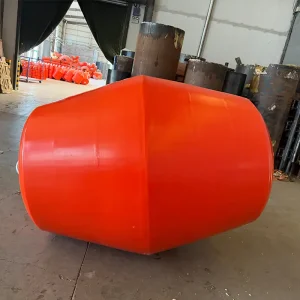
Best Foam-Filled Polyethylene Mooring Buoy for UAE Reliable Marine Anchoring
View Product Specs
High-integrity rotomolded polyethylene designs built to withstand high-salinity Persian Gulf marine loading.


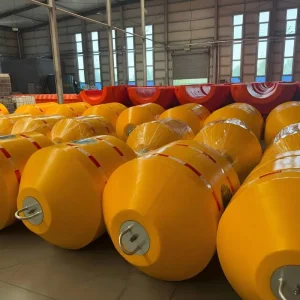
Navigating technical shifts in maritime infrastructure, mega-project demands, and harsh chemical-thermal water conditions across Abu Dhabi, Dubai, Fujairah, and Sharjah.
The United Arab Emirates represents one of the world's most dense crossroads of bulk petrochemical transit, containerized shipping, and offshore energy exploration. With primary marine operating epicenters including the Port of Jebel Ali (Dubai), Khalifa Port (Abu Dhabi), and the Port of Fujairah—one of the world's premier global bunkering hubs—anchorage capacity must deliver flawless reliability. Historically, marine authorities and EPC engineering firms specified welded carbon steel mooring buoys. However, regional waters present an aggressively corrosive matrix: seawater temperatures regularly exceeding 36°C in summer, surface salinity levels exceeding 40 PSU (practical salinity units), and intense solar ultraviolet (UV) radiation exceeding index levels of 11+.
Under these severe environmental dynamics, conventional steel buoys suffer from micro-pitting, rapid cathodic degradation, sacrificial anode depletion within 18 months, and catastrophic coating blistering. This creates substantial operating expenditure (OPEX) burdens due to recurring dry-dock repainting and sandblasting. In contrast, modern maritime projects across the UAE are comprehensively migrating to high-density, rotationally molded virgin polyethylene (LLDPE/HDPE) shells combined with closed-cell polyurethane (PU) foam cores. PE buoys are inherently non-corrosive, demonstrate zero chemical breakdown in hyper-saline conditions, and integrate stabilized UV inhibitor packages (UV20+) that prevent embrittlement and environmental stress cracking (ESCR) over operational lifespans beyond 20 years.
Procurement for mooring and marking assets within the United Arab Emirates operates under precise statutory oversight enforced by the UAE Federal Transport Authority (FTA - Maritime), individual Port Authorities (e.g., Abu Dhabi Ports Group, DP World), and corporate standards set by the Abu Dhabi National Oil Company (ADNOC Offshore). Suppliers must guarantee strict alignment with guidelines ratified by the International Association of Marine Aids to Navigation and Lighthouse Authorities (IALA).
| Compliance Vector | Standard / Norm | Operational Requirement in UAE Waters |
|---|---|---|
| Colorfastness & Chromaticity | IALA Recommendation E-108 | High-visibility pigments compounded directly into PE matrix to prevent UV fading under Arabian Gulf sun. |
| Central Core Tension Member | API Spec 2F / ISO 19901-7 | Through-chain or heavy-duty pad-eye load transmission fabricated with hot-dip galvanized Grade U2/U3 structural steel. |
| Foam Infill Impermeability | ASTM D1622 / D2842 | Closed-cell, fire-retardant polyurethane foam (≥35–45 kg/m³) ensuring 100% reserve buoyancy even if outer skin is ruptured. |
| Weld & Lifting Verification | IACS Classification Standards | Non-destructive testing (NDT), magnetic particle testing (MPI), and proof load pull-testing to 2.5x safe working load (SWL). |
How advanced rotomolding tooling, vertical polymer integration, and cost-effective scaling outmatch local small-batch fabrication.
Equipped with multi-axis rotational molding machines supporting hulls up to 4.5 meters in diameter, maintaining uniform, stress-free wall thicknesses (12mm–22mm) with electronic multi-zone temperature verification.
We leverage specialized, hexene-copolymer grade linear low-density polyethylene with pre-blended hindered amine light stabilizers (HALS UV-20+), preventing photo-oxidation and brittleness under intense solar UV.
Massive tooling libraries eliminate costly customized mold charges for standard cylindrical, spherical, and modular pick-up mooring buoys, delivering 30% to 45% CAPEX savings relative to European suppliers.
Eliminates recurring shot-blasting, hull recasting, and epoxy reapplications. Resistant to bio-fouling adhesion, allowing rapid high-pressure wash-down while positioned in open anchorages.
Direct oceanic container & breakbulk shipping from major coastal ports directly into Jebel Ali, Port Khalid, Mina Zayed, and Fujairah with structured lead times and complete export export packing protocols.
Every tender and inquiry is reviewed by seasoned naval architects and materials engineers who analyze load catenary, seabed bathymetry, current dynamics, and reserve buoyancy margins.
From bunkering limits off Fujairah to offshore supply vessels serving Upper Zakum and Das Island.
Fujairah hosts one of the busiest ship-to-ship (STS) transfers and bunkering anchorages globally. Heavy-duty cylindrical and peg-top mooring buoys serve as secure swinging moorings for support tugs, crew boats, and bunkering barges, enduring severe swells rolling inward from the Gulf of Oman.
In fields like Upper Zakum, Lower Zakum, and Umm Shaif, marine contractors deploy non-sparking, high-impact polyethylene mooring buoys for offshore supply vessels (OSVs) and dive-support vessels (DSVs) tethering in shallow, environmentally sensitive coral-adjacent zones.
Dubai Harbour, Mina Rashid, and Yas Marina require aesthetic, non-marking pick-up mooring buoys that protect pristine luxury yacht hulls against paint abrasions during berthing operations, combining elegance with internal steel load assemblies.
Key technical answers for marine engineers, project managers, and port authorities ordering mooring systems for the Middle East.
Select from our field-tested rotomolded buoy configurations engineered for commercial harbors, offshore anchorages, and private marine facilities.
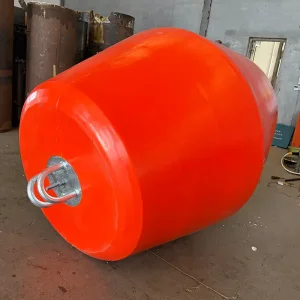

Send your project specifications, bathymetric data, or vessel displacement numbers to receive complete buoyancy calculation reports, certified 2D/3D layout drawings, and competitive FOB/CIF Middle East quotes within 24 hours.
Send Inquiry Now