
High-Performance Mooring Buoys Optimized for Vietnam Waters
Designed to withstand the severe tropical monsoon climates, hydro-dynamic drag, and harsh salinity levels of Hai Phong, Cai Mep-Thi Vai, and offshore oil/gas fields.
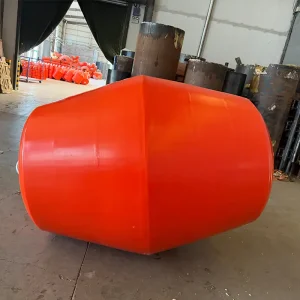
Foam-Filled Polyethylene Mooring Buoy for Vietnam Port Berthing
High-density LLDPE outer shell filled with hydrophobic closed-cell PU foam. Designed for high impact resistance near busy harbor terminals.

Rotomolded Polyethylene Mooring Buoy for Modern Marine Infrastructure
Maintenance-free UV20+ stabilized rotomolded construction prevents marine organism adhesion and rust corrosion in tropical seawater.

Heavy-Duty Offshore PE Mooring Buoy for Deepwater Anchoring
Integrated internal hot-dip galvanized steel structural chain-through tube for heavy vessel anchoring off the Vung Tau and Quang Ninh coasts.
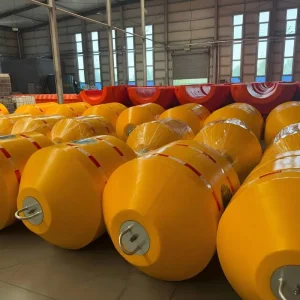
OEM Custom Offshore Mooring System Buoy for Vessel Anchoring
Customizable dimensions, buoyancy capacity (1T to 55T), color coding, and top-mark radar reflectors according to IALA recommendations.
The Strategic Importance of Marine Mooring Equipment in Vietnam
Vietnam’s strategic geographical position along major global shipping lanes—boasting over 3,260 kilometers of coastline—has propelled it into an ASEAN maritime logistics power. Major port complexes including Hai Phong (Lach Huyen Deep-Water Port) in the North, Da Nang and Dung Quat in the Central region, and Cai Mep - Thi Vai and Cat Lai in the South require reliable, weather-resilient mooring infrastructure to handle ever-increasing TEU throughput and bulk cargo traffic.
Furthermore, the expansion of offshore oil and gas operations in the Cuu Long and Nam Con Son basins, coupled with nearshore wind farm projects in Bac Lieu and Tra Vinh, creates an urgent operational demand for advanced, non-corrosive mooring buoys. Traditional steel mooring buoys face accelerated marine corrosion, severe marine fouling, high repainting overheads, and risk of catastrophic sinking if punctured during vessel impact.
Modern Vietnamese engineering procurement teams are rapidly transitioning from steel structures to Rotationally Molded Polyethylene (PE) Foam-Filled Mooring Buoys. These next-generation floating systems eliminate maintenance costs, deliver superior energy absorption during vessel collisions, and offer a operational lifespan exceeding 20 years in harsh tropical saltwater environments.
Vietnam Marine Sector Demand Factors
Deep-Water Port Expansion
Lach Huyen & Cai Mep receiving 150,000+ DWT container vessels require durable, high-buoyancy STS mooring points.
Offshore Wind & Energy Surge
Nearshore construction vessels need heavy-duty offshore mooring buoys capable of enduring typhoon-grade wave actions.
Typhoon & UV Resilience
Vietnam’s high solar irradiance (UV Index 11+) and tropical storms demand specialized UV20+ LLDPE resins.
Why Vietnamese EPC Contractors & Port Authorities Partner with Direct Chinese Manufacturers
Sourcing customized mooring buoys directly from top-tier Chinese rotomolding factories provides an unbeatable synthesis of technical innovation, industrial scale, rapid production velocity, and cost efficiency.
Advanced Rotomolding Machinery
Our factory utilizes computer-controlled, large-format CNC rotational molding machines capable of producing seamless LLDPE shells up to 4.5 meters in diameter. Seamless molding guarantees uniform wall thickness (12mm-18mm) with no stress points or weak weld seams.
Hydrophobic Foam Injection Core
Unlike low-cost alternatives, our internal void space is pressure-injected with high-density (40-45 kg/m³) closed-cell polyurethane (PU) or EPS foam. Even in the event of severe hull damage from sharp vessel propellers, the buoy retains 100% positive buoyancy and will never sink.
Optimized Total TCO & Procurement Cost
Direct factory sourcing eliminates intermediary trading markups, reducing capital expenditure by 30% to 45% compared to European or Western suppliers, while maintaining full compliance with IALA, OCIMF, and ISO international standards.
Engineering Blueprint: Rotomolded PE Mooring System Architecture
Mooring buoys deployed in open sea or river estuaries must resist immense dynamic forces generated by tides, windage, surface currents, and vessel displacement. Below is a comprehensive engineering breakdown of our custom mooring buoy architecture engineered for Vietnam's marine environments.
| Engineering Feature | Material Specification | Technical Operational Advantage |
|---|---|---|
| Outer Hull Shell | Virgin LLDPE with UV20+ Stabilizers | Resists 20,000+ hours of direct tropical sunlight without discoloration, micro-cracking, or embrittlement. High elasticity absorbs impacts. |
| Internal Flotation Core | 100% Closed-Cell Polyurethane Foam (40-45 kg/m³) | Water absorption rate < 1.0%. Guarantees unsinkable performance under structural shell puncture conditions. |
| Structural Load Frame | Q235 / Q345 Steel Core with Hot-Dip Galvanization (85µm coating) | Transfers mooring line tension directly through the buoy center, eliminating shell stress. Option for Stainless Steel 316. |
| Mooring Attachment Types | Central Through-Rod, Pad Eye, or Chain-Through Design | Fully compatible with standard studlink anchor chains (22mm - 76mm), shackles, swivels, and synthetic mooring hawser lines. |
| Visibility & Topmarks | IALA Color Conformity (Yellow, Red, Green) + Retro-reflective Strips | High visibility range exceeding 3-5 nautical miles; optional solar LED navigation lights and radar reflectors. |
Localized Application Scenarios Across Vietnam
From northern deepwater ports to southern coastal aquaculture zones, our custom mooring buoys serve critical maritime operational functions.
1. Deep-Water Port Berthing & Ship-to-Ship (STS) Transfer
In regions like Cai Mep - Thi Vai and Hon La Port, large bulk carriers and oil tankers utilize offshore STS mooring buoys to conduct safe cargo offloading without occupying limited pier space. Our high-reserve buoyancy foam-filled buoys ensure stable positioning under dynamic tidal fluctuations.
2. Nearshore Wind Farm Logistics & Support Vessels
Offshore wind projects in Bac Lieu, Soc Trang, and Tra Vinh require heavy-duty temporary mooring points for installation barges, crew transfer vessels (CTVs), and crane ships. Our PE buoys withstand rough seabed scouring and high wave fatigue during typhoon seasons.
3. Commercial Fishing Ports & Industrial Aquaculture
Major fishing centers in Kien Giang (Phu Quoc), Binh Thuan, and Quang Ninh deploy modular PE mooring buoys for vessel tie-up stations and perimeter marking of deep-sea fish farming cages. The inert polyethylene material ensures zero chemical leaching into sensitive marine ecosystems.
4. River Navigation & Dredging Pipeline Anchoring
In the busy inland waterways of the Mekong Delta and Dong Nai River, dredging contractors utilize compact foam-filled mooring buoys to stabilize floating discharge pipelines and mark navigation boundaries for inland barges.
Meeting Stringent Global Procurement & Tender Specifications
International marine contractors, port developers, and EPC corporations operating in Vietnam require strict adherence to international maritime safety standardizations. Our manufacturing facilities operate under comprehensive quality management frameworks to ensure every unit shipped meets or exceeds global engineering standards.
- ISO 9001:2015, ISO 14001:2015, & ISO 45001:2018 Certified Factory
- IALA (International Association of Marine Aids to Navigation and Lighthouse Authorities) Guideline Compliance
- Raw Material Traceability & Third-Party Class Certificates (BV, ABS, CCS, DNV)
- Full Tensile Pull Load Testing & Hydrostatic Pressure Resistance Reports
Need Tender Documentation or CAD Drawings?
Our marine engineering department provides full CAD/3D modeling, FEA structural stress analysis, and custom tender submission dossiers within 24 hours.
Get Engineering SupportExplore Our Full Range of Marine Mooring Buoys
Standard and bespoke polyethylene mooring floating products manufactured for global supply chains and ready for direct shipment to Vietnam ports.
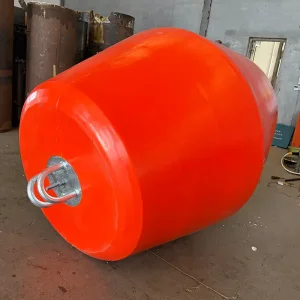
Offshore Marine Mooring Buoy for Secure Vessel Anchoring
Designed with reinforced internal steel structure to handle heavy tension load from commercial offshore vessels.
ODM Custom Marine Mooring Buoy for Stable Anchorage
Tailor-made buoyancy and dimension configurations ideal for coastal port management and vessel mooring systems.

Foam-Filled Mooring Buoy for Marinas & Offshore Facilities
Impact-absorbing smooth LLDPE surface prevents vessel hull scratches during marina dock tie-ups.
ODM Heavy-Duty Foam-Filled Mooring Buoy for Offshore Anchorages
Equipped with high-strength pad eyes for fast connection with anchor chains and marine mooring ropes.
Custom Mooring Buoy for Boat Berths & Harbor Stations
Compact and highly visible mooring floating buoy tailored for shallow harbor waters and commercial berths.
Custom Mooring Buoy System for Harbor & Offshore Anchorage
Rotomolded cylindrical and skittle-shaped floating buoys engineered for extreme marine salinity resilience.
ODM Polyethylene Mooring Buoy for Vessel Anchorage Berths
Seamless wall design prevents saltwater leakage and minimizes biological growth adhesion on outer shell.
ODM Custom Heavy Mooring Buoy for Berthing & Marina Applications
Heavy-duty buoyancy rating designed to provide long-term stable anchoring for commercial vessels.
Polyethylene (PE) vs. Steel vs. Fiberglass Mooring Buoys
Making an informed procurement decision requires analyzing total cost of ownership (TCO), maintenance requirements, and structural longevity in tropical marine environments.
| Evaluation Criterion | PE Foam-Filled Buoy (Our Solution) | Traditional Steel Buoy | Fiberglass (FRP) Buoy |
|---|---|---|---|
| Seawater Corrosion | 100% Corrosion-Proof (Inert) | Severe rusting; requires repainting every 2-3 yrs | Corrosion-resistant; prone to osmosis blistering |
| Impact Collision Behavior | Elastic deformation; absorbs energy | Dents easily; paint flakes; structural fatigue | Brittle fracture; cracks upon hard vessel impact |
| Unsinkability | Unsinkable (Closed-Cell Foam Core) | Sinks if hull is breached by collision | Sinks if laminate ruptures and fills with water |
| Maintenance Cost (10 Yrs) | Near Zero Maintenance | Very High (Drydocking, sandblasting, repainting) | Moderate (Gelcoat repair, structural patch) |
| Marine Fouling Resistance | High (Smooth low-friction PE surface) | Low (Heavy barnacle & algae attachment) | Moderate (Requires anti-fouling coatings) |
| Total Cost of Ownership | Lowest TCO over 15+ year lifecycle | High initial + continuous maintenance cost | High upfront initial procurement cost |
Mooring Buoy Technical & Procurement FAQ
Expert answers to common engineering, logistics, and customization questions from marine buyers in Vietnam.
Equip Your Marine Project in Vietnam with Reliable Mooring Buoys
Contact our direct factory engineering team for technical consultations, customized buoyancy calculations, and competitive FOB/CIF quotation proposals.