
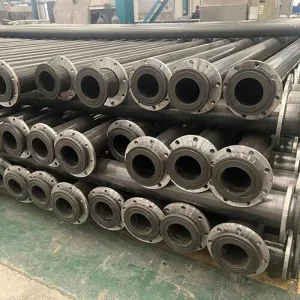
Featured Pipeline Systems for French Marine Infrastructure
Engineered for high hydraulic efficiency, aggressive maritime exposure, and high-volume slurry transfer across the Atlantic Seaboard, Le Havre ports, and the Mediterranean corridor.
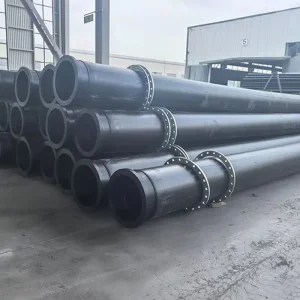
Heavy-Duty High-Volume Pipeline – Grand Port Maritime Project Standard
Explore Specifications & Pricing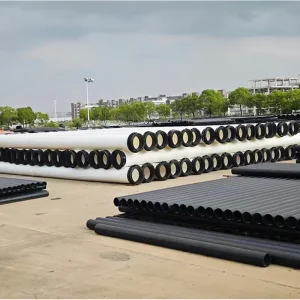
ODM Versatile Slurry & Water Transfer Pipeline – France River Basin Edition
Explore Specifications & Pricing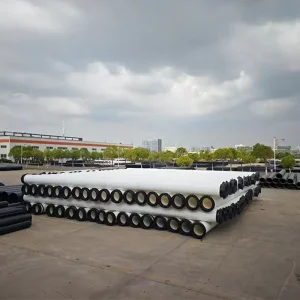
ODM High-Density Liquid Pipeline – Rhône-Méditerranée Industrial Line
Explore Specifications & Pricing20+
Years Advanced Rotomolding Experience
EN ISO
Fully Compliant with EU Directives
80+
Export Hubs Serving Maritime Clients
100%
Virgin High-Density PE Construction
French Marine Pipeline Dynamics: Ecological Transition & Infrastructure
Bridging traditional maritime engineering with the modern demands of decarbonization, coastal dredging, and cross-estuary pipeline sustainability.
The French Maritime & Industrial Pipeline Landscape
France's expansive coastline and strategic navigable waterways—from the Port 2000 hub in Le Havre and the petrochemical pipelines surrounding Fos-sur-Mer and Marseille to the delicate river ecosystems of the Seine, Loire, and Rhône—require high-integrity piping systems. Industrial operations in France face unique challenges: high saline corrosion, rigorous hydrodynamics, and severe ecological constraints enforced under Loi sur l'eau and broader European environmental safety doctrines.
Municipal bodies, marine contractors, and port authorities across Brittany, Normandy, and Occitanie are phasing out legacy steel and uncertified composite systems due to internal scaling, galvanic degradation, and heavy deployment costs. The market migration is steering decisively toward heavy-duty, UV-stabilized, high-density polyethylene (HDPE) pipelines and cellular-filled pipeline floats. Sourcing managers demand verifiable wall thickness consistency, high impact resistance against North Atlantic swell dynamics, and chemical inertness for industrial effluent mitigation.
Stringent Local Compliance
Engineered to meet French environmental frameworks, guaranteeing non-leaching performance in aquatic zones, UV stabilization against Alpine and Mediterranean solar levels, and full adherence to REACH chemical standards.
- Non-toxic virgin PE resins
- No heavy metal additives
- Fully recyclable materials
Total Cost of Ownership (TCO)
Replacing corrosive ductile iron and standard metals with rotomolded PE pipelines slashes maintenance intervals, eliminates cathodic protection overheads, and drastically drops dredging pipeline downtime.
- Zero corrosion degradation
- Low frictional resistance factor
- Over 30-year operational lifespan
Procurement Predictability
Global procurement teams executing French tenders require stable lead times and volume-tiered pricelists. Our calibrated supply chain ensures rapid CFR and DDP delivery straight to Marseille, Dunkirk, and Bordeaux.
- Volume-indexed price transparency
- Strict dimensional tolerances
- Direct engineer-to-buyer support
Integrated Hydraulic & Flotation Engineering Architecture
A comprehensive overview of mechanical durability, hydrodynamic stability, and buoyancy sizing under varying hydraulic densities.
The Technical Sizing Equation for French Offshore & Estuary Applications
Floating pipeline stability in tidal areas like the Gironde Estuary or the English Channel depends on hydrodynamic balance. A common failure in pipeline sourcing is failing to account for slurry specific gravity variations and turbulent surface shear. For dredging sediment transfer, the pipeline design must calculate buoyant counter-displacement using real slurry density values rather than pure water parameters:
Buoyancy Margin Calculation:
Fbuoyancy_req = [ (Wpipe + Wmedium(SG=1.3-1.8) + Whardware) × (1.25 ∼ 1.30) ]
This reserve coefficient of 1.25 to 1.30 ensures the discharge pipeline maintains an operational freeboard exposing approximately 25% of its upper diameter above the mean waterline. This prevents submergence during rapid wave frequency hits while minimizing current drag coefficients on the anchor chains and flex joints.
Engineering Roadmap & Sustainable Production Evolution
Pioneering lifecycle endurance and circular economy integration for marine plastic components.
Phase 01: Raw Polymers
Virgin PE-100 Blends
Integration of hexene-copolymer resins engineered for high environmental stress crack resistance (ESCR).
Phase 02: Precision Forming
Variable Thermal Molding
Closed-loop, electronically tracked rotational molding guaranteeing continuous wall thickness and structural symmetry.
Phase 03: Internal Infill
Closed-Cell Polyurethane
High-density foam infusion ensuring complete buoyancy retention even in the rare event of outer shell breach.
Phase 04: Lifecycle Closed-Loop
Circular Recyclability
Designed for multi-project redeployment across European zones and 100% mechanical regrind at decommissioning.
Industrial Pipeline & Buoyancy Catalog – France Supply Selection
Complete certified selection of pipelines, slurry modules, and high-displacement floats built for reliable performance in French coastal and inland waters.
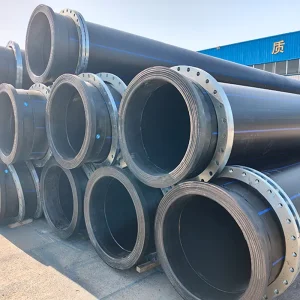
ODM Industrial & Municipal Pipeline – France Infrastructure Spec
Inspect Details & Request Pricing
OEM Industrial Reliable Transfer Pipeline – Saint-Nazaire Maritime Class
Inspect Details & Request Pricing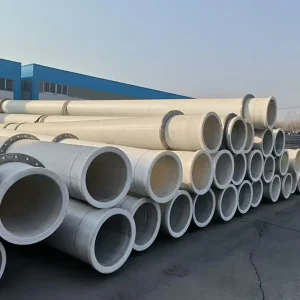
ODM Industrial-Strength Slurry Pipeline – Dunkirk Port Series
Inspect Details & Request Pricing
Robust Maritime Fluid Transport Pipeline – Brest Naval District Compatible
Inspect Details & Request Pricing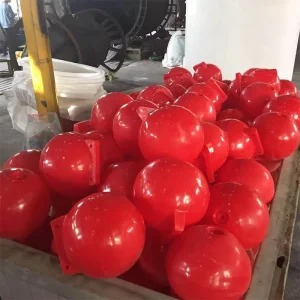
High-Visibility Marine Float Ball – France Aquaculture & Safety Array
Inspect Details & Request Pricing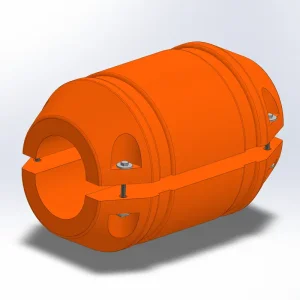
ODM Buoyancy Pipe Floats – French Atlantic Navigation Spec
Inspect Details & Request Pricing
Heavy-Duty Marine Pipe Floats – Marseille Offshore Berth Standard
Inspect Details & Request Pricing
Custom Modular Pipeline Floats – Bay of Biscay Deep Swell Edition
Inspect Details & Request PricingProcurement & Technical FAQ – France Logistics
Clear, direct answers regarding customs clearance, European quality certifications, material grades, and maritime deployment parameters.
What regulatory standards do your pipelines comply with for deployment in France?
Our pipeline modules and rotomolded floats are engineered in compliance with EN 12201 standards for polyethylene pressure piping systems. The raw material resins strictly respect European REACH regulation (EC No 1907/2006), ensuring complete absence of restricted toxic plasticizers, lead stabilizers, and banned cadmium components. This makes our assemblies fully suitable for operations under French water management guidelines (Loi sur l'eau) across pristine riverbeds and coastal ports.
How do you handle freight, customs duty, and inland delivery across French ports?
We provide structured Incoterms 2020 shipping agreements, typically offering CIF or DDP terms directly to primary ports including Port du Havre (HAROPA), Marseille-Fos, Dunkerque, and Bordeaux. Shipping containers are optimized using custom nest-packing engineering to minimize cubic ocean freight charges. Complete documentation—including Clean Bills of Lading, Certificates of Origin, EUR-compliant packing declarations, and factory pressure test certificates—is provided for smooth customs clearance through French Direction Générale des Douanes.
Why choose rotomolded PE pipeline floats over fabricated steel pontoon floats?
Unlike steel pontoon units, rotomolded polyethylene floats never rust, pit, or require periodic sandblasting and toxic anti-fouling coatings in saline environments. They feature high impact memory, absorbing vessel contact without permanent deformation. When filled with closed-cell polyurethane foam, our floats remain unsinkable even if the exterior skin is compromised by jagged rock collisions or propeller abrasions along shallow tidal flats.
Can pipelines and floats be custom-drilled or adapted for sensor wiring & hydraulic lines?
Yes. We design and mold integrated cable troughs, instrumentation conduits, and umbilical channels directly into the float halves. This accommodates dredge automated positioning sensors, solar buoy batteries, telemetry systems, or auxiliary hydraulic return lines safely without pinching or requiring ad-hoc field strapping.
What are the minimum order quantities (MOQ) and warranty terms for French contractors?
We support both small-scale replacement maintenance batches and complete capital tender volumes. Standard production warranty covers defects for 18 months from bill of lading or 12 months from site immersion, whichever occurs first. Material certificates (EN 10204 3.1) and raw batch traceability accompany every export shipment.