
20+
Years Engineering Buoyancy
80+
Global Export Destinations
100%
Virgin High-Density PE & ABS
DIN/EN
EU Ecological Compliance
Precision Engineering
Primary Floating Ball Architectures for European Logistics
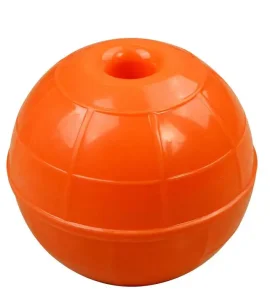
Ultra-stabilized hollow and foam-filled modular spheres manufactured under strict rotational and precision molding tolerances for rapid deployment along the Spree-Oder waterway corridors.
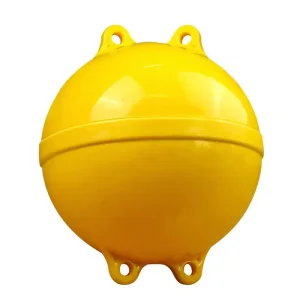
ODM ABS Float Ball – Reliable Marine & Freshwater Buoyancy for Berlin Channels
Explore Product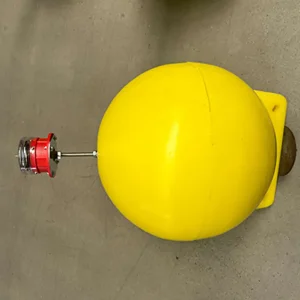
ODM Floating Ball with LED Light – Intelligent Marine Navigation for Berlin Waterways
Explore Product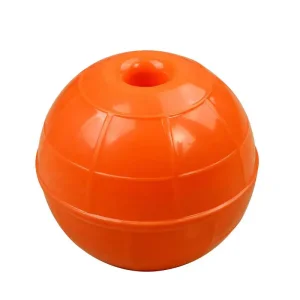
ODM Heavy-Duty ABS Float Ball – Industrial Water Infrastructure for Berlin Systems
Explore Product
Regional Landscape
Commercial Dynamics of Floating Ball Deployments in Berlin
Strategic analysis of urban watershed management, industrial cooling loops, and green energy transition throughout the German Capital Region.
Algae & Evaporation Suppression
Berlin's urban water bodies and open storage basins in the Spree-Neisse district rely on densely packed floating ball blankets to eliminate up to 90% of solar radiation. By preventing photosynthesis, these installations mitigate hazardous cyanobacteria blooms while reducing summer evaporation losses in municipal cooling reserves.
Wastewater & Odor Control (Wasserbetriebe)
The Berliner Wasserbetriebe operates extensive wastewater treatment assets across Ruhleben, Wassmannsdorf, and Schönerlinde. Hexagonal and spherical coverage spheres form physical thermal and vapor barriers that drastically suppress H2S emissions and ammonia volatilization within clarification basins and retention canals.
Intelligent Navigation & Smart Canals
The Landwehrkanal, Havel, and connecting waterways undergo dynamic night-time freight and civil operations. Integrated LED float balls provide low-profile, energy-autonomous channel demarcation, collision cushioning, and surface run-off safety without demanding permanent marine mooring infrastructure.
Technical White Paper
Macro Buoyancy Engineering: Materials, Sizing & Compliance
In municipal and industrial hydraulic engineering, flotation devices are critical components that directly dictate structural integrity, thermal retention, and environmental safety. For Berlin-based engineers and European EPC contractors, selecting between hollow injection-molded components, foam-filled spheres, and rotational HDPE floats depends on hydrostatic pressure, anticipated ice shearing loads, and regulatory chemical leach limits.
German & European Regulatory Conformance
Polyethylene flotation balls deployed within the Federal Republic of Germany must adhere strictly to Wasserhaushaltsgesetz (WHG) requirements and the EU REACH Regulation (EC No 1907/2006). Virgin resins formulated without phthalates, heavy metals, or prohibited plasticizers ensure that zero persistent synthetic contaminants migrate into drinking water collection basins or natural riverbeds.
1. Hydraulic Load Calculation & Buoyancy Margin Principles
Flotation calculations must consider static equilibrium alongside hydrodynamic dynamics induced by wind sheer, surface icing, and biological accretion. When designing industrial floating barrier lines or pipeline suspension spheres for Berlin desilting programs:
Minimum Displaced Buoyancy (B_total) ≥ 1.30 × (Structural Weight + Slurry Payload Mass + Transient Environmental Drag)
A continuous freeboard margin of at least 25% of the spherical diameter prevents submergence under laminar flow rates typical of the Spree river system during high-precipitation periods.
2. Material Science: Virgin High-Density Polyethylene vs. Technical ABS
Float balls manufactured for the Berlin market utilize specialized compounding tailored to Central European climatic regimes:
- UV Stabilization Matrix: Compounded with carbon black or hindered amine light stabilizers (HALS UV-8 / UV-12), enabling more than 15 years of continuous outdoor service against solar degradation.
- Impact Fracture Resistance: The resin retains high notch impact ductility down to -20°C, absorbing winter ice expansion stress across frozen canals without brittle fracture.
- Closed-Cell Foam Infill: For mission-critical marine barriers, polyurethane foam filling prevents loss of flotation in the rare event of puncture from industrial debris or vessel impact.
Future Engineering
Engineering Roadmap & German Localization Protocol
Bridging global direct-manufacturer supply chains with localized project fulfillment for regional engineering consultants across Germany.
01
Hydrostatic Modeling & CAD Integration
Full 3D modeling and calculation sheets provided directly to Berlin engineering bureaus (Ingenieurbüros) verifying ballast ratios, wave impact tolerances, and anchor tether forces prior to tool-cutting or extrusion.
02
Automated Variable-Frequency Rotational Molding
Shell production uses multi-axis variable speed rotation with infrared electronic pyrometers to guarantee uniform wall thickness across every meridian, eliminating weak seams.
03
Direct European Intermodal Delivery
Turnkey export logistics to Hamburg or Bremerhaven ports, paired with customs clearance and scheduled truck transfers directly to Brandenburg industrial hubs.
04
IoT Environmental Sensor Integration (Future Horizon)
Next-gen floating spheres currently entering pilot trials include micro-PV panels and NB-IoT/LoRaWAN surface water temperature, conductivity, and dissolved oxygen monitoring arrays.
Complete Equipment Catalog
Heavy-Duty Flotation & Marine Pipeline Fleet
Explore our extended line of rotomolded PE float balls, marine floats, dredging pipe supports, and heavy slurry conduits designed for European procurement teams.
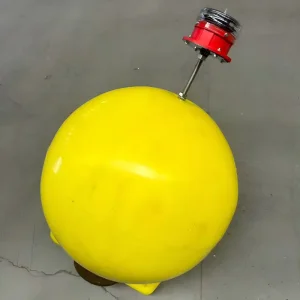
ODM High-Visibility Floating LED Ball for Berlin Marine Safety
Explore Product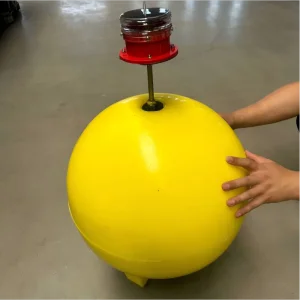
High-Quality LED-Equipped Floating Ball for Safe Berlin Water Operations
Explore Product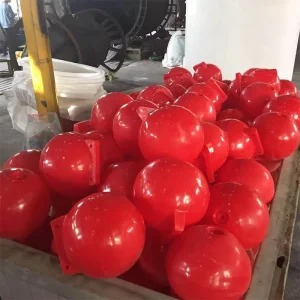
Best PE Float Ball – Durable Buoyancy Solution for Berlin Water Projects
Explore Product
Best PE Float Ball for Safe & Efficient Water Operations in Berlin Ports
Explore Product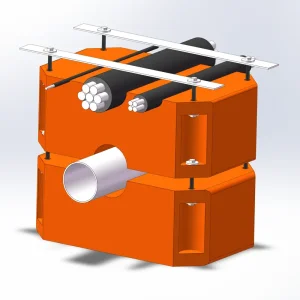
OEM Advanced Modular Pipe Floats with Cable Channels for Berlin Works
Explore Product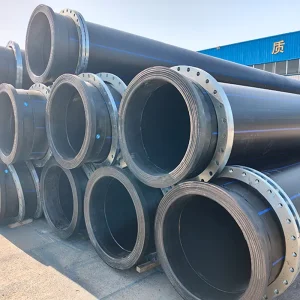
ODM High-Performance Pipeline for Industrial and Municipal Water Transport
Explore Product
Foam-Filled Mooring Buoy for Inland Marinas & Berlin Harbors
Explore Product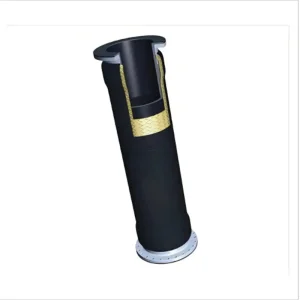
Custom Premium Rubber Hoses for Water and Slurry Transport in Dredging
Explore Product
Technical Clarity
Frequently Asked Questions: Floating Ball Engineering for Berlin
Specific engineering and commercial answers addressing cold-climate durability, logistics, and EU environmental conformity.
How do PE floating balls withstand freezing winters along the Spree & Havel?
Our floating balls are compounded with low-temperature impact modifiers, ensuring ductile performance down to -25°C. The spherical and rounded geometries distribute lateral compressive ice thrust upward rather than crushing inward, preventing structural splits during freeze-over cycles.
What coverage density is required for evaporation control in reservoirs?
Spherical floating balls naturally assemble into a hex-dense matrix when poured across open water, achieving roughly 91% continuous surface coverage. This cuts solar incident radiation by over 85%, dramatically reducing evaporation and keeping water cooler in shallow treatment lagoons.
Are these products certified compliant with EU REACH and German WHG?
Yes. We exclusively process virgin, high-density rotomolding grade polyethylene with documented traceability. Raw material certificates guarantee the absence of regulated phthalates, BPA, or lead-based heavy metal pigments, fully conforming to German water resource safety frameworks.
What is the delivery timeline for bulk shipments to the Berlin-Brandenburg hub?
Standard high-volume production requires 15 to 22 working days. Maritime container shipping from our port facilities to Hamburg takes approximately 24 to 30 days, followed by 48-hour bonded intermodal rail or road delivery directly to your facility or construction site in Berlin.