
OEM Standard
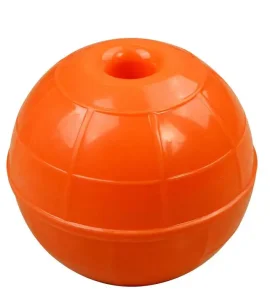
Engineered for high hydrodynamic stability, UV50+ weathering, and high impact resistance along tidal berths, stormwater discharge basins, and surface-water intake channels.
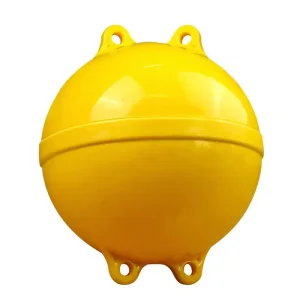
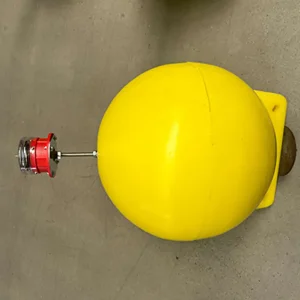
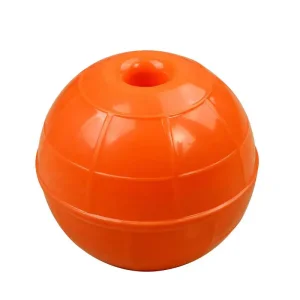
The River Thames and its integrated canal network present unique hydrodynamic challenges: 7-metre macro-tidal fluctuations, brackish estuarine chemistry, heavy vessel wakes, and stringent Port of London Authority (PLA) safety regulations.
With massive infrastructure investments modernizing London's sewage and drainage systems (including the Thames Tideway Tunnel), floating barrier balls and buoyancy spheres play a critical role in debris capture, surface-scum containment, and overflow valve actuation along combined sewer overflow (CSO) outfalls.
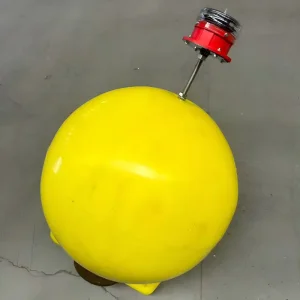
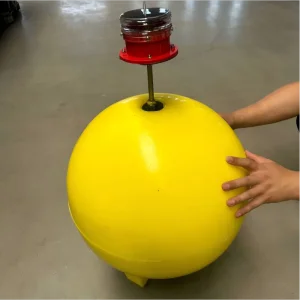
From the Port of Tilbury inward toward London Bridge, marine engineering works demand continuous visual and physical water-lane demarcation. Photovoltaic LED-equipped floating spheres provide night visibility adhering to PLA general navigation directions and IALA international buoyage guidelines.
Potable water facilities serving London—such as Queen Mary, King George V, and Walthamstow reservoirs—face strict drinking water inspectorate standards. Floating shade and barrier spheres prevent algae proliferation, curb VOC evaporation, and safeguard water quality without synthetic biocides.
Specifying the correct float ball shell material is critical for lifecycle costing and risk reduction in London's corrosive marine and industrial wastewater applications.
| Performance Metric | Rotomolded LLDPE / HDPE Spheres | Injection-Molded / Extruded ABS Spheres | Subsea Closed-Cell Polyurethane Fill |
|---|---|---|---|
| Primary Application | Dredging, debris booms, reservoir covers, buoys | Level sensors, industrial valving, pump lines | Internal core for anti-sink puncture survival |
| Tensile Strength (ISO 527) | 21 – 26 MPa (Ductile, high stress-crack resist) | 38 – 48 MPa (Rigid, higher dimensional stability) | High compressive modulus (> 0.35 MPa) |
| Impact Resistance (Charpy) | No Break at -30°C (Superior cold ductility) | 12 – 18 kJ/m² at 23°C (Susceptible to freeze impact) | Absorbs dynamic hydraulic crush shocks |
| UV Degradation (ASTM G154) | > 15,000 Hours (UV-8 to UV-20 compounded) | Requires post-treatment or UV stabilizers | Fully encapsulated within impermeable shell |
| Environmental Stress Cracking | F50 > 1,000 Hours (ASTM D1693 condition B) | Moderate (Vulnerable to aromatic hydrocarbons) | Impervious to water penetration < 0.02 g/cm³ |
| Service Life Expectancy | 15 – 25 Years (Open freshwater / saltwater) | 8 – 12 Years (Industrial internal fluid systems) | Equal to external shell service life |
A common failure mode in UK marine project procurement is under-calculating buoyant reserve under dynamic flow. In estuarine waters like the lower Thames, floating spheres experience variable salinity (1.000 to 1.025 g/cm³) combined with wave drag and debris impingement.
            // Dynamic Safety Criterion

            B_net = (ρ_fluid × V_disp × g) - W_dry

            Reserve Margin = (B_net / W_load) ≥ 1.35

            // Minimum 35% reserve buoyancy required to prevent sub-surface suction under 3.5 kn river current.
Why Tier-1 civil engineering contractors and UK water supply partners source floating ball systems directly from Shandong Binzhou Juhua Rubber & Plastic Co., Ltd.
Unlike conventional manual molding which causes wall thinning at corners, Juhua utilizes proprietary multi-axis computer-controlled heating chambers. Every float sphere maintains uniform wall thickness (+/- 0.5mm), eliminating weak shear lines under compression.
Where unsinkable certification is mandatory for navigational safety along London shipping lanes, high-density closed-cell polyurethane foam is injected via automated metering robots. Even if the outer shell is pierced by propeller strikes, water ingress is restricted to < 1%.
Each production batch undergoes hydrostatic compression testing, low-temperature drop dart puncture tests, and spectral UV degradation verification. Full batch documentation and raw material mill certificates accompany all UK exports.
Specific field configurations where our rotomolded and ABS floating spheres resolve operational safety, environmental mitigation, and buoyancy dilemmas.
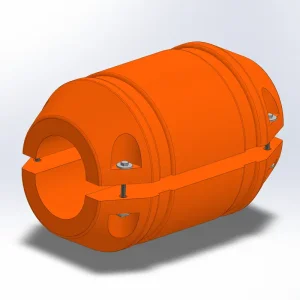
Dredging contractors operating trailing suction hopper dredgers near Greenwich and Canary Wharf require robust ball floats to support temporary dredge discharge lines while resisting cross-current drag and wash from passing high-speed passenger clippers.
Along the Regent's Canal and River Lea, connected floating ball barriers prevent urban plastic debris, fallen foliage, and floating litter from choking automated sluices and entering critical water treatment pumping stations.
Bridge retrofits, pier piling, and embankment restoration projects deploy high-visibility LED floating balls to isolate marine working craft from leisure paddlers, rowers, and commercial barges under low-light British weather conditions.
At facilities like Beckton and Mogden STW, dense floating balls form thermal and odor-insulating blankets over open aerated lagoons, curbing hydrogen sulfide emissions and drastically cutting thermal energy loss during winter months.
Attenuating bird strikes at Heathrow and London City Airport storm retention basins: floating camouflage spheres blanket water surfaces, discouraging waterfowl from landing while permitting stormwater free drainage into municipal collectors.
Refurbishing private moorings and light service pontoons across St Katharine Docks and Surrey Quays using interchangeable rotomolded modular floats that resist petroleum residue, gasoline sheens, and constant marine biofouling.
Explore our full roster of marine-certified rotational moldings, dredge line buoyancy collars, and specialized safety spheres ready for rapid global dispatch.


Authoritative technical guidance compiled by Juhua's marine flotation engineering team for civil contractors, municipal authorities, and dredging managers.
Rotomolding creates completely seamless bodies with zero mold parting lines under tensile stress. Rotomolded wall thicknesses typically range from 6mm to 16mm (compared to 1.5mm–3mm for blow-molded balls), delivering tenfold greater puncture resistance, higher dynamic load tolerance, and superior long-term resistance to environmental stress cracking (ESCR).
Yes. We mold our PE spheres utilizing 100% prime virgin LLDPE/HDPE materials free of heavy-metal pigments. For drinking water reservoirs across England and Wales, our resins conform to international non-toxicity standards equivalent to WRAS/NSF-61, ensuring zero volatile leachables or plasticizer release into raw water storage.
Production lead time for standard molds is typically 7 to 15 days depending on batch scale. Ocean transit from Qingdao Port directly to the Port of London (Tilbury / London Gateway) or Southampton runs approximately 28 to 34 days. We provide comprehensive export documentation including Bill of Lading, Certificate of Origin, packing lists, and CE/ISO documentation for rapid HMRC clearance.
Tidal flows in the Thames can induce substantial hydrodynamic drag and downward suction (vortex-induced downward pulling force). We recommend a minimum buoyancy safety factor of 1.35x for static water applications, increasing to 1.5x–1.8x in dynamic tidal zones, accounting for ballast weight, accumulated biofouling, and wave slap dynamics.
We offer both hollow float spheres and units injected with rigid closed-cell polyurethane (PU) foam with a core density of 32 to 45 kg/m³. The microscopic closed-cell structure guarantees water absorption of less than 3% by volume, ensuring the float maintains 97%+ of its positive buoyancy even under severe structural breach or propeller impact.
Absolutely. Juhua operates dedicated mold tooling facilities. We can cast central hawseholes (pass-through tubes for steel wire rope or mooring chain), mold integrated tie-down loops, embed stainless steel 316 threaded inserts, or integrate solar panels with dusk-to-dawn LED navigation beacons tailored to client CAD drawings.