
High-Quality Marine Navigation Buoys Manufacturers & Pricelist in Ireland
Precision Rotomolded Polyethylene (PE) Aids to Navigation (AtoN), Mooring Terminals, and Offshore Monitoring Buoys Sized for the Rigorous Atlantic Seaboard & Celtic Sea Operations.
Send Inquiry Now • Get Irish Project PricelistFeatured Navigation Solutions for Ireland’s Harbours & Offshore Corridors
Engineered for immediate deployment across Irish waters—from commercial ports in Dublin and Cork to rugged marine installations off Galway and Shannon Foynes.
-

ODM Heavy-Duty Marine Buoys for Irish Atlantic & Shannon Estuary Offshore Safety
Technical Specs & RFQ -

Custom High-Performance Marine Buoys for Dublin Port & Celtic Sea Waterways
Technical Specs & RFQ -
High-Quality High-Visibility Marine Buoys for Irish Offshore Wind & Marine Operations
Technical Specs & RFQ -
ODM Ocean-Grade Navigation Buoys for Irish Commercial Harbours & Channel Marking
Technical Specs & RFQ
Navigational Demands Across Ireland's Maritime Sectors
Ireland commands an Exclusive Economic Zone (EEZ) encompassing over 490,000 km²—nearly seven times its terrestrial landmass. The modern marine navigation buoy is not merely a marker, but a vital digital hub protecting life, cargo, and energy transitions.
Tier 1 & Tier 2 Commercial Ports
Facilities such as Dublin Port, Port of Cork, Shannon Foynes, and Waterford require uninterrupted deep-water channel alignment. The massive movement of LoLo and RoRo cargo demands high-stability buoys that resist heave, surge, and intense tidal currents while minimizing hull deflection.
Offshore Renewable Energy (ORE) Boom
With Ireland's Climate Action Plan designating over 37GW of offshore wind capacity off the western and eastern seaboards, AtoN platforms serve as mandatory perimeter boundary markers, metocean sensor hubs, and construction hazard zones adhering strictly to MARPOL and Commissioners of Irish Lights standards.
Aquaculture & Coastal Harbours
From salmon estuaries in Bantry Bay and Donegal to oyster beds in Carlingford Lough, regional fish farms require demarcation under the Sea Fisheries and Maritime Jurisdiction Act. Durable, anti-fouling rotomolded poly buoys prevent navigational entanglements.
Industrial Pricelist Guidelines & Hydrodynamic Configurations
Transparent budgeting metrics based on hull diameter, ballast configuration, solar-LED integration, and mooring tension tolerances across Irish waters.
| Buoy Class / Series | Diameter / Focal Height | Displacement / Reserve | Mooring Depth Rating | Key Applications | Estimated Base Price (EUR €) |
|---|---|---|---|---|---|
| JHN-1200 Coastal Marker | Ø 1.2m / 1.8m Focal | 850 kg / 450 kg Net | 0 - 25m Coastal / Estuary | Marina approaches, Aquaculture bays, Inland rivers | €1,850 - €3,200 |
| JHN-1800 Port Channel | Ø 1.8m / 2.6m Focal | 2,100 kg / 1,200 kg Net | 5 - 45m Shipping Channels | Harbour entrances, Dublin Bay, Shannon Estuary | €4,200 - €6,800 |
| JHN-2400 Offshore AtoN | Ø 2.4m / 3.8m Focal | 4,800 kg / 2,800 kg Net | 20 - 90m Open Offshore | Offshore wind perimeter, Celtic Sea hazards, Deep-water routes | €8,500 - €14,200 |
| JHN-3000 Ocean Metocean | Ø 3.0m / 5.2m Focal | 9,200 kg / 5,500 kg Net | 40 - 250m Continental Shelf | Atlantic wave data gathering, Major offshore wind substations | €19,000 - €34,500 |
*Note: Standard ex-factory price baseline. Final quotations depend on lantern configuration (range 3-12NM), AIS transponder type (Type 1 or 3), telemetry, sinker weight, and sea freight delivered to Dublin, Cork, or Shannon Foynes.
Request a Custom Mooring & Buoyancy Calculation
Provide current velocity, tidal range, and seabed bathymetry for certified static/dynamic mooring simulation.
Global Manufacturing Scale Engineered with Irish Localised Compliance
Navigational aids deployed in Ireland must withstand hyper-saline corrosion, force 10-12 storm swells, and stringent regulatory oversight from the Commissioners of Irish Lights (CIL).
Commissioners of Irish Lights (CIL) Alignment
Our buoys conform to CIL statutory guidelines and IALA Maritime Buoyage System Region A (Red to Port, Green to Starboard for channel approaches). Hull chromacity and retro-reflective coatings conform strictly to IALA E-108 chromatic coordinates.
Virgin UV-Stabilised LLDPE Material
Using premium polymer grades with UV20 ratings, our rotational moulding process prevents environmental stress cracking (ESCR) under chronic UV radiation and high-salinity exposure, guaranteeing zero rust and over 15 years hull longevity.
Closed-Cell EPS Internal Matrix
Hulls are filled with high-density, hydro-resistant expanded polystyrene (EPS) or closed-cell polyurethane foam. Even in the event of an accidental vessel collision puncturing the outer shell, water absorption is prevented, maintaining 100% positive buoyancy.
Engineered Mooring & Ballast Systems
Custom cast-iron counterweights combined with hot-dip galvanised internal steel tie-rods transfer mooring loads straight from the mooring bridle to the lifting eye, shielding the polyethene hull from destructive tensile shearing.
The Evolution Towards Autonomous & Connected Smart Buoys
Transitioning from passive floating hulls to active marine telemetry platforms powering real-time hydrographic analytics for Irish operations.
AIS Transponders & V-AtoN (Virtual Navigation)
Integrated Type 1 and Type 3 AIS payloads transmitting precise GPS coordinates, battery status, and lantern operational metrics directly to ship-borne ECDIS screens and Irish port Vessel Traffic Services (VTS).
Integrated IoT & Metocean Sensor Suites
Equipped to host Acoustic Doppler Current Profilers (ADCP), turbidity sensors, wind anemometers, and salinity probes. Real-time 4G/LTE-M and Iridium Satellite uplinks relay live sea-state telemetry during stormy North Atlantic events.
Self-Sustaining Solar-Microgeneration
Integrated MPPT solar charge controllers with marine-grade monocrystalline PV arrays and Lithium Iron Phosphate (LiFePO4) energy reserves engineered for low-insolation Irish winters, delivering up to 30 days of autonomous darkness backup.
Frequently Asked Questions: Buoy Systems & Procurement
Key hydrographic, regulatory, and mechanical criteria for marine procurement managers in Ireland and internationally.
Why is rotomolded polyethylene replacing steel navigation buoys in Irish harbours?
Steel buoys require frequent repainting, drydock grit blasting, and sacrificial anode replacements due to rapid saltwater oxidisation. Rotomolded PE hulls are permanently pigment-impregnated (no painting required), resist bio-fouling, and deform elastically upon vessel impacts without damaging ship plates or losing structural integrity.
How do you calculate mooring bridle tension and catenary for high-energy Atlantic conditions?
We employ hydro-dynamic software simulating current drag (up to 4.5 knots), extreme tidal ranges (up to 5.5m in Shannon Foynes), and maximum wave amplitudes. Mooring chains are sized with a safety factor of 3.5 to 5.0× against maximum working loads, using calibrated studless or stud-link marine grade chain anchors.
Are these buoys fully certified for IALA Region A maritime standards?
Yes. Every lateral, cardinal, isolated danger, and special mark is manufactured to meet IALA Region A recommendations. Colors (red/green/yellow/black) are strictly matched to international chromatic coordinates and paired with corresponding IALA topmarks and solar-LED lanterns.
What is the standard warranty and maintenance cycle?
Our hulls carry a standard multi-year structural warranty, with a service life exceeding 15 years. Operational maintenance is limited to routine visual inspections and periodic battery/lantern diagnostic checks every 24 to 36 months, substantially reducing marine maintenance budgets.
Complete Navigation & Flotation Catalogue for Irish Projects
Explore our full line of specialized AtoN buoys, mooring systems, pipeline floats, and pontoons engineered for industrial marine projects.
-
Best Precision Marine Buoys for Cork Harbour Navigation & Approaches
Technical Specs & RFQ -
Best Reliable Floating Buoys for Irish Coastal Projects & Wind Farm Zones
Technical Specs & RFQ -
Custom Reliable Marine Buoys for Irish Inlets, Estuaries & Aquaculture
Technical Specs & RFQ -
High-Quality Reliable Marine Navigation Buoy for Irish Deep-Water Channels
Technical Specs & RFQ -
Rugged PE Marine Channel Markers for Irish Dredging & Harbour Works
Technical Specs & RFQ -
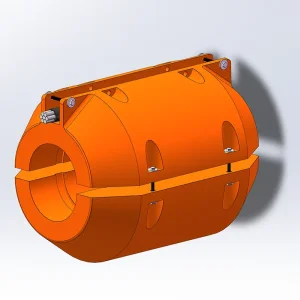
Custom Reliable Pipeline Floats for Irish Marine Dredging & Offshore Outfalls
Technical Specs & RFQ -
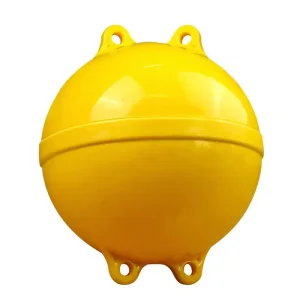
ODM ABS Float Ball for Irish Inshore Marinas, Net Demarcation & Flotation
Technical Specs & RFQ -

ODM Heavy-Duty Mooring Buoys for Marina Berths & Offshore Anchorage in Ireland
Technical Specs & RFQ