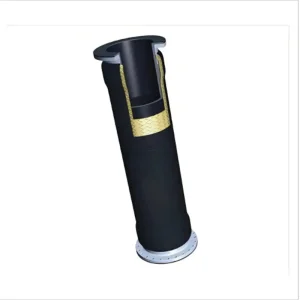
High-Quality Advanced Pipeline Float System for Secure Subsea Installations Supplier, Factories
- Buoyancy Rating: Up to 3,800 kg/m
- Core Shell: UV-8 Virgin LLDPE
- Application: Controlled Subsea Tie-In

Engineered modular pipeline floats designed for critical hydrodynamic stability, pull-in catenary relief, and trench alignments in coastal New South Wales maritime operations.
A comprehensive technical brief examining maritime logistics, directional drilling pullback buoyancy, desalination outfalls, and harbor infrastructure demands across New South Wales.
The Port Botany container terminal, Kurnell liquid fuel berths, and the surrounding maritime channels require recurring dredging, maintenance, and subsea pipeline tie-in protocols. Strong dynamic swells from the Tasman Sea impose severe shear loads on floating discharge and subsea pull-in lines, demanding resilient, non-collapsing rotomolded PE floats with reinforced perimeter bolt flanges.
Kurnell’s Sydney Desalination Plant and regional water treatment utilities operate critical offshore intake manifolds and hypersaline dispersion diffuser lines. Subsea tie-in operations necessitate mathematically verified buoyancy modules to counteract the submerged deadweight of heavy HDPE or lined steel spools without destabilizing bottom tension or disturbing sensitive benthic habitats.
Civil infrastructure megaprojects, such as the Sydney Metro underwater cross-harbour utility conduits and Hawkesbury River remediation, utilize Horizontal Directional Drilling (HDD) shoreline tie-ins. Controlling pull-in forces through staged buoyancy floats eliminates ground friction and prevents pipe buckling during critical trench entry.
In offshore and coastal marine pipeline installations, the "tie-in" represents the pivotal engineering phase where independent subsea pipeline segments, shore-approach conduits, or wellhead riser spools are aligned and permanently joined. When a pipeline is submerged, its uncompensated submerged weight creates immense frictional forces on the seabed, producing severe axial tension that can easily overload barge winches, pull-in rigs, or trench-laying gear.
Our engineered Pipeline Float Tie-In assemblies counteract negative buoyancy by distributing precise hydrostatic uplift along predetermined catenary coordinates. By transforming an unwieldy 500-ton steel or heavy HDPE pipe string into a neutrally or slightly positively buoyant structure, marine contractors can execute micro-positioning using light tugs, subsea ROVs (Remotely Operated Vehicles), or small support diver teams. Once alignment flanges are bolted or welded at the tie-in target point, calibrated modular float segments are systematically released or flooded without destabilizing the rest of the alignment.
Sourcing large-diameter marine buoyancy products from specialized Chinese manufacturing hubs like Juhua delivers measurable engineering and financial advantages for Australian Tier-1 marine civil engineering firms:
| Steel / HDPE Pipe OD (mm) | Float Outer Diameter (mm) | Effective Length (mm) | Net Uplift Buoyancy (kg) | Recommended Tie-In Spacing |
|---|---|---|---|---|
| DN 250 (273 mm) | 680 mm | 1,100 mm | 280 - 320 kg | Every 6.0 - 8.0 meters |
| DN 450 (457 mm) | 1,050 mm | 1,400 mm | 750 - 880 kg | Every 5.5 - 7.0 meters |
| DN 630 (630 mm) | 1,380 mm | 1,800 mm | 1,650 - 1,920 kg | Every 4.0 - 6.0 meters |
| DN 900 (914 mm) | 1,750 mm | 2,200 mm | 3,100 - 3,550 kg | Every 3.5 - 5.0 meters |
| DN 1200 (1219 mm) | 2,200 mm | 2,500 mm | 5,800 - 6,400 kg | Project-Engineered Catenary Layout |
Comprehensive turnkey products supporting dredging, hydro-tailings, dynamic subsea bypass lines, and offshore terminal tie-ins.
Strategic purchasing criteria, material certifications, and future-ready flotation solutions for Australian environmental standards.
Marine projects within New South Wales state waters must align with strict EPA guidelines regarding marine microplastics and environmental degradation. Our pipeline floats use non-toxic, biologically inert PE resin without heavy metal plasticizers. Closed-cell polyurethane infill prevents any crumbling foam pellets from shedding into the pristine aquatic ecosystems of Botany Bay, Broken Bay, or Sydney Harbour.
The global marine pipeline industry is transitioning rapidly toward automated monitoring. In tie-in operations, dynamic subsea loads can produce local buckling if buoyancy shifts. We provide custom tie-in modules pre-molded with recessed chambers for acoustic transponders, hydrostatic pressure depth loggers, and GNSS beacon modules, allowing project managers in Sydney control rooms to trace pipe immersion profiles in real time.
Tidal streams across Sydney heads can reach 2 to 3 knots, causing severe vortex-induced vibration (VIV) on bluff bodies. Our specialized tie-in buoyancy shells incorporate rounded noses, hydrodynamic taper reliefs, and textured surface patterns that reduce fluid drag by up to 22% compared to flat-faced generic dredging floats, decreasing anchor hold requirements during installation.
Direct answers for EPC contractors, marine estimators, and subsea installation engineers.
Standard dredge floats are designed simply to maintain surface freeboard for discharge pipes carrying slurry. In contrast, Pipeline Float Tie-In systems are engineered for subsea precision: they feature calibrated net buoyancy ratings to offset specific pipe steel wall weights, contoured hydrodynamic surfaces to minimize drag during towing, and reinforced bolt-down pockets engineered for remote or diver-operated release once the subsea connection (spool tie-in or HDD shore pull) is mechanically completed.
For critical tie-in operations where pipe strings are submerged and pulled along the seabed or positioned near subsea manifolds, engineers must size buoyancy modules to achieve either neutral buoyancy (0 to +5% positive buoyancy) or a specific controlled submerged weight. For open water towing, a reserve factor of 1.25x to 1.35x total weight (pipe + conveyed water + hardware) is applied to maintain 25% freeboard above surface chop.
Due to the high salinity and temperature fluctuations of coastal New South Wales waters, we recommend either Grade 316 (A4-70) stainless steel threaded rods, heavy hex nuts, and flat washers, or multi-layer Dacromet-coated Grade 8.8 high-tensile steel bolts for temporary tie-in pull-ins where high clamping torque is critical to resist axial slippage along the pipe.
Standard sizes (DN200 to DN800) maintain an ongoing casting inventory with production turnarounds of 7 to 14 days for volumes up to 500 units. Sea freight from Qingdao or Tianjin to Port Botany in Sydney typically takes 12 to 18 days on direct sailings. Customs documentation (COO, Form A, commercial invoice, packing list, and raw material mill test reports) is provided directly to your nominated freight forwarder.
Yes. Subsea pipelines frequently feature factory-applied concrete weight coatings (CWC), 3-layer polypropylene (3LPP), or thermal insulation blankets that enlarge the outer diameter beyond standard nominal sizing. We manufacture bespoke internal clamping profiles, including neoprene or polyurethane elastomeric friction liners, to fit any non-standard diameter without crushing fragile protective coatings.
Submit your pipe outer diameter, submersion profile, medium density, and delivery schedule. Our technical team delivers certified buoyancy load calculations and commercial quotes within 24 hours.