

Primary Marine Navigation Systems Serving Melbourne
Featured ocean-grade polyethylene navigation aids deployed across Victorian commercial port channels and coastal infrastructure projects.

Port Phillip Custom High-Performance Fairway Channel Buoy
Download Channel Pricelist
Western Port High-Visibility Offshore Operations Navigation Aid
Factory Direct Pricing
Bass Strait Heavy Sea Ocean-Grade Navigation Marker
Inspect Deployment DataVictoria Marine Ecosystem & Melbourne Regional Logistics Overview
A comprehensive analysis of fairway hydrodynamics, environmental mandates, and operational life-cycle requirements within Australian Southern Waters.
1. Melbourne Port Dynamics and The Rip (Port Phillip Heads) Challenge
The Port of Melbourne stands as Australia’s largest container and general cargo port, handling upwards of 3.2 million TEU annually. Container vessels navigating through the Great Ship Channel, crossing Port Phillip Heads (colloquially known as "The Rip"), encounter some of the world's most unforgiving tidal race conditions. Water flows can surge up to 8 knots across complex basalt reefs, generating standing waves and abrupt current shears. Conventional steel navigational markers often experience extreme hydrodynamic stress, accelerated mooring fatigue, and coating degradation in this aggressive marine environment.
Transitioning toward rotational-moulded Virgin Polyethylene (PE) hulls filled with closed-cell polyurethane foam has fundamentally rewritten maritime maintenance protocols across Victorian regional ports. Polyethylene buoyancy hulls absorb kinetic vessel impacts and dynamic hydro-mechanical loads without denting or compromising internal integrity. Furthermore, Melbourne's climate delivers high seasonal UV index ratings (UV 10+ during southern summer peaks). The integration of Ciba Specialty UV Stabilizers (UV20 rating) into our virgin HDPE matrices guarantees colour retention and prevents chalking, thermal cracking, and environmental degradation across an operational life cycle exceeding 15 to 20 years.
2. Regulatory Architecture: IALA Region A Compliance for Australian Waters
The Australian Maritime Safety Authority (AMSA) and Maritime Safety Victoria strictly govern navigation aids according to the International Association of Marine Aids to Navigation and Lighthouse Authorities (IALA) Maritime Buoyage System: Region A. In Region A waterways, the navigational paradigm dictates:
- Port Hand Marks: Solid Red hue, cylindrical can topmarks, emitting synchronous red light characteristics, signifying the port boundary when entering harbour with the prevailing flood tide.
- Starboard Hand Marks: Solid Green hue, conical topmarks, flashing green signatures marking channel safety limits toward starboard.
- Cardinal Markers: Distinct yellow and black horizontal striping designating navigable quadrants relative to natural hazards, requiring high optical chromatic consistency.
| Buoy Model & Class | Diameter / Height | Reserve Buoyancy | Focal Plane Height | Melbourne Typical Application |
|---|---|---|---|---|
| JH-NAV-1500 (Can/Cone) | 1500 mm / 3200 mm | 1,200 kg | 2.2 m | Yarra River Channel, Hobsons Bay, Corio Bay Entrance |
| JH-NAV-2400 (Deep Sea) | 2400 mm / 5600 mm | 4,500 kg | 3.8 m | Port Phillip Heads Fairway, South Channel Traffic Separation |
| JH-NAV-3000 (Ocean Spec) | 3000 mm / 7200 mm | 8,200 kg | 5.1 m | Bass Strait approaches, Western Port deep draught approaches |
Industry 4.0 Rotomolding: Chinese Smart Manufacturing Advantage
Transforming heavy marine engineering with PLC variable-frequency heating, digital wall-thickness ultrasonic telemetry, and structural traceability.
Electronic Automated Curing
Automated bi-axial rotational molds leverage multi-zone electronic temperature sensors ensuring that the cross-link molecular chain is cured uniformly without micro-porosity or residual interior stresses.
High-Efficiency Cost Ratio
By standardizing CNC molds across standardized diameter classes (1.2m to 3.0m), global procurement teams bypass costly non-recurring engineering fees, saving 35–45% compared to domestic Australian localized fabrications.
Closed-Cell Polyurethane Infilling
High-pressure injection of marine-grade PU foam (density 35–40 kg/m³) guarantees virtually unsinkable performance. Even if the polyethylene exterior hull suffers direct high-speed hull collision, water ingress remains capped under 1%.
20+
Years Continuous Production
100%
Virgin Food-Grade Polymer
>15 Yrs
UV Stability Certification
80+
Destination Ports Supplied
Navigation & Infrastructure Solutions Portfolio
Complete deployment catalog spanning Precision Channel Markers, Mooring Buoyancy Units, and Industrial Floating Pipeline Protection.
Port Melbourne Precision Lateral Safe Waterway Buoy
Request Factory Quote
Victoria Coastal Navigation Project Floating Buoy
View Technical Specs
Geelong Refinery Marine Operations Support Buoy
Download Product Sheet
Melbourne High-Integrity Fairway Navigation System
Inquire Availability
Melbourne Port Dredging High-Density Pipe Floats
Check Float Pricelist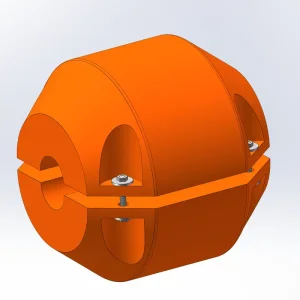
Victoria Slurry Discharge & Dewatering Pipe Floats
Request Sizing Data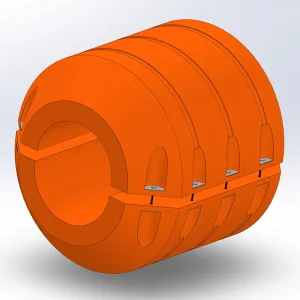
Harbour Dredge Pipeline Marine Support Floats
Consult OEM Engineer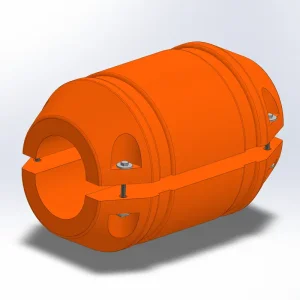
Marine Infrastructure Reclaim Pipe Floater Units
Explore Project PricingTechnical & Procurement FAQ: Melbourne Marine Projects
Direct answers for marine civil contractors, port superintendents, and logistics directors sourcing navigation aids into Victoria.
How are buoy freight dimensions managed for shipping directly to the Port of Melbourne?
Our navigation buoys utilize modular assembly architectures. Hulls with diameters up to 2.4 meters are designed with demountable daytime superstructures and topmarks. This enables complete navigation buoy sets to pack efficiently into standard 40-foot High Cube (40'HC) shipping containers, eliminating expensive breakbulk charges on direct liner shipping routes from Qingdao/Tianjin directly into Swanson Dock, Melbourne.
Do these navigation buoys meet Australian Maritime Safety Authority (AMSA) criteria?
Yes. All visual navigation marks strictly adhere to IALA Region A standards, which govern Australian territorial waters. Standard equipment provisions incorporate 316-grade stainless steel hardware, internal ballast weights, and pre-drilled standardized lantern plates ready for self-contained solar marine lights (such as Carmanah, Sealite, or Sabik fixtures).
How does the virgin PE material handle the extreme UV radiation in Port Phillip and Western Port?
The external shell is compounded using premium virgin low-density polyethylene (LLDPE) combined with medical/marine grade Ciba UV20 stabilizers. This chemical bonding prevents brittleness, photo-oxidation, and mechanical decay under Australia’s intense seasonal ozone fluctuations, maintaining high impact tensile strength across decades of open-water sun exposure.
What is the standard warranty and after-sales support provided for EPC projects?
Standard warranty terms cover 18 months from the bill of lading date or 12 months post-installation deployment, whichever arrives first. Full engineering documentation—including hydrostatic balance certificates, wall-thickness ultrasonic testing profiles, and mooring bridal load sizing calculations—accompanies every procurement lot.
Initiate Your Melbourne Port Project Specification
Connect with our senior buoyancy engineers to calculate reserve freeboard, coordinate IALA Region A daymark compliance, and review our current FOB/CIF Melbourne export pricelist.
Send Inquiry Now