
Primary Mooring Buoy Systems Engineered for the Seoul & Incheon Corridors
Specifically matched for metropolitan inland waterways, heavy tidal estuaries, and municipal passenger ferry moorings requiring maximum reserve buoyancy and non-destructive surface contact.
-
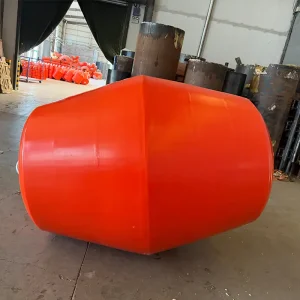 Seoul River & Port SeriesView Product Specs
Foam-Filled Polyethylene Mooring Buoy for Reliable Marine Anchoring
-
 High-Density PE HullView Product Specs
Polyethylene Mooring Buoy – Floating Solutions for Seoul Marine Projects
-
 Maintenance-Free CoreView Product Specs
Offshore Polyethylene Mooring Buoy – Safe & Maintenance-Free Systems
-
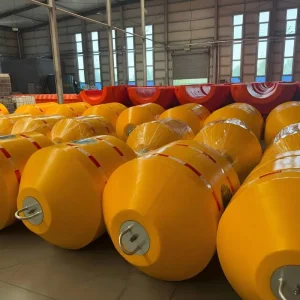 OEM Heavy AnchorageView Product Specs
OEM Offshore Mooring Buoy for Heavy Vessel Anchoring & Infrastructure
The Maritime & Flotation Infrastructure Dynamics of the Seoul Metropolitan Area
Understanding the unique convergence of high-density river transport, estuary tidal swings, and national safety initiatives shaping mooring procurement across the Sudogwon region.
The Strategic Landscape: Inland Revival Meets Port Expansion
The Seoul Metropolitan Area, home to over 25 million inhabitants, is undergoing a profound structural evolution in its relationship with its waterways. Under the ambit of the Seoul Metropolitan Government's "Great Hangang Project" and the revival of commuter water-bus transit routes connecting Yeouido, Jamwon, Ttukseom, and Mangwon, the demand for high-reliability marine anchoring equipment has expanded dramatically beyond traditional commercial tug and barge sectors.
Navigating the Han River entails addressing severe seasonal velocity fluctuations, sudden monsoonal discharge surges via upstream dams (such as Paldang Dam), and urban aesthetic requirements that prohibit the deployment of dilapidated, rusting steel buoys. Simultaneously, the maritime gateway serving Seoul—principally the Port of Incheon and the Gyeongin Ara Waterway—presents extreme semi-diurnal tidal ranges exceeding 8.5 to 9.0 meters. These macrotidal regimes impose complex cyclic tensile loads on ground tackle, chafe gear, and buoy bodies.
"Marine engineers and civil contractors operating along the Gyeongin Axis cannot risk buoy shell puncture, hydro-abrasion from suspended silt, or catenary line failure under high tidal cycles. Modernized rotational polyethylene architectures have definitively superseded legacy steel drums."
Global procurement directors and municipal authorities across Seoul require factory-direct manufacturing partnerships capable of supplying certified high-density polyethylene (HDPE/LLDPE) buoyant modules that resist UV breakdown during harsh East Asian summers and maintain cold-impact flexibility during sub-zero continental winters.
Technical Challenge Matrix: Seoul Aquatic Environments
Zero Hull Corrosion
Unlike steel mooring cans requiring sacrificial zinc anodes and anti-corrosive recoating every 24 months, rotomolded PE outer shells will never oxidize in the brackish estuarine conditions of Incheon Port.
Impact Elasticity & Memory
Engineered using low-density virgin polyethylene matrices with high tensile elongation at break (>800%). The shell absorbs kinetic impacts from high-speed passenger craft without yielding or hull cracking.
Vessel Hull Protection
The soft exterior of poly floats safeguards high-finish gelcoats on Seoul yachting vessels, water-taxis, and luxury catamarans, completely eliminating the hull scarring commonly caused by steel mooring buoys.
Global Procurement Criteria for Heavy Mooring & Berthing Buoys
Technical benchmarks, material science specifications, and mooring line load kinematics necessary for EPC contractor compliance across international coastal projects.
| Engineering Parameter | Legacy Steel Drum Buoys | Juhua Factory 4.0 Rotomolded PE Buoys | Project Compliance Benefits |
|---|---|---|---|
| Primary Shell Material | Q235 Carbon Steel (Welded plate) | UV20+ Stabilized LLDPE (Monolithic seamless) | No Rust / 15-Year Life |
| Internal Core Filling | Air chamber / Unfilled (Puncture sinkable) | Closed-Cell Hydrophobic Polyurethane / EPS Foam | Unsinkable Even if Breached |
| Central Tension Member | Welded mild steel pad eyes | Hot-Dip Galvanized / SS316 Through-Chain Pad Eyes | Continuous Tensile Strength |
| Sub-Zero Impact Strength | High brittle risk at -10°C | Ductile performance certified to -40°C | Seoul Freeze Tolerant |
| Maintenance Overhead | Bi-annual blasting, painting, anode replacement | Zero hull recoating; pressure washer cleaning only | OpEx Reduced by 75% |
| Weight / Displacement Ratio | Heavy tare weight, lowers net buoyancy | Lightweight shell, optimal freeboard ratio | Easy Crane-Free Handling |
Rotational Molding Finite Stress Analysis
Our offshore factory leverages bi-axial rotational molding furnaces operating under automated closed-loop electronic temperature telemetry. This suppresses thermal decomposition, eradicating microscopic void formation in the polyethylene skin.
- Wall Thickness Uniformity: Computer-controlled speed axes hold wall tolerance within ±0.5mm across the equator and corners.
- Tensile Load Transfer: Heavy-duty through-rods distribute cyclic ship berthing pull straight through the central structural column to the anchor ground tackle.
- Eco-Friendly Pigment Dispersion: Food-grade Masterbatch additive guarantees zero leaching into drinking water reservoirs or Seoul urban waterways.
Information Gain: Calculating Dynamic Reserve Buoyancy
A fatal flaw in typical procurement RFQs serving the Seoul river basin is neglecting the dynamic hydrodynamic drag generated by high current velocities. Buoyancy must never be sized merely to offset chain mass:
Reserve Buoyancy (RB) ≥ [W_chain + W_shackle + W_drag(v²)] × 1.35
Where W_drag(v²) denotes velocity-induced submergence force. At river currents reaching 2.5 m/s during monsoon spillway discharge, uncalculated hydrodynamic drag can drown under-buoyed equipment, dragging floating safety barriers or mooring points underwater and creating hazardous maritime collision risks.
Our engineering department conducts custom CAD & hydrodynamic reserve calculations for every client order bound for the South Korean peninsula, validating mooring stability prior to steel mold fabrication.
China Factory 4.0: Supply Chain Resilience, Scalability & Cost Efficiency
Bridging heavy rotomolding capacity with agile international delivery directly to Incheon, Busan, and Pyeongtaek ports within days.
Integrated CNC Mold Fabrication
In-house computerized mold machining facilities allow rapid custom tooling modifications. We can prototype, tool, and cast bespoke mooring buoy geometries tailored to Seoul municipal tender specifications in under 18 days.
Continuous High-Pressure Foaming
Equipped with computerized high-pressure polyurethane foaming machinery. We achieve optimal cellular density (38 to 45 kg/m³) without voids, assuring true closed-cell hydrophobicity even in deep water submersion tests.
Proximity to South Korean Ports
Situated in the coastal industrial corridor of Shandong Province, our export terminals dispatch weekly direct roll-on/roll-off and container vessels to Incheon Port (less than 36 hours sailing time), providing peerless logistical efficiency.
Procuring Mooring Buoys for Projects in Seoul or Gyeonggi?
Connect with our senior flotation engineering team for customized displacement calculations, CAD mooring drawings, and competitive direct factory quotation packages.
Send Inquiry NowEngineering Deployments Across the Capital Waterfront
Specific spatial and hydrodynamic criteria across the Seoul Metropolitan maritime geography.
Han River Ferry & Water-Bus Pontoon Anchoring
Rapid transit passenger boats require dedicated floating staging points. Our cylindrical and spherical mooring floats provide resilient buffer tension for pontoon catenary anchor lines, maintaining berth stability regardless of flood discharge rates.
Ara Waterway Locks & Industrial Berths
Connecting the Yellow Sea to the Han River, the Gyeongin Ara Canal experiences intensive commercial traffic. High-visibility yellow and orange polyethylene mooring buoys designate secure vessel waiting stations adjacent to canal lock approaches.
Marina Leisure & Private Yacht Moorings
Seoul marinas (such as Seoul Marina in Yeouido and Wangsan Marina in nearby Incheon) utilize our foam-filled, non-scuffing polyethylene buoys to tether luxury yachts without danger of hull marring or paint contamination.
Specialized Offshore & Marina Mooring Buoys for Heavy Marine Engineering
Browse our complete rotationally moulded mooring buoy range available for immediate containerization and rapid delivery to ports serving Seoul.
-
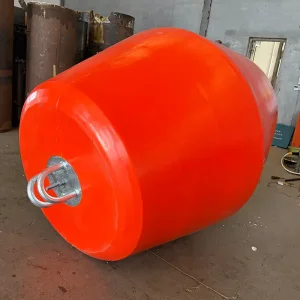 Offshore Floating SystemView Product Specs
Offshore Mooring Buoy for Secure Vessel Anchoring Systems
-
ODM EngineeringView Product Specs
ODM Mooring Buoy for Stable Marine Mooring Systems
-
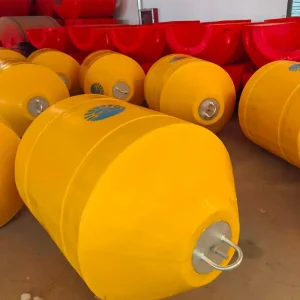 Marina AnchorageView Product Specs
Foam-Filled Mooring Buoy for Marinas & Offshore Facilities
-
High Buoyancy CoreView Product Specs
ODM Foam-Filled Mooring Buoy for Harbor & Offshore Anchorages
-
Custom Berth SeriesView Product Specs
Custom Mooring Buoy for Boat Berths & Offshore Stations
-
Architectural MooringView Product Specs
Custom Mooring Buoy for Marinas & Offshore Anchorage Systems
-
Multi-Berth SolutionView Product Specs
ODM Mooring Buoy for Marina Berths & Offshore Mooring Systems
-
Commercial DutyView Product Specs
ODM Custom Mooring Buoy for Vessel Berthing & Marina Operations
Frequently Asked Questions: Mooring Buoy Procurement & Deployment
In-depth responses covering certification, shipping lead times, cold-weather resilience, and anchoring configurations for engineering project managers.
Q1: How does rotational polyethylene behave during Seoul's freezing winter weather?
Our rotomolded mooring buoys use specialized high-grade linear low-density polyethylene (LLDPE) modified with low-temperature impact stabilizers. Unlike unplasticized rigid plastics that turn brittle at freezing thresholds, our materials retain high flexural ductility and charpy notch impact resistance down to -40°C, easily withstanding Seoul's Han River ice formations without cracking.
Q2: Can these mooring buoys be customized to match Seoul municipal maritime markings?
Yes. Because the pigment is compounded directly into the raw polyethylene matrix prior to molding (rather than merely applied as an exterior coat of paint), high-visibility colors—such as IALA maritime buoyage system red, green, yellow, or international orange—remain vibrant for years without peeling or chalking, even under severe UV exposure.
Q3: What prevents the mooring buoy from sinking if struck by a commercial vessel?
All Juhua mooring buoys are filled with high-density, closed-cell polyurethane foam or expanded polystyrene (EPS). Because the foam core possesses an independent, hydrophobic cellular structure with over 95% closed cells, seawater cannot penetrate even if the exterior polyethylene skin suffers severe penetration from a high-energy collision.
Q4: What is the transit lead time from your factory to Incheon or Busan Port?
Standard model inventories can be packed and dispatched for container ship loading within 7 working days. Ocean transit from Shandong ports (Qingdao/Weihai) to Incheon or Busan typically takes only 24 to 48 hours, providing Seoul-based civil contractors and marine operators with faster fulfillment than domestic stock replenishment.
Q5: How do your central steel tension members prevent internal galvanic corrosion?
Our central through-pipe or tension bars are hot-dip galvanized to ISO 1461 standards with minimum zinc coating thickness exceeding 85 microns. Stainless steel 316 or specialized marine protective epoxy coatings are optionally provided for high-salinity offshore anchoring applications in Incheon Bay.
Q6: How is buoyant capacity calculated for high-velocity river currents?
Our technical team applies hydro-dynamic drag algorithms factoring cross-sectional surface area, water velocity, current angle, and ground chain deadweight. We recommend maintaining at least 35% to 50% net reserve buoyancy above static anchor chain mass to ensure the buoy retains proper visual freeboard during storm conditions.
Require project-specific buoyancy calculations, 3D CAD step files, or wholesale pricing tables?
Contact Engineering Support Now